Get in Touch with Pangeng

Diaphragm Hydrogen Compressor
Diaphragm Hydrogen Compressor — Oil-Free High-Pressure Solutions | Pangeng
Pangeng Diaphragm Hydrogen Compressors can deliver 99.9999% gas purity (from inlet to discharge) at 1000 bar operating pressure. All our compressors leave the factory zero oil contamination risk, with a fully metal diaphragms that forms the most complete physical barrier between your hydrogen and the hydraulic drive system.
Get a Custom Quote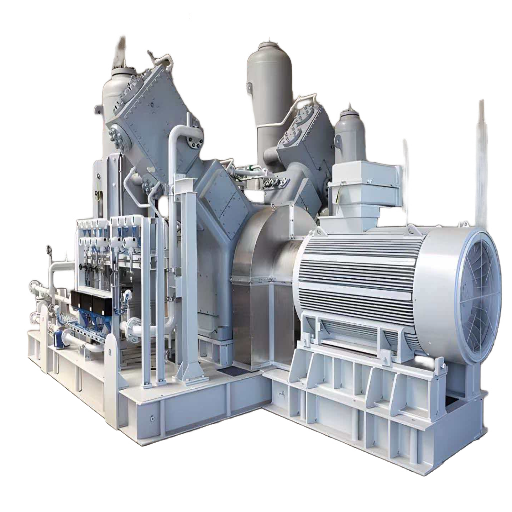
Max Pressure
Up to 1000 bar
Flow Rate
5–2,000 Nm³/h
Gas Purity
99.9999%
Maintenance Interval
10,000–40,000 h
Compression Stages
1–4 Stages
Applications
12+ Industries
Diaphragm Type Hydrogen Compressor: Models & Selection Guide
We manufacture three diaphragm compressor series, each covering a different part of the hydrogen pressure-flow envelope. All three have had the same triple-diaphragm design concept and zero oil contamination architecture applied – only the maximum discharge pressure, flow capacity and packaging format differ. This means, in the real world, roughly 60% of our hydrogen installations are PG-DH high-pressure units since, the demand so far being driven mainly by refuelling station and tube-trailer filling applications.
PG-D Series
Standard Diaphragm
- Max Pressure 350 bar
- Flow Rate 5–500 Nm³/h
- Power Range 5.5–75 kW
- Stages 1–2
- Weight 800–3,500 kg
- Gas Purity 99.9999%
PG-DH Series
High Pressure
- Max Pressure 1000 bar
- Flow Rate 10–1,200 Nm³/h
- Power Range 22–200 kW
- Stages 2–4
- Weight 2,500–12,000 kg
- Gas Purity 99.9999%
PG-DC Series
Containerized
- Max Pressure 500 bar
- Flow Rate 20–2,000 Nm³/h
- Power Range 30–160 kW
- Stages 1–3
- Weight 6,000–18,000 kg
- Gas Purity 99.9999%
Decision Matrix — Quick Selection By Application
| Parameter | PG-D (Standard) | PG-DH (High Pressure) | PG-DC (Containerized) |
|---|---|---|---|
| Discharge Pressure | Up to 350 bar | Up to 1000 bar | Up to 500 bar |
| Flow Range | 5–500 Nm³/h | 10–1,200 Nm³/h | 20–2,000 Nm³/h |
| Motor Power | 5.5–75 kW | 22–200 kW | 30–160 kW |
| Compression Stages | 1–2 | 2–4 | 1–3 |
| Package Weight | 800–3,500 kg | 2,500–12,000 kg | 6,000–18,000 kg |
| Typical Application | Lab supply, small industrial | Refueling stations, tube trailer filling | Remote sites, modular plants |
Technical Deep-Dive: Triple Diaphragm Construction
All Pangeng diaphragm hydrogen compressors use a three-layer diaphragm assembly; a process-side diaphragm (in direct contact with hydrogen), middle monitoring diaphragm, and hydraulic-side diaphragm (in contact with the oil). Between the process and middle layers there is a network of micro-grooves machined between the process layer and middle layer which forms a leak-detection channel connected to a pressure transducer. If the process side diaphragm fatigues over time and hydrogen begins to migrate along the system at rates measured in cubic millimeters per minute, the transducer detects the pressure increase and initiates an automatic shutdown.
This approach provides for near-zero possibility of undetected diaphragm failure and containment thereof. In our field experience, an installed set of diaphragms on filtered, dry hydrogen feed gas will consistently run in excess of 20,000 hours before the monitoring system senses any detectable increase in the detection channel pressure. All diaphragms are cold-rolled 316L stainless steel, ground to a fairly tight tolerance (0.01 mm variation in thickness) and stress relieved at the factory to extend the fatigue life when the diaphragms undergo cyclic flexure at high ratios of compression.
Hydrogen Compression Challenges — How Diaphragm Technology Solves Them
Hydrogen is the world’s lightest molecule, and that poses engineering challenges that other industrial gases do not. Its atom is small enough to penetrate metal grain boundaries, would reach explosive classification in any zone (so it has to be explosion-proof), and is so sensitive that a handful of oil ppm will ruin a PEM fuel cell membrane in just a matter of weeks. Diaphragm compressors were designed to combat these issues—the very metal of the diaphragm assembly provides a hermetic barrier that eliminates the possible failure points of a piston-ring or rotary-screw assembly.
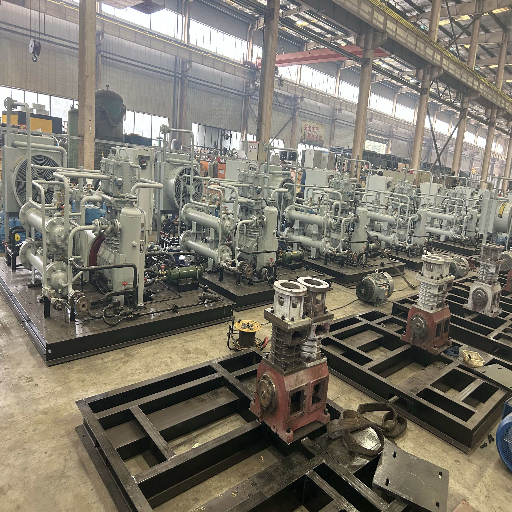
Hydrogen molecules will easily flow past all typical polymer seals and through the gaps between piston rings in a typical compressor. Impurities such as small amounts of oil from lubricated cylinders will drown the gas stream. In a diaphragm compressor, three panels of stainless-steel act as a leak-proof wall and even a highly subsurface micro-fatigue on the top panel will call for a forced shut-down prompted by a leak-detection channel between all three panels. We have already proven this layer-based system able to catch a hairline fracture in the diaphragm that would easily have gone undetected under a piston compressor for weeks, possibly months to come.
Under pressure, hydrogen atoms diffuse into the carbon steel resulting in embrittlement and brittle failure. All hydrogen wetted Pangeng compressor components (diaphragm plates, gas head cavity, valves, piping) employ hydrogen rated alloys (316L stainless, Inconel, or Hastelloy, depending upon pressure class). Since the gas contact area is limited to a small, visible, and manageable surface, the diaphragm design minimizes risk of embrittlement rather than a long cylinder bore with many possible potential failure points.
Achieving 99.9999% purity at 500+ bar is beyond most compression technology. Seal leakage and oil carryover are further increased with higher pressures in oil lubricated processes. With diaphragm technology, the effect is just the opposite. Increasing the discharge pressure enhances the gas seal as the diaphragm is pushed harder against the machined gas cavity surface. That is the reason for the widespread adoption of diaphragm technology in hydrogen refuelling stations where invariably 700-1000 bar dispensing pressure and SAE J-2719 fuel quality cannot be compromised.
Diaphragm Compressor vs. Reciprocating & Centrifugal for Hydrogen
…so I am sure the next line of inquiry I am asked, “question” will be at least comparative to the performance of a reciprocating or centrifugal machine.
| Specification | Diaphragm | Reciprocating | Centrifugal |
|---|---|---|---|
| Gas Purity (Output) | 99.9999% | 99.9% | 99.5% |
| Maximum Pressure | 1,000 bar | 600 bar | 200 bar |
| Flow Range | 5–2,000 Nm³/h | 50–10,000 Nm³/h | 500–50,000 Nm³/h |
| Maintenance Interval | 10,000–40,000 h | 4,000–8,000 h | 8,000–16,000 h |
| Oil Contamination Risk | Zero | Moderate | Low |
| Best For | High-purity, small-medium volume | Large volume, moderate purity | Very large volume, low pressure |
Technology Selection Strategy
Every hydrogen project begins with the choice of a technology, and that should be driven by your purity needs, targeted pressure and volume. Our chart below will help you compare our actual performance vs. neighboring technologies’ benchmarks – numbers-based, not label-claimed…. Zegbrk_0005. These figures tell a very clear story for hydrogen-specific applications.
Performance Gaps & Application Limits
Reciprocating Compressors
Reciprocating compressors handle much bigger flows, up to 10,000 Nm/h, but deliver contamination-inducing oil in the lubricant to include piston rings and rider bands – which limit purity to 99.9%, no further. While this is enough for some chemical applications and ammonia synthesis feed gas, it does not meet common hydrogen purity standards for vehicles outlined in SAE J-2719 nor meeting CD 2000 semiconductor-grade standards.
Centrifugal Compressors
Centrifugal compressor handle bigger flow, they do so with high efficiency – but at a maximum inlet pressure of approximately 200bar, they are not able to meet 700-1000bar discharges demanded by refuelling station applications.
The Diaphragm Advantage
The “Hard” Applications Niche
Diaphragm technology is finding a niche few other compressor designs do not yet serve: those “hard” applications where a reliable source of high duty-cycle discharge pressure is more pressing than simply moving a high volume of gas. For flow rates of over 2,000 Nm/h we have seen those service duties justified with alternative reciprocating series designs: and when that is the case we will advise you to select that design and simply compose the quotation accordingly, rather than try to push the diaphragm on.
The Sweet Spot (5-2,000 Nm³/h & >200 bar)
But for flow rates between 5-2,000 Nm/h at discharge pressures above 200 bar, nothing else offers the purity aspect, the proven reliability and arguably the economics of maintenance that the diaphragm design assures. For over 10,000 hours in service, a typical diaphragm compressor’s 40,000 hour maintenance cycle will avoid the labor and downtime of two or three piston ring overhauls.
Customer Results: Hydrogen Gas Compressor Refueling & Industrial Gas Applications
Pangeng diaphragm compressors are used in hydrogen refueling stations, petrochemicals plants and electronic manufacturing plants in the Asia and Middle East region. Every one of those compression plants below covers a unique application area with different pressure, purity and reliability needs.

Hydrogen Refueling Station
700 Bar Dispensing for Municipal Fuel Cell Bus Fleet
A municipal public transit authority wanted to compress electrolysis hydrogen from 30 bar to 700 bar and dispense into a fleet of fuel cell electric buses. Each system would be run 16 hours a day, 7 days/week, dispensing to >40 vehicles. They had used a reciprocating compressors that needed changing out piston rings after 5000 hours as well as running the downstream gas analyzer on oil content.
A PG-DH Series cascaded buffer stored four stage system was set up. the PG-DH unit compresses hydrogen from 30bar to 875bar to the high pressure storage bank (dispensers reduce from 875 to 700 bar at nozzle). Our system has operated for over 14 months with in excess of 6800 hours of operation with no unscheduled shut downs or oil contamination. Since commissioning, the SAE J-2719 gas quality monitor has recorded no exceedance at the station.
On the practical side, the membrane degradation rates for the fleet of fuel cell buses appear to be significantly lower following the transition to diaphragm compressed hydrogen, although the operator states that several other maintenance upgrades occurred at this time, so the hydrogen purity upgrade is one of several improvements.
Petrochemical Hydrogenation
Process Hydrogen Recovery — Refinery Hydrocracker Unit
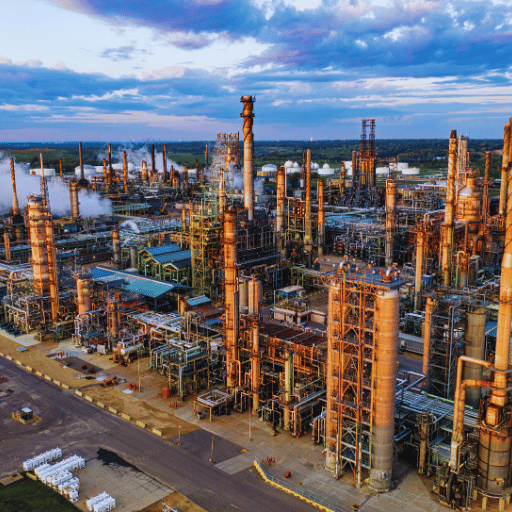
Hydrocracker Purge Gas (PG) Recompresser—This facility recovers hydrogen from the hydrocracker purge gas, recompresses to 350 bar (5,000 psig) for reinjection into the process. Its hydrogen stream (1 p.p.m. HS; H 2 S less than 5 p.p.m. after amine scrubbing) had accelerated seal degradation of their old reciprocating unit to a level where the service intervals dropped below 3,000 hours. The carburised seal faces of our PG-DH diaphragm set, and corrosion resistant gas head, prevented the HS from causing seal damage. After 18,400 hours’ service the diaphragm set was returned to us for inspection. Upon inspection, the diaphragm set was found to be below the fatigue limit and so was refitted without replacement. Annual maintenance costs were reduced by an estimated 35% compared to the reciprocating predecessor (piston-ring and packing replacement).
Electronics / Semiconductor
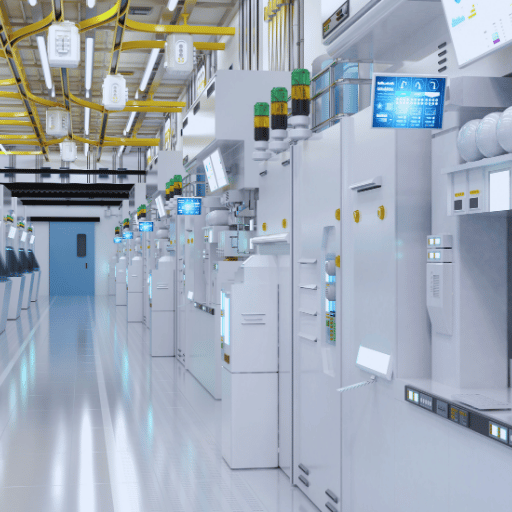
Ultra-High Purity Carrier Gas — Semiconductor Fab
The Challenge
A semiconductor fabrication facility needed a hydrogen carrier gas at 99.99995% purity (Grade 5.5) at 150 bar for CVD deposition processes. While its supply chain — bulk liquid hydrogen supplied by an ISO tanker and vaporized on site — was reliable, it also proved prohibitively expensive given their current consumption of 45 Nm/h. Prior to implementation of on site electrolysis with nearby compression, the facility would accept no chance of oil contamination contaminating their CVD chambers.
The Solution
We provided an PG-D Series compressor with electropolished wetted surfaces and a dedicated particle filtration system rated to 0.01 micron at the discharge. Our 2 stage compressor takes electrolyzer outputs from 15 bar to 150 bar. An inline gas chromatograph insures total hydrocarbon content shows continuously since start up is well below 0.05 ppm. Under these conditions, conversion to on site compression provided the facility an estimated 40% reduction in hydrogen procurement cost compared to its bulk liquid delivery at a 22 month payback period.
Total Cost of Ownership Comparison
30–40% Lower Maintenance Cost
TCO over 10 year life: typically 30-40% lower total maintenance cost than recips. This projection is based on industry average maintenance intervals and parts cost experience consistent with API 618 scheduled maintenance recommendations. Actual savings are application specific and depend on operating duty, gas composition, and annual hours of operation.
Industry average: based on API 618 maintenance recommendations. Actual experiences will depend on operating duty, gas supply purity and composition, and maintenance practices.
Certifications & Compliance for Hydrogen Equipment
Every certification listed below is relevant to a specific buyer concern – whether that is quality system auditing, pressure vessel code compliance, or explosive atmosphere safety. We carry all six because hydrogen compression equipment faces regulatory requirements from multiple jurisdictions simultaneously, and missing even one certification can delay your project permitting by months.
ISO 9001:2015
Quality management system — ensures consistent manufacturing processes and traceability from raw material to final test
API 618
5th Edition — the primary design standard for reciprocating and diaphragm process gas compressors in oil, gas, and chemical industries
CE Marking
EU Machinery Directive 2006/42/EC compliance — required for installation in European Economic Area member states
ATEX
Directive 2014/34/EU — Zone 1 & Zone 2 certified for operation in potentially explosive hydrogen atmospheres
PED
2014/68/EU Pressure Equipment Directive — mandatory for pressure-containing components above specified thresholds in the EU market
SAE J-2719
Hydrogen fuel quality standard for PEM fuel cells — confirms output purity meets fuel cell vehicle requirements
Hydrogen safety standards continue to evolve as the energy transition accelerates. Combining ATEX Zone 1/2 certification with PED compliance covers the two most critical safety domains for hydrogen equipment: explosive atmosphere protection and pressure containment integrity. For refueling station applications, SAE J-2719 compliance is increasingly specified by station operators and vehicle OEMs as a procurement requirement – we test to this standard as part of our factory acceptance procedure on every unit destined for a refueling application.
In our experience, having all six certifications pre-qualified measurably reduces procurement cycle time. Projects where the compressor vendor needs to obtain a missing certification after order placement often add 8-12 weeks to the delivery schedule – time that you absorb as project delay and cost overrun.
Diaphragm Hydrogen Compressor Price Range & Cost Factors
Buyer Advisory — Pricing Transparency
Diaphragm hydrogen compressor pricing ranges from $15,000 to over $200,000, being so broad because the engineering differences between a one stage lab unit and a 4 stage refueling station package are enormous. We publish this range because all the “please contact us for pricing” statements on the world wide web are wasting you time (and ours). Here are the four most important factors that define where your particular configuration will sit on the pricing spectrum.
| Price Factor | Low End | High End | Impact on Price |
|---|---|---|---|
| Discharge Pressure Rating | 50–200 bar | 500–1000 bar | Higher pressure requires thicker diaphragms, heavier forgings, and more compression stages — typically the single largest cost driver |
| Flow Capacity | 5–50 Nm³/h | 500–2,000 Nm³/h | Larger flow demands bigger cylinders, higher motor power, and heavier structural frames |
| Number of Stages | 1 stage | 3–4 stages | Each additional stage adds a complete compression module with its own diaphragm set, cooler, and piping |
| Customization Level | Standard package | Full turnkey with controls, SCADA, and enclosure | Containerized packages with integrated cooling, controls, safety systems, and remote monitoring add 30–50% over base machine cost |
Lead Time
Normal production lead time is 8-16 weeks from receipt of order and is load and model dependent. Standard PG-D Series units with typical pressure ratings ship for delivery nearer the 8-week time frame, as we keep stock of the higher-volume sub-assemblies. Custom PG-DH high-pressure units with specialty metallurgy or containerized PG-DC packages demand a longer cycle time of 12-16 weeks. Emergency manufacturing can be performed for critical-path offerings, but timelines should be discussed during costing so we can determine in advance whether and when it can be accomplished.
Warranty
Standard warranty includes 12 months from commissioning or 18 months from shipment (whichever occurs first) for all manufacturing defects of parts and workmanship, Standard warranty is followed by the option of 24 or 36 months extended warranty provides warranty coverage 24 or 36 months respectively post standard warranty period. It can be combined with preventative service contracts and get maximum uptime guarantee. As most operators we have suggested schedule diaphragm inspections, we find that there are very few warranty claims—failures in diaphragm compressors are well understood and nearly completely preventable.
After-Sales Support
Every Pangeng compressor ships with a defined support structure:
Spare parts inventory
We carry diaphragm sets, valve assemblies, hydraulic seals and gaskets for all current machines. Critical spare parts generally ship worldwide in 48 hours.
24/7 Technical Support
Phone and remote diagnostics access to application engineers for troubleshooting, alarms, and maintenance.
Service terrain
Nos techniciens procèdent au montage, à l’entretien planifié, au changement de diaphragme ou en dépannage de votre site.
Training
Operator and maintenance training programs provided during commissioning or can be provided at your facility as scheduled.
Frequently Asked Questions
How does a diaphragm hydrogen compressor work?
Hydrogen compressor using diaphragms A diaphragm hydrogen compressor employs a hydraulic driven metal diaphragm element to compress the hydrogen gas with no contact between the process gas and the hydraulics or mechanical parts. The process works in two strokes; The compression stroke involves hydraulic oil pumped by a crank-shaft driven piston, which pushes this oil against the under-side of a triple-layer metal diaphragm assembly pushing this into a machined back-and-front gas cavity to form compression. The compressor then draws the piston back in during the suction stroke to bring the diaphragm back to its resting position.
Because the diaphragm instrument completely seals the gas from any other moving parts and hydraulic fluid, the hydrogen discharged from the compressor is 100% oil free and contamination free. A hydraulic oil distribution plate under the diaphragm is machined with a very specific grooved pattern which passes exactly the correct amount of oil across the entire surface of the diaphragm – and prevents any localised stress concentration which would significantly shorten the service life of the diaphragm. This absolute physical separation of process gas and drive mechanism is the reason diaphragm compressors are the technology of choice for ultra high purity hydrogen generation: any hydrogen from electrolysis process cells, onto-fuel hydrogen dispensing stations, hydrogen membrane separation plant to produce high purity feed gas, and semiconductor carrier gas systems.
What pressure range can diaphragm hydrogen compressors achieve?
Pangeng diaphragm hydrogen compressors are capable of delivering hydrogen at discharge pressures of 50 bar (7,250 psi) through 1000 bar (14,500 psi). Most single stage units are rated for compression ratios to 10:1 which will produce 200-350 bar (2,900-5,075 psi) from most typical inlet pressures. This translates to oil free compression of most commercial hydrogen production processes. Multi-stage units with between 2 to 4 stages balance multiple intermediate compression ratios for applications such as hydrogen refuelling stations where 700 bar (10,150 psi) dispensing combined with cascade storage to 875+ bar (12,720+ psi) is required.
And the final attainable pressure range in a single compression stage depends on the overall compression ratio. Increasing the stage ratio above 10:1 in a single stage creates such excessive diaphragms stress that it decreases service life significantly. So any high pressure hydrogen scheme is based on multiple compression stages, interstage cooling, and manages several moderate compression ratios through each individual stages rather than pressing one compression stage into a very high pressure high ratio compression duty.
Diaphragm vs reciprocating — which is better for hydrogen?
From a diaphragm unit the maximum achievable pressure depends directly on the overall compression ratio. Moving above 10:1 compression ratios creates such an excessive diaphragm stress that it rapidly compromises service life. All high pressure hydrogen compression schemes are therefore designed around multiple compressor stages with several intermediate intercoolers and designing multiple moderate compression ratios through each individual phase rather than a single high compression ratio move.
To generate very high purity hydrogen of greater than 99.99% (often called 4N), diaphragm compression is the pragmatic solution. In reciprocating compressors, process gas is in direct contact with piston rings and lubricants creating oil vapor contamination and providing capture points for particulate matter. This means in practice maximum output purity 99.9% even with highest specification filters. In a diaphragm oil free compressor the only contamination source is the gas contact surface; energy transmission system is put on the outside of the process path.
What is the typical maintenance interval?
Reciprocating units generally offer much larger flows by comparison to diaphragm: up to 10,000 Nm/hr compared to 2,000 Nm/hr maximum for diaphragm units. Diaphragms are inherently more complex to build and service, so their relative unit cost for that particular flowrate is higher. For moderately high flowrate, moderate purity applications such as ammonia synthesis, refinery desulphurization, propylene oxide production, reciprocating compressors are preferable. But for DESS-specified fuel cell-grade hydrogen, electronics grade gas, or any large industry sector that cares about the oil contamination risk it has to be a diaphragm compressor.
What gas purity level is achievable?
Expect 10,000 to 40,000 hours between major service intervals on a diaphragm hydrogen compressor. The life of your diaphragms (the maximum major service is scheduled into the users maual) is dictated by the composition of inert carry over present in inlet gas. The costs of diaphragm replacement are low at 4-8 hours per changeout, the more dry clean inlet gas you have (i.e.: a fully saturated inlet with moisture), the longer you diaphragm will serve in an oil-free application.
This purity level complies with hydrogen fuel quality specifications SAE J-2719 for fuel cell electric vehicles, surpasses Specifications for nearly all pharmaceutical and semiconductor uses, and meets laboratory and analytical instrument carrier gas standards. For processes where documented purity verification is critically important, inline analyser modules at compressor discharge link to control system providing continuous Total Hydrocarbon, moisture and oxygen measurements as good as proof at the point of use.
How much does a diaphragm hydrogen compressor cost?
Hydrogen compressor prices range from $15,000 for a single-stage low-pressure machine to above $200,000, for a containerized multi-stage manifolded compressor. The four main cost drivers are compressor discharge pressure capability, flow rate (Nm/h), number of compression stages, and level of customization/standardization. Typical single-stage low flow machines with moderate pressure capability (200 bar or less) commands prices in the $15,000-$40,000 range. Fully loaded High-pressure multi-stage hydrogen refueling systems are market-priced in the $80,000-$200,000+ bracket. Containerized turn-key packages that include controls, precooling, safety systems, remote monitor and control, integrators’ enclosure, and other comfort features add further to overall costing.
Preliminary pricing maybe obtained upon request as early as your team’s initial phase of project planning. Our application engineers will quote your project within 48 hours of receiving your process data sheet giving your staff an accurate project budget number without the burden of a purchase order.
What certifications should hydrogen compression equipment have?
Minimum necessary certification includes ISO 9001:2015 (ISO 9001 quality management system); API 618 5th Edition (the reciprocating or diaphragm compressor design specification), and ATEX Directive 2014/34/EU certification for Zone 1 or Zone 2 explosive atmospheres. Hydrogen combustion’s 4-75% in air broad spectrum flammability limits make ATEX/IECEx certification essential for safe installation practices.
CE marking (Machinery Directive 2006/42/EC) and PED certification (Pressure Equipment Directive 2014/68/EU) are MANDATORY for European market machines. SAE J-2719 fuel quality specification sign-off is recommended for systems being designed for the hydrogen fuel station market. PG diaphragm compressors are factory Certified to all 6 mark-for-mark specifications, not one or two, alleviating your purchasing department from having to specify what certification is needed from your design team.
Can Pangeng customize compressors for specific hydrogen applications?
Yes. PG manufactures electro-mechanical custom diaphragm compressor facilities designed around the unique pressures, flows, compositions, and controls features your process requires. Our team of application engineers will work directly from your process data sheets, typically a project will take 12-16 weeks from purchase order to deliver.
Use Cases, Materials, and Published Model Groups
For high-purity hydrogen duty, the existing page states a published claim of 99.9999% gas purity at 1000 bar and describes fully metal diaphragms that separate the gas path from the hydraulic drive system. It also identifies cold-rolled 316L stainless-steel diaphragms in its technical discussion. Confirm the required gas quality, pressure, flow, and material compatibility against the project specification before selecting equipment.
| Published page item | How to use it in selection |
|---|---|
| PG-D, PG-DH, and PG-DC model groups | Use the existing on-page model information as a starting point, then confirm the intended duty with the supplier. |
| Oil isolation and diaphragm construction | Review the separation approach against the gas-purity and contamination-control requirement. |
| Material discussion | Validate material compatibility for the actual hydrogen condition and project standard. |
Diaphragm Hydrogen Compressor FAQs
When is a diaphragm approach relevant?
It is commonly evaluated when the project requires controlled gas-path separation and high-purity hydrogen handling; final selection must follow the specified duty.
Which compressor technology should be compared?
Use the existing reciprocating-versus-diaphragm comparison and the hydrogen compressor selection guide to compare project requirements.
Trending now
![Low Pressure Hydrogen Compressor Applications [Guide]](https://pgcompress.com/wp-content/uploads/2026/09/low-pressure-hydrogen-compressor-applications-blog-featured-150x150.png)