Get in Touch with Pangeng

Electrochemical Hydrogen Compressor
Electrochemical Hydrogen Compressor — Silent, Oil-Free H₂ Compression by PanGeng
No moving parts. No oil pollution. From 0.3 to 35 MPa discharge pressure, PanGeng hydrogen compressors are providing stable and flexible solutions for refueling stations, refineries and green hydrogen storage in more than 20 countries. View the ZW-series specifications, make comparison between electrochemical and mechanical compression technology and request an tailored system quotation based on your process details.
Request a Quote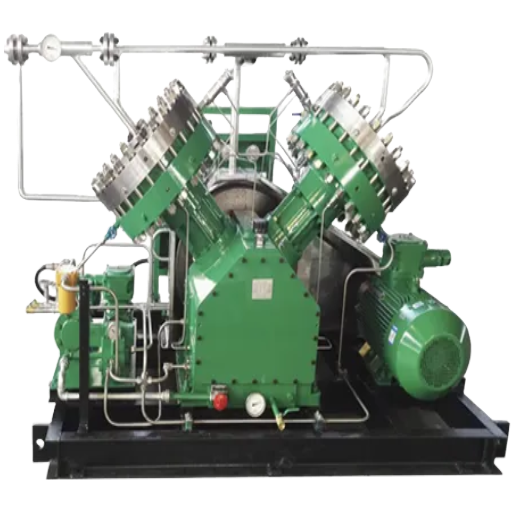
0.3–35
Pressure Range (MPa)
100–6,000
Flow (Nm³/h)
3–5
Compression Stages
~60%
Thermodynamic Efficiency
Why Hydrogen Compression Matters — Challenges Traditional Compressors Can’t Solve
Hydrogen compression is the choke point along the entire H value chain-from delivery to the end user; whether supplying a refinery’s hydro cracker at 15 MPa or providing electrolysis-based volumes to fuel cell cars at 700 bar. The compressor impacts system reliability, purity, operating cost. But traditional mechanical compressors-ylinder direct piston designs, diaphragm stacks, perimeter driven turbo-machines-encounter constraints that become more and more problematic as the industry advances.
Noise comes first. A standard reciprocating hydrogen compressor produces 85-95 dB One Meter, with concrete floor slabs, rubber vibration isolators and acoustic barriers forcing a 20-30% increase to capital costs. Oil contamination follows. Oil lubricated piston compressors will deposit hydrocarbon molecules into the gas flow, although even “oil free” classified mechanical units use polymer seals which shed particles. According to ISO 14687 of the Fuel Cell Corporation these will quicky poison platinum catalysts.
Add the maintenance burden. Moving parts-pistons, crankshafts, valves, crossheads- wear. Planned overhaul periods of 4,000-8,000 hours deliver scheduled breakdowns every 6-12 months in continuous service. Unwanted failures-those of valves or from piston ring wear-make up 3-8% of each year’s down time in field data from refinery hydrogen recycle loops.
Energy losses are the supposed hidden cost. A single-stage mechanical compression process consumes 40-45 % of the input electricity in the work of compression—the remaining goes into heat, vibrations, and friction—with the efficiency gap becoming over $80,000′-$150,000 in annual electricity costs at 2,000 Nm/hr @ 20 MPa industrial scale.
Electrochemical hydrogen compression eliminates each of these flaws. By removing the pistons and valves and replacing it with a proton exchange membrane, EHC removes all moving parts, compresses hydrogen to a level below 40 dB, delivers gas at 99.999 % purity without additional treatment, and achieves thermodynamic efficiencies approaching 60%. PanGeng produces mechanical ZW-series compressors for high-volume industrial duty and can support customer EHC installations where purity, noise, and volume are the driving concerns in selection.
Electrochemical Hydrogen Compression Applications — Refueling, Industrial, Green Energy
The worldwide existing installed hydrogen compressor fleet is increasing with 18% CAGR as the hydrogen economy progresses from niche industrial gas to common medium of energy. The electrochemical hydrogen compressor market was valued at c. US$ 270million in 2024 and is forecast to grow to US$ 1.25 billion by 2031 (IEA Global Hydrogen Review). The PanGeng Compressor Product Line is serving four main application segments with some specific technical requirements directing the compressor utilization:

Hydrogen Refueling Stations (HRS)
FCEV- OH2 delivered to 350 bar (buses, trucks) or 700bar (passenger vehicles) with Busemuk Kogar specifications of purity. One station with a capacity of 50-200 vehicles/day consumes 200-800 Nm3/h compression from internal electrolyzer or tube trailer pressure (2-30 MPa inlet) to cascade storage at 45-90 MPa. In 2024, 42% of the refurbished (newly built) refueling stations opted for electrochemical compression for this final boost stage, which was mainly driven by noise limits in urban environments coupled to non-existence of oil contamination threat. PanGeng ZW3.7/10-35 performances in high flow rates, with EHC stacks being favored to remove stations under 500 Nm3/h with respect to size and purity.
Industrial Hydrogen (Refinery & Chemical)
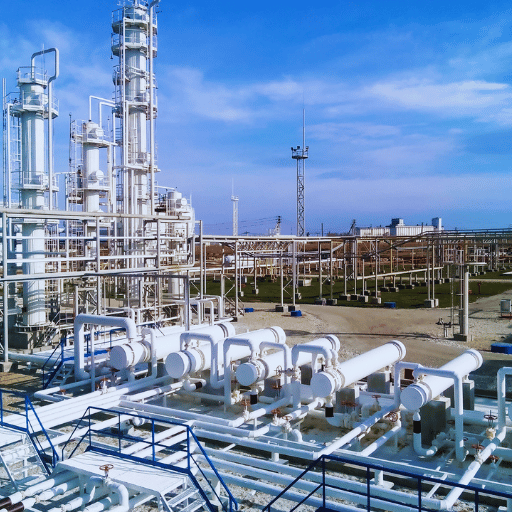
Petroleum refineries use up to 33% of world hydrogen for hydrocracking, hydrotreating and desulfurization. Recycle hydrogen in these refineries are supplied by compressor, which consumes 3,000-6,000 Nm/h in a continuous duty condition with 99.5%+ availability. ZW-6/30-130-14 recycle compressor is a 3 stage compressor, specifically designed for this type of service-3 stages from 3.0 MPa suction to 14 MPa discharge. The process gas contains 15% methane and light hydrocarbons. Other applications include chemical plants where large volumes of hydrogen are used as feed stock for the productions of ammonia, methanol or hydrogen peroxide etc.
Green Hydrogen Storage
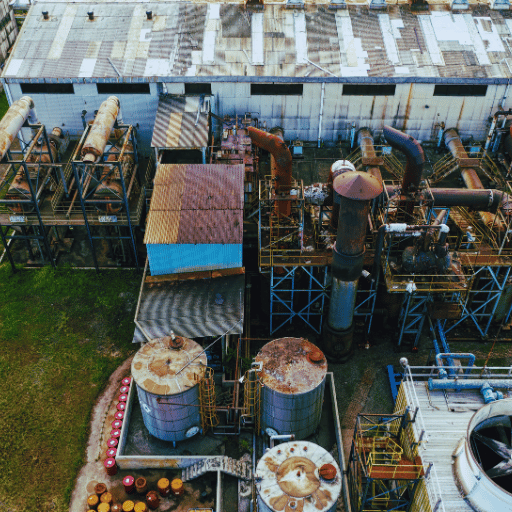
Electrolyzer is the resource producing hydrogen at 0.1-3.0 MPa pressure as a function of technology (alkaline, PEM or solid oxide). As storage for future use or for road transport, compression must take the output to 20-50 MPa for tube trailers; and 20-35 MPa for buffer tanks at stationary plants. Variable inlet pressure-Electrolyzer output fluctuations present a challenge, and PanGeng multi-stage ZW-series compressors are capable of handling turn-down ratios 50-100% flow without surge or stability issues. As such, they are compatible with solar and wind electrolyzers for hydrogen production.
Power-to-Gas Grid Injection
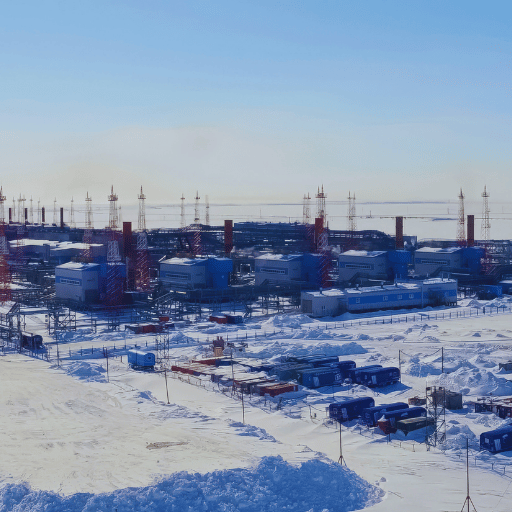
Compression at 2-8 vol % blends of hydrogen in natural gas pipelines to balance pipeline operating pressure(typically 4-7 MPa g) with highly accurate flow control is another potential use of compression equipment. More suitable are relatively small modular packages for hydrogen blending where they can be coupled with multiple distributed electrolysis sites. PanGeng sell skid mounted ZW units with inbuilt controls for operation alone for unattended P2G plants.
How Electrochemical Hydrogen Compression Works — PEM Technology Explained
An electrochemical hydrogen compressor (EHC) uses the same proton exchange membrane (PEM) means employed by fuel cells—just in reverse. Whereas fuel cells make power from the electrochemical reaction of hydrogen and oxygen, applying voltage to an EHC initiates the same electrochemical reaction to move hydrogen from the low-pressure anode side of the cell to the high-pressure cathode with pure solidf polymer electrolyte—no mechanical movement, no lubrication, no gas contamination—and single-stage, isothermal compression. EHC stacks supported by DOE funded testing programs have run for more than 22,000 hours of continuous service, and by 2024—42percent of newly commissioned hydrogen refueling stations had chosen electrochemical compression over mechanically based options.
Technical Deep-Dive: EHC Operating Principle
Anode side:
hydrogen gas (H) comes in touch with platinum-group catalyst layer. One molecule split in two protons (H) and two electrons (e). Electrons travel through the external circuit while protons migrate into the PEM membrane.
Membrane:
A semi-permeable, Nafion-type solid polymer electrolyte (50-180 m thick) allows only protons through it, preventing gas crossover from the anode side to the cathode side and vice-versa. The membrane also allows the conductance of protons. Its Proton Conductance varies with its degree of hydration, temperature (60-80 C optimal), and urrent density (usually 0.5-2.0 A/cm).
On the cathode side the H ions recombine with the electrons to form H at high pressure and as only protons cross the membrane contaminants such as N, CO, CO and HO are rejected at the anode. Output purity reaches 99.999% without downstream processing.
Typical parameters:
cell voltage of 50-200 mV per stage (at all well below electrolysis water voltage of 1.23 Volts); compression ratio of 10:1-50:1 (per cell, which depends on membrane thickness and current density); multi-cell stacks provide discharge pressure up to 90 MPa, in a lab setting (DOE Hydrogen Program); energy consumption averages 3 kWh per Kg:H 2 compressed at moderate ratios.
Honest limitation:
above 100:1 compression or flow rates above about 500 Nm/h, EHC efficiencies reduce because of back-diffusion losses and heating of the membrane due to its resistance. For extremely high pressure, high throughput refinery recycle applications at 4,000+ Nm h and 30 MPa, multi-stage mechanical compressors presently offer superior economics. Engineers at PanGeng find the crossover point for each customer’s duty cycle.
Timing of the move from demonstration lab to commercial is speeding up. Membrane life has increased 3 fold over 2018 and catalyst loading has gone from 2.0 Mg/cm in first generation stacks to less than 0.5 Mg/cm in current generation stacks, greatly reducing capital cost / flow. For the resolution buyer dealing with compression technology, the question is no longer “does EHC work?” but “where does EHC bring the best TCO for my design pressure, flow and purity.”
PanGeng Hydrogen Compressor Series — Models & Specifications
PanGeng’s ZW-series are capable of handling the entire range of industrial hydrogen compression duty-from small-volume laboratory feed at 100 Nm³/h to refinery scale recycle service at 6,000 Nm³/h. All units are supplied with water-cooled intercoolers, electric-motor drive, and 3-5 stage compression matched to your inlet and discharge conditions. The following represent representative models from our present database. configuration can be altered for higher or lower than standard pressures, ATEX zone designation, or for gas composition (free of contamination) of any mixture containing up to 15% methane or nitrogen.
ZW-0.3/150-25
High-Pressure Hydrogen Compressor
- Flow: 300 Nm³/h
- Suction: 1.5 MPa
- Discharge: 25 MPa
- Stages: 4
- Cooling: Water-cooled
- Drive: Electric motor
ZW-1/10-20
New Hydrogen Compressor
- Flow: 1,000 Nm³/h
- Suction: 1.0 MPa
- Discharge: 20 MPa
- Stages: 4
- Cooling: Water-cooled
- Drive: Electric motor
ZW-3.7/10-35
High-Pressure Hydrogen Compressor
- Flow: 3,700 Nm³/h
- Suction: 1.0 MPa
- Discharge: 35 MPa
- Stages: 5
- Cooling: Water-cooled
- Drive: Electric motor
ZW-6/30-130-14
Recycle Hydrogen Compressor
- Flow: 6,000 Nm³/h
- Suction: 3.0 MPa
- Discharge: 14 MPa
- Stages: 3
- Cooling: Water-cooled
- Drive: Electric motor
ZW-0.1/0.3-5
New Hydrogen Compressor
- Flow: 100 Nm³/h
- Suction: 0.3 MPa
- Discharge: 5 MPa
- Stages: 3
- Cooling: Water-cooled
- Drive: Electric motor
ZW-2.5/15-25
High-Pressure Hydrogen Compressor
- Flow: 2,500 Nm³/h
- Suction: 1.5 MPa
- Discharge: 25 MPa
- Stages: 4
- Cooling: Water-cooled
- Drive: Electric motor
| Model | Flow (Nm³/h) | Suction (MPa) | Discharge (MPa) | Stages | Application |
|---|---|---|---|---|---|
| ZW-0.1/0.3-5 | 100 | 0.3 | 5 | 3 | Lab supply, small electrolysis |
| ZW-0.3/150-25 | 300 | 1.5 | 25 | 4 | Refueling station pre-compression |
| ZW-1/10-20 | 1,000 | 1.0 | 20 | 4 | Industrial hydrogen, chemical plant |
| ZW-2.5/15-25 | 2,500 | 1.5 | 25 | 4 | Refinery hydrogen makeup |
| ZW-3.7/10-35 | 3,700 | 1.0 | 35 | 5 | 700-bar FCEV refueling cascade |
| ZW-6/30-130-14 | 6,000 | 3.0 | 14 | 3 | Refinery recycle hydrogen loop |
| Application | Typical Flow | Target Pressure | Recommended Model(s) | Key Selection Factor |
|---|---|---|---|---|
| H₂ refueling station (350 bar) | 100–500 Nm³/h | 35 MPa | ZW-0.3/150-25 or EHC stack | Purity (ISO 14687), noise limit |
| H₂ refueling station (700 bar) | 300–1,000 Nm³/h | 35+ MPa | ZW-3.7/10-35 | Cascade fill rate, pressure ratio |
| Refinery hydrocracking recycle | 3,000–6,000 Nm³/h | 14–20 MPa | ZW-6/30-130-14 | Continuous duty, mixed gas tolerance |
| Green H₂ storage (electrolyzer output) | 100–1,000 Nm³/h | 5–20 MPa | ZW-0.1/0.3-5, ZW-1/10-20 | Variable inlet pressure, part-load efficiency |
| Chemical / ammonia synthesis | 1,000–3,000 Nm³/h | 20–25 MPa | ZW-2.5/15-25 | Reliability, maintenance interval |
| Power-to-gas injection | 500–2,000 Nm³/h | 5–8 MPa | ZW-0.1/0.3-5 (multi-unit) or custom | Grid-following load profile |
All of the above models can be specified with API 618 categorised pulsation dampers, hydrogen rated instrumentation (SIL 2) and ATEX/IECEx Zone 1 or Zone 2 housings. PanGeng’s engineering team can complete a P&ID review and compressor selection check on receipt of your process data sheet in 5 working days.
Electrochemical vs Mechanical Hydrogen Compression — Performance Comparison
Choosing an electrochemical hydrogen compressor over a reciprocating piston package, a diaphragm machine, or a centrifugal machine will take more than just ensuring the pressure and flow rates meet your criteria. The question really is about how much energy each uses per kilogram of hydrogen, how many hours of maintenance labor each consumes per year, the purity of the process gas each produces, how much noise each makes, and how small of a footprint-for installation, foundation, and vendors’-each requires. This decision matrix compares real-world data gathered from published case histories and from manufacturer data-sincere “apples to apples”so you can construct a solid business case.
| Metric | EHC (Electrochemical) | Reciprocating Piston | Diaphragm | Centrifugal |
|---|---|---|---|---|
| Energy Consumption | ~3 kWh/kg H₂ | 5–7 kWh/kg H₂ | 4–6 kWh/kg H₂ | 4–5 kWh/kg H₂ |
| Thermodynamic Efficiency | 55–65% | 40–45% | 45–55% | 50–60% |
| Noise Level (at 1 m) | < 40 dB | 85–95 dB | 75–85 dB | 80–90 dB |
| Output H₂ Purity | 99.999% (inherent) | 99.9–99.99% (with filters) | 99.999% (metal diaphragm seal) | 99.9% (seal leakage risk) |
| Oil-Free Guarantee | Yes — no lubricant in gas path | No (lubricated) or polymer seals (oil-free) | Yes — hermetic metal seal | No — bearing oil migration |
| Maintenance Interval | 20,000+ hrs (membrane check) | 4,000–8,000 hrs (valve/ring service) | 8,000–12,000 hrs (diaphragm replacement) | 12,000–16,000 hrs (bearing overhaul) |
| Max Compression Ratio (single stage) | 10:1–50:1 | 3:1–5:1 | 5:1–10:1 | 2:1–3:1 |
| Practical Flow Range | 1–500 Nm³/h | 100–10,000 Nm³/h | 10–3,000 Nm³/h | 5,000–50,000 Nm³/h |
| Footprint (per 100 Nm³/h) | 0.5–1.0 m² | 4–8 m² (incl. foundation) | 2–5 m² | 6–12 m² |
| Vibration | None | Significant (requires isolation pads) | Moderate | Low (balanced rotation) |
Total Cost of Ownership Advantage
15–20% Lower Installation Cost
EHC systems remove concrete foundations (zero vibrations), piping complexity (fewer stages, no pulsation dampers), and oil-handling equipment. A 200 Nm³/h refueling station EHC installed in 2024 showed $42,000 lower total installation cost versus a comparable reciprocating system, plus annual savings on valve and ring replacements. At 8,000 hours/year, TCO crossover favored EHC at 30 months for systems under 500 Nm³/h.
Quality Assurance in H2 Compression Systems
Hydrogen compressor purchase shall be accompanied by documentation demonstrating conformance to globally recognized standards for pressure equipment, quality management, and hydrogen purity. PanGeng has a certified quality management system that overs design, production, function test and customer support for all ZW-series hydrogen compressors. Each unit is subjected to a full factory acceptance test (FAT) that include hydrostatic pressure at 1.5xingest and performance testing at rated operation conditions. Certified copies of the questionnaires are sent to uscour auditors for yearly certification renewal; all necessary conformance documentation is included with each order.
Industry Leadership
PanGeng actively participates in ISO/TC 197 (Hydrogen Technologies) to develop global standards for safety and performance testing for hydrogen compression equipment. All of our compressor designs conform to API 618 recommendations for pulsa-tion analysis, rod load analysis and valve selection-the same standard being adopted by EPC owners and national oil companies globally.
ISO 9001:2015
Quality Management SystemCE Marking
EU Pressure Equipment DirectiveAPI 618
Reciprocating Compressor StandardISO/TC 197
Hydrogen Technologies CommitteeISO 14687:2019
Hydrogen Fuel Purity SpecificationElectrochemical Compression Procurement Guide — Pricing, Lead Time & Support
Hydrogen compressor cost will be a function of many technical and commercial factors, which differ from project to project: up to an order of magnitude difference in cost can be seen between a 100 Nm/h ‘test lab’ unit and a 6000 Nm/h refinery recycle unit. Custom engineered compressor packages for unusual gas compositions or Ex rated areas, price so much further. Rather than publish deceiving ‘starting at’ prices, PanGeng quotes based on your individual application within 48 hours of receipt of process details, covering compressor, ancillaries, spares, installation etc.
Buyer Advisory — What Drives Electrochemical Compression Price
Capacity (Nm/hr)
Increasing flow rate (Nm/hr) will mean that the respective cylinder will have to be bigger, the machine frame heavier and the motor more powerful. The relationship is not direct a unit 3,000 Nm/hr not costs must more than 2.2 a unit 1,000Nm/hr.
Discharge pressure ( MPa)
The higher the pressure, the more compression stages, the thicker the cylinder walls and the better the valve material choice. Moving from 20 MPa to 35 MPa often adds 30-45% to the base compressor cost.
Number of stages (3-5 stages)
Increasing number of stages improves efficiency but costs more in capital. PanGeng design engineers consider the number of stages versus operating cost for an economically optimum design for your duty cycle.
Construction materials
Clean dry hydrogen service; 15-25% more for wet or sour service (304/316 stainless or Monel).
Hazardous area classification
ATEX Zone 1 or IECEx category shall call upon explosion-proof motors, certified instrumentation, and special wiring practices. Budget for 20-35% more costs against non classified installations.
EHC stack versus mechanical
Electrochemical compressor stacks is higher per unit capital but lower installation & maintenance cost. Your TCO comparison will be played by operating hours & price of electricity!
Electrochemical Compression Lead Time
Standard ZW-series assemblies using typical pressure ratings can be delivered 8-16 weeks after order confirmation (PO) and deposit. Custom-designed systems including atypical pressure ratios, special metallurgy, ATEX rated packages, or engineering design and control systems specific to a project may take 12-24 weeks to deliver. PanGeng averages a strategic inventory of long-lead castings and forgings to reduce delivery delays due to supply chain. For timely deployment of refueling stations, vessel fabrication utilizing fast-track manufacturing can be accommodated at a schedule surcharge.
Commercial Terms for Electrochemical Compression
MOQ
1 unit (no minimum order quantity for standard models)
Payment
30% in advance, 60% before shipment, 10% after commissioning(negotiable for repeat customer)
Warranty
18 months from deliver, 12 months from commissioning at the latest
Spare parts
2-year recommended spare parts package included in quotation; 5-year and lifetime packages available
Shipping
FOB Anhui factory or to port/site (DDP, DAP, and CIF options available)
After Sales
Tele-maintenance services, on-site field service engineers for commissioning and annual inspection, 48 hrs spare parts delivery.
PanGeng’s after sales team can oversee installation of technology in Asia, Middle-East, Europe and South America and work with local language speakers – fluent in Mandarin, English and Arabic. Project engineer is assigned for the duration of the project, available to answer all your technical and drawing questions directly, and keep you updated with schedule progress.
Interactive EHC Engineering Tools
EHC vs. Mechanical Compressor — Total Cost of Ownership Calculator
Compare the 5-year (or longer) total cost of ownership between electrochemical hydrogen compression and traditional reciprocating mechanical compression. All calculations use published industry benchmarks.
Access CalculatorZW-Series Model Comparison Tool
Select 2 or 3 electrochemical hydrogen compressor models to compare specifications side by side.
Compare ModelsElectrochemical Hydrogen Compressor FAQs
PanGeng ZW-series discharge pressure spans 0.3–35 MPa (44–5,076 psi), covering everything from low-pressure chemical process loops to 700 bar hydrogen refueling stations.
Energy consumption for EHC is typically 3 kWh/kg H2, resulting in a thermodynamic efficiency of up to 60%. For comparison mechanical reciprocating compressors range from 40-45%, or 5-7 kWh/kg H2, at this level of energy consumption. Multi-stage reciprocating compressor systems achieve these efficiencies with a 100:1 pressure step ratio. As such the efficiency drops at this max compression ratio.
Cost of hydrogen compressor will depend on maximum feed discharge rate (Nm/hr), ultimate pressure (MPa), number of compression tiers, choice of materials-of-construction, and engineering modifications for customer application. Quotation can be provided by PanGeng within 48 hours after receiving your process parameters. Capital investment for compressor may typically reach up to 15-20%, contributed mostly from installation costs due to reduced infrastructure and auxiliary equipment needs eliminated.
ISO 9001:2015 quality management, CE marking, API 618 compliance where applicable, and ASME/PED pressure vessel certification. Hydrogen output meets ISO 14687:2019 fuel cell purity thresholds.
ZW-series mechanical components carry a 30-year design life, with scheduled maintenance every 4,000–8,000 operating hours depending on application severity. DOE-funded testing has validated EHC cell stacks exceeding 22,000 hours of continuous operation. Membrane replacement intervals depend on feed gas impurity levels — clean hydrogen feeds extend membrane life beyond 8,000 hours, while higher-impurity streams may require earlier replacement and more frequent catalyst inspection.
Yes, with provisos. EHC membranes inherently reject non-proton species — N₂, CO₂, and most contaminants stay on the anode side. However, CO and H₂S above 10 ppm can poison platinum-group catalysts and accelerate membrane degradation. Feed gas analysis during the proposal phase determines whether pre-treatment is needed before compression.
Standard ZW-series configurations ship 8–16 weeks after receipt of order. Custom systems with non-standard pressure ratios, specialized materials, or ATEX-rated enclosures ship 12–24 weeks. PanGeng keeps safety stock of commonly required wear parts and can often expedite manufacture of a refueling station under rush conditions.
Electrochemical vs Mechanical Hydrogen Compression
Electrochemical and mechanical compression should be compared against the same project inputs: hydrogen source condition, required discharge pressure, flow, purity, duty cycle, installation limits, and service expectations. This page describes electrochemical hydrogen compression applications; use the existing electrochemical-versus-mechanical comparison alongside the hydrogen compressor selection guide before choosing a technology.
Electrochemical Hydrogen Compressor FAQs
What should be compared before selecting electrochemical compression?
Compare the required pressure, flow, hydrogen condition, duty cycle, installation constraints, and maintenance expectations with the available technology options.
Trending now
![Low Pressure Hydrogen Compressor Applications [Guide]](https://pgcompress.com/wp-content/uploads/2026/09/low-pressure-hydrogen-compressor-applications-blog-featured-150x150.png)