Get in Touch with Pangeng

Axial Air Compressor — Custom Industrial Compressor Solutions | Pangeng
Custom-designed axial air compressors for air separation, blast furnace, and process gases–designed to fit your pressure, flow, and gas mixture specifications exactly.
Flow Rate
Up to 500,000+ m³/h
Pressure Ratio
1.15–1.6 per stage
Polytropic Efficiency
90–95%
Applications
Air separation, blast furnace, FCC
Design Life
20 years (API 617)
Customization
Fully tailored to process
Industrial Air Compression Challenges — How Axial Technology Solves Them
From steel mills to cryogenic air separation plants, petrochemical refineries to chemical manufacturing, the challenge of moving tons of air or process gas at a uniform pressure at minimum cost has haunted large industrial facilities for years. Centrifugal compressor ranges allow moderate quantity throughput but sacrifice efficiency at high flow rates. Reciprocating gas machines vent large amounts of unproductive power with unstable pressure delivery.
Beyond energy waste, machine failures on central air compressors extending 8,000 hours per annum or more can halt factory-wide production. Downtime more than halts process flow, just a 12-hour outage of a blast furnace oxygen supply may cause refractory damage to the unit interior. Repair costs for such damage develop into a multi hundred thousand dollar bill.
///
Advanced
Advanced
Compressor
Solutions
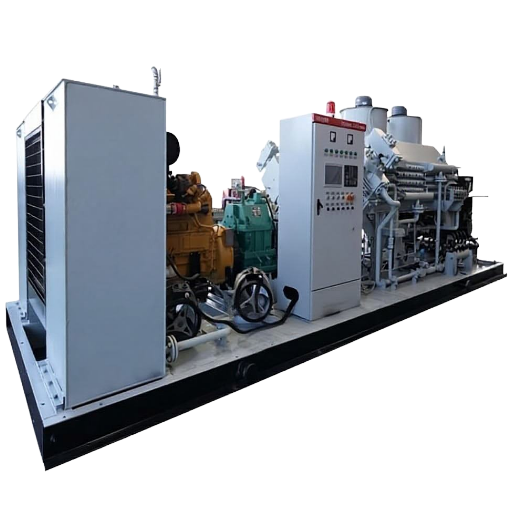
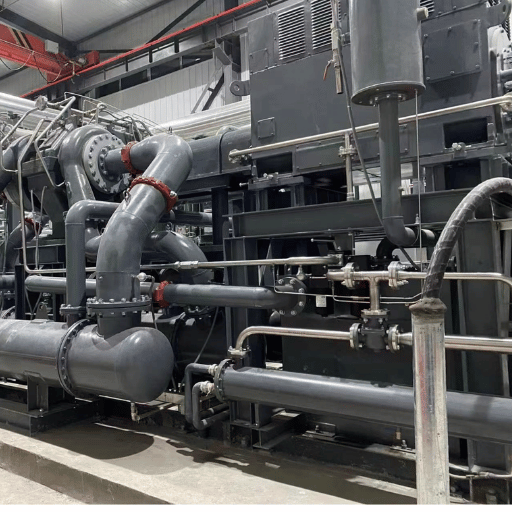
An axial compressor-uniquely, a machine that moves a working fluid lean-to the impeller-uses a linear flow path built-up of rotor and stator blades to add small pressure ratios prior to converting velocity to static pressure. Mean value velocities in the impeller are 55-125 m/sec, duct velocities are 20-46 m/sec, and a typical axial compressor has a compression stage pressure ratio between 1.15 to 1.6 with over 95% polytropic efficiencies due to optimized blade design that creates stable flow. As a result, axial machines can expel 100+ lbs/sec of air at efficiencies of tremendous magnitudewith no other solution feasible to achieve this result.
For commercial plant operators analyzing compressors capable of delivering beyond 50,000 m/h, axial compressor solutions are the only solution capable of providing near-standalone efficiency with abundant throughput. Pangeng custom-engineers each rotational machine train across site-specific inlet thermodynamic parameters and turbine/gas mixture specifications to maximize throughput and efficiency uniquely: because for every efficiency percentage point of improvement, the processing plant benefits with annual electricity costs that often reach 600-900 thousand dollars.
Aerodynamic principles proven on gas turbines and turbo-fan jets are translated directly into their respective compressor sections into high volumen axial units. Impellers are designed through computer-aided CFD software to refine blade shape realization and aerodynamic feedback, then validated on Angmash and Aermadmash test beds to ensure field performance.
Pangeng Axial Compressor Series — Models and Selection Guide
In the four key industry segments Pangeng specializes in, application engineering allows for a truly custom solution capable of minimizing energy costs. Gas property details, site conditions, throughput demands, and process compositions define the field of our design space, so that each rotor stator combination pairing is optimized.
Air Separation Plant Compressors
For oxygen and nitrogen air separation plants, volumetric flows into the hundreds of thousands of m³/h are common.
Pangeng axial compressors (with 10-15 stages) deliver rapid turndowns between load swings and flow rates up to 500,000 m³/h at as high as 95% efficiency and over 250,000 USD/year savings.
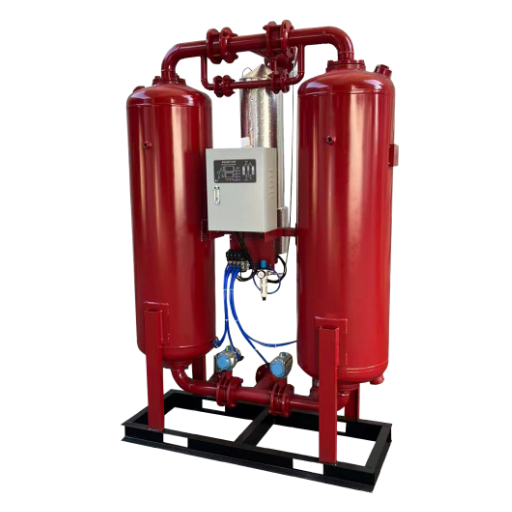
Blast Furnace Air Compressors
A single, dry, high flow rate, stabile discharge pressure air supply is needed for a steelmaking blast furnace – interruption risks liner thermal shock.
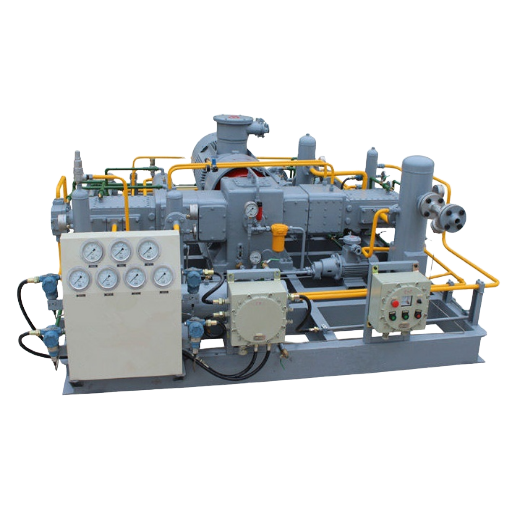
Pangeng axial machines for blast furnace service are specified for 8,400+ hours/year of high speed continuous operation, with critical exhaust bearing/shaft vibration, multistage operating pressures, and chosen blade metal alloys, balancing longterm fatigue with high sustained loads in the hostile blast furnace environment. Double contingency fluid flow lubrication and seal oil systems match a blast furnace campaign life.
FCC and Process Gas Compressors
Petroleum refinery fluid catalytic cracking (FCC) units use axial compressors for regeneration air and scrubber wet-gas duty.
This requires dealing with variable molecular weights, potential process fouling, and stringent API compliance. Pangeng FCC axial compressor machines incorporate anti-surge designs, cleanable blade profiles, and materials rated for the corrosive crucible of FCC gas streams. All installations leave the factory with a complete API 617 data package.

Custom Engineered Solutions
Pangeng has developed axial and hybrid compressor packages for other specialty uses beyond standard furnace duty.
Hydrogen compressor trains for refinery hydrotreaters, biogas compressor stations for biomass-to-ethanol plants, and nitrogen injection packages to boost oil recovery. These projects often require special shaft seal configurations (dry gas seals for hydrogen duty), exotic ducting, and customized control logic and field instrumentation.
Decision Matrix — Application Selection Guide
| Application | Flow Range | Pressure Range | Key Feature |
|---|---|---|---|
| Air Separation | 100,000–500,000+ m³/h | 5–7 bar(a) | Adjustable stator vanes for turndown |
| Blast Furnace | 80,000–350,000 m³/h | 4–6 bar(a) | Continuous duty, vibration-rated |
| FCC / Process Gas | 50,000–200,000 m³/h | 3–5 bar(a) | Anti-surge, washable blades |
| Custom Engineered | Project-specific | Project-specific | Special materials, dry gas seals |
Need help selecting the right configuration?
Talk to an engineer →Axial vs Centrifugal Compressors — Performance Comparison
Choosing an axial or centrifugal compressor is a matter of operating point position on the ideal flow-pressure outline. Axial technology is king at high flow/high load, passive pressure ratio compressors. Centrifugal technology is king at high pressure ratio/low volume flows. You see why this is: reading the performance numbers shows why throughputs are comfortably high with axial designs, and why operators enjoy more than 20 year life in their large volume industrial machinery.
What makes a viable axial compressor comes down to how we convert velocity into pressure. One practical approach is to look at each stage through flow machines. An axial compressor has a series of stages where the high energy gas turns into velocity. This is the point where the rotor blades and stator vanes run. Rotor blades flow with the gas. Their effect is inevitable high velocity streams. Turn them into pressure with stator vanes. Repeat, 15 times, in the context of a giant axial compressor.
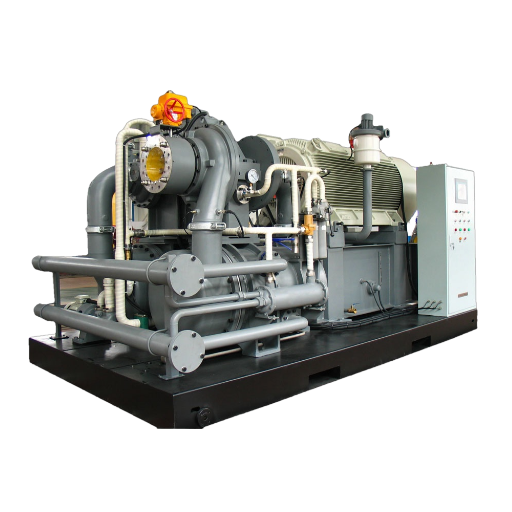
| Parameter | Axial Compressor | Centrifugal Compressor |
|---|---|---|
| Polytropic Efficiency | 90–95% | 80–87% |
| Mass Flow Rate | >100 kg/s | <15 kg/s |
| Pressure Ratio per Stage | 1.15–1.6 | 5–7 |
| Stages for High Ratio | 10–15 | 2–4 |
| Physical Size | Smaller/lighter at equivalent flow | Larger footprint at equivalent flow |
| Operating Speed | 3,000–10,000 RPM (higher) | 1,500–6,000 RPM (lower) |
| Best Application | Large-volume, moderate pressure | High-pressure, lower volume |
Total Cost of Ownership Analysis
For any compressor running in excess of 8,000 hrs a year, energy use makes up 70-80% of the lifetime cost of ownership. Even for a multi-million dollar axial compressor, the purchase price makes up less than 15% of overall lifetime costs. Therefore, it is the efficiency difference between the axial and the centrifugal that has the largest influence on the economic ROI. At a flow rate of 200,000 m³/h, a 5-10% efficiency difference from the axial model often saves $300,000-$700,000 in electricity costs annually. This payback on the upfront capital cost is normally realized within 12-24 months.
70–80%
Of Lifetime Costs = Energy
At this proportion, even a 3% efficiency gain translates into significant annual savings. Axial compressors typically deliver 5–10 percentage points higher polytropic efficiency than centrifugal types at equivalent flow rates.
Industry benchmarks, ASME PTC 10 testing protocols
Customer Results — Energy Savings in Air Separation Applications
The air separation end of the business best illustrates the economics of the axial compressor as the principal air compressor (PAC) uses more than the entire plant energy budget. Industry standards show that compression represents between 70-80% of the total energy used by the overall cryogenic air separation plant. Over 3,000T/D oxygen production onwards the MAC is normally the biggest electrical load on site.
Air Separation Plant Performance Benchmarks
~30%
Share in Annual Operating Cost Savings
Contemporary axial air compressors in oxygen generating air separation plants. Typical specific powers in 0.35-0.50 kWh/Nm³ O, while on old centrifugal only plants with the same capacity, 0.55-0.65 kWh/Nm³ O.
Such advantage of the new axial about 30% share in annual operating cost savings. Based on the example of a 4000 tonne/day O plant, electricity cost savings from conversion from an out of date centrifugal MAC to a modern axial compressor could be $500,000 -$1,200,000, area. Typical pay back efficiency from such conversions, based on published turbomachinery case data appear in the range of 12-24 months.
Blast Furnace Air Supply — Reliability Under Continuous Demand
99.2+%
Achievable System Availability
Blast furnace applications for the steel industry tell a different story: if the furnace runs, then “uptime” and “pressure stability” are just as important as the efficiency of the process.
The blast furnace air compressor is running for the duration of the furnace campaign–approximately 15-20 years between major relines. A blower trip or other sudden loss of the air supply (“the blast”) can cause the charge to solidify, incurring damage that can take several weeks, and cost millions of dollars to repair. Pangeng axial compressors for blast furnace service are built with this stringent reliability requirement in mind: redundant bearing protection circuits, online probe vibration monitoring for load limit trimming, and rotor blades fabricated from fatigue-optimized stainless steels. Our performance experience with steel mill blast furnace compressors in service worldwide suggest that with proper maintenance, 99.2+ percent availability is achievable.
Certifications and Compliance Standards
In compressor purchase, certifications are not mere decoration – they specify the machines engineering and test regimes, and file requirements. For petrochemical, steel industry or air separation users, you get it wrong, and you are eliminated from the bid, and commission is held back or you face liability exposure. Pangeng builds to the following worldwide standards, with complete documentation filepackages according to each buyer’s compressor performance and compliance needs:
API 617
Axial & Centrifugal CompressorsISO 9001
Quality ManagementCE
European ConformityASME
Pressure Vessel CodeAPI 672
Packaged Air CompressorsExecution & Auditing Standards
API 617 is the applicable standards for axial and centrifugal compressors in Petroleum, chemicals and gas industries services. It defines the compressor requirements of design, material, testing and data sheet documentation requirement. Pangeng engineering and manufacturing office based on the latest 8th edition of API 617 requirements, including machine mechanical running tests, machine performance testing according to ASME PTC 10 standard and complete string test if specified. ISO 9001 certification addresses the company-wide quality management system from design review to final inspection, test and shipment.
Acquire rigorous documentation details for your procurement file.
Download full compliance documentationAxial Air Compressor FAQ
Comprehensive answers to the most common engineering and procurement questions regarding our custom industrial axial compressor solutions.
An axial compressor raises the pressure of the gas by passing it through any number of stages of fixed and moving blades located along a long axis that runs through the centre of the machine. The incoming air enters individual rotor blades, which impart an initial small increase in velocity from the blades’ leading edges. This high-velocity flow then passes into and exits from larger stator blades, which decelerate it, accelerating the rotation of the gases, but more importantly, increasing pressure. From stage to stage, the pressure ratio adds up to create the desired discharge pressure while maintaining high efficiency—this aerodynamic principle is identical to that of jet engine and gas turbine compression sections.
Axial compressors are compared to centrifugal types: they deliver considerably improved polytropic efficiencies (90-95%, up to 10% points better than, say, 80-87%) over much larger flows (more than 100 Kg/sec against less than 15 Kg/sec) in a much smaller diameter package for equivalent flow. The efficiency effect has been found to dominate capital & operational economics, because energy constitutes 70-80% of lifetime compressor costs. Centrifugal compressors are equipped to suit high-pressure ratio, lowthroughput applications.
Typical applications are in air separation plants, where they supply the main air feed for Oxygen and Nitrogen production, in blast furnaces for steelmaking, in fluid catalytic cracking units at refineries, in LNG baseload compressor trains and in general process-gas handling. All processes with flows at constant throughput exceeding 50,000 m/h at modest pressure ratios are relevant to axial technology.
Initial selection involves four factors: flow rate required (m/h or Kg/sec, inlet conditions), pressure ratio demanded, input composition (molecular weight & corrosives) & inlet temperature. Then three “factors” are considered: turndown (range of flow control required), available driver (electric motor or steam turbine), site altitude & climate & likely certifi cation standards. Designer engineers at Pangeng use a proprietary software tool to design components from the fluid-dynamic standpoint on this input.
Major standards for axial compressor equipment are API 617 (8 13 th edition, for use in the hydrocarbon, chemical & gas industries), ISO 9001 (certification that the manufacturer has a documented quality management system), CE (for European Economic Area installation), ASME (Pressure Vessel Code for compressor casings) & so on. Appropriate standards depend on endmarket & end-client requirements &location.
Lead time is a function of the level of detail of the machine, specification of the material, and testing program. Schedule drivers include rotor forging delivery, blade manufacture, casing manufacture, and factory testing scope. (performance testing for mechanical running test, ASME PTC 10, PTC 36, optional string test) Early OEM system engineering and long lead time forgings ordering can significantly cut down total schedule. We supply detail schedule in a proposal stage, and weekly updates after order.
The cost of the energy used by an axial compressor can, over a 20-year life to an estimated $300,000-$700,000 (design life), account for 70-80% of the total cost of ownership, with the purchase price being less than 15% of the total. The consequence of this is that a compressor operating at 92%, rather than 85% polytropic efficiency, will save around 8% of the energy it uses annually. This would typically amount to ~ $300,000-$700,000 per year for a large air separation or blast furnace compressor, depending upon volume flow rate and power costs. This is where the efficiency becomes the most significant economic factor in compressor choice.
Trending now
![Low Pressure Hydrogen Compressor Applications [Guide]](https://pgcompress.com/wp-content/uploads/2026/09/low-pressure-hydrogen-compressor-applications-blog-featured-150x150.png)