Get in Touch with Pangeng

What is a Nitrogen Booster Compressor and How Does It Work?

Contents
show
Nitrogen booster compressor stands as an imperative towards reaching high pressure nitrogen in many substantive applications. This is an advanced system used to boost the pressure of nitrogen gas effectively, which is required in the absorbers mainly in the filling vegetation in industries like Oil and Gas, manufacturing as well as hospitals. The use of these compressors however could be improved by the understanding of how they work, and the main components of the compressors. That is both the operational considerations, and especially the equipment considerations. In the following lines, we shall endeavor to look at the origins and operational principles of the nitrogen booster compressor, its functioning, and where this particular device fits in its corresponding industry.
Understanding the Basics of Nitrogen Booster Compressors
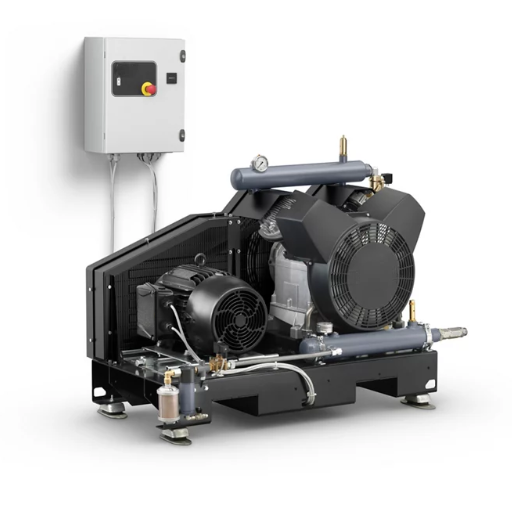
Specialized compressors that increase the pressure of nitrogen gas for various industrial needs are known as nitrogen booster compressors. Nitrogen developers work on the principle of taking nitrogen from a low-pressured inlet and then compressing it to a high-pressured outlet via a complex inert, gas cycle. In addition, these compressors are widely used in industries requiring nitrogen at high pressures, such as oil and gas, chemical processes, and manufacturing. Such factors include the ability to control the output pressure with a high degree of accuracy, withstand the environment during operations and accuracy of their dimensions, and relocation within the nitrogen supply systems unaltered. In general, industries that adopt such technologies can expect their operations to run efficiently alee from these controls.
Definition of a Nitrogen Booster Compressor
Nitrogen booster compressors are a type of compressor that raises the nitrogen gas pressure to the one specified for the intended industrial or operation application. Nitrogen to be compressed is sourced from a low pressure primary back up whether it is a nitrogen generator or a storage tank, and is compressed to the pressure level that satisfies the requirements of its use. Such compressors are usually very reliable, powered by more advanced compressing systems providing extensive pressure amplification facilities, and reducing all chances of impurities.
These days, modern nitrogen compressor advantage has been enhanced with features like automated rotary control, pressure management on line as well as roles in operations such as high precision directions. Nitrogen booster compressors are very effective for such demanding operations as laser metal cutting, pressure tests in pipes, high pressure processing, and nitrogen transport in filled gas vessels among other such applications because they provide the highest nitrogen pressures.
Components of Booster Compressor Systems
| Component | Description |
|---|---|
| Compression Chamber | The core unit that compresses nitrogen gas. |
| Piston System | Drives the gas compression process through reciprocating motion. |
| Heat Exchanger | Cools the compressed gas to prevent overheating. |
| Valves | Regulate gas flow into and out of the compressor. |
| Control Panel | Provides automated control for efficient system operation. |
| Pressure Sensors | Monitors and displays real-time gas pressure levels. |
| Lubrication System | Ensures smooth piston and component performance. |
| Safety Relief Valve | Prevents over-pressurization by releasing excess gas. |
| Filters | Removes contaminants to maintain output gas purity. |
| Gas Storage Tank | Temporarily stores compressed gas for stable output. |
Types of Nitrogen Compressors
| Type | Description | Key Features | Applications |
|---|---|---|---|
| Reciprocating | Uses pistons for compression. | High pressure, low flow rates. | Industrial gas generation. |
| Rotary Screw | Rotating screws compress gas. | Continuous flow, low maintenance. | Manufacturing, pharmaceuticals. |
| Centrifugal | Uses high-speed impellers to compress gas. | High capacity, efficient operation. | Oil and gas, chemical industries. |
| Diaphragm | Flexible diaphragm for compression. | Oil-free, high purity. | Laboratories, semiconductor industry. |
| Scroll | Orbiting scroll plates for compression. | Compact design, quiet operation. | Food packaging, medical use. |
| Oil-Free | No oil in compression chamber. | Contaminant-free gas output. | Electronics, food and beverage. |
| Booster | Boosts existing compressed gas pressure. | Secondary stage, customized pressure. | High-pressure applications. |
Working Principle of Nitrogen Booster Compressors
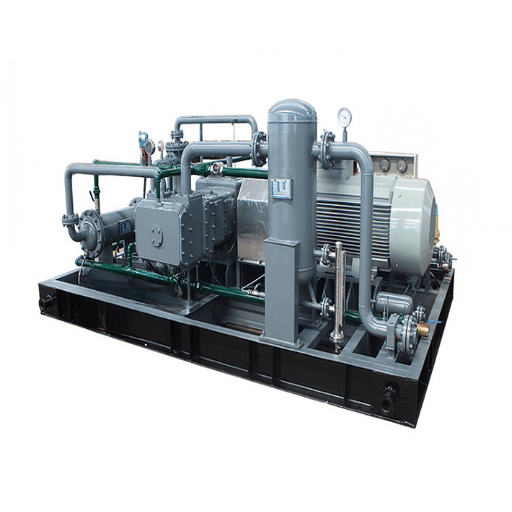
A nitrogen oxidation compressor works by permitting nitrogen gas at a mid-pressure to enter and ascend to a higher pressure, which is the necessary and described pressure needed for the application. This function occurs in the second stage of the compression where the gas is inserted into the boost chamber for elevation in pressure. By the use of pistons or membranes, the gas is directly compressed and then its temperature is increased in addition to its pressure. The layout makes it difficult for foreign particles to infiltrate the gas and outputs the pressure calculated correctly, which is why such compressors are known to be very reliable to accomplish the service of high pressure nitrogen in such sectors like electronics, aircrafts, manufacturing industries and so on.
How a Booster Compressor Works
To carry out industrial processes that are high-pressure oriented, the usage of a booster compressor is justified. The industrial uses of a booster compressor, is to strongly compress a weakly precompressed gas. A booster compressor is used when both the high and low pressure sides of a system require a booster to maintain the operational pressure and temperature of the expected levels. All involved operations with the gas start with the procedures of receiving gas, hence an intake system. At this point, the low-pressure gas is taken in through the compressor. Through the process of multi-stage compression, the gas placed in the chamber is lifted by up and down movements of pistons, or turned in rotary screw type compressors, where gas is pushed into appropriate pressure levels.
The booster compressor is designed with advanced real-time monitoring and control mechanisms to manage pressure, temperature, unit functions, and other operational parameters to secure the best possible operational efficiency together with total safety protection. The construction highlights the use of high-quality material and advanced sealing technology to be able to accommodate high pressure and at the same time prevent leakages that would be detrimental to the system. In particular, many applications use these systems: for example, production of PET bottles, laser processing, gas injection, which shows that they have good efficiency and reliability in harsh industrial conditions.
The Role of Piston Mechanisms in Compression
In contemporary compression setups, the pistons form a crucial element at work, guaranteeing the swift, and excellent execution of related activities. It is the action of these devices to change one kind of movement, linear movement, to another type of movement, which is a compressing force that thrusts gas or air into a smaller area. As it moves within a cylinder, the piston changes the pressure in compression which is an essential requirement for the necessary degree of pressure. For high compression and pressure conditions, pistons are constructed with the using of advanced materials like very strong alloys in order to prevent them from wearing or warping.
With new piston developments, the performance of the system has also been improved. For example, one can now employ the use of engineering technology to work with smaller gaps between materials which results in less energy being lost as a result of friction which also gets rid of other problems such as the creation of undesired levels of air leaks temporarily. In addition, the regulation of temperature is also effected through the addition of coatings materials and substances known to have high heat transfer properties, which in turn is absolutely necessary in high powered applications. Piston compressors are single-acting with a good depth of compression and are well placed to serve in industries that have strict control over all their working processes; for instance, in air-conditioning, pneumatics, and turbochargers.
Multistage Compression Process Explained
The process of multistage compression is when a gas compresses through the compressors under several stages with cooling after each stage. This is for accomplishment of the high compression ratio along with the proven reliability and energy performance. Operation of the first stage is the introduction of the gas to be handled by the compressor at an intermediate pressure of compression. It is apparent that the increase in pressure during compression processes will lead to rise in temperature of gas due to gas laws correlation. In order to combat, the gas is taken through an intercooler, where it undergoes the cooling then heads for the next stage. Due to cooling of the gas, the system cuts down the energy demand required to compress the gas in the next stage and avoids heating up problems.
This cycle is performed a year after another until the gas reaches a required ultimate pressure. Each step of compression and intercooling is litigated their trade-offs with mechanical load and thermal energy with intelligent energy management choices and control system developments. Such innovation is in systems like these and has an advanced material selections as well as the protective surface treatment to cope with the high pressures and temperatures, maintaining high levels of control across different regimes. They are these days necessary modifications given that process industries for example managing of natural gas, chemical industries and large capacity refractory operations need high level of second output, consistency and endurance.
Applications of High-Pressure Nitrogen in Modern Industries
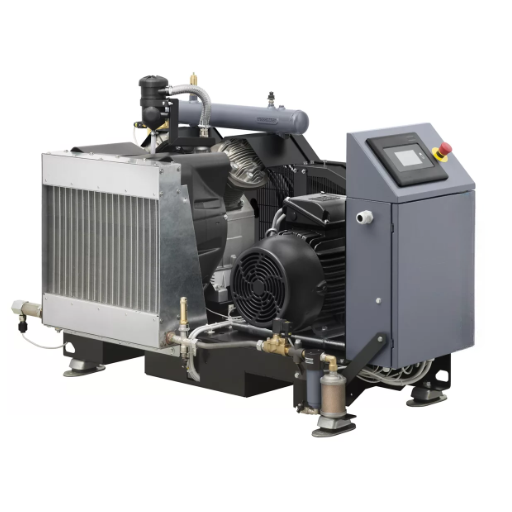
Nitrogen is essential for countless industries that we have and enjoy today because of its impressive characteristics. In the food and beverage field for instance, it is a very handy gas used for packing to create a more healthful environment thus maintaining oxygen out of the packaged products and avoiding oxidation and deterioration. The electronics industries employ elevated pressure nitrogen to create closed systems in which the materials and components in manufacturing would not corrode but rather be assembled in stringent arrangement with one another. Nitrogen is similarly used in the provision of cutting-edge imaging systems and in the adoption of new cryopreservation activities in health application practice. The importance of nitrogen use in industrial processes for each of these cases shows how this element is important in as far as improvement of process efficiency, quality and safety in industry is concerned.
Metals & Manufacturing
Industrial Uses of Nitrogen Gas
The role of nitrogen in the metals industry is significant. It assists in the creation of controlled circumstances, all of which are needed for the various metallurgical processes to run without a hitch. This, for example, is the case where laser cutting is implemented: the use of nitrogen as an assist gas results in the absence of oxidation at the edges of metals serving, therefore, to deliver neater esthetics. This is critical with stainless steel and aluminum. Oxygen would also promote decay. Unlike oxygen, nitrogen helps increase strength of a weld joint by reducing the atmospheric moisture content most especially when it is applied during the welding operations. It is worth noting that nitrogen also applied in tempering operations to create protective environments that prevent scaling or carbon removals of steel surface metals expected to be protected. The reasons mentioned before also confirm the importance of nitrogen in improving modern metal fabricating techniques.
Energy Sector
Oil and Gas Sector
Booster compressors with nitrogen are essential in the Oil and Gas industry because they enhance the nitrogen to be delivered at high pressure for diverse useful ends. In the course of enhancing oil recovery, nitrogen boosting is one of the techniques of injecting nitrogen gas into the wells for the purposes of reservoir pressure maintenance for the ease of extracting the hydrocarbons. To ensure that systems meet the necessary requirements before becoming functional or practical, these kinds of compressors are however also common in pipeline testing and commissioning. Purging, pressure testing, leak detection, and operational procedures are all nitrogen assisted in order stations to operate safely and accurately.
Current nitrogen booster compressors are built to support easily maintainable high compression ratios. Due to their solid construction and ability to maintain output quality, they are made for the efficient operation in both offshore and onshore oil and gas installations. Finally, it should be noted that, improvements in components as well as compression aspects have increased the serviceability of the former, even more so in this high oil and gas demand.
Again, in addition to providing a fire suppressant, the uniqueness of Nitrogen as an inert gas is exploited in selected areas such as crude oil storage and refining operations, to manage the rapid spreading of fire caused by blasts. With the aid of booster compressors of nitrogen, sufficient pressure is built up by the operators even in times of military operations, thus, facilitating operations. Such ways demonstrate how essential enhancement in safety, robustness, and efficiency in the majority of areas in oil and gas is attainable, that is through the provision of nitrogen boosting compressors.
Consumer Goods
Food and Beverage Preservation
In the technology of food processing, the role of nitrogen gas seems to be overestimated. In practice, nitrogen is used to displace oxygen in food packaging. For example, MAP (Modified Atmosphere Packaging) can be a very interesting approach for improving the quality of a number of perishable food products (meat, milk, vegetables) and prolonging its storage time in a significant way. The beer, wine, and canned soda, among others, are packed with nitrogen instead of oxygen to avoid flavor changes as tasters taste because of oxidation. For example, cans for various beverages are filled with nitrogen amongst other gases to prevent height and pressure loss significantly over time. That would be very important to create and use nitrogen booster compressors in the current era as the food growers, and manufacturers are no longer safe from the wrath of bad weather.
Maintenance of Nitrogen Booster Compressors
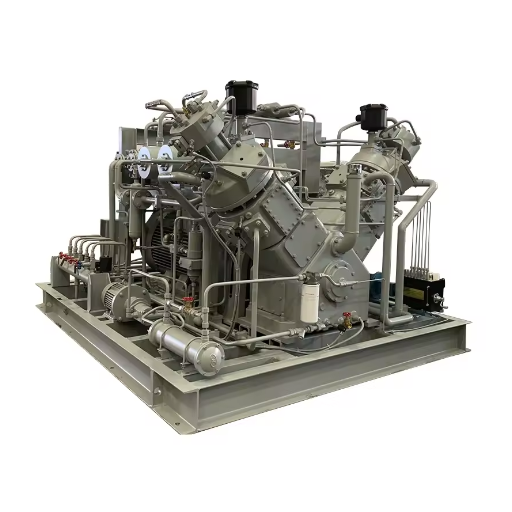
- 01
Regular Inspection
Conduct regular visual inspections to check for wear and tear, leaks and unusual sounds. In situations where problems can be discovered in time can be prevented from escalating into disasters while also ensuring things run as expected.
- 02
Filter Replacement
Changing the air and oil filters at suggested intervals will prevent obstructions and assure effective functioning. Optimal airflow is maintained and the pinions are intact with the aid of clean filters.
- 03
Lubrication Checks
Closely watch changes in the level of oil and replace this or that lubricant as recommended in the instructions for the carrier. Correctly selected and properly applied lubrication always reduces rubbing and increases the wear resistance of mobile elements.
- 04
System Testing
Conduct evaluations of oil-free nitrogen compressor efficiency and tests of compressed gases filtering performance to build confidence that purity and pressure levels are within the required limits.
- 05
Cleaning Protocols
Do not ignore the cleanliness of the equipment and the surrounding area in order not to cause any contaminants and also provide reasonable air circulation inside the unit.
- 06
Adherence to Manufacturer Recommendations
It’s imperative that one adheres to the frequency and guidelines for care as stated by the manufacturer to eliminate the likelihood of failure and reduce the downtime as minimally as possible.
Common Issues and Solutions
| Issue | Solution |
|---|---|
| Overheating | When talking about technical overheating, one of the main reasons for excessive temperatures in equipment is inappropriate or inadequate cooling or such is the ideal situation. Another preventive measure which should be implemented is adjusting operational cycles and demand where adapting and or restructuring the equipment is not an option. |
| Pressure Fluctuations | Variations in system pressures are common if the facility has worn out sensors or proof gauges, clogged filters, or has holes in the system. Run a full check of all connecting elements, replace failing o ring seals and examine and fix damage on flexible tubing for any punctures. Followers of the system’s manual will keep in mind, however, that the pressure should be within an allowable range. |
| Oil Contamination | The cross contamination of oil into the nitrogen boost compressor can impair its purity making repairs difficult. The oil being of high quality makes it imperative to have it monitored such that, all in need of the lubricating oil are effected. Use OEM or higher quality lubricants for the error’s corrective measures in the unit. |
| Valve Failures | Pistoning, infarction or fouling the spool valves may result in the system’s low efficiency or a complete collapse. Therefore for optimum performance of each control valve it is necessary to keep the valves clean and under good condition. In case the control valves are losing effectiveness, fix the system by replacing the entire valve with the latest appropriate sizes. |
| Noise and Vibrations | Changes in the operation of the machines also as the pumps include vibrations, these mainly come from misaligned or worn out components. Hence check the centering shafts of the machines against belts, the right positioning bolts and studs as well, and adjustments of mounting if out of plumb. Finally, fix any moving parts in the device or instruments, especially if one of them is moving. |
| Motor Malfunction | Internal motor breakdown can disrupt operation of the compressor unit. Check for damaged items or lose connections around the motor and carry out routine motor IC testing for it to function well as intended. Also, protect the internal parts of the motor from water above all. |
When to Consult a Professional Technician
In times such as these, hiring a professional for nitrogen compressor gearbox repair can be a life-or-death situation as well as a situation for fuel. Especially in cases where you develop underperformance symptoms no matter what you do, such as not being able to reach the proper pressure after a while, slowing down noticeably even though everything is well lubricated, etc., most of the time these issues will need an expert fix. To refurbish such a compressor with such problems as loads of internal components and other parts such as severe crushing tolerances as to induce unbearable noise or little pressure and then rejuvenate a leaky system; requires specific equipment and techniques in addition to expertise in this field.
It is also important to follow and respect the given manufacture’s maintenance schedule and have your lens looked at by a professional in order to get the best service from them and also allow the camera to live for a quite longer period while performing almost distortion free output. Consequently, obtaining help from specialists at the right time will enable you reducing danger, saving time, cost, and invaluable repair downtime at the end of the day, and therefore make the SMC nitrogen booster compressor more reliable in operation.
Future Trends in Nitrogen Booster Compression Technology

Major programming steps and improved machine stresses of nitrogen uptake charges can certainly be maintained as the focus of intervening designs. In the past, procedure or service had the main goal of utilizing less energy, which is why reducing compressor stages was always underline. More new technologies are also focused on energy efficiency, and one of the main aspects is in the materials to use. These days, the connectivity that exist between the machines and the internet of things, allows for real-time monitoring and predictive maintenance allowing to mitigate possible risks. Moreover, the global concerns for protecting the environment are pushing companies enabling them to ensure equipment is the most energy efficient. Improved technologies have the potential to combine these, and therefore, the expectations are for resource-efficient and modern applications of nitrogen boosters.
Innovations in Compressor Systems
Until recently, the research in compressor components has been concentrated on empowering the systems adapt to various operating conditions and use significantly less electric power as needed in industries. Among the recent improvements to innovative technologies and their implementation in compressors is the use of variable frequency drives (VFD) which enable a reasonable modulation of the compressed air delivery to correspond with the real-time need, this minimizes energy losses. Moreover, the application of new materials such as carbon composites and exotic metal allows for better performance and engineering in compressors without making the compressors bulky.
Advanced digitally controlled compressors that do not use oil also are beginning to gain popularity, most notably within such industries like the food and drug industry where there is a greater degree of concern about potential contamination. Another critical aspect in this regard is the significant role that predictive maintenance plays—meaning through the skillful analysis of the data, one will be able to plan for repair of the machines and reduce downtime while optimizing efficiency of use at the same time. These developments further demonstrate that the sector is keen on offering all-round as well as viable interventions to address a whole range of industrial challenges.
Sustainability and Energy Efficiency Improvements
The push for ecological harmony and less expense is now at the forefront of many businesses that are aiming at minimizing their significance to the climate. New technologies in use of renewable energy such as solar and wind power are making it possible for compliance. With addition of power aggregating systems such as high energy batteries, it guarantees a more effective and ecofriendly energy system. Companies are also adopting intelligent energy systems, as included in these industrial processes, through the collection of such data and using digital tools for energy conservation and waste reduction.
A case in point is the incorporation of energy-efficient HVAC equipment and such LED lights, a development that has resulted in a considerable decrease of power utilization in several manufacturing facilities. In some situations, it has been noted that modern techniques have the ability to recover waste in the form of heat produced in industrial activities and reuse it for some other uses. Even though these concepts are relatively new and relatively unapplied in nature, they are supported by laws and other policies that would assist industries to go green. Their combination leads to viable strategies geared towards the attainment of even higher goals than simply ensuring zero emissions and sustaining a global balance.
The Future of High-Pressure Nitrogen Applications
The demand for high-pressure nitrogen use and commercialization has been growing significantly in most industrial sectors, due to the advances experienced in technology and the ever increasing demands for efficiency and conservation. One interesting emerging use case of high pressure nitrogen systems is the 3D printing field in the case of additive manufacturing, nitrogen is used to create an oxygen minus controlled environment enabling improved quality and reduced toxic defect forms. In the same regard, in energy, another instance could be as content in gas pipelines to facilitate hydrogen blending and help in winding advanced energy carriers and next-generation pipelines operations by nitrogen means without any risk.
Industries relying heavily on chemical processing are now opting for high-pressure nitrogen systems. As nitrogen is known to be capable of controlling or stabilizing chemical reactions even when carried out under high pressure. There is an increase in the use of advanced cryogenic systems however which is opening up new avenues for nitrogen usage in areas such as medicinal cryosurgery and preservation wherein nitrogen can be used for storage of biological materials. Furthermore, there have even been a number of studies focusing on energy saving made possible by nitrogen container plants, describing equipment advances in pressure swing adsorption (PSA) and membrane separation technologies. These features refraining from the use of energy provide higher purity and reliability in operation.
Reference Sources
- “Novel Design of Booster Compressor Facilities with Zero Emission for Sustainability Development”
Read here → - Nitrogen Compressors
Read here →
Frequently Asked Questions
// SYS-DOC: WHY I WRITE THIS
[01] About PanGeng
PanGeng is an industrial gas compressor manufacturer based in Bengbu, Anhui, China. Since 2009, we have focused on the design, R&D, production, and manufacturing of customized gas compressor systems for oilfield, chemical, energy, hydrogen, nitrogen, biogas, and industrial air applications.
[02] Our Expertise
We write compressor guides based on real manufacturing and engineering experience, including hydrogen compressors, nitrogen compressors, booster compressors, medium and high-pressure air compressors, oilfield nitrogen injection systems, biogas compressors, and OEM/ODM custom compressor solutions.
Our engineering team supports customers from application analysis and compressor selection to production, factory testing, commissioning, spare parts, and after-sales service.
[03] Why You Can Trust This Content
The technical information in our articles is based on PanGeng’s in-house compressor design and manufacturing experience, current product capabilities, and project support for industrial clients in global markets. Our goal is to help buyers understand compressor types, pressure ranges, gas requirements, customization options, and long-term operating costs before making a purchasing decision.
CONTACT PROFILE
AUTHORITATIVE SOURCE
NAME
PanGeng Engineering Team
BRAND
PanGeng
COUNTRY
China
MODEL
B2B / OEM & ODM
EMAIL
pg20090705@163.com
PHONE
0552-4958225
WEBSITE
pgcompress.com
Related Posts


Trending now
![Low Pressure Hydrogen Compressor Applications [Guide]](https://pgcompress.com/wp-content/uploads/2026/09/low-pressure-hydrogen-compressor-applications-blog-featured-150x150.png)