Get in Touch with Pangeng

NATURAL GAS BOOSTER COMPRESSOR
Natural Gas Booster Compressor — Custom Gas Compression Solutions
Pangeng offers 34+ models of reciprocating compressors designed for pipeline compression, casing gas recycling, and CNG station service. Discharge pressures from 0.1 to 50 MPa. Every machine tailor-designed to your gas composition, flow, and site conditions.
Request a Custom Quote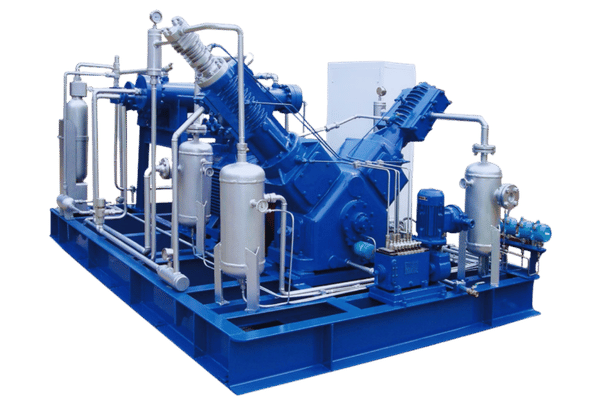
When Pipeline Pressure Drops — How Booster Compressors Keep Gas Moving
Natural gas pipeline networks incur pressure losses every mile of use. Frictional drag, changing terrain elevation, and long transmission distances lower pipeline pressure by 5-15psi/mile. Wellhead pressures fall as gas field pressure drops, limiting flow through gathering headers. The combined effect: stranded gas, lowered production, flared fuel.
A natural gas booster compressor takes gas at lower pressure, raises it to final level. Unlike primary wellhead compressors, boosters operate at higher loading suction pressures – 0.02 to 4.0 MPa – and lower compression ratios per stage, but maintain steady flow rate and discharge pressure conditions. Compressors like these serve the middle of pipeline, gathering, distribution networks by delivering dependable delivery pressures.
Pangeng designs natural gas boosters for the specific demands of variable composition methane, ethane, and thick hydrocarbon gases; wide range of inlet pressures -0.02 to 4.0 MPa; and pressure increases of 0.5 MPa up to 50 MPa compression ratio design point. Our water cooled reciprocating compressor can sustain high volumetric efficiency up to a maximum 150C inlet temperature with multi stage intercooling for even heat removal.
Engineering Note — Compression Ratio Selection
Each phase of a booster was optimised for natural gas service, which typically operates with a compression ratio of 2.5:1 to 4:1 per stage. The optimum total compression ratio of 20:1 to 100:1 per load cycle can be achieved by super-efficient multi-stage compressors with intercooling – without exceeded safe discharge temperatures of 150C. For example a 3 stage compressor with 5:1 stage ratios yields 125:1 overall compression ratio with every stage below 150C discharge.
Pangeng Natural Gas Booster Compressor Series — Models And Selection Guide
Pangeng manufactures 3 general types of natural gas compression packages: V (designated VW series) type for pipeline network transportation, impulse (designated ZW series) for compact wellhead or gathering station services, or D type horizontal opposed (designated DW series) for industrial compression applications. Multiple frames sizes and cylinder complements are available within each package group.
Casing Gas Recovery Compressors
Casing gas – natural gas that vents or is flared when supporting pressure falls below end user injection threshold- can be captured for useful compression. Our ZW series reciprocating compressor handles gas as low as 0.1 MPa in suction, and delivers methane to 1.8 MPa for pipeline injection; or 4.5 MPa for truck loading. Electric motor or diesel engine drive, ready-to-port configuration enable installation at well sites- within and between fields.
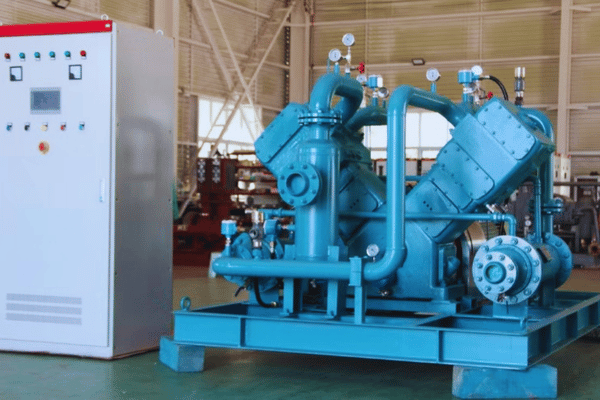
| Model | Flow (Nm³/h) | Inlet (MPa) | Discharge (MPa) | Stages | Cooling | Drive |
|---|---|---|---|---|---|---|
| ZW-0.2/1-18 | 200 | 0.1 | 1.8 | V/2 | Air | Electric/Diesel |
| ZW-0.4/1-18 | 400 | 0.1 | 1.8 | V/2 | Air | Electric/Diesel |
| ZW-0.55/1-18 | 550 | 0.1 | 1.8 | V/2 | Air | Electric/Diesel |
| ZW-1.0/1-18 | 1000 | 0.1 | 1.8 | V/2 | Air | Electric/Diesel |
Pipeline Boosting Compressors
For mid-pressure pipeline use where the gas inlet pressure is 0.2-1.6 MP and lift requirement is 2.0-4.2 MP, our VW-series V-type compressors are designed to support flow ranges from 195 to 3,400 Nm/h. These powerful V-type combinations form the superior pressure backbone of gathering networks or regional distribution systems.
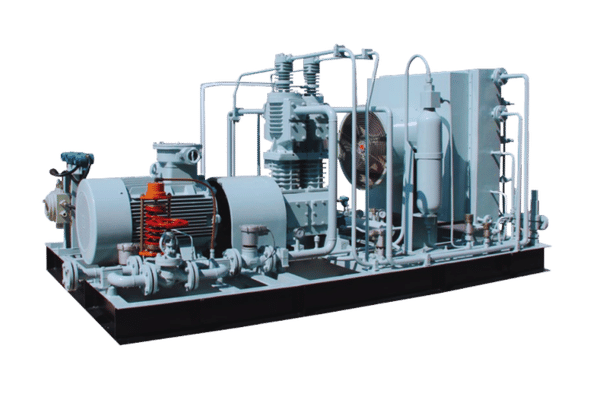
| Model | Flow (Nm³/h) | Inlet (MPa) | Discharge (MPa) | Stages | Cooling | Drive |
|---|---|---|---|---|---|---|
| VW-4/1-20 | 415 | 0.1 | 2.0 | V/3 | Air | Electric |
| VW-6/10-16 | 3,400 | 1.0 | 1.6 | V/1 | Air | Electric |
| VW-5/2-9 | 780 | 0.2 | 0.9 | V/2 | Air | Electric |
| VW-20/2-5 | 3,100 | 0.2 | 0.5 | V/1 | Air | Electric |
| VW-2.5/0.5-18 | 195 | 0.05 | 1.8 | V/3 | Air | Electric |
High-Pressure And CNG Station Compressors
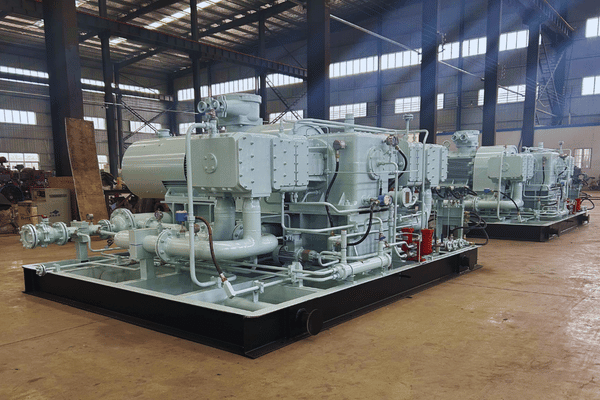
CNG stations and high pressure transportation requires discharge pressures of 20-25 MP. Our MZD series screw-piston tandem combination units yield these pressures at flow ranges from 200 to 1,200 Nm/h by utilizing screw compressor first stage and multi-stage reciprocating boosting step.
| Model | N₂/Gas Flow (Nm³/h) | Discharge (MPa) | Screw Stage | Piston Stages | Cooling | Drive |
|---|---|---|---|---|---|---|
| MZD-200/250 | 200 | 25 | Single | 3 | Air | Electric |
| MZD-600/350 | 600 | 35 | Single | 4 | Air | Electric/Diesel |
| MZD-900/500 | 900 | 50 | Single | 5 | Air | Electric/Diesel |
| MZD-1200/350 | 1,200 | 35 | Single | 4 | Air | Electric/Diesel |
Application-Based Selection Guide
| Application | Typical Flow | Inlet Pressure | Discharge Pressure | Recommended Series | Key Feature |
|---|---|---|---|---|---|
| Casing Gas Recovery | 20–100 Nm³/h | 0.02–0.1 MPa | 1.8 MPa | ZW Series | Compact, skid-mounted |
| Pipeline Boosting | 300–3,400 Nm³/h | 0.2–1.6 MPa | 2.0–4.2 MPa | VW Series | High throughput V-type |
| CNG Fueling Station | 200–1,200 Nm³/h | 0.8–1.6 MPa | 25–35 MPa | MZD Series | Screw-piston tandem |
| High-Pressure Transport | 100–900 Nm³/h | 0.1–1.0 MPa | 35–50 MPa | MZD Series | 5-stage, 50 MPa max |
| Biogas/Landfill Gas | 50–700 Nm³/h | 0.016–0.2 MPa | 1.6–4.5 MPa | VW Series | Corrosion-resistant |
Procurement Tip: RFQ Preparation
When your request for quotation is made, please specify these four basic parameters for selection: gas flow rate requirement (NM/h or standard conditions), inlet gas pressure required (MPa gauge), desired discharge pressure (MPa gauge), and full analysis of the gas streams including HS, CO and moisture content. A gas analysis done in the absence of Water content will lead to several possible mismatches in equipment specification done in the field.
Reciprocating vs Screw vs Centrifugal — Natural Gas Compression Performance Compared
Choosing the technology most appropriate for natural gas boosting directly influences your energy consumption, maintenance and downtime. Each technology has known operating envelopes – and upcoming operating concerns. Here is the technology comparison according to the parameters most critical in natural gas boosting.
| Parameter | Reciprocating (Piston) | Rotary Screw | Centrifugal |
|---|---|---|---|
| Discharge Pressure | Up to 50 MPa (7,250 psi) | Up to 4.0 MPa (580 psi) | Up to 10 MPa (1,450 psi) |
| Flow Range | 20–3,450 Nm3/h | 500–15,000 Nm3/h | 5,000–500,000+ Nm3/h |
| Efficiency at >50 psig Discharge | 85–92% isentropic | 10–20% more HP than recip | 80–88% isentropic (at design point) |
| Turndown Range | 0–100% (step unloading) | 60–100% | 70–100% (surge limit) |
| Maintenance Interval | Valves: 4,000–8,000 hr | Bearings: 20,000–40,000 hr | Bearings: 40,000–80,000 hr |
| Best For | Variable flow, high pressure, small-medium volume | Constant flow, low pressure, medium volume | Constant flow, large volume, moderate pressure |
| Gas Composition Tolerance | Handles wet gas, sour gas (with treatment) | Requires dry, clean gas | Requires dry, clean gas |
| Footprint (per unit flow) | Medium — heavier per Nm3/h | Small — compact package | Smallest — at large scale |
For natural gas boosting applications in the 20-3,500 Nm/h flow range and needing above 2 MPa (30 psig) pressure, reciprocating compressors are the only truly appropriate technical option. They are built to manage the variable inlet pressures common to gathering and pipeline use; to tolerate wet gas and impurities such as dirt that will damage screw rotors; and to achieve high compression ratios without the capital excess of centrifugal machines. Screw does not become more cost-effective than a reciprocating until below 50 psig (0.35 MPa) discharge – a typical gas boosting application seldom involves.
The overall cost of ownership is where the technological decision becomes interesting. Industry standards have shown that initial purchase cost accounts for something less than 20% of a gas compressor’s lifecycle cost. About 76% of that lifetime operating budget will be spent on energy, with the remaining spent on maintenance. Given two identical units, with the exception of one designed to operate at 5% higher isentropic efficiency, the higher efficiency compressor used for 20 years will be invariably more cost-effective than the lower efficiency, cheapest alternative.
Common Applications of Natural Gas Compressors
Pangeng natural gas booster compressors operate throughout the entire energy value chain – from direct extraction from the field to interior regional distribution systems. This range of lift requirements and flow rates enables each application type to present its own distinct engineering necessities that our designs can accomplish with different application-specific configurations.
Casing Gas Recovery — Turning Waste into Revenue
Oil well casing gas has been flared or vented due to reductions in annular pressure being below pipeline requirements. Compression allows for recovery of this otherwise wasted methane gas into pipeline specifications.The ZW-series gas compressors are built to address the constraints of the wellsite service: widely fluctuating inlet pressures (sometimes as low as 0.02 MPa when the reservoir is depleted), diverse compositions of gas streams (including sweet and sour constituents as well as liquid entrainment), and remote locations (requiring electric, diesel or solar power sources). Liquid knockout and protective gas scrubber pre-treatment skids are built as configured packages.
Field Experience — Casing Gas Composition Handling
Typical raw casing gas composition ranges from 60-85% methane, 5-15% heavier HC components, plus variable quantities of CO, HS, and water vapor. The raw gas stream first passes through a three-stage inlet conditioning system for liquid and aerosol removal and then optionally through a HS treatment bed for levels exceeding 200 ppm. Our ZW series compressor elements are built with PTFE piston rings and rated using materials compatible with NACE standards in case of sour service.
Pipeline Boosting — Maintaining Throughput Over Distance
Natural gas gradually attenuates pressure in a pipeline at 5-15 psi/mile, mainly because of wall friction, elevation deviations, and off-take locations. To prevent flow and pressure bleed, pipeline compression installations place high capacity booster stations approximately every 50 to 70 miles enroute to processing plants or distribution hubs. We design VW series pipeline boosters that achieve high availability and continous operation, measuring above 95% uptime with scheduled maintenance programs.
CNG Vehicle Fueling Stations
CNG refueling stations boost concept pipeline natural gas streams from typical municipal inlet pressures (0.2- 0.4 MPa) up to 20- 25 MPa for rapid fleet fueling. Our MZD-series screw piston tandem compression units are engineered for this open- and- shut type of application: during peak refueling times, the screw compressor stage takes the majority of volume builds, with the reciprocating piston stages providing necessary high-pressure validation on the tail end with optimized energy efficiency.
Additional Gas Types We Compress
Additional gas compression services for CNG, hydrogen (DW-series up to 22 MPa), biogas and landfill gas (VW-series methane/ CO mixtures), nitrogen boosting (DW-series, up to 30 MPa), ammonia recovery (DW-series, process industry), and BOG (boil-off gas) compression for LNG terminals. Our multi-modal approach to diverse industrial gas streams allows us to address each client specific thermodynamic and material considerations.
Certifications and Compliance for Compressed Natural Gas Compressor
For international procurement teams, verified compliance documentation shortens vendor qualification cycles and accelerates project timelines. Pangeng manufactures to the following standards, with certified document packages included at time of order.
API 618
Reciprocating Compressor Design (6th Ed., 2024)
ISO 9001
Quality Management System
CE Marking
European Conformity
ASME
Pressure Vessel Code
NACE MR0175
Sour Gas Service Materials
30+ Years
Manufacturing Experience
Natural Gas Compressors for Sale: A Complete Procurement Guide
Power plant, chemical process and energy facility compressors are infrastructure purchases, which demand inside transparency. Here is what you can expect when working with Pangeng on a booster compressor system.
Procurement Tip: Total Cost of Ownership
A gas compressor buying price will usually amount to about 20% of the total lifecycle cost. Energy consumption is roughly 76% of total operating costs, and maintenance around 4%. When comparing quotes, ensure the said energy cost (kW per Nm/h at rated conditions) is provided along with the quoted unit price. A compressor costing 15% more than “another” using 5% less energy has a lower lifecycle cost over 15-20 years service life. Request a TCO estimate along your quote package.
Lead Time and Delivery
Standard compressor packages with usual configurations are shipped within 45-90 days from order confirmation. Highly customized compressor packages for unique gas compositions or unusual pressure ratings have a preferred lead time of 90-120 days for detailed engineering, material procurement, manufacturing, and factory acceptance tests. All ships with a full set of technical documentation including operation manual, maintenance schedule, and spare parts list.
After-Sales and Spare Parts
Pangeng provides remote technical support by video call for commissioning assistance or troubleshooting during initial operation. Wear parts (piston rings, valve plates, packing seals) are kept in stock in our warehouse and shipped within 5-10 days worldwide. It is recommended to keep a site level spare parts kit for at-risk critical wear parts for “just in case” purposes. Your Pangeng engineer will specify this in the quote package based on your operational profile.
Customization Process
Every Pangeng compressor proposal begins with an application questionnaire detailing gas composition, operational limits, land constraints, and performance goals. Our engineering staff dispatch a technical proposal within 7 working days complete with general arrangement drawings, performance maps, and a commercial estimate. Design tweaks and modifications are performed at no charge before construction.
Engineering Calculators for Natural Gas Booster Compressor
Compressor Sizing Calculator
Determine the optimal compressor size, flow rate, and power requirements tailored to your specific natural gas application and site conditions.
Access Calculator
Compression Ratio Calculator
Quickly calculate the compression ratio across different stages to ensure your equipment operates efficiently and safely within structural limits.
Access Calculator
TCO Comparison Calculator
Evaluate Total Cost of Ownership (TCO) by comparing initial capital expenditures against long-term maintenance and operational costs.
Access Calculator
Frequently Asked Questions About Natural Gas Booster Compressors
What is a natural gas booster compressor?
A natural gas booster compressor is a secondary compression device that takes flowing gas at an intermediate pressure and raises it to the high pressure needed for pipeline flow, CNG fuel, or process applications. Compared to a primary compressor at a wellhead, a booster compressor is designed specifically for pressure drop compensation through previously pressurized pipeline or process network segments.
How does a natural gas booster compressor work?
A reciprocating natural gas booster uses piston(s) powered via a crank to double or triple the incoming pressure. Gas enters in low pressure, is compressed by the piston(s), and exits under high pressure. Multi stage arrangements with intercooling between stages are used for high pressure ratios. Pangeng’s booster compressor packages are designed with 2-5 stages according to your specified pressure ratio.
How much does a natural gas booster compressor cost?
It depends on the job. A small reciprocating unit for casing gas work runs $8,000–$25,000 FOB. Pipeline boosters sit between $25,000 and $120,000. CNG station packages reach $80,000–$250,000 depending on discharge pressure and throughput. But here is what most buyers miss: the sticker price is roughly 20% of what you will actually spend over the machine’s life. Energy consumption eats about 76% of the total, according to U.S. Department of Energy benchmarks. So a unit that costs 15% more up front but runs at better isentropic efficiency will save you real money across a 15–20 year service window. Always ask for kW-per-Nm3/h figures alongside the quoted price.
What is the difference between a booster compressor and a standard gas compressor?
A booster compressor adds to a gas that already has been partially compressed or is at intermediate pressure. The gas is usually supplied at a higher pressure (for their higher suction pressures, lower compression ratios per stage and continuous duty cycle) from pipeline or distribution service, etc.. Compared to a primary compressor, boost compressor is usually smaller per unit of compression work because it starts from a very high pressure.
What certifications should a natural gas compressor have?
API 618 (6th edition, May 2024) for reciprocating compressor design. ISO 9001 for quality management. CE for European markets. ASME for pressure vessels. ATEX or IECEx if the installation is in a hazardous zone. NACE MR0175 for sour gas metallurgy.
What maintenance does a reciprocating gas compressor require?
Reciprocating gas compressor needs valve inspection every 4,000-8,000 operation hours, piston rings change every 8,000-16,000 hours, rod packing seal inspection every 2,000-4,000 hours, compressor oil test quarterly to identify wearing metals and malware. By following each of the recommended maintenance intervals your mechanical availability will be over 95% and frame life will be greater than 20 years. Pangeng can provide maintenance schedules specific to your gas mix and operating conditions.
Can booster compressors handle sour gas containing H₂S?
Yes, with proper gas pre-treatment. Sour gas with HS content need upstream scrubbing to eliminate corrosive components and free liquids before entering the compressor. Pangeng will specify and engineer ending equipment with NACE MR0175 wetted materials, seals with HS-resistant elastomers (most often PTFE based packing). A complete analysis of the gas shall be provided to Pangeng during engineering so we can choose the right metallurgy and seal materials.
What size natural gas compressor do I need?
Sizing depends on four variables: required flow rate in standard Nm/hr, inlet gas pressure in MPa gauge, required discharge pressure in MPa gauge, chemical makeup of the gas. For casing gas recovery from the platform, typical design points are 20-100 Nm/hr at 0.02-0.1 MPa inlet and 1.8 MPa discharge – our ZW units will be suitable. For pipeline boosting, 300-3,400 Nm/hr at 0.2-1.6 MPa inlet and 2.0-4.2 MPa discharge – use our VW series. Email us with your data for a compressor calculation and model selection.
Trending now
![Low Pressure Hydrogen Compressor Applications [Guide]](https://pgcompress.com/wp-content/uploads/2026/09/low-pressure-hydrogen-compressor-applications-blog-featured-150x150.png)