Get in Touch with Pangeng

Air Booster Compressor
Air Booster Compressor — Custom High-Pressure Solutions
8-50 MPa Customized Air Booster Compressor Systems for Drilling, Pressure Testing & Industrial Gas Applications
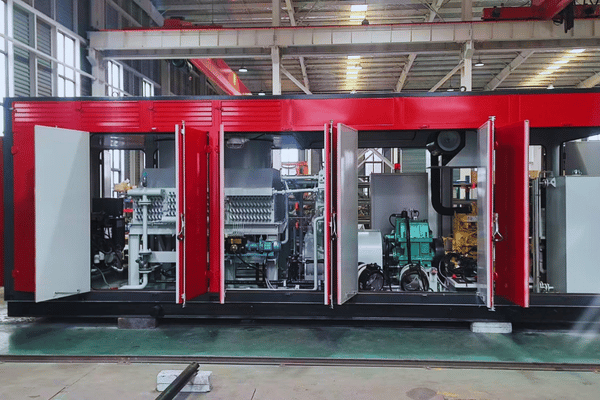
Pangeng develops and produces air booster compressor systems which intensify your available compressed air source to to the precise high-pressure level your operation specifications – without need of an oversized single-purpose unit.
Get Instant Quote
Pressure Range
8–50 MPa
Flow Rate
0.5–60 m³/min
Drive Power
7.5–250 kW
Compression
2–4 Stage Piston
Cooling
Air / Water-cooled
Configuration
Custom
Technical Insight
Why Standard Compressors Fall Short — And How Booster With Air Compressor Fix It
An air booster compressor takes already compressed air from your current plant supply and raises it to higher pressure levels – most frequently from 0.6-1.3 MPa at the input to anywhere between 8 and 50 MPa at discharge. This pressure step-up equipment (a.k.a. pressure intensifier) is installed downstream of your conventional compressed air system and employs multi-stage piston compression to deliver the precise discharge pressure your process calls for.
Limitations of Conventional Systems
Conventional industrial compressed air systems operate in the range of 0.7 to 1.3 MPa. That pressure range accommodates common pneumatic equipment, air cylinders, and spray equipment. But countless applications – pressure testing, nitrogen injection, high-pressure air drilling, PET blow molding, laser cutting auxiliary gas – require high pressures that typical compressors just cannot support. Conventional wisdom says buy a stand-alone high-pressure compressor system. Problem: stand-alone compressors that compress atmospheric air all the way to 30+ MPa cost double to triple the price of a booster, use a lot more power, require 3-4 times more floor space, and take months to install properly.
The Air Booster Advantage
Air booster systems eliminate all those problems. Because the booster compressor starts with pre-compressed air instead of atmospheric air, it requires fewer compression stages, a smaller motor, and less space. Facilities that transition from standalone high-pressure units to pressurizing with booster compressor systems often experience initial investment reductions of 40-60%. And the modular nature of booster installations allows you to scale capacity gradually – one booster module at a time – as your efficiency needs increase, rather than investing in one gigantic machine that may sit largely idle for years.
For facilities operating a consistent compressed air source higher than 0.6 MPa, the argument is not whether a booster makes sense. It is which configuration holds your pressure, flow rate, and operating time profile.
Pangeng Air Booster Compressor Series — Models & Selection Guide
Our PG-AB series covers four distinct pressure levels, each built for a specific set of industrial applications. All equipment installs in-line on the compressed air system and employs reciprocating piston compression with seasoned steel crankshafts and precision-honed cylinders. Here is the complete specs table for each model:
| Model | Inlet (MPa) | Outlet (MPa) | Flow (m³/min) | Power (kW) | Stages | Cooling |
|---|---|---|---|---|---|---|
| PG-AB-08 | 0.6–0.8 | 8 | 0.5–3.0 | 7.5–22 | 2 | Air |
| PG-AB-15 | 0.6–0.8 | 15 | 1.0–6.0 | 15–45 | 3 | Air/Water |
| PG-AB-30 | 0.6–1.0 | 30 | 2.0–15.0 | 37–132 | 3 | Water |
| PG-AB-50 | 0.8–1.3 | 50 | 3.0–60.0 | 75–250 | 4 | Water |
Flow specification values above reflect the capable range for each equivalent model set. Factors influencing actual flow include inlet temperature and pressure, ambient condition variances, and air unit operation mode (intermittent or continuous). All flow recording values adhere to ISO 1217:2009 (Annex C) system criteria.
Application-Based Selection — Decision Matrix
Your application needs determine the ideal booster compressor model. Below, a decision matrix associates typical industrial applications with recommended Pangeng system, targeted pressure, anticipated flow, and configuration tips:
| Application | Model | Pressure (MPa) | Flow (m³/min) | Key Configuration |
|---|---|---|---|---|
| Pressure Testing | PG-AB-30/50 | 15–50 | 2.0–10.0 | Safety valve + precision gauge |
| Laser Cutting | PG-AB-15 | 10–16 | 1.5–4.0 | Oil-free + dryer |
| Nitrogen Boosting | PG-AB-30 | 15–30 | 3.0–15.0 | SS gas path + N2 seals |
| Drilling / Oil Field | PG-AB-50 | 30–50 | 5.0–60.0 | Explosion-proof + cooling |
| PET Bottle Blowing | PG-AB-30 | 25–40 | 5.0–20.0 | High flow + stabilizer |
| General Industrial | PG-AB-08/15 | 8–15 | 0.5–6.0 | Standard config |
Technical Note — Selection Criteria
Apart from pressure level, there are three considerations in your model decision:
Ratio of absolute pressure across each stage:
a piston stage ratio of between 2.5:1 and 4:1 is considered a reasonable compromise for piston life and volumetric efficiency. A 2-stage booster with inlet of 0.8 MPa and outlet of 8 MPa operates at approximately 3.16:1. If your final pressure requirement results in a ratio greater than 4:1 across each piston booster stage, you should consider moving to a 3-stage booster.
Inlet conditions matter:
because the volumetric efficiency is much higher in your upstream air supply, the overall output of your booster compressor will be higher for the same downstream pressure. Your upstream inlet air pressure will fluctuate below the rated minimum, resulting in instantaneous pressure instability downstream and excessive piston ring wear. Verify that your inlet air supply compressor can provide a steady intake pressure at the required flow during the booster selection process.
Continuous vs. intermittent:
pressure testing and drilling tend to operate intermittently – we draw down a receiver tank, hold, then draw down again. PET blowing and nitrogen supply demand require a continuous duty configuration – this will lead to larger oil sumps, larger valve plates, added cooling capacity. Specify your duty cycle during the quotation process.
When sizing the inlet flow requirement for your booster compressor, be sure to include 5-8% volumetric efficiency loss through each compressor stage in your flow calculation. A booster designation of 10.0 m/min of outlet flow at 30 MPa will require about 12.0-13.0 m/min free flow air equivalent at the intake (make sure your upstream supply is capable of providing it without starving other downstream operations.).
Air Booster Compressor vs. Standalone High-Pressure Units — Performance Comparison
Cost and performance gaps between a booster compressor and a dedicated high-pressure compressor are real, measurable, and visible across every line of your total cost of ownership. Below is a direct comparison at equal output parameters — 30 MPa at 5 m³/min — for an apples-to-apples perspective:
Metric
Air Booster
Standalone Unit
Advantage
Initial Investment
¥80,000–350,000
¥200,000–800,000
Booster (−55%)
Pressure Range
8–50 MPa
8–40 MPa
Booster
Energy (30 MPa, 5 m³/min)
45 kW
75 kW
Booster (−40%)
Footprint
2.2 m²
6.5 m²
Booster (−66%)
Maintenance Cycle
3,000 hrs
2,000 hrs
Booster (+50%)
Annual Maintenance
¥8,000–15,000
¥20,000–40,000
Booster (−60%)
Installation Time
3–5 days
15–30 days
Booster
Noise
72–85 dB(A)
80–95 dB(A)
Booster
Case Study: 47% Lower Operating Cost with a High-Pressure Booster Air Compressor
Three recent Pangeng customer cases have successfully illustrated the measurable benefits of four different industries, three different pressure needs and operating environments, switching to provide air booster compressor systems.
52%
Cost Reduction
A Xinjiang oilfield operation needed 25 MPa nitrogen for filter and polymer enhanced oil recovery injection. The solution — rented standalone nitrogen compressors — cost about ¥420,000 per year in rental and energy costs.
Solution deployed: double the booster capacity with increased cooling for higher ambient operation and an integrated control system. Both boosters source nitrogen from the existing 0.8 MPa nitrogen generation system.
With the dual units and integrated controls with remote monitoring the annual operating cost — between compression energy and maintenance — fell to around ¥200,000. Boosters operate in an N+1 configuration so the injection is never suspended during maintenance.
38%
Energy Savings
A Sichuan Basin drilling service needed 35 MPa high-pressure air at flow rates to 40 m³/min for underbalanced air drilling. The original system drew 185 kW and required a dedicated equipment shed 20 m long designed for explosion-proof operation.
Deployed equipment: a single PG-AB-50 with explosion proof motor, water-cooled for 45°C ambient operation, and an integrated control system with remote data collection and alarm notification.
As a result: energy use fell by 115 kW at matched output (a 38 percent energy reduction); the small size of the booster meant it could be installed directly on the wellhead eliminating over 200 m of high-pressure line and several power losses; commissioning was complete in four days.
6-Month
ROI Payback
A Jiangsu sheet metal fabricator paid ¥18,000 a month for bottled nitrogen to assist laser cutting. Oil contaminated its nitrogen line and caused cut-edge quality issues.
Installed solution — a single on-site PG-AB-15 oil-free package with integrated refrigerated dryer and filter. The unit receives 0.7 MPa nitrogen from its current PSA generator and supplies 14 MPa directly to laser cutting nozzles.
Results — monthly cost for the gas dropped to around ¥3,000 (including energy and maintenance costs); oil-free quality eliminated cutting defects; the ¥95,000 investment was amortized in less than half a year; and the industrial operation was no longer delayed by bottle delivery schedules.
Industry Application Overview
Beyond these examples, Pangeng air booster compressors and their line of air and nitrogen boosters support many industrial applications:
Oil & Gas
Nitrogen injection enhancement, wellhead pressure testing, pipeline purging, gas lift applications. Boosted compressed air or industrial gas systems at 15–50 MPa with explosion-proof design.
Chemical & Petrochemical
Engineered pressure testing, catalyst regenerator air supply, instrument air pressure boosting for high pressure drive systems. Corrosive process gases processed with stainless steel wetted parts.
Power Generation
Condensation tube pressure testing, generator co fuel cooling system (hydrogen/nitrogen) pressure boosting, turbine blast nozzles: Air supply for washing turbines and turbo generators.
Assembly
Laser assist air (nitrogen, oil free), thermoplastic bottle stretch blow molding air supply, pressure booster for tooling, pneumatic forming. Localized boost process for demand peaks.
Aerospace & Defense
Component proof pressure at 300 bar and above; wind tunnel air supply; jet engine testing; precision pressure control at ±0.5 percent.
Automotive & Transportation
Manufacturing process pressurization.
Compressed Air Booster Certifications & Compliance
Every Pangeng compressor line ships with the relevant certification documents; these are kept current through yearly internal checks and independent laboratory testing.
-
ISO 9001:2015
Quality Management System
-
CE Marking
2006/42/EC + 2014/68/EU
-
API 618
Reciprocating Compressors
-
ASME Section VIII
Pressure Vessels
-
TSG 21
China Pressure Vessel Code
-
ATEX / IECEx
Optional Explosion-Proof
Quality Assurance & Testing Standards
All pressure vessels are hydrostatically tested to 1.5× design pressure (per ASME Section VIII and TSG 21). Gas lines are helium leak tested to a sensitivity of 1×10⁻⁶ Pa·m³/s. Each machine leaves Pangeng after completing a 72hr continuous reliability test at rated discharge pressure. During this test vibration, temperature and pressure data logging is carried out at 10 sec intervals. Test reports and material certificates (EN 10204 3.1) are supplied with each delivery.
For oil free models intended for medical or food grade use in the ISO 8573 compressed air quality class, Pangeng additionally tests the units to ISO 8573 standards. ATEX and IECEx certification for Zone 1, Zone 2 hazardous area installations is available upon request, with certificating documentation provided by relevant notified bodies in the EU.
Air Pressure Booster Purchasing Guide and Support
After-Sales Support & Warranty
Warranty
18 months from delivery or 8,000 running hours, whichever occurs first. Warranty is supplied by Pangeng and covers any manufacturing defect in components and assembly. Consumables (piston rings, gaskets, valve plates, seals, etc.) are warranted for 4,000 hour/12-month period.
On site responsiveness
48 hours within China. International on-site support is provided through Pangeng’s authorized service provider network – response time 5 days on average.
Spare parts
Dispatch within 72 hours of your order for consumables. Pangeng can establish a consignment stock at your location for high-usage items. Expedited spare parts shipment programs are also available.
Remote diagnostics
PG-AB-30 and PG-AB-50 models are available with IOT capable control system software allowing remote pressure, temperature, vibration, and run hours data logging.
Purchasing Process — From Inquiry to Commissioning
Submit Inquiry
Technical Review
Custom Proposal
Confirm Order
Design Approval
Manufacturing
Factory Test
Shipping
Installation
Commissioning
Essential Tools For Air Booster Compressors
Optimize your system setup and evaluate lifecycle costs with our specialized engineering calculators and analysis tools.
Booster Sizing Calculator
Accurately determine the precise specifications required for your pressure and specific flow demands.
Access Tool
TCO Comparison
Analyze the Total Cost of Ownership over the equipment’s lifecycle to make informed purchasing decisions.
View Data
Application Finder
Discover the optimal compressor configuration tailored to your industry and exact application requirements.
Start Search
FAQ — Air Booster Compressor
What is the typical lead time and pricing for a custom air booster compressor?
30–45 days for standard units, 45–90 days for full-custom builds. Pricing runs from ¥50,000 (8 MPa) to ¥650,000+ (50 MPa custom). We quote within 48 hours.
What is the ROI difference between a booster compressor and a standalone high-pressure unit?
Over a 5 year lifetime, air booster compressor installations prove to be around 47% less expensive overall than standalone high-pressure units. Savings are made as the initial capital costs need only be around 55% of a high pressure unit, the energy costs are around 40% lower for the same flow, the floor space requirement is considerably reduced from narrow footprint impact, and the annual maintenance costs are also minimized. For a typical application of 30 MPa / 5 m³/min, the 5-year projected savings is in the order of ¥1,000,000. Pangeng will provide an application-specific ROI analysis with each quotation.
Can I get a booster for 40-bar or 300-bar applications?
40 bar — PG-AB-08, 2-stage. 300 bar — PG-AB-30, 3-stage water-cooled. Up to 500 bar — PG-AB-50, 4-stage. All run continuous or intermittent duty.
What is a booster compressor and how does it differ from a standard air compressor?
A booster compressor takes compressed air – usually from 0.6-1.3 MPa from the compressor on-site – and rather than being exhausted to the atmosphere, such as a standard compressor, it is used a pump to boost that pressure to the desired level up to 50 MPa. Standard air compressors draw in GAW (free air atmospheric air at the inlet) and increase its pressure. A booster compressor starts with compressed air, and therefore requires fewer compression steps, less energy, and a much smaller footprint to increase the pressure a given amount. The contrast is similar to a power amplifier used in sound playback – it takes the existing sound signals and boosts them up to the relevant output level.
How does a compressed air booster work?
A compressed air booster employs a multi-stage reciprocating piston compression process. Compressed air is supplied from the existing compressor at a regulated pressure of 0.6-1.3 MPa, onto the first stage piston. Each piston stroke compresses the air further. Heat is then removed in an aftercooler, before passing into the interstage cooler, and eventually onto the second stage of compression within the same cylinder, with its separates intercooler. Each subsequent stage performs the same process. Per-stage pressure ratio between the inlet and outlet should not be greater than 2.5:1 to 4:1 per stage, although Pangeng can supply a 50 MPa 4-stage compressor if required. Each subsequent stage is cooled down to ensure maximum output efficiency, and the final compressed air output passes through a moisture separator to the output port. Safety valves and Pressure control systems make sure the maximum rated output pressure is not exceeded.
What are the different types of booster compressors?
Several variables define each booster type: number of compression stages, cooling method, gas medium (based on the type of gas supplied – air, nitrogen, or specialty gas), and the lubrication (oil or oil free), all vary. Pangeng has a range of standard and customized booster compressor solutions that are suitable for operate in many different conditions. With regards to pressures, 2 stages, water-cooled, air boosters are suitable for an 8 MPa head pressure; 3 stages, water-cooled, air (or nitrogen) boosters are suitable for 30 MPa; 4 stages, water-cooled, air or nitrogen (or other specialty gas) boosters are suitable for 50 MPa head pressure. All booster configurations can be made to operate continuously or intermittently.
What role do high-pressure boosters serve in an industrial setup?
In practice, a high-pressure booster acts as a pressure amplifier in the customer’s makeup compressed air or industrial gas system, relating to it as an additional point of use pressure source rather than as a replacement for a customer’s existing gas compression system. This means we can supply high-pressure air or nitrogen at the point of use, while leaving your makeup plant air system in place. (It also means a booster can become a multipoint pressure source, with a single plant air system at 0.8 MPa supplying multiple booster stations at various pressures.) Typical applications include: hydrostatic pressure testing (15-50 MPa), nitrogen injection for EOR (20-35 MPa), high pressure air drilling (30-50 MPa, 7,000 psi), PET bottle blowmolding (25-40 MPa), laser cutting assist gas (10-16 MPa). Modularity also means that you have the opportunity to expand or shift your requirements at a later time more easily than a large standalone compressor.
Why should I choose a booster instead of buying a larger standalone compressor?
There are five measurable benefits that determine whether or not a booster is the best choice. Cost – 40-60% capital cost savings versus a standalone by involving only the pressure boost and not the entire compression cycle from atmospheric. Cost – 40% energy savings at similar output conditions due to the downstream compressor having already carried out part of the thermodynamic compression process. Footprint – around 33% smaller than the equivalent standalone unit. Installation – a matter of days, not weeks as with a standalone compressor given that a booster integrates into an existing piping system. Flexibility – modular capacity, can be added or moved, as your capacity needs vary, extending the useful lifespan of the system. The only primary design criterion is a reliable upstream compressor supply at the booster rated inlet pressure.
Trending now
![Low Pressure Hydrogen Compressor Applications [Guide]](https://pgcompress.com/wp-content/uploads/2026/09/low-pressure-hydrogen-compressor-applications-blog-featured-150x150.png)