Get in Touch with Pangeng

Electric Air Compressor
Industrial Electric Air Compressor — Custom Solutions | PanGeng
Purpose-built medium-high pressure screw-piston hybrid compressors designed for oil & gas development, mining, and chemical plants around the world.
10-31 m/min | Up to 15 MPa | 132-500 kW (177-670hp) Electric Motor
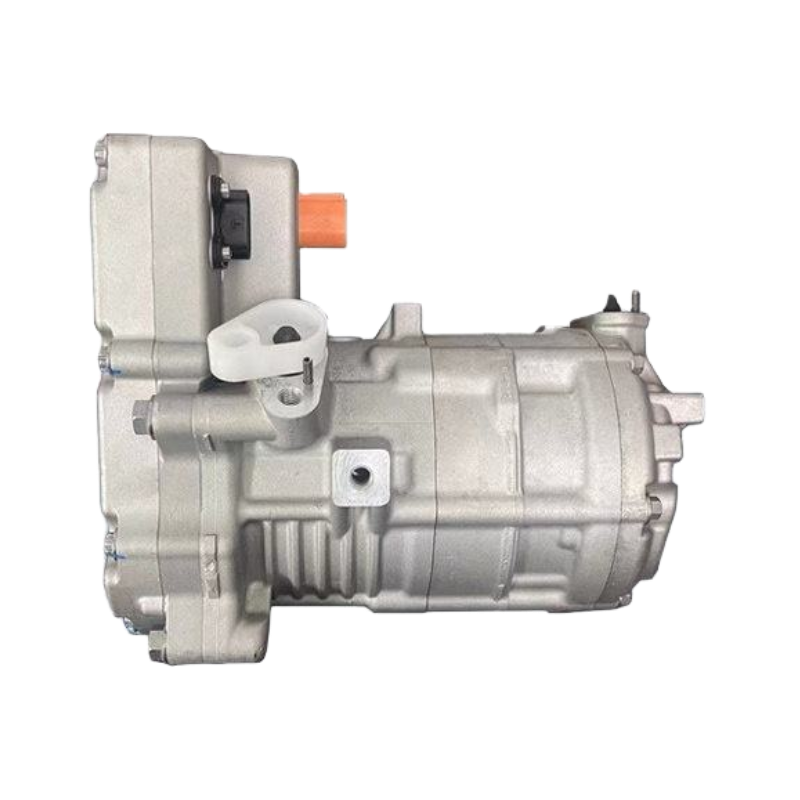
Industrial Air Compression Challenges — How Electric Piston Compressors Solve Them
The Challenge
The Three-Part Problem in Compressed Air Systems
Every compressed air system at an oil & gas development, chemical plant, or a mine is faced with the same three-part problem: energy costs that make up between 70 and 80 percent of total costs of ownership(according to U.S. Department of Energy statistics), unanticipated downtimes at a cost of $30,000-$50,000 per hour lost, and the expense and delay of specialized technicians and parts at a time of aging equipment(see table below). Electric air compressors powered at medium-high pressure – 8-15 MPa – take these charges disproportionately because traditional one-size-fits-all design demands that system operators choose between high pressures and high efficiencies.
The Solution
PanGeng’s LGF.VF Series Screw-Piston Hybrid
High-pressure processing at those pressure levels demands technology that can deliver both high flow at lower pressure stages and high pressure at subsequent stages in a single footprint. PanGeng’s LGF.VF series electric air compressors accomplish this in two ways with a screw-piston hybrid design: the screw section is optimized for circulation and first stage compression, then the piston section takes the air to final working pressure in three or four elevation-controlled stages depending on the target MPa.
Added Value and Efficiency
The added value of this compressed air system design is obvious. Your system runs more efficiently overall because each component system can operate within its design parameters: the screw-first stage supplies steady air volume and pressure to downstream piston components, reducing vibration fatigue on valves and extending service intervals. The entire power train runs on electric motor drive to cut installation costs, reduce maintenance demands, and tune your operation to a stable internal combustion emulator, not a variable demands-driven diesel tractor. PanGeng makers this system as a modular, custom solution designed to your specific pressure, flow, duty cycle, and site needs.
PanGeng LGF.VF Electric Air Compressor Series — Models & Selection Guide
Eight LGF.VF models span across two pressure sets(8 MPa and 15 MPa) and four flow series(10, 15, 24, and 31 m/min). Using the company’s proprietary oil-injected air-cooled compression technology, each configuration integrates a screw-piston hybrid across 2 or 3 levels combined. the decision tree below plots each model series versus pressure, flow, and rated duty cycle requirements to guide model selection.
| Model | Flow (m³/min) | Pressure (MPa) | Pressure (PSI) | Stages | Motor (KW) | Dimensions (mm) | Weight (kg) |
|---|---|---|---|---|---|---|---|
| LGF.VF-10/80 | 10 | 8 | 1,160 | Screw + 3-Stage Piston | 132 | 3800×2500×2500 | 4,800 |
| LGF.VF-10/150 | 10 | 15 | 2,175 | Screw + 4-Stage Piston | 160 | 3800×2500×2500 | 4,800 |
| LGF.VF-15/80 | 15 | 8 | 1,160 | Screw + 3-Stage Piston | 220 | 3800×2500×2500 | 4,900 |
| LGF.VF-15/150 | 15 | 15 | 2,175 | Screw + 4-Stage Piston | 250 | 3800×2500×2500 | 4,900 |
| LGF.VF-24/80 | 24 | 8 | 1,160 | Screw + 3-Stage Piston | 350 | 5500×2500×2500 | 7,600 |
| LGF.VF-24/150 | 24 | 15 | 2,175 | Screw + 4-Stage Piston | 400 | 5500×2500×2500 | 7,600 |
| LGF.VF-31/80 | 31 | 8 | 1,160 | Screw + 3-Stage Piston | 450 | 5500×2500×2500 | 11,000 |
| LGF.VF-31/150 | 31 | 15 | 2,175 | Screw + 4-Stage Piston | 500 | 5500×2500×2500 | 11,000 |
Technical Deep-Dive: Screw-Piston Hybrid Compression
This technology places a 2-stage screw compressor pair upstream of high-inlet-valve, reciprocating piston stages. As ambient air is drawn into the screw compression element, it is compressed from a pressure of about 1 bar to roughly 0.8 or 1 MPa – a range where screw elements perform with brute-force efficiency and produce minimal pulsation. From there, the pre-compressed air flows from the screw compressor into a multi-stage piston compressor that takes it to the final 8 or 15 MPa through 3 or 4 levels with each level intercooler between.
Intercoolers draw out the heat that fuels temperature rise during compression to prevent exceed the compressor’s design threshold and lessen the thermal cycling of valves. Oil-injected seals and cooling systems apply to every piston stage and the oil separator after the final stage, with an air-cooled compressor eliminating the need for local cooling water transport. This feature adds value to similar stage set ups designed for offshore mining or chemical production on where water is in minimal supply.
The selection process starts with your specifications—the working pressure that your application requires, and your air consumption rate. If 8 MPa (1,160 PSI) is what you need—standard in petroleum recovery and mining pneumatic tools—the 3-stage models (LGF.VF-XX/80 series) provide it with less motor power draw and less mechanical complications. 15 MPa (2,175 PSI)—nitrogen injection, high pressure leak testing, and deep well stimulation requires the 4-stage configuration (LGF.VF-XX/150 series). Within the pressure level you pick, select the flow rating that accounts for your full air demand plus 1.5-factor padding: 10 m/min (353 CFM) single point—up to 31 m/min (1,095 CFM) multiple plant air systems. PanGeng engineers evaluate your entire application to assure your motor power, staging, and belt driven configuration match your site electrical supply and operating cycle requirements.
Electric Piston vs Rotary Screw Compressor — Performance Data Comparison
Determining whether your application needs a reciprocating compressor versus a rotary screw design hinges on your application pressure & flow profile. Every compressor below 1.3 MPa (190 PSI) uses rotaries for good reason: continuous duty, quiet performance, and maintenance down to 4,000 hours and beyond. Above 1.3 MPa, piston/hybrid technology enters because screw compression peaks out at a certain given pressure. Use these performance charts to see why each technology hits or misses its mark:
Parameter
PanGeng Piston-Hybrid (LGF.VF)
Rotary Screw Only
Max Operating Pressure
PanGeng Piston-Hybrid (LGF.VF):
Up to 15 MPa (2,175 PSI)
Rotary Screw Only:
~1.3 MPa (190 PSI)
Flow Range
PanGeng Piston-Hybrid (LGF.VF):
10–31 m³/min (353–1,095 CFM)
Rotary Screw Only:
1–50 m³/min
Duty Cycle
PanGeng Piston-Hybrid (LGF.VF):
60–70% (intermittent optimal)
Rotary Screw Only:
100% (continuous required)
Initial Cost Index
PanGeng Piston-Hybrid (LGF.VF):
1.0× (baseline)
Rotary Screw Only:
1.5–2.5×
Maintenance Interval
PanGeng Piston-Hybrid (LGF.VF):
Every 500–1,000 hours
Rotary Screw Only:
Every 2,000–4,000 hours
Airend Replacement Cost
PanGeng Piston-Hybrid (LGF.VF):
Rebuildable (component-level)
Rotary Screw Only:
Up to 70% of purchase price
Max Pressure Capability
PanGeng Piston-Hybrid (LGF.VF):
50+ MPa achievable
Rotary Screw Only:
~1.3 MPa ceiling
The above reveals why piston hybrid technology makes sense in demanding high pressure industrial air applications. Rotary screw compressors may have the edge on maintenance intervals—2,000-4,000 hours versus 500-1,000 hours for piston driven equipment—but this advantage disappears when you include airend replacement economics. A screw airend instance costs 70% of the original purchase price to replace because the entire airend must go; PanGeng’s rebuild model for piston-hybrid stages allows even the most extensive components to be individually replaced without scrapping the entire assembly. Over the service life of the unit (15-year average), this rebuild capacity reduces the life cycle cost per unit of delivered compressed air. For any application exceeding 1.3 MPa, where screw technology reaches a pressure limit, piston-hybrid designs are not merely practical, they are essential.
Ready to compare options for your application?
Request a Custom Comparison →Customer Results — Reliable Air Power Across Heavy Industries
PanGeng LGF.VF compressors meet the tough demands of industrial air users that rely on compressed air as a production-critical resource that can do—and do more– if it is dependable. The application charts above present typical operating site conditions encountered by heavy-duty producers of oil sands & oilfields, chemical plants, and mining industries.
Petroleum & Oil Recovery
Upstream petroleum operation frequently depend on high pressure compressed air for nitrogen injection the system, well stimulation and gas lift system. These operations require constant air flow of 8-15 MPa at an injection well bore matching flow rate. Both the LGF.VF-24/150 and LGF.VF-31/150 provide a flow of 24-31 m/min at 15 MPa-with in the pressure-flow envelope, petroleum field operation typically specify. The electric motor/air cooled combination avoids diesel fuel supply logistics on well pads where electrical power is available and can reduce operating costs per barrel.
Mining & Drilling
Both underground and surface operations depend on pneumatic drill systems, blast hole flushing, and ventilation air that need to keep a steady pressure under heavy-duty continuous operation. Pneumatic rock drills and DTH (down-the-hole) hammers at 0.7-2.5 MPa average between 8 and 15 m/min per unit, relying on hydraulic power to create desired output. High-pressure requirements of deep blast hole flush and hydraulic fracturing support require 8+ MPa. The flow and pressure density of the LGF.VF-15/80 and LGF.VF-24/80 is ideal for mining needs, and the small package weight of 4,900-7,600 kg easily accommodates concrete-pad or skid-mounted installation at pit-side locations.
Chemical Processing
Chemical plants use high pressure air for reactor pressurization, pneumatic conveying of powders/ granules, and the process control system that require oil free, or course filtered air at precise pressure setpoints. Process air flow rates would typically be within 10-20 m/min, at pressure levels dictated by the specifications of the reactor vessel design specifications. PanGeng’s LGF.VF-10/80 through LGF.VF-15/150 configurations can be used to achieve the desired application service range and the air quality rated by the oil separation system, located downstream of the final compression stage, would proven to meet specifications, with appropriate aftertreatment filtration.
Certifications & Industrial Compliance Standards
Procurement of equipment to this level of OEM equipment needs to be supported by qualified quality documentation. PanGeng holds the ongoing certification scheme and testing regimes that meet Chinese regulatory requirements along with international buyer due diligence standards. The following certification demonstrates the quality and specification guideline on which each LGF.VF unit is supplied.
☑
ISO 9001
Quality Management System — certified manufacturing processes from raw steel procurement through final assembly and testing.
☑
CE Marking
European Conformity — confirms compliance with EU health, safety, and environmental standards for pressure equipment.
☑
ISO 1217:2009
Displacement compressor acceptance testing standard — every unit tested for flow, pressure, and power consumption per this protocol.
☑
ASME Referenced
Design and valve components reference ASME standards for pressure vessel and compressed air system safety.
☑
TSG License
Chinese special equipment manufacturing license — mandatory government certification for pressure equipment manufacturers.
Procurement Guide — Pricing Factors, Lead Time & After-Sales Support
Factory configuration, pricing, lead times and post purchase support schedules all matter. Industrial compressor purchasing has the potential to be simple or complex, becoming more complex with scope enlargements. Factory lead times can vary with scope. PanGeng purchase services are tailored to your needs; you work directly with your technical specifiers, your project manager and PanGeng project management to determine the necessary configuration at the desired budget.
Pricing Factors That Drive Cost
Six basic configuration variables influence the price of a PanGeng LGF.VF electric air compressor. Variations in any of these six factors affect the total cost of equipment depending on its engineering and material content.
Flow capacity (m³/min)
For a given configuration, higher flow ratings mean larger screw intake stages, larger piston bores and higher capacity intercoolers. This drives up material costs and machining costs.
Pressure rating (MPa)
An increase from 8 MPa (3-stage) to 15 MPa (4-stage) introduces an additional compression stage, heavier cylinder forgings and heavier-duty valve components.
Number of compression stages
3-stage versus 4-stage will require different parts, assembly and testing labor.
Motor specification
KW rating, IE2/IE3/IE4 efficiency class, voltage and frequency to suit your site electrical supply.
Cooling arrangement
NormAir-cooled packages or others specially designed for operation at high ambient temperature.
Scope of customization
Panel integration, configuration of mounting, after cooler sizing, inlet filtration improvements and packaging for shipping or explosive-zoned applications.
Lead Time
Contact PanGeng and compare lead times for your installed configuration. Standard concept units and custom engineered systems require distinctly varied manufacturing schedules. Our sales engineering team is ready to provide your requested delivery time frame with each in-field proposal.
After-Sales Support
PanGeng’s after-sales service commitment manifests itself in four ways – OEM-approved spare parts inventory supplied in pre-packaged service kit formats for each scheduled maintenance interval, technical assistance provided by our trained application engineers based in Dimok, remote diagnostics capability to pinpoint issues with your control systems, and far-field commissioning service to verify operational parameters relative to effective ISO 1217 acceptance criteria at your facility. Our inventory stocking commitments extend across all current LGF.VF series applications and we will design your individual maintenance strategy using your actual duty cycle and ambient conditions.
Buyer Advisory: Procurement Best Practices
- Specify overall compute air demand at point of use, rather than nameplate ratings of current equipment. In-procedure profiles of usage generate more precise scale than theoretical calculations.
- Borne in mind is your ambient operating environment at your destination site. Capture altitude, potential temperature extremes, and humidity in your RFQ – your compressor may require derating or a specialized cooling approach.
- Make sure you have an entire Total Cost of Ownership comparison included in your purchase decision. Initial cost of purchase only accounts for about 10-15% of eventual life cycle expenditure (DOE data). Request PanGeng model your energy consumption and maintenance requirements against your operation span and application conditions.
- Verify your electrical supply compatibility – voltage, frequency, maximum available amps. Your motor ought to be virtually identical to what is supplied to your facility.
- Inquire about pre-packaging spare parts – elimination of material procurement pressure and maximized timing at scheduled service intervals.
Ready to Specify Your Industrial Air Compressor System?
PanGeng engineers provide custom-built screw-piston hybrid Compressors conforming to your pressure, flow and duty cycle specifications. Request a factory direct quote with full technical details.
Request a QuoteFrequently Asked Questions About Industrial Electric Air Compressors
Piston (reciprocating) compressors rely on cylinders and pistons to compress the air by positive displacement (above 15MPa in multi stage arrangements). rotary screw compressors use meshing helical rotors to produce a near-continuous compression cycle though typically top out within 1.3 MPa. The ultimate compromise is screw compressors produce best continuous duty performance while piston units satisfy application requirements for high pressures – petroleum extraction, leak testing, etc. – better. PanGeng’s LGF.VF-series provides a combined technological model; in the first stage, the air is pre-compressed by the screw compressor and then fed into piston stages so our consumers may enjoy both efficiencies.
A typical service life of an industrial piston air compressor is on the order of 15-20 years with normal oversight and appropriate owner-maintenance. Significant determinants of service life include oil change cycles, valve inspection/service intervals, and measured duty cycle operation. Cast iron cylinders, forged-steel crankshafts, pressed-in piston rods retain uncompromised mechanical integrity even after multiple decades in service. Assembly design for this product family even extends the useful longevity with the availability of an ‘overhaul’ capability: spare replacement rings, rings and liners, individual cylinders, valves, or entire stages (piston and cylinder assemblies) can be replaced without hand-benching and otherwise dismantling the entire airend. By the time a single stage piston has reached the end of a 20-year lifespan, the other components of the complete compressor may still have meaningful service life remaining.
The PanGeng LGF.VF family are oil injected screw-piston compressor packages, where lubricants fulfill three essential roles: assuring sealing clearances between compression stages for superior volumetric efficiency, lubricating the gears and piston rings for minimum wear, and dissipating the heat of compression from the airend. Virtually all high energy efficiency screw compressors operates at increased volumetric efficiencies at higher pressure levels when using oil injection versus oil-free technology. The typical application water for the final air filtration separates lubrication from compression air so particulate compressor air only is delivered into the process. If certified oil free compressed air must be supplied (ISO 8573 Class 0), a dryer-based aftertreatment system can be specified downstream of the package.
Begin by summing total air demand in m/min or CFM across all of the connected equipment and pneumatic tools (based on actual, not nameplate consumption) that may operate simultaneously. Then factor in a safety margin of 1.5X to account for leaks (a default of 1010% of generated air in older buildings), additional future capacity, and irregular demand spikes. Determine your setpoint pressure (states whether oil free or compressed air needs to be supplied): generally either an 8 MPa (3-stage) flow is needed, or a 15 MPa (4-stage) flow will be required. Also include your site elevation and vary of ambient air temperature which will influence actual delivered flow rate. PanGeng engineers develop an analytical model of your actual air system to spec the proper LGF.VF model.
The straightforward response is yes. PanGeng is Iowa Felusetuf quality assured, CE compliant (Europe) and has permits for the manufacture of special equipment (airends) from the Chinese Chinese TSG regulatory authorities. We run every developed LGF.VF compressor through Hangfot Zodemuv approval testing facility at our Bengbu manufacturing facility where flow, PA, power draw, and safety shut-down operation were all approved step in the specification sheet. This screw-piston hybrid compressor serves extraction of petroleum, inverology/rust industry, and chemical refineries where even a short unplanned shutdown costs $30,000-$50,000 each hour. These regulatory oversight frameworks and standard operating procedures exist specifically to prevent this. We supply spare parts, spare/repair groups, and technical support to every corner of the planet.
Absolutely. PanGeng engineers extensively adapt the specifications of our LGF.VF machines specifically for your announced usage: flowrate (10-31 m/min), set pressure (8 or 15 MPa), pump size (132-500kW), and compression stage count (three or four). Other customization options include integration into a PLC control scheme with remote monitoring, base skidded or fixed installation, inlet air filtration if location is dusty, aftercooler specifications (say in a high ambient temperature environment), integration with your existing compressor air network and control system, or other options. Submit your expected parameters and processes to us for product configuration ideas. Our engineering team replies within a single business day.
Piston air compressor maintenance is performed on time-based schedules according to operating hours. Daily tasks include checking oil level, draining inter- and after-cooler condensates, and visual checking belt tension and intake filters. Every 500 hours: change compressor oil and oil filters. Every 1,000 hours: visually check intake/discharge valves for carbon deposits, visually check piston rings for wear, visually check belt tension/parallel alignment. Annual overhaul at 2,000-4,000 hours based on duty cycle: measure cylinder bore, change piston rings if wear exceeds maximum tolerances, clean coolers, perform safety valve tests. P&G provides operating model specific maintenance schedules for each LGF.VF configuration as well as pre-packaged spares kits organized by time-based maintenance interval in order to reduce procurement lead time.
Trending now
![Low Pressure Hydrogen Compressor Applications [Guide]](https://pgcompress.com/wp-content/uploads/2026/09/low-pressure-hydrogen-compressor-applications-blog-featured-150x150.png)