Get in Touch with Pangeng

How Does a Booster Compressor Work: Understanding Gas Booster Systems

Contents
show
Within industries, including the industrial and commercial sectors, maintaining the required pressure level in the compressed gas systems is achievable with booster compressors. What is the working mechanism behind it and what makes it so essential to many? This is a commentary in the workings and usefulness of booster compressors and their ability to increase gas pressure in many different applications, including manufacturing processes or energy systems. Whether you are an entrepreneur or you just want to know how the system works, this article will explain the Booster Compressors and its importance in more details. Get ready to learn how these systems work, what aspects of science they incorporate and which of these practices are used in current industries.
Introduction to Booster Compressors
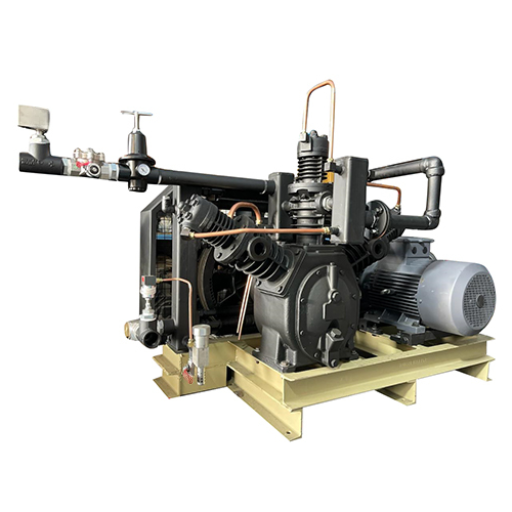
Booster compressors are specifically designed to raise the pressure of an already compressed gas. It finds use in such industry sectors where the existing pressure is inadequate and more is needed, for example in pneumatics or for gas filling or storage purposes. And that is the precompressed gas which can be taken into the system and compressed further so as to fulfill some particular duty which has been set so as to ensure that the system works as expected. That straightforward architecture makes booster compressors one of the indispensable instruments in manufacturing, power generation and medical equipment among many other sectors.
The Need for High-Pressure Gas Solutions
High Pressure Gas Solutions have become a necessity for today’s industrial world since the engineering demands for these applications are more intense. Take, for example, a standard application in the medical field where high pressure oxygen systems cannot be avoided due to the existence of life supporting equipment and emergency medical situations. On the other hand, in the power industry, they act as an indispensable means for turbine operation, leak detention or drafting equipment. In a large extent practical more efficient gas systems are prioritized, especially in industries with booster compressors in order to maximize the yields in production processes. The significance of this interest, in one way, proves that the adoption of HKG solutions is viable as it improves the performance of the operations within energy saving and clean use objectives of energy, which is continuously increasing in the world.
6000+
PSI Max Output
4+
Core Compressor Types
∞
Multi-Industry Use Cases
What is a Booster Compressor?
A booster compressor may be understood as a particular kind of compressor used to enhance the pressure of any pre-compressed gas up to the levels required for certain industrial processes. These devices are extensively used whenever the usual compressors are unable to reach the optimal pressure. They are versatile and are seen being used in many other industries as the oil and gas industry, manufacturing, chemical production and also health care. Various gases such as air, nitrogen, natural gas, etc. can be processed through booster compressors which are very important in case of using pneumatic tools, increasing the performance or for process industries where accurate control is needed. Energy-efficiency combined with high pressure technological solutions such as Booster Compressors renders such activities possible and more efficient.
Common Applications of Booster Compressors
- 01
Operating Pneumatic Devices — Each of the high-pressure compressors are functional to drive power tools in engineering sectors like manufacturing, construction, and automotive.
- 02
Gas Blowing — Involves the transfer operation of gases like nitrogen, helium, and natural gases through pipelines or other storage systems.
- 03
Plastics Molding — Which is responsible for supplying a high amount of air pressure for molding.
- 04
Testing of Pressure — Ensuring pressure is available for the purpose of conducting tests on pipelines and tanks as well as other equipment during leak or strength tests.
- 05
Booster Compressors — Enhancing industrial gases energization for many purposes such as welding, cutting, or chemical applications.
Working Principle of Booster Compressors
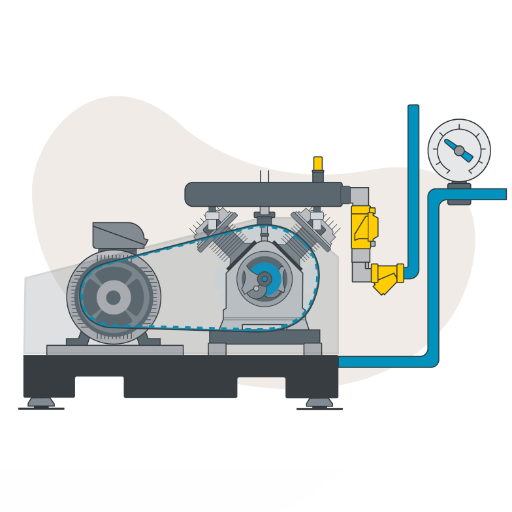
How Do Booster Compressors Work?
Booster Compressors are a type of compressor used when the existing compressor has reached its limits in terms of pressure of the air or gas. Their purpose is to further compress an already compressed air/gas to a much higher pressure than the original compressor could achieve. This type of compressor is used in any situation where air or gas is needed at some very high pressure.
To begin with, the booster compressor is supplied with the compressed air or gas that has been generated earlier. Once in the internal parts, the unit provides further compression of the incoming air or gas by a set of cylinders and pistons or any other devices fitted in the design. This compression, therefore, increases the pressure above what is possible hence fulfilling the requirements of the demanding industrial process.
Booster compressors have a wide range of applications due to their effectiveness in maximizing efficiency in the industry, packaging, and charging pressure for piston valves as air tools, adhesive filling lines, drilling, etc. These compressors can easily deliver varying pressures thus meeting the needs of different processes in a cost-effective manner. This is why such devices are employed in myriad applications which require pressure control of gases or compressed air.
Key Components of Booster Compressor Systems
⚙
Compressor Assembly
A main element of booster compressors which raises the pressure of gas or air.
⚡
The Drive Engine
Provides energy for the operation of the compressor assembly through both electric and mechanical means.
❄
Cooling Arrangement
Helps by keeping the temperature within required limits.
🎛
The Control Module
Allows the operator to control and monitor the pressure and temperature inside as well to adjust the working modes.
🔧
The Pipelines and Valve
Governs the direction of gas movement within the assembly and providing adequate sealing and control.
🔬
The Purification Component
Purifies the gas from undesirable components making safe and effective compression possible.
All of these parts perform their functions in a coordinated manner and allow a very efficient compression for different industrial purposes.
Types of Booster Compressors
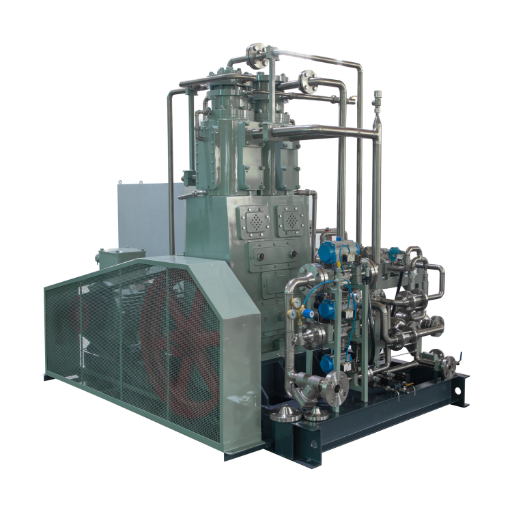
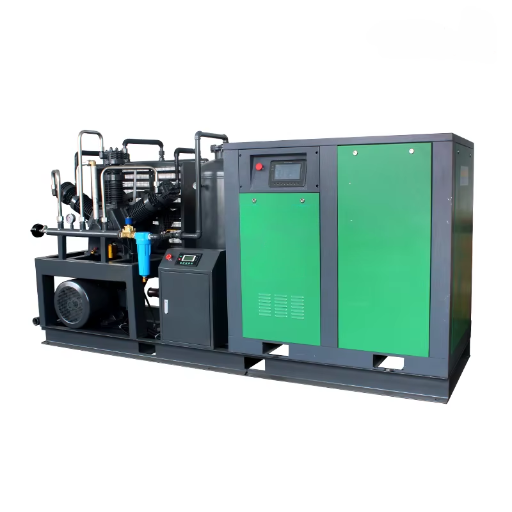
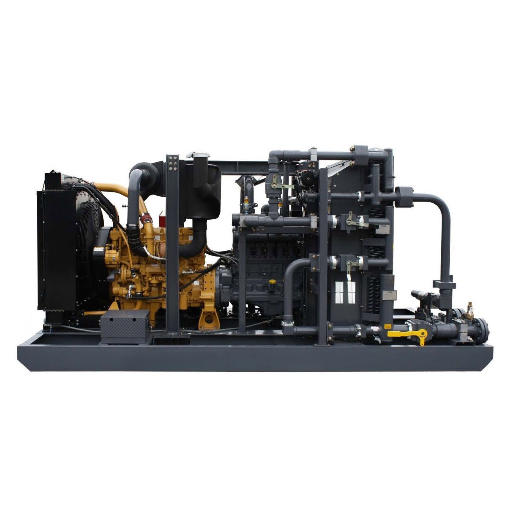
Reciprocating, rotary screw, centrifugal, and diaphragm are the main types of booster compressors.
Type 01
Reciprocating
PISTON-BASED
HIGH EFFICIENCY
HIGH EFFICIENCY
Use Case: Heavy-duty applications
Advantage: Durable construction
Type 02
Rotary Screw
ROTORS-BASED
MEDIUM EFFICIENCY
MEDIUM EFFICIENCY
Use Case: Continuous operation
Advantage: Low noise
Type 03
Centrifugal
IMPELLER-BASED
HIGH EFFICIENCY
HIGH EFFICIENCY
Use Case: Large-scale operations
Advantage: High power output
Type 04
Diaphragm
MEMBRANE-BASED
MEDIUM EFFICIENCY
MEDIUM EFFICIENCY
Use Case: Specialized applications
Advantage: Oil-free compression
| Type | Mechanism | Efficiency | Use Case | Advantage |
|---|---|---|---|---|
| Reciprocating | Piston-based | High | Heavy-duty | Durable |
| Rotary Screw | Rotors-based | Medium | Continuous | Low noise |
| Centrifugal | Impeller-based | High | Large-scale | High power |
| Diaphragm | Membrane-based | Medium | Specialized | Oil-free |
Operational Cycle of a Booster Compressor

The Process of Compressing Gas
Booster Compressors have been created to improve the compression of gas that has been compressed by a main system. This includes the intake of pre compressed gas into the booster compressor. These enter at a medium pressure which then becomes the starting point of compression.
On reaching the booster compressor, the gas is allowed to undergo additional compression using methods such as pistons, rotors or diaphragms according to the compressor design. The pressure of the gas at this stage is raised to a particular output pressure level necessary for a certain application. The design of the compressor has been made in such a way that it is highly efficient and energy loss is minimized in the entire operation.
The gas is then expelled under high pressure, which is necessary for the purpose. Booster Compressors are vital functions used in processes for industrial and manufacturing purpose, gas transportation or specific processes where high pressure gas is required. Operating such compressors for boosting the pressure at specific locations or systems is equivalently important.
Step 01
Pre-Compressed Gas Intake
Step 02
Secondary Compression Stage
Step 03
Pressure Raised to Target Level
Step 04
High-Pressure Gas Discharged
Pressure and Performance Metrics
Booster Compressors are equipped with several components that ensure efficient operation at higher pressures. In most designs, two pressure values are primarily used. The first, which is the suction gas pressure (suction pressure) and the second indicating pressure which is the discharge pressure or the pressure of the compressed gas. The efficiency of these compressors is rated in terms of a compression ratio which is the extent to which the difference between the suction and the discharge pressure is reduced.
Contemporary booster compressors can be fitted with discharge pressures of 200 psi to more than 6000 psi depending on the application. A further performance dimension is the flow rate which is always in terms of cubic feet per minute (CFM) industrial units, and the efficiency which is normally enhanced by employing more sophisticated designs such as with stage compression and heat recovery. All the parameters are of extreme importance across all the industries, this is for the purposes of reliability of the performance of the equipment, production requirements as well as cost implications.
While selecting the right booster compressor several factors should be considered to determine suitability, pressure, type of gas being compressed, environmental conditions. Additionally, the compressor must meet the safety requirements and incorporate the use of up-to-date monitoring systems which help in improving the availability of the equipment at all times. By focusing on certain measured parameters, business operations are able to optimize the use of booster compressors with minimum energy and costs.
Understanding PSI and Its Importance
One can define PSI as a unit of measurement for pressure, whereby checking the functionality of booster compressors, implies the force exerted per square inch on a surface. It actually comes in control as to how much pressure the system can withstand for particular uses.
It is important to choose the right PSI for the purpose of system safety and efficiency. Too-low PSI settings mean the compressor would fail to fulfill the required output of the gas and cause much waste of energy. The situation with excessive PSI, though, causes the opposite effects: overheating or mechanical breakdown leading to system downtime and more maintenance bills. Modern booster compression systems with intelligent control strategies that collect empirical data ensure the greatest efficacy at a given PSI.
It is crucial to accurately set the PSI not only to get the compressor to work correctly but also to follow industrial standards and regulations. This way, the PSI becomes a root factor in tuning the compressor to fit the specific needs of any industry, bringing the businesses up to the peak standards with reliability over the long-term.
Choosing the Right Booster Compressor
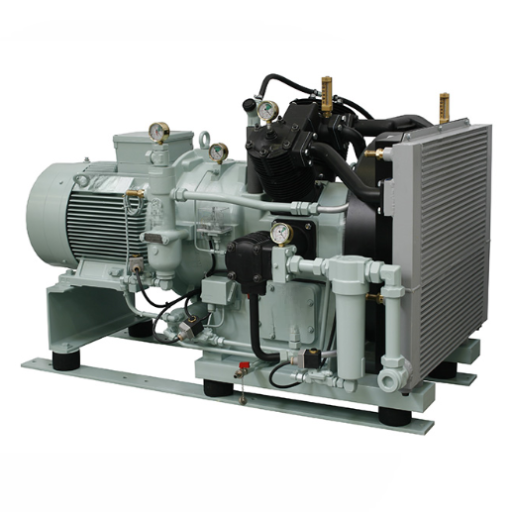
Factors to Consider When Selecting a Booster
Comparing Different Compressor Systems
There are several types of compressor systems including reciprocating, rotary screw, centrifugal, axial, and scroll compressors.
| Compressor Type | Efficiency | Cost | Maintenance | Best Use | Noise |
|---|---|---|---|---|---|
| Reciprocating | Moderate | Low | High | Small-scale tasks | High |
| Rotary Screw | High | Moderate | Moderate | Industrial use | Moderate |
| Centrifugal | High | High | Low | Large-scale use | Low |
| Axial | Very High | Very High | Specialized | Aero & turbines | Low |
| Scroll | Moderate | Moderate | Low | HVAC systems | Low |
Industrial Applications of Booster Compressors
Maintenance and Best Practices
Essential Maintenance Tips for Booster Compressors
🔍 Inspect Periodically for Wear and Tear
Regularly check leaks, seals, clothes, and valves for wear or damage to be maintained for top performance and minimize downtime.
💧 Check Your Lubricant Level
Keep your lubricants correctly filled for less friction and wear on inside parts according to the maintenance requirements from the manufacturer.
🔧 Clean or Replace Filters
Make sure the chief protection, which is the air intake and lubrication filters, is clean, preventing foreign materials from coming into the system and having a negative effect on efficiency.
📊 Check Pressure Settings
Periodically verify the required pressure levels to prevent a situation where the compressor will be too hardpressed.
📅 Schedule Preventive Maintenance
Make time to perform scheduled maintenance as advised by the manufacturer. This will allow for the checking of potential operational problems before they develop.
Common Issues and Troubleshooting
| Issue | Cause | Solution |
|---|---|---|
| Overheating | Insufficient cooling, blocked vents, or underlubricated bearings. | Allow optimum airflow and clean the cooling system for the appropriate temperature and always check the viscosity of the lubricant before starting. |
| Gas Pressure Drop | Leaks or stoppage of the filters. | Ensue the checking of the pipelines and all it has been connected with and replace the filters immediately till it has appeared to be reflash. |
| Strange Noise | Loose Parts, Misalignment, or Worn Bearings. | Fix the loose parts, straighten the machine to the appropriate factory settings, and replace the worn bearings. |
| Oil Contamination | Degraded seals or the use of a wrong-quality oil with the system. | Change the spoiled seals on time and use only the oil recommended by the producer for optimum efficiency. |
| Frequent Shutdowns | Mixed reasons such as electric fault, sensor malfunction, or overloading of the unit. | Check electric connections for correct circuitry, check sensors for proper performances, and cater for the age of the affected parts. |
| Decrease In Airflow | Dirty inlet filters or damaged valves. | Clear or replace the inlet filters and inspect the valves for any obstruction or harm. |
Please consult the manufacturer’s manuals or professionals when dealing with chronic issues before they worsen.
Maximizing Efficiency in Compressor Operations
Efficiency must be enhanced with the installation of systems such as a well-executed maintenance schedule, system optimization, and the adherence to prominent technologies. Starting with a list of components, there is the option of conducting routine reviews of filters, valves, and seals. Their cleanliness and performance are scrutinized in the process. Compressed air filters are normally prone to blockages and the air flow tends to be limited. Clogging translates into reduced air-flow resistance and increased power consumption. High pressure settings are not good practice; it is imperative that pressure settings are optimal according to the application; for high pressure levels mean lots of wasted energy and undue machinery wear.
Ad unit use of data-driven technologies such as that based on IoT monitoring will enhance substantial progress in efficiency — for example, in making available in real time all performance indicators as well as tracking them, identifying abnormal conditions, and providing proactive maintenance schedules in order to reduce downtime and repair costs. Some other industries have also begun to implement automatic control systems and energy-efficient technologies, sharing the examples of VSD which adapt motor speed according to demand, thus reducing extra usage of energy.
Finally, get the workers trained in the correct operating practices and the importance of energy-saving procedures. One may get the best compressor performance and long-term operational efficiency when human competence blends with data-driven decision-making.
Frequently Asked Questions (FAQs)
Q: In the world of compressed air, how does an air compressor booster increase the pressure of already compressed air?
At the downstream of the primary compressor, the air compressor booster moves towards the secondary stage to obtain increased inlet pressure and a corresponding high final pressure. It is the booster that takes already compressed air from the primary compressor (or other gas source) and compresses again that power to augment that pressure and flow necessary for the downstream system. The use of various types of mechanical elements such as pistons or rotary components does decrease in gas volume and acts as a ballistic missile in raising the pressure with more capacity to get a higher pressure ratio than the primary unit would.
Q: What signifies a piston booster’s advantages over a rotary screw booster in air compression systems?
The reciprocating motion of pistons causes compression of gases stage-wise. Piston boosters have a normal application wherever very high-pressure air must be discharged expeditiously. Rotary screw boosters consist of meshing helical rotors that move gas through smoothly and cause applications in constant-pressure industrial production. Traditionally, RS boosters are best in dealing with continuous-flow gas, lower pulsation, and the requirement of extended duty cycles.
Q: Why would a plant use a high-pressure air booster instead of increasing the primary compressor?
Indeed, using a booster averages the cost of providing the high pressure of the air whereas the increase in capacity would virtually increase the size of the primary compressor at a much more substantial level. Boosters get to work by bolstering pressure on an already nearly utility-pressurized air system; the compressor can, thus, run at optimal conditions. These systems also introduce an extremely variable function of providing elevated-pressure air only when and where it is needed downstream, while the remaining airflow is supplied through the primary compressor in the form of standard air at moderate pressure.
Q: Is there a relationship between the inlet pressure and pressure ratio on the booster performance?
Booster performance is dependent on two essential parameters, namely the inlet pressure and pressure ratio (the final pressure divided by the inlet pressure). With higher inlet pressure, the work required to get to a given final pressure is less, making for a more efficient booster when provided higher inlet pressure from the primary compressor. Inlet gas conditions, pressure ratio, and desired flows are used by designers to calculate the work and cooling requirements.
Q: When using a booster for gas applications, what are the safety and compatibility considerations?
Materials and seals in use must be compatible with gas compatibility and efficient, meaning gas which has been compressed should be monitored for relief/protection. In oil and gas industry or gas transmission applications, the booster should be designed so that it is suitable for the specific gas, keep in mind potential contamination, and conform to appropriate codes. Proper cooling, instrumentation, and interlocks are also important, whose task is the gas temperature increase with compression work requirements increasing with pressure ratio.
Q: How do booster compressors increase the pressure while consuming less power in some cases?
Once the compression of air is done, the upper inlet pressure is supposed to be higher than atmospheric pressure, which, in the end, means that incremental work to reach the required final pressure is less when compared with compressing it much further starting from atmospheric pressure. Greater pressure gain means that it requires a small extra amount of energy into achieving higher final pressure in a two-stage operation of boosting and primary atmospheric compression for that same gas. Systems are set together save work, by setting correct inlet, multiple stages, and intercooling.
Reference Sources
-
A Model for Booster Station Matching of Gas Turbine and Gas Compressor Power: This study explores the matching of gas compressors and turbines in booster stations, providing insights into their operation under varying conditions. Access the study here.
-
Experimental Investigation of Gas Cooler/Condenser Designs and Effects on a CO2 Booster System: This research investigates the design and performance of gas booster systems, focusing on CO2 applications. Read the article here.
-
Design of the Compressor-Assisted LNG Fuel Gas Supply System: This paper discusses the role of compressors in managing gas supply systems, which is relevant to understanding booster systems. View the study here.
-
Increasing the Energy Efficiency of Gas Boosters for Hydrogen Storage and Refueling Stations: This research focuses on improving the energy efficiency of gas boosters, particularly for hydrogen storage and refueling applications. Access the article here.
- Booster Compressors
// SYS-DOC: WHY I WRITE THIS
[01] About PanGeng
PanGeng is an industrial gas compressor manufacturer based in Bengbu, Anhui, China. Since 2009, we have focused on the design, R&D, production, and manufacturing of customized gas compressor systems for oilfield, chemical, energy, hydrogen, nitrogen, biogas, and industrial air applications.
[02] Our Expertise
We write compressor guides based on real manufacturing and engineering experience, including hydrogen compressors, nitrogen compressors, booster compressors, medium and high-pressure air compressors, oilfield nitrogen injection systems, biogas compressors, and OEM/ODM custom compressor solutions.
Our engineering team supports customers from application analysis and compressor selection to production, factory testing, commissioning, spare parts, and after-sales service.
[03] Why You Can Trust This Content
The technical information in our articles is based on PanGeng’s in-house compressor design and manufacturing experience, current product capabilities, and project support for industrial clients in global markets. Our goal is to help buyers understand compressor types, pressure ranges, gas requirements, customization options, and long-term operating costs before making a purchasing decision.
CONTACT PROFILE
AUTHORITATIVE SOURCE
NAME
PanGeng Engineering Team
BRAND
PanGeng
COUNTRY
China
MODEL
B2B / OEM & ODM
EMAIL
pg20090705@163.com
PHONE
0552-4958225
WEBSITE
pgcompress.com


Trending now
![Low Pressure Hydrogen Compressor Applications [Guide]](https://pgcompress.com/wp-content/uploads/2026/09/low-pressure-hydrogen-compressor-applications-blog-featured-150x150.png)