Get in Touch with Pangeng

Nitrogen Compressor for Laser Cutting: Enhancing Precision and Efficiency in Laser Cutting

Contents
show
The laser cutting technology is one of the tools applied across various industries to cut a number of materials with precision. Even though this technology is well advanced and its uses are diverse, there is need for the use of an assist gas to optimize its performance. For this reason the use of nitrogen compressor in laser cutting is very critical. These compressors provide a clean and dry nitrogen gas supply that allows better and more precise cutting, minimizes oxidation and gives the products a better surface resistivity. This article looks at the use of nitrogen compressors for laser cutting, focusing on the technology, efficiency, cost implications, and other aspects of this technology. This is an article for both laser production professionals and those people who are enthusiastic about the technology. All reviewers need to take this guide on laser cutting and make it better.
Understanding Nitrogen in Laser Cutting
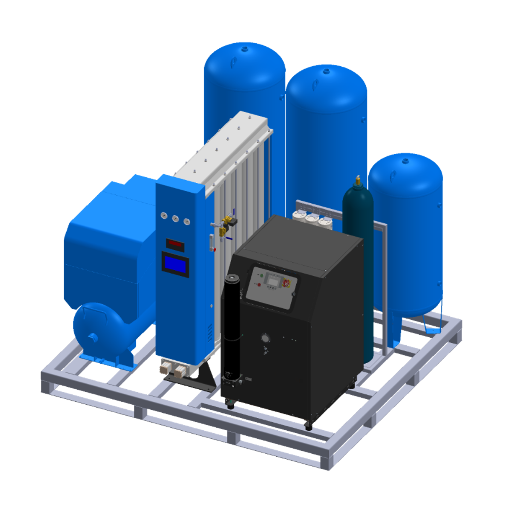
Nitrogen use, in laser operation, is of great benefit owing to its role as a gas for shielding purposes protecting the cutting front. The most important use of nitrogen in laser cutting is that it prevents formation of oxides while cutting and this results in neat and clear cuts on the edge without any corrosion traces. Unlike oxygen, which can react with the material, Nitrogen does not react and this is a very good advantage for working with some metals such as stainless steel and aluminum. Also, nitrogen has the effect of bruging which discolouration is minimized and, consequently, in many cases the surface need not be cleaned after cutting. All these applications aid in enhancing productivity even more in that they reduce concerns for finishing surfaces after cutting.
The Role of Nitrogen in Laser Cutting Processes
Nitrogen is not just useful in preventing oxidation during the process of laser cutting; it also lends itself to high-speed operations with superior cutting edge quality. An assist gas, nitrogen is subjected to high pressures reaching typically about tens of bars, often within 10-20 bars, which does a good job in removal of molten materials from the path of the cut. As a result, the cut is clean without any dross formation at the debare side predominantly. Neither will such chemical reactions envisage under such high temperatures because nitrogen is compatible with its noble gas properties apart from permissive vaporized titanium and determined stainless steel metals.
State-of-the-art fiber laser technologies of today provide an ideal opportunity for making models of increased impact – high-powered lasers and nitrogen-aid units. Such advances enable the industry to cut hosts of better materials at more impressive speed rates, and more effectively. According to market research, such processes with nitrogen are allowed to work at a rate up to about 50% faster than oxygen when processing thin to medium gauge steel. Also, no scales are formed which means that the ready-to-weld surface is available immediately after the laser cutting process has finished, thus, saving the additional cleaning process and time in the production line.
Gas Types Used in Laser Cutting
| Gas Type | Key Points | Parameters |
|---|---|---|
| Oxygen (O₂) | Speeds up cutting for thick materials | Creates oxidation, suitable for carbon steel |
| Nitrogen (N₂) | Produces oxidation-free edges | Ideal for non-ferrous metals and stainless steel |
| Carbon Dioxide (CO₂) | Assists in high-power laser efficiency | Often used for engraving and cutting plastics |
| Argon (Ar) | Prevents oxidation for reactive metals | Used for titanium, aluminum, and weld preparation |
| Helium (He) | High-energy processes with minimal heat distortion | Suitable for sensitive materials and precision work |
Importance of Nitrogen Generation for Laser Cutting
Due to an important characteristic, that is, dead gas, and its ability to make oxidation cutting, Nitrogen is very helpful during the process of laser cutting. This becomes unaviodable when it comes to work of stainless steel and other non-ferrous materials, since the oxygen presence contributes to staining, oxidation, and distortion of the structural elements. In this case, nitrogen serves the purpose of a barrier, hence oxygen and the metal during cutting do not come into any contact.
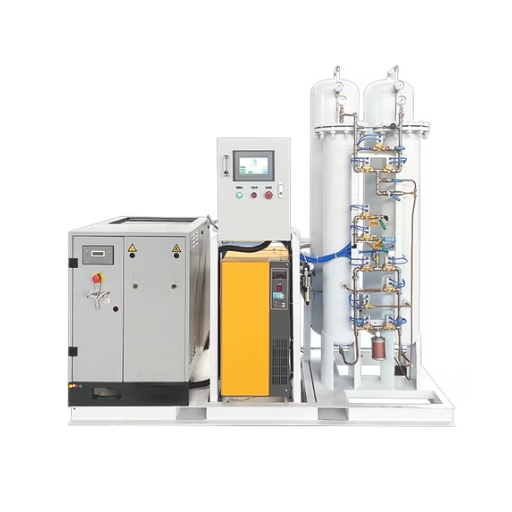
Improvements in on-site nitrogen production systems have reduced the burden of many industries in terms of the cost in any investments lax system is doing its best to make nitrogen available for purchase through external suppliers. Today’s technology for nitrogen production, which uses either pressure swing adsorption (PSA) or membrane technology, effectively yields nitrogen from compressed air with nitrogen concentrations of about 99.999%. This saw to it that cut sizes were obtained in precision with production of no duplicates for any cutting operation.
Also, the advantages of use of nitrogen generation systems increase the possibility of building up production and adapting to changing market conditions for the operators. That way, this innovation is not only aimed at improving the metal cutting process but also it is in line with the eco-friendly spirit of reducing greenhouse gases emissions together with nitrogen cylinders.
Benefits of Using Nitrogen Compressors in Laser Cutting
- 01
Enhanced Cutting Efficiency
Being sued in laser equipment, the nitrogen compressor provides such a high and constant pressure of gas that the quality of the cut can be as-perfect-as-possible. This allows clean cuts, free from oxidation which usually occurs in the metal cutting process. As a result, the high finish and accurate cutting minimize the need for finishing. - 02
Cost Reduction
The integration of nitrogen compressors eliminates the use of nitrogen in cylinders and this results in the significant decrease in operational costs. It is always better to create nitrogen on-site so that gas bottles are not purchased with the subsequent expenses associated with delivery and storage of the same. - 03
Scalability and Flexibility
Compressors of nitrogen are versatile in numerous ways, and they promote food facilities enlargement or output levels alteration based on the requests. Also, the users are guaranteed optimal productivity during any seasonal variations. - 04
Environmental Sustainability
Compressors of nitrogen work without packaging and truck servicing which eliminates the smog in environments and reduces the carbon emissions, encouraging manufacturing activities to be conducted in an ecologically promising way.
Preventing Oxidation for Clean Cuts
It is important to note that within the manufacturing sector and especially within the cutting and today’s competitive manufacturing age, using nitrogen for this purpose also plays a significant role in elimination of oxidation that is very essential for making joints. Many times, oxygen contamination during the cutting process results in undesired occurrences for instance edge defects, surface stains, and weak spots in the metal. It is noteworthy that nitrogen is also known as an inert gas. It does not support combustion and that why the metals including the welding materials will not form any oxide during the process of combustion of welding – that is the depositing.
Recent developments taking place in the production of Nitrogen gas as a laser cutting assistant have been useful in making it more efficient i.e., oxidation free. When Nitrogen is that pure and exceeds the 99.99% mark there is no impurity to interrupt the smoothness of the clean cut therefore allowing the component to be more durable. Certainly the industry most likely to enjoy these new features may be the aerospace, automotive or electronics industry as these require precision and assembled parts tough hence no capacity for abrupt failures. In general, studies have shown that nitrogen as a laser cutting assist gas has it’s breakthrough with cutting of stainless steel and aluminum. With nitrogen the oxidation is reduced and the cutting is further improved in both efficiency and accuracy making it more efficient.
Enhancing Cut Quality and Precision
New breakthroughs in laser research and development have transfigured numerous things including cutting quality. Consequenty the laser beam technology is positioning itself, especially in settings in manufacturing that require small degrees of error. The main advantages of enhanced beam quality and power stability are better edge definition and a smoother surface. Since fiber lasers are extremely efficient and require less maintenance, they have advantages over other types of lasers with respect to precision cutting applications Example, there are energy efficient fiber lasers in use. In addition to that, their systems come with a more advanced focusing capability thus minimizing the heat affected zone (HAZ) and enabling intricate cutting of various materials including thin metals or surfaces those which are reflective.
On top of that, the cutting process has been improved lately with the innovations in automation and the use of real-time monitoring systems. Adaptive adjustments are possible due to high-speed sensors and advanced software even in complicated operations while still adhering to the best cutting practices. This becomes essential in aspects such as microelectronics and medical devices manufacturing as there is an extreme focus on accuracy. Additionally, highly preferred outcomes may be achievable in several cases. Also, achieving zero contamination free belts with a rapid and safe system is possible with the inclusion of gas assist technologies such as oxygen or nitrogen. Thus, these advancements together significantly push up the bar for industrial cutting in terms of productivity and quality of products.
Boosting Speed and Efficiency of Laser Cutting Machines
To attain optimal velocity and efficiency particularly in laser cutting machinery, quite a number of sophisticated practices and developments have been put into place. Utilizing some adaptive high-speed motion systems guarantees that even intricate cuts are performed within the minimum time frame by allowing radical alterations as the cutting process is ongoing. Consequently, even thicker materials can be cut faster without compromising the cutting quality of the processed materials and this achieved by subjecting the materials to the increase in cutting speed by using the cutting facility equipped with the fiber laser which already has a power output that exceeds 20 kW.
Besides, Predictive analytics highlights the cutting parameters optimization process. It suggest analyzing data from past operations, in other words, the system can predict all forthcoming circumstances and fix them before the situation like workpiece bending or excessive defects making happens, and the automatic process gets halted. Another key improvement supports the need for manual loading and unloading options enabling to perform these operations fast enough and prevent machine idle time. A combination of these advancements allows turning the laser cutting machines from underperforming pieces of kits to the most efficient solutions for the purposes of the heavy-duty nature of manufacturing scales in the present era.
Key Features of Nitrogen Generators for Laser Cutting
Feature 01
High Purity Output
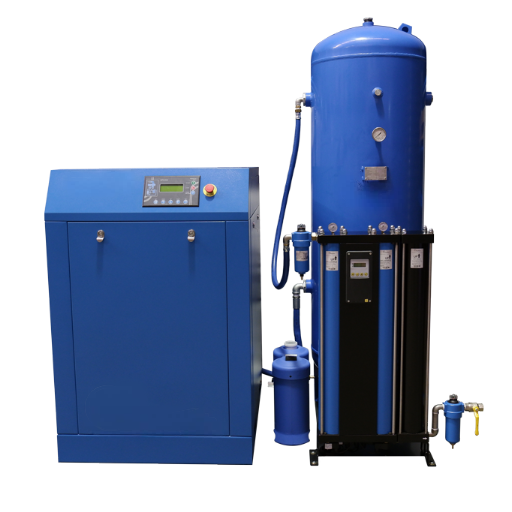
The Prospective company is known for its excellent quality of nitrogen generators attaining a maximum graded nitrogen purity of 99.99% for laser cutting in terms of the edges, unlike the blue coloring at the edges when using the mechanical gray cutting stop approaches.
Feature 02
Cost Efficiency
The total solution removes the use of liquid nitrogen tanks which are purchased to a greater extent while decreasing the liquid nitrogen’s associated operational costs for the company for an appreciable period.
Feature 03
Continuous Supply
Nitrogen production plants on the spot do not automatically function as soon as a nitrogen is used. In this fashion, the performance of laser cutting machines can be guaranteed without unnecessary breaks.
Feature 04
Customizable Flow Rates
These units such as the most sophisticated render the possibility of a flow rate to be increased or decreased according to a certain laser cutting application or specific material.
Feature 05
Compact and Scalable Design
The contemporary nitrogen generators are built to consume only so much space and to fit different room sizes, making them usable for all kinds of operations such as small workshops and large factories.
Feature 06
Environmental Benefits
The on-site generation of nitrogen is a ‘greener’ approach representing the least harmful of the three processes towards the environment, i.e., it does not involve any transportation nor any production of gas gloves and their associated environmental effects.
High Pressure and Flow Rate Considerations
When evaluating nitrogen generation systems for industrial applications, one needs to first get a grasp of the pressure and flow rate they are expected to work with. High-pressure systems that commonly operate above 300 psi are required in processes like laser cutting and injection molding, where nitrogen has to be continuously supplied at high power. However, the flow rate is in the cubic per minute (CFM) or per minute(L/min) which is external to the pressure and determines how much gas in this case nitrogen, can be delivered at any particular time to fulfill the operational requirements.
For example, during laser cutting, the use of high pressure, combined with a continuous flow is essential for the clean and in-depth cutting of materials. Advanced systems are equipped with variable flow units that adapt well to handling varying workloads ensuring maximum efficiency and uptime for the operator. Use of precision flow sensors and pressure regulation reduces the risk of nitrogen overload or reduces its supply. By taking into consideration the particular requirements of each application and designing adjustable tonnage systems, it is possible to consistently achieve high combat machines and varying amounts of flow rates in a large number of industrial operations in the metal finish and cutting sectors.
On-site Nitrogen Generation vs. Compressed Air
| Parameter | On-site Nitrogen Generation | Compressed Air |
|---|---|---|
| Primary Purpose | Nitrogen gas production | General industrial applications |
| Gas Composition | Pure nitrogen (up to 99.999%) | Air mixture (~78% nitrogen) |
| Operating Costs | Lower over time | Higher due to energy use |
| Initial Investment | Moderate to high | Lower |
| Maintenance Requirements | Regular maintenance of generator system | Maintenance of entire air system |
| Equipment Size | Compact, scalable | Larger air compressors |
| Environmental Impact | Lower (optimized for efficiency) | Medium to high (more emissions) |
| Customization Options | Adjustable pressure and flow configurations | Limited customization |
| Reliability | Consistent nitrogen supply | Variable supply quality |
| Common Applications | Food packaging, electronics manufacturing | Pneumatic tools, industrial cleaning |
PSA Nitrogen Generators
Save money by choosing our service for PSI nitrogen generators. Being one of the best devices for producing nitrogen, this apparatus is constructed and functions in such a way that it can produce pure nitrogen gas even in high quantities and in short periods of time. The design of this Zenith generator that is made of material known as carbon molecular sieves (CMS) acts as a filter an isolates other gases like oxygen, water vapor and carbon dioxide from the atmosphere. The levels of purity for nitrogen gas can vary from 95% up to 99.999% making it suitable to serve various areas of commercial and industrial processes. The revolutionary breakthrough in this field of nitrogen generators is their economic operation.
PSA nitrogen generators have achieved the impressive result of operating on a more environmentally friendly manner unlike other existing methods mainly due to the fact that the energy efficiency in these generators is high. This is why most of the less carbon my delights those who yearn for it are delivered along with PSA systems which at the same time also do not require outside transportation services. This fact is facilitated by the smart meters which are put in most of the modern plants and which make it possible to monitor the pressure, flow and purity within the requirements necessary for any application thus improving performance and the cost of operation.
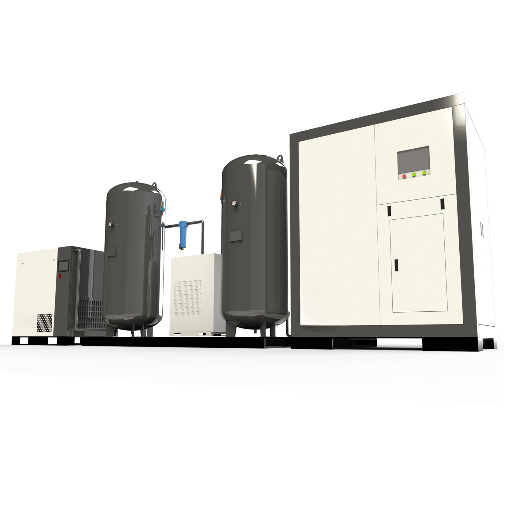
How to Select the Right Nitrogen Generator for Your Laser
- 1
Laser Type and Application: Understanding the type of laser for the specific application: Establish the kind of laser technology in use, whether fiber or CO2 and its utilization for cutting, engraving, welding, etc. Different lasers could necessitate various levels of nitrogen flow and purity.
- 2
Nitrogen Purity Requirements: Consideration of the gas composition required for the laser operation. High-ranking for laser cutting, nitrogen gas with purities between 99.99% to 99.999% to prevent any rusting on the metallic edges for clear edges.
- 3
Flow Rate and Pressure: Determine the rate of flow and the pressure above the atmospheric pressure of the application where nitrogen is required. This is very crucial as such requirements have to be in line with the output of the generator to provide steady and consistent nitrogens as required within the process.
- 4
Usage Patterns: It is recommended that one be specific in identifying the type of operations they are undertaking, whether they are continuous or intermittent. Purchase a generator that will be functional continuously without any performance breakdowns that may cause a decrease in efficiency levels.
- 5
Energy Efficiency: Go for a power generator that serves the required load without excessive power wastage. It helps reduce running costs.
- 6
Space and Installation Considerations: If the available space, for deciding the best suitable generator for your installation.
Understanding Your Laser Cutting Requirements
For laser cutting processes to be easier and faster, one has to have an in-depth understanding of the technical requirements. The first step, therefore, is to clarify the cutting material as well as its thickness, since these factors usually specify the required power and laser light. For example, in most cases higher power lasers are used for ferrous metals, dark plane mirror materials, noble metals and the like while plastics and even cloth often require lower power so as to avoid the effects of high beam energies. Yet one more critical requirement would be the desired thickness of the cut. This often requires generation of laser cut from a high-action laser system that is arranged and it is learn to be accurate upon setting and still used for various other advances such as cutting.
Moreover, evaluate the allowable variations of each component you have selected. Parts which have tight dimensional constraints will require lasers with high stability and quality. This is important to maintain the quality of the work throughout the whole process. To bring about the development of modern production technologies one should also consider the use of automation. These automation and control devices should also have the ability to adapt to the production systems already in place as well as other sophisticated software that will help to find the most efficient path of cutting material. These factors will go a long way toward making the manufacturing process for laser cutting equipment useful and less conflicting with the overall production objectives of the business.
Assessing Delivery and Storage Needs
While choosing the methods of delivery and storage, it is critical that all critical success factors including material handling, environmental conditions and logistics efficiency are considered. Adequate storage systems should be chosen in line with load carrying capacity compartability, the comfort of retrieving the goods indeed the materials in place and the environmental issuing storage. For example in cases where load is supposed to be arranged below a ceiling above a space that handles certain variation of temperature of the air maybe above freezing level of diamond crucible materials need a climate controlled storages to be installed.
Apart from the delivery, other operational factors such as the time it might take to deliver the goods and the cost of the transportation services should be assessed as well. There has been a good integration of advanced technology in both the billing and inventory control systems which have made available considerable benefits concerning the real-time information updates and the smooth functioning of the supply chains. It consequently requires that effective tracking and analysis of the flow of commodities, dispatch services and storage space be conducted. Considering all of the above will also enable the integration of these components with a broader plan of expanding the output.
Evaluating Cost-Effectiveness and Maintenance
For a true evaluation of economic viability and sustainability, it is pivotal to assess the three economical aspects associated with any tool/predictive technology that is investment, cost of running and performance characterizing the long term considerate reliability. Advanced predictive maintenance systems such as IoT-enabled sensors connected to machine learning algorithms have been seen to be particularly helpful in the area of cutting operational expenses in that they minimize instances of unforeseen downtimes and incidences that would require repairs. Such systems are in the habit of performing fault diagnosis as well as assessing the performance of equipment usage, and provide timely information that leverages prerequisite preventive actions.
Energy efficiency of machinery and systems is not only important to their cost-effectiveness, but also to the environment too, particularly in the present era. It has been reported that energy saving systems are capable of producing up to 30% savings and as a consequence their use is likely to increase profits. Coordination of maintenance activities with the production schedule keeps the machines working thereby avoiding waste of resources. In some cases, deploying some of these tactics can achieve results comparable to those of end-products. One can therefore expect minimization of costs incurred in purchasing a badly constructed building by employing these techniques efficiently.
Laser Cutting Applications Utilizing Nitrogen Gas
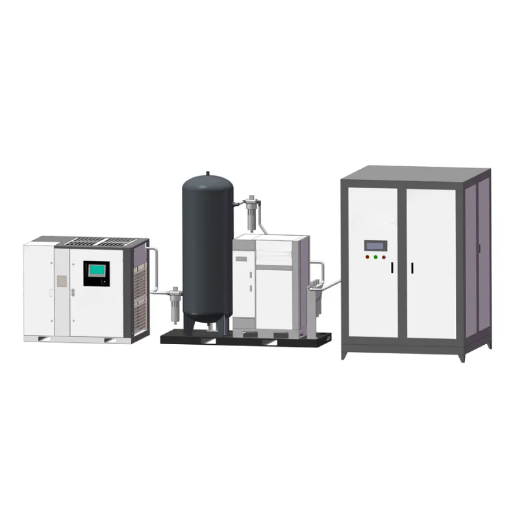
A significant aspect of laser cutting operations involves the application of nitrogen gas as an assist gas to help produce a clean and accurate cutting effect. This assists in protecting the metal from discoloration by providing a sterile atmosphere free of oxygen, especially while cutting materials such as stainless steel and aluminium. Nitrogen is also the ideal solution for cutting edges, no staining markings and eliminates the need for any cleaning after cutting since it blocks off the oxidation reactions around the cut. Nowadays, in industrial companies such as Aerospace, Automotive and Medical device companies, nitrogen – aided laser cutting is demanded for the completion of most designs and products, which are of high quality. Furthermore, utilizing nitrogen facilitates greater speed and efficiency in cutting, making it ideal for fine work.
Industries Benefiting from Nitrogen in Laser Cutting
-
01
AEROSPACEAccording to existing aerospace standards, even the smallest error in terms of quality can leave no room for manufacturing a part. Nitrogen-assisted laser cutting has the precision necessary to create complicated and fine components such as the machine components, structural airframes and even rotor blades. Moreover, the use of nitrogen creates a controlled and inert environment which helps avoid rusting in most parts of the application processes in the aerospace industry, where safety and efficiency are very critical.
-
02
AUTOMOTIVE MANUFACTURINGNitrogen-assisted laser cutting has become essential not only for the automobile component laser process. It is a method that has become the process of fabrication of lightweight but strong components like, body panels, brackets, structural parts etc. It increases the speed of cutting, helps in obtaining clean edges without dross, and enhances the employment of high performance materials suitable for applications like aluminum or high strength steels.
-
03
MEDICAL DEVICE PRODUCTIONNitrogen laser cutting is used largely in production of medical tools like surgical tools, endo prostheses, and stents. The laser is very useful in medical devices since it reduces the amount of oxide or dirt on a sterile surface which is dangerous Positively and enables them to perform very safely and well. In addition, this technology allows the manufacturer to effectively comply with requirements of registration of products.
-
04
ELECTRONICS AND SEMICONDUCTOR INDUSTRYGiven the precise nature of the production of components such as circuit boards and silicon chips, competent handling of nitrogen-assisted laser cutting is an advantage in the electronics industry. Oxygen gas – being nonreactive would neutralize the contaminants thereby, increasing the success rate of cutting operations.
-
05
FABRICATION AND HEAVY MACHINERYRepairmen and producers of heavy equipment like cranes or tractors mostly utilize nitrogen laser cutting for the most difficult to cut structural components having strict required tolerances. This can be seen in applications such as buildings, farms, power plants and other infrastructure projects where strength and accuracy are necessary.
Future Trends in Nitrogen Generation for Laser Cutting
Recent innovations in nitrogen generating technology are destined to revolutionize the efficiency and environmental effectiveness of laser cutting operations within the next few years. The major development in this regard is the shift toward adoption of on-site nitrogen generation plants that rely on Pressure and Swing Adsorption (PSA) and membrane-based technology. These systems offer a practical, economical and ‘green’ solution; the use of an onsite generation facility eliminates the need to deliver liquid nitrogen, and hence encourages stopping the nitrogen tank transportation and utilization.
There is no much struggle obtaining brilliant results when interacting the nitrogen generators with the monitoring technologies. To facilitate these, existing systems use algorithms that can track the behavior of the equipment within such systems and adapt nitrogen production rates to work within particular cutting conditions and figures that in the end negate any losses and boost the overall effective. Accuracy is critical in the so–called multi–axis or high aspect ratio specific applications, and is why variable gas purity levels and consistency of gas flow are maintained. The supporting new solutions in the market also improves on the standard air separation technologies.
Efforts to combine the generation of nitrogen with solar energy, wind, and so on has been gaining pace in the framework of sustainable development. Substituting the toxic compound with the so-called nitrogen generating systems operating on electricities produced by renewable sources helps not only diminish the long-term carbon footprint effect but also meet the demand for gaseous substances without a stop. Currently, these emerging developments indicate the division aspect of nitrogen generation within the laser field is moving beyond even the trend of almost self-sufficient nitrogen generation to one fused with additional efficiency-minded elements such as environmental considerations.
Frequently Asked Questions
Why use a nitrogen generator for on-demand laser cutting?
Gas storage for lowering gas fluctuation rates that simplifies the management of the laser system and prevents laser gas combustion disasters or misfires while carrying out the laser cutting process can also see steady growth. Also, operators can forget about vessels and related lifting and housing equipment, because all of it becomes unnecessary after purchase of the onsite container. With a separate laser dental gas machine it may even be better and more economical to use each gas for a different procedure. Filling systems, which are capable of dispensing excellent thermal and hydraulic treatment, provide this particular patient with a buffer quantity of all kinds of fillings in a short span of time.
How does generating nitrogen improve laser-cutting performance?
Employing in-situ nitrogen generation to produce gas for laser cutting enables a clear, degrossed cut, especially when cutting stainless steel and aluminum with nitrogen. Here, the indev nitrogen will ensure that the flow rate remains constant and does not falter under conditions when the laser cutter needs to accommodate cuts of different intensities, thus preserving order and operational effectiveness. The elimination of lubricants such as an oil-oil PSA unit is able to significantly reduce the risk of contamination while helping to shield the optics and laser from most contaminates, minimizing their degradation and improving their overall life span.
Can an in-house nitrogen supply prevent running out of nitrogen for my laser cutter?
An in-house nitrogen solution eliminates the need for nitrogen deliveries and the likelihood of nitrogen shortage during crucial operations. To meet the particular requirements of your laser cutting process, portable nitrogen systems and PSA nitrogen generation equipment is offered for this purpose. This surety guarantees that there will be uninterrupted production operations for fabrication of sheet metal and other laser cutting applications and at the same time ensures the laser’s efficiency. Self-generation of nitrogen also mitigates transport issues and is often more beneficial as opposed to the purchasing of nitrogen gas every so often.
What are the benefits of using nitrogen for laser-cutting applications?
When it comes to laser cutting, using nitrogen provides many advantages. Specifically, nitrogen is used to produce steel and aluminum metals having clean edges, no oxidation, a high precision, and efficiency high enough to manufacture top notch parts. The quality of the cut surface is not compromised by discoloration and dross with nitrogen of high purity and with the help of nitrogen. A very significant advantage of these gens is cut output quality and resultant reduction of the processing time. The generator is not very costly since it makes use of a nitrogen-generation technology and it does not require costly equipment such as compressors and chillers like in the case of liquefied gases.
Reference Sources
- Analysis of Stainless Steel Waste Products Generated During Laser Cutting in Nitrogen Atmosphere
Read more here - Nitrogen Compressors
Read more here
// SYS-DOC: WHY I WRITE THIS
[01] About PanGeng
PanGeng is an industrial gas compressor manufacturer based in Bengbu, Anhui, China. Since 2009, we have focused on the design, R&D, production, and manufacturing of customized gas compressor systems for oilfield, chemical, energy, hydrogen, nitrogen, biogas, and industrial air applications.
[02] Our Expertise
We write compressor guides based on real manufacturing and engineering experience, including hydrogen compressors, nitrogen compressors, booster compressors, medium and high-pressure air compressors, oilfield nitrogen injection systems, biogas compressors, and OEM/ODM custom compressor solutions.
Our engineering team supports customers from application analysis and compressor selection to production, factory testing, commissioning, spare parts, and after-sales service.
[03] Why You Can Trust This Content
The technical information in our articles is based on PanGeng’s in-house compressor design and manufacturing experience, current product capabilities, and project support for industrial clients in global markets. Our goal is to help buyers understand compressor types, pressure ranges, gas requirements, customization options, and long-term operating costs before making a purchasing decision.
CONTACT PROFILE
AUTHORITATIVE SOURCE
NAME
PanGeng Engineering Team
BRAND
PanGeng
COUNTRY
China
MODEL
B2B / OEM & ODM
EMAIL
pg20090705@163.com
PHONE
0552-4958225
WEBSITE
pgcompress.com
Related Posts


Trending now

![Low Pressure Hydrogen Compressor Applications [Guide]](https://pgcompress.com/wp-content/uploads/2026/09/low-pressure-hydrogen-compressor-applications-blog-featured-150x150.png)