Get in Touch with Pangeng

Types of Booster Compressors Explained

Contents
show
Booster compressors are essential in many sectors of the economy as they help maintain efficient systems where high pressure is necessary. Regardless of whether you work in the manufacturing sector, achieve your goals in the oil and gas industry, work in food processing among others, you will definitely find it worthwhile to understand the types of booster compressors available and to learn how different types of such compressors work. This piece of writing presents all the types of booster compressors, an array of architectures, purposes and main values. This will aid you in understanding which specific compressor is applicable in a particular area of industrial activity thereby, facilitating you in selecting the right equipment for your business endeavors.
01
Introduction to Booster Compressors
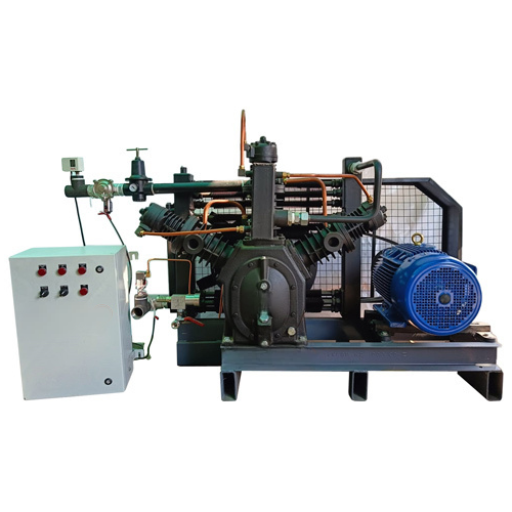
The set of booster compressors includes this and many others. These are functional devices whose primary purpose is to boost an already compressed gas or air to desired pressures for certain processes. For instance, they are mostly found in places turned to high-pressure applications like the testing of pipelines, manufacturing of PET bottles, and powering of pneumatic tools. Also in these situations, boosted compressors are used at the outlets of the existing compressors to step up the pressure of the existing system enhancing performance and enhancing reliability. These instruments are well developed for effective function in such environments because of their simplistic structure and appropriateness to the required goal.
Definition of Booster Compressors
Booster compressors are machines made explicitly to intensify pressure for air or gas that has been previously compressed. They use pre-compressed compressed air or gas from a mother compressor and compress it further for delivering pressure at higher levels than of a primary compressor which has great importance in several industrial and commercial applications. As per the available statistics, they find application in industries including manufacturing, oil and gas, and packaging where accurate and high-pressure systems are mandatory for effective productivity. The advance booster compressors are also designed energy savers with enhanced durability incorporating even sophisticated control systems that guarantee a consistency of function and appropriate performance standards. These attributes of higher pressure booster compressors make them handy tools in utilization for any process which is outside the range of the normal compressors in terms of pressure compressor levels.
Importance of Booster Compressors in Various Industries
The need for booster compressors in various industries lies in their capability to achieve specific pressure levels desired for applications. They are used against standard compressors to augment performance when distinctly high pressures are critical in the activity. In all these processing pressures, for instance, predominantly in the gas transportation, fabrication workshops, or packaging industries, maintaining scrupulous pressure levels becomes pivotal to high productivity and good-quality manufactured products.
One of the sectors wealthy in booster compressors is the oil and gas industries. Booster compressors find valuable assets in energy transport for natural gas compression, at sea to perform gas transfer over long distances. The booster compressors maintain pressures to streamline the motion flow and achieve uninterrupted flow while reducing energy losses. Similarly to the alternating ones used generally, compressors of the nature in the manufacturing operations enhance pressure for optimum machine operation, thus producing products of the desired quality.
An important area where booster compressors find operations is the packaging industry. Several modern packaging processes, such as blow molding and vacuum packaging, depend on high-pressure compressed air. Booster compressors ensure an even supply of the required pressure for smooth and effective operations. Their flexibility and efficiency, through proportion control, make them incredibly valuable where sophisticated control of pressure is prerequisite for equipment efficiency and integrity across multiple industries.
Operational Benefits of Booster Compressors
-
Increased Pressure Capability
Booster compressors increase the pressure of compressed air or gas to specific operational requirements, thereby optimising their performance in high-pressure applications. -
Energy Efficiency
Modern booster compressors offer high-pressure technology while reducing energy consumption, thus securing against considerable operational costs over time. -
Degree of Utilization
Available in numerous sizes and configurations, these compressors largely qualify for a range of industrial sectors, including technology, automotive, packaging, which extends the delivery page based systems for dare way for any kind of services so that they can easily get coordinated. -
Accuracy and Dependability
Booster compressor control systems pave the way for consistent pressure levels. No more unmet expectations where machinery and processes are concerned. -
Small Footprint
A few of booster compressors’ designs are so compact that they easily fit into existing systems, saving much needed floorspace in industrial settings.
02
Types of Booster Compressors
Type 01
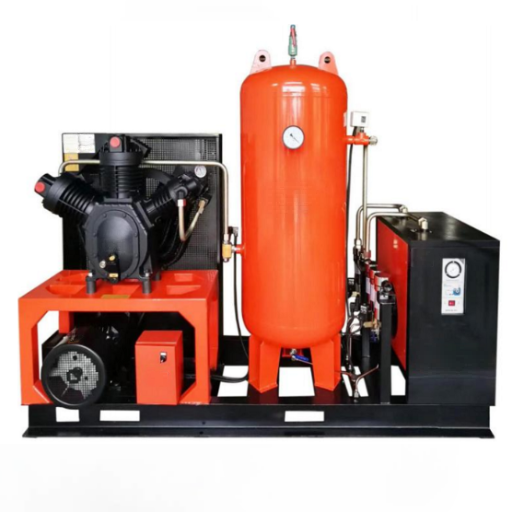
Piston Compressors
Piston compressors, also called reciprocating compressors, are one of the most widely observed types of booster compressors along with their conventional boosters. The operation system of a piston within a cylinder is employed to compress air/gas to a definite pressure level. Inflexibility and the limitless variety in producing high-pressure outputs consequently make piston compressors an incredible appliance used in the manufacturing, oil and gas, and energy industries. Their praise goes down to longevity, efficiency, and ability to take a fluctuating workload. Nonetheless, their lifespan is hardly imminent; regular mechanical checks might be required for the machinery to sustain. Eventually, owing to their reliable performance, they continue to be high in demand for high-pressure requirements around the world.
Type 02
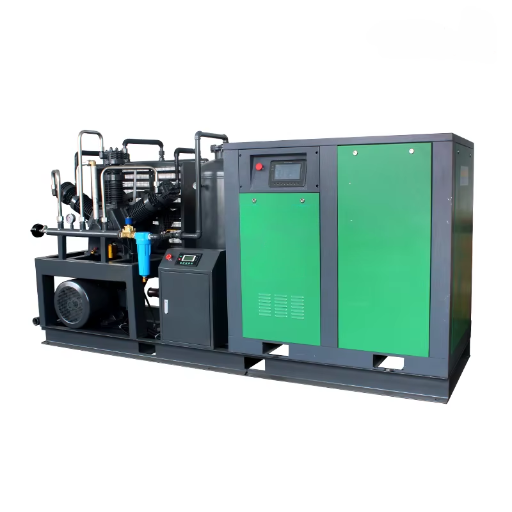
Rotary Screw Compressors
Rotary-screw compressors are mighty and durable regarding the continuous supply of compressed air, resulting in the efficiency of several industrial fields. Unlike the reciprocating screw type, these two screws are helixes interlocked alongside each other in space for compressing air for smooth pressure or flow, with minimal pulsation. The rotary machine slides nicely and quietly ensuring there is limited vibration around it. This means that they are more energy-efficient especially when high volume is the demand. Also, fewer moving parts lead to relatively fewer instances of friction requiring careful attention in comparison to the energy usage of rotary-screw oil; alternatively, regular lubrication is ensured through the automatic lubrication system. Rotary screw air compressors are commonly used in industrial sectors such as manufacturing, pharmaceuticals, and food wrapping. They are mainly used in processes requiring constant, uninterrupted flow of compressed air. Some of the modern rotary-screw compressors work differently from the rest of the crew because they are highly advanced when it comes to monitoring systems. In general, most of the computers each has smart integration technology the compressors work on with digital readouts.
Comparison of Different Types
Rotary screw, reciprocating, centrifugal, and diaphragm booster compressors are the main types available, each suited for specific applications.
| Type | Mechanism | Efficiency | Maintenance | Noise Level | Application |
|---|---|---|---|---|---|
| Rotary Screw | Continuous | HIGH | LOW | Moderate | Industrial |
| Reciprocating | Piston-based | MEDIUM | MEDIUM | High | Versatile |
| Centrifugal | Impeller | HIGH | LOW | Low | Large-scale |
| Diaphragm | Flexible Mem. | MEDIUM | MEDIUM | Low | Precision |
Each type carries distinct advantages suited to specific operational environments and pressure demands.
03
Working Principles of Booster Compressors
How Booster Compressors Operate
Booster compressors play a vital role by augmenting the pressure of precompressed air or gas through pre-existing system pressure to the pressure of operation while required. These machines can be used in applications that require a high-pressure output. The process includes erupting the hanging-on gas to reach the cylinder where the working piston compresses the gas to a higher pressure by a set of machineries which may range from simple sliding piston to diaphragm explosion according to the design of the compressor.
One notable feature peculiar to booster compressors is their precise capability in pressure setting, which allows functionality without excessive amounts of energy. This feature makes them primarily applicable to manufacturing, petrochemical processing, and gas pipeline industries, where the demand for a specified pressure level will necessitate deliberate planning. Routine operation will require an initial pressure only slightly above atmospheric so that effective boosting can take place.
Booster compressors are installed with heavy-duty construction and high-pressure cycle capability in order to sustain long-lasting operations with minimal wear. Checking seals, valves, and lubrication regularly is critical to prolong its lifespan and operate efficiently. The booster compressor ultimately becomes a critical player in many practical industrial and commercial processes in supplying a solution for simply generating the demanded pressure.
Gas Compression Process
The second pressure boost process is a complex process that involves increasing the pressure of a gas that has already been subjected to primary compression. In certain applications where elevated pressure levels are necessary — for instance, industrial manufacturing, gas pipeline transport, or the petrochemical industry — a secondary stage of compression is applied. The gas enters into the booster compressor of the intake valve, thus rendering the unit operational; this is the point where the volume of the gas starts reducing and where its pressure starts rising in turn. Efficient and continual attainment of the intended pressure levels is done by pistons, diaphragms, or rotary elements used throughout the production process.
With the multi-stage compression arranged to reduce the pressure rise and minimize the heat generation as well as energy losses, modern booster compressors incorporate efficient technologies that considerably tweak their performance. In some applications and system variants, the good old booster can now hit at pressures above 10,000 psi. Integration with intelligent monitoring apparatuses puts operators in a cogent capacity to mix and match all the parameters of interest from the system. For instance, real-time pressure, temperature, and power consumption data monitored by automated systems help condition-wise enhance the safety net and increase the efficiency of a system.
35%
Energy Savings
Efficiency is a major agenda in gas compression. Operational efficiency has been fortified due to technological innovations like Variable Frequency Drives and efficient cooling mechanisms on the modern compressors, causing massive energy savings. Tests have been conducted with the consensus that VFD systems can save energy by up to 35% over conventional fixed-speed compressors. Regular maintenance should maintain the highest efficiency and prevent costly downtime with the inspection of seals, bearings, and cooling systems.
Through the combination of equipment engineering and advanced technology, the booster compressor of the present is well positioned to respond to the increased demand for high-pressure applications in assorted industries while still accounting for environmental sustainability and operational efficiency.
Role of Primary Compressors
The role of primary compressors in the booster compressor system calls for the initial compression of air or gas to be so-called. It is the contribution of the primary compressor — initiating from atmospheric air and above atmospheric gas — which necessitates the compressor to further compress to moderate pressure for regulated flow into the booster for secondary compression. The operation of the booster compressor is reinforced by the primary compressor, essential for providing the pressurized output needed for various specialized industrial processes, such as manufacturing, petrochemical applications, and production of energy.
Continuous primary compressors are eventually configured for maximum efficiency and reliability together with such characteristic features as speed control devices and energy recovery systems in efforts to cut cost-effectively about operational costs. The design of such systems is intended to infuse the booster compressors with pressurized content at fitting levels, thus all the time precluding system overload and erosion. This very internal should-undergo integrative functioning of a well-operated primary compressor within a good and cost-efficient high-pressure solution for different industrial processes.
04
Applications of Gas Booster Systems
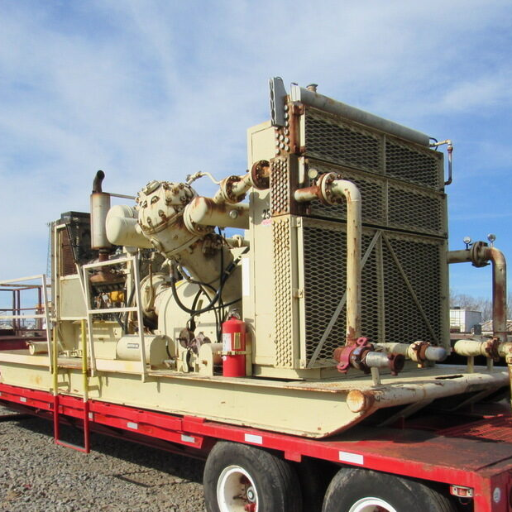
Industrial Uses of Booster Compressors
Booster compressors are of utmost importance to industries, used largely for the role they play in energy enhancement due to their ability to augment gas pressure. Basically, booster compressors are key components of manufacturing setups requiring high-pressure air or gas for working pneumatic tools, enhancing production lines, or simply explaining chemical processes entirely. Critical to the oil and gas sector, booster compressors are used in different operations including the transfer of gas, pipeline pressure testing, as well as improving productivity in well operation. Another area where it is used significantly is the food and beverage industry, where its high-pressure application in processes like bottling and packaging is noteworthy. Hence, increased growth has been evident recently toward booming booster utilization in emerging sectors such as the production and storage of hydrogen, with precise high-pressure handling. This broad spectrum of applications identifies booster compressors as industrial tools not only in semi-emerging environments.
Natural Gas Applications
The gas boosting systems share an important position with different natural gas applications due to their energy recovery, effectiveness, and safety while ensuring that services endowed with pipelines remain. Their prime job is to maintain the pressure required in the gas over long distances so that it provides a constant flow rate. Of course, they are the cornerstone to natural gas storage plants, as they compress natural gases into storage tanks for later use or as the demand fluctuates. Another natural gas booster system’s main task is to expend the “much said” filling of compressed natural gas tanks in natural gas vehicle (NGV) fueling stations.
From the latest data, it was observed that the utilisation of gas boosters in liquefied natural gas (LNG) applications is increasing. For instance, they are extensively applied in smaller-scale LNG plants and also in regasification units. With these kinds of boosters, LNG is efficiently passed on and utilized by regulating pressure and minimizing energy losses. As attention turns to cleaner energy resources, the area where booster systems are to be utilized to optimize the operation of natural gas is rapidly expanding, hence making natural-gas production and distribution in multiple dimensions dependent on them.
Benefits of Using Booster Pumps
Benefit 01
Improved Efficiency
Booster pumps also enhance the efficiency of an LNG-and-natural gas system, which means a constant pressure level and the smallest possible buildup of energy losses during operation.
Benefit 02
Optimized Performance
Booster pumps keep optimal flow rates going in demanding conditions to ensure dependable performance throughout various applications.
Benefit 03
Energy Saving
Booster pumps work by best controlling fluid pressures and thereby minimize the excess energy needed to circulate the needed fluids, finally helping to lessen the cost of running the system at the same time.
Benefit 04
Improved Safety
These pumps keep pressure variations at a minimum when operating and that ensures that there are fewer hazards to system failure which ensures maximum safety during operation.
Benefit 05
Versatility
All booster pumps can be adjusted to any capacity and application. This makes a perfect fit for small-to-large LNG and natural gas systems.
05
Installation and Maintenance of Booster Compressors
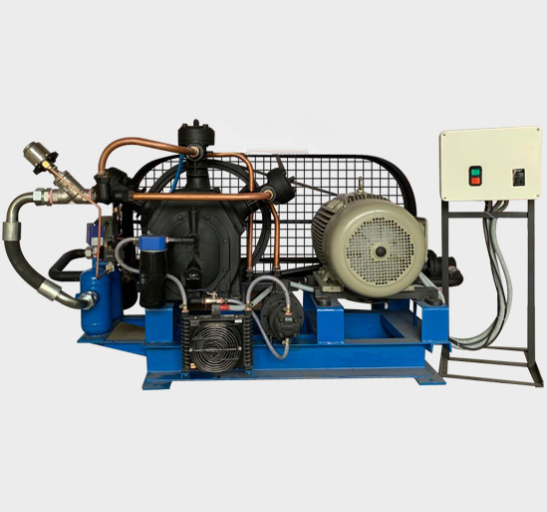
Installation Best Practices
- 01
Site Evaluation
The installation environment needs to be adequately ventilated, devoid of any obstructions poses any threat to the system, and is in compliance with all safety regulations. Site preparation decreases the chances of risk; hence, operational efficiency is enhanced.
- 02
Foundation Preparation
Install the booster compressor on a moderately firm foundation where it is perfectly level so that the device operates without vibrations, thereby performing excellently.
- 03
Alignment
Take the utmost care to align every connection correctly, including piping and hoses, in order to keep them tight and without leaks in the system.
- 04
Connection Inspection
Check installation requirements for electrical and gas setups so that you would not be in violation of safety standards according to the manufacturer, company, or local regulations.
- 05
Adequate Spacing
Allow generous space around the compressor for performing regular inspections or for standard operations of maintenance. The compressor should be readily identified from all directions for specifically servicing major components.
- 06
Follow the Manufacturer’s Guidelines
Follow all installation instructions and care guidelines provided to secure and efficient installation.
Routine Maintenance Procedures
Regularly scheduled maintenance of those booster compressors is critical to having the device functioning at optimal level, having an extended life, and keeping it safe. Below are suggested maintenance measures, as advised by latest experts:
- ■
Daily Checks — Be cognizant of any odd noises, vibrations, or leaks produced during the compressor’s operation. With respect to the proper working of the important indicators, see to it that all gauges and controls conform to the expected performance levels.
- ■
Lubrication — Periodically check the oil content and its quality; and add oil/replace oil, as it seems fit, with the suitable oil type according to the company to keep the unit running extremely well and prevent wearing out.
- ■
Filter Cleaning and Replacement — Periodically clean the air intake filter screens, make sure they are not clogged, and achieve a free flow of air through them. Change them on the basis of the manufacturer’s recommendations for the cleaning interval, or if you observe any clogging.
- ■
Draining Condensate — Frequently drain moisture out of condensate traps/separators to prevent the possibility — that is so far the most dangerous one — of water remaining and corroding parts from the inside.
- ■
Drive Belts and Couplings — Inspect the drive belts and couplings for wear or misalignment, and replace or adjust them where necessary.
- ■
Critical Components — Valves, gaskets, and seals should all be frequently inspected for any signs of wear or damage. In case one of these components seem inadequate, make repairs to avoid leakages or lack of performance.
- ■
Safety Controls — To check on safety controls, pressure relief valves must be tested and calibrated. Temperature sensors must be checked for utmost safety and to meet regulatory requirement.
- ■
Regular Cleaning — Clean the compressor’s exterior as well as other parts, which in most cases are cooling fins or heat exchangers, to prevent overheating and to enhance the rate of cooling (system working efficiency).
- ■
Keep Records — Complete documentation of problems found, repairs made, part replaced, and general maintenance conducted — years of maintenance and the compressor’s performance recorded to anticipate needs of future maintenance.
In view of our heavy reliance on this particular unit for various purposes, it is expedient that these intervention procedures be scheduled at periodic intervals lest vibration anomalies and mismanagement of the unit are addressed timely.
Common Issues and Troubleshooting
| Issue | Cause | Solution |
|---|---|---|
| Overheating | Excessive heat due to inadequate ventilation or blockages. | Clean cooler fins, filters, and ensure adequate ventilation. Inspect the coolant levels if equipped. |
| Pressure Fluctuations | Leaks in connection or malfunctioning valve. | Check all connections for leaks; repair and possibly replace a faulty valve. |
| Excessive Noise | Some parts have become loose or the bearings have worn out. | Fasten the parts straight. If warranted, change bearings. |
| Low Output Pressure | Restriction in suction filters or damaged valve seals. | Check activity of intake filters; either clean or replace them. Seals should be examined for wear and tear, and replaced, as needed. |
| Too Frequently Shutting Down | Malfunctioning sensors or electrical issues. | Test sensors for proper operation, and inspect cables for integrity before inspecting the components suspected of being responsible for the shutdown. |
By promptly fixing these troubles and performing periodic maintenance checks, the efficiency and lifespan of booster compressors are significantly extended.
06
Reference Sources
-
Compressor Types, Classifications, and Applications: This paper provides an in-depth analysis of compressor types, including their classifications and applications, which is essential for understanding booster compressors. Access the study here.
-
Compressor Types: This chapter discusses various compressor types, including their use as boosters in compression applications, and explains key technical aspects. Read the chapter here.
-
Compressors: Selection and Sizing: This book provides detailed insights into the selection and sizing of compressors, including booster compressors, for various industrial applications. Access the book here.
-
Working Characteristics of Two Kinds of Air-Driven Boosters: This study compares air-driven boosters with multistage high-pressure compressors, analyzing their working principles and applications. Read the article here.
- Booster Compressors
07
Frequently Asked Questions (FAQs)
// SYS-DOC: WHY I WRITE THIS
[01] About PanGeng
PanGeng is an industrial gas compressor manufacturer based in Bengbu, Anhui, China. Since 2009, we have focused on the design, R&D, production, and manufacturing of customized gas compressor systems for oilfield, chemical, energy, hydrogen, nitrogen, biogas, and industrial air applications.
[02] Our Expertise
We write compressor guides based on real manufacturing and engineering experience, including hydrogen compressors, nitrogen compressors, booster compressors, medium and high-pressure air compressors, oilfield nitrogen injection systems, biogas compressors, and OEM/ODM custom compressor solutions.
Our engineering team supports customers from application analysis and compressor selection to production, factory testing, commissioning, spare parts, and after-sales service.
[03] Why You Can Trust This Content
The technical information in our articles is based on PanGeng’s in-house compressor design and manufacturing experience, current product capabilities, and project support for industrial clients in global markets. Our goal is to help buyers understand compressor types, pressure ranges, gas requirements, customization options, and long-term operating costs before making a purchasing decision.
CONTACT PROFILE
AUTHORITATIVE SOURCE
NAME
PanGeng Engineering Team
BRAND
PanGeng
COUNTRY
China
MODEL
B2B / OEM & ODM
EMAIL
pg20090705@163.com
PHONE
0552-4958225
WEBSITE
pgcompress.com


Trending now
![Low Pressure Hydrogen Compressor Applications [Guide]](https://pgcompress.com/wp-content/uploads/2026/09/low-pressure-hydrogen-compressor-applications-blog-featured-150x150.png)