Get in Touch with Pangeng

Hydraulic Driven Compressor: A Comprehensive Guide to Hydraulic Air Compressors

Contents
show
The Hydraulic Driven Compressor serves as an epitome of an efficient machine with minimum compromises on the trustworthiness of the machine. Hence, they are an integral component in many industries. In this guideline, we shall attempt to help you understand how the hydraulic air compressors function, what are their benefits and what top aspects should be considered before purchasing one. Even if you’ve been at it years and just trying to find ways to improve their performance or just on the verge of shopping around, these basics will help you. Owing to their distinctive way of operation and capability to push tasks to a higher level, including some very strenuous activities, enjoy reading as to why Hydraulic Driven Compressor literally changed the how industries work today. Be ready to learn new things which will help you in henceforth impacting the inevitable as well as optimizing the results.
Understanding Hydraulic Driven Compressors

Understanding Hydraulic Driven Compressors
Hydraulic Driven Compressor is a typical example of compressors driven by a hydraulic system and which are used, for instance, in the industry, as well as in portable applications where performance and reliability are important. The basic principle of such compressors is to transform the power of hydraulics into generation of compressed air necessary for the operation of mechanical tools or any equipment needed for instance for drilling, pneumatic systems, powering of machinery, etc. The mentioned compressors provide lots of advantages such as a good overload capacity, active service life and all these in a compact package. Another plus is, that machine is fully independent of the electric grid; any machinery with on board hydraulic system can be modified to include a compressor unit.
What is a Hydraulic Driven Air Compressor?
A Hydraulic Driven Compressor is a specialized tool designed in such a way that it uses a hydraulic system for the purpose of providing power and not the usual electricity or gas as other types of compressors do. This technology effectively changes hydraulic pressure into compressed air that is used to run the pneumatic tools of many industries. They are very useful in cases whereby there is no furnished electrical power or in situations where electrical power supplied is not reliable. These can easily find use in places like a construction site or any other heavy industry whereby electricity availability is not guaranteed. They make use of the existing machinery’s hydraulic system and do away with additional power requirements thereby enhancing energy conservation and lowering the cost of operation. Furthermore, today’s hydraulic driven air compressors come in small sizes, are constructed of tough materials, dependable and perform without a hitch even in high pressure situations, making them perfect for users who require energy high flexibility and productivity.
How Hydraulic Drive Technology Works
With the hydraulic drive, energy is passed from one location to another using fluid power. It includes a hydraulic pump which compresses some liquid usually oil where this then goes through some hoses and valves which terminate in a hydraulic motor. In the hydraulic motor it translates this pressure and flow of the fluid to mechanical energy which turns equipment or motors.
An important characteristic of all hydraulic technologies is their efficiency and capacity to transmit significant amounts of power through tiny devices. It is possible to control the flow of energised fluid without difficulty and very smoothly even at high loads and also in adverse environments. This is a very versatile technology, as such very helpful in many situations and industries such as building, farming or manufacturing.
Durability and safety constitute basic qualities of mechanisms based on hydraulic power. Smart designs ensure that systems are comprehensive in operation and able to be functional at extreme conditions. This is thanks to the progress that has been made which also minimizes noise levels of systems so that efficiency is increased meeting some environmental requirements as well. Thus, this concept of hydraulic drive presents a convenient option to control an array of processes and machines.
Key Components of Hydraulic Air Compressors
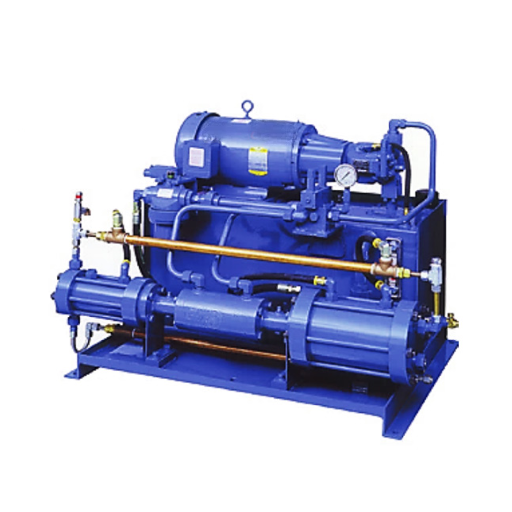
Hydraulic air compressive blend numerous principal constituents that control the synchronizing of one another in order to compress air adequately:
-
Hydraulic Pump: Converts mechanical power to hydraulic power so as to drive the system.
-
Hydraulic Motor: Uses hydraulic pressure to derive the action from the compressor.
-
Compressor Assembly: Compresses air with pure energy to required pressure levels.
-
Storage System: Maintains all environments in hydraulic armed forces.
-
Control Valves: Section the pressure and flow of hydraulic fluid.
-
Cooling Assembly: Is crucial in shedding away heat for normal work temperatures.
-
Filtration System: To keep the fluid clear whose high performance helps in yielding excellent results.
It takes all components to enable the compressor to work superbly and with utmost reliability in various applications.
Types of Hydraulic Driven Compressors

Comparison of Hydraulic vs. Engine-Driven Compressors
Hydraulic-driven compressors are known for their efficiency, durability, and integration capabilities, while engine-driven compressors are valued for portability, self-reliance, and versatility.
| Parameter | Hydraulic | Engine-Driven |
|---|---|---|
| Efficiency | High | Moderate |
| Durability | Superior | Standard |
| Portability | Low | High |
| Noise | Low | High |
| Maintenance | Minimal | Moderate |
| Fuel Source | Hydraulic | Fuel-powered |
| Integration | Easy | Standalone |
| Cost | Higher | Moderate |
| Applications | Industrial | Varied |
Two-Stage vs. Single-Stage Hydraulic Air Compressors
Two-stage compressors provide higher efficiency and pressure capacity, while single-stage units offer simplicity and are suitable for low to moderate pressure applications.
| Parameter | Two-Stage | Single-Stage |
|---|---|---|
| Efficiency | Higher | Moderate |
| Pressure Range | High | Low-Moderate |
| Durability | Superior | Standard |
| Complexity | Complex | Simple |
| Cost | Higher | Lower |
| Applications | Industrial | Basic |
| Noise | Moderate | Low |
| Portability | Low | High |
Compact Hydraulic Compressors for Limited Spaces
Compact hydraulic compressors are specially designed for optimal performance in confined areas. These compact hydraulic tools are lightweight and highly portable. Their output pressure capability, even while maintaining compact dimensions, is an advantage in and of itself. This is achieved through the integration of cutting-edge engineering techniques with advanced material science.
Advantages of Compact Hydraulic Compressors:
- 01
Space-save: Because of their small size, they can easily be stored in areas with limited space; really ideal option for small maintenance vehicles or plants with small working space.
- 02
Mobile: Built with a light weight structure, the portable design ensures easy moves within the workplace.
- 03
Durable: Constructed with highly durable materials, they can be used even in severe conditions, to give a prolonged performance life.
- 04
Versatility: As they are relatively compact and can be utilized for powering hydraulic tools, operating pneumatic systems, and providing auxiliary power in mobile equipment.
In industries like construction, automotive repair, and agriculture, there is also value for this particular compressor type, where space and efficiency both matter equally. Merging compactness with delivery of air may represent a practical solution for the present workspace challenges.
Applications of Hydraulic Driven Compressors

Common Applications in the Industry
Construction Equipment
Construction sites normally employ hydraulic powered compressors for powering pneumatic tools like jackhammers, drills, and impact wrenches.
Agricultural Machinery
Such medium-pressure compressors operate from tractors for field use – related to driving the seeders and sprayers, inflating tires, etc. specific requirements concerning farming equipment.
Automotive Repair Shops
To ensure every automotive repair shop carries one is a must and for good means; basically, these medium-pressure compressors offer them activities of an air force on levels that produce highly efficiency. Helping to provide good support are the air tools spray guns, air ratchet, engraver, and other tools.
Oil and Gas Industries
Either remote or compactary locations abroad can gain vital power from this tool given their importance in installing dated pipelines or maintaining equipment manual or hydraulic used in extraction activities.
Mining Operations
Underground and open pit mining referral for high-pressure compressors to operate pneumatic drilling, ventilation systems, and other machinery needed for mining configurations that alight.
Use Cases for Truck Air Compressors
- ›
Emergency tire service — Truck air compressors are used on the go for tire filling needs and getting punctured status wheels refurbished so that downtime may be minimized.
- ›
Power for pneumatic tools — Needing power to support tools like impact wrenches, air hammers, and drills for different mechanical operations and general maintenance.
- ›
Construction Industry — Air pressures are essential in areas with much construction work, to enable powering tools and equipment including, but not exclusively, high-power nail guns or jackhammers in circumstances where an electrical supply may be an impractical option.
- ›
Agriculture — This machinery provides air for the various operations within the farming industry, such as spraying, seeding, and cleaning.
- ›
Cleaning & Maintenance — Air compressors can help eject stray materials like dirt, dust, particles, etc. from around work areas, vehicles, and other tools necessary for a small workshop.
Hydraulic Compressors in Construction and Crane Operations
Hydraulic compressors perform an essential role in improving production and operational efficiency on job sites in construction and cranes. These systems can harness the hydraulic power and use it to generate and supply substantial air pressure and velocity required to drive the pneumatic tools and equipment. This capability simulates the activities of decking, sandblasting, or connecting machines like the air-powered chipping hammers, drills, and air-powered tools for demolition, drillings, and foundational work-all of which add a considerable fleet of impressed clients in terms of noise and dust. The use of cranes means hydraulic compressors can make these highly specific activities like pick-and-carry capacities and/or cylinder operation by means of an air or vacuum.
The hottest figures in search trends and industry reports suggest that hydraulic compressors are finding tremendous growth in these areas since they can be trusted to deliver concise, sustainable, and portable performance in heavy conditions. No longer need to haul expensive air compressors from construction sites, since these compression systems allow for space-saving strategies and streamline on-site logistics, making them essential tools for both the modern construction-type projects and crane activities also.
Advantages of Hydraulic Driven Compressors

Operational Benefits Over Traditional Compressors
01
Enhanced Durability
The compressors benefit from a sub-design that provides edge over other types of compressors in providing rugged service and long working life.
The compressors benefit from a sub-design that provides edge over other types of compressors in providing rugged service and long working life.
02
Compact Design
These compressors eliminate the need for large external components, allowing easier integration with any host machine, and not only the design but also reducing the installation’s distortion on the job site.
These compressors eliminate the need for large external components, allowing easier integration with any host machine, and not only the design but also reducing the installation’s distortion on the job site.
03
Energy Efficient
Through the use of hydraulic power, they minimize energy wastage thus also reducing fuel consumption and associated running cost to a considerable advantage.
Through the use of hydraulic power, they minimize energy wastage thus also reducing fuel consumption and associated running cost to a considerable advantage.
04
Low Upkeep Costs
Low maintenance costs can be put down as a result of reduced moving parts. Unlike that of conventional compressors, the wear and tear is diminished because of minimal friction.
Low maintenance costs can be put down as a result of reduced moving parts. Unlike that of conventional compressors, the wear and tear is diminished because of minimal friction.
05
Uniform Operation
These compressors continually give out constant amounts of air at high performance under fluctuating environmental conditions and amid heavy load and installations.
These compressors continually give out constant amounts of air at high performance under fluctuating environmental conditions and amid heavy load and installations.
High-Flow Capabilities and Efficiency
The hydraulic drive of the compressor helps to address high flow conditions in an efficient manner. This makes the compressor perfect for industrial applications and also for commercial applications, where a need for consistency is nonnegotiable. The hydraulic-driven compressors, due to their high-flow properties, ensure that large-scale, high-pneumatic-demand activities are smoothly performed without any hassle.
Another superiority of hydraulic-driven compressors is the reasonable use of energy; since they work in the realm of the hydraulics, they work accordingly. This kind of setup-making full use of hydraulic power-reduces waste energy back to almost zero. Controlled operation through hydraulic means ensures that no excess energy consumption occurs whenever the compressor is in use, which in the long run keeps operability costs low.
Hydraulic-based compressors are designed to perform for a long time while maintaining the highest level. The robust design and rugged design make the compressors a top choice for industries where life is the business. These operational features are productivity enhancing and sustainable and in line with cost-effective operations.
Oil-Free Options and Environmental Considerations
The advantages of oil-free technology are realized by hygiene-oriented companies that care about maintaining environmental sustainability and purity of products. In their application, these compressors do not need lubrication in any part of the compression chamber so that there is never any occurrence of oil contamination. They are extremely suitable for industries such as food processing, pharmaceuticals, and electronics manufacturing, where the cleanness of the process is most significant. Every effort is made for the limiting of oil disposal and less maintenance. This goes in the right direction for the purpose of a cleaner and safer environment.
The opinion among specialist circles has been reinforced by a study in another industrial case; that is, the emphasis on noise reduction. Apparent results from real machinery indicate that isolating Ancillaries from the dry coolers significantly enhances noise reduction for compressor units. Key positive signals for superior performance are sent out by hydraulic-driven systems. Static optimization is an interesting research outcome the industry has to deal with. There is the site cost demand factor in compression technology sticking out-perhaps being able to bring down the business of compression technology as a whole if it indeed proves to be true.
Maintenance of Hydraulic Driven Compressors
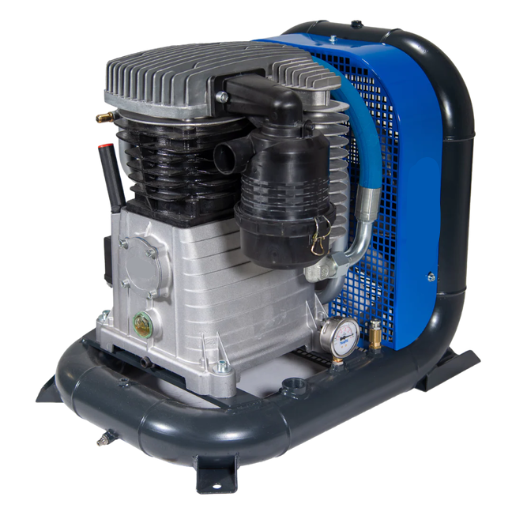
Maintenance of Hydraulic Driven Compressors
Routine Maintenance Tips for Longevity
- 1
Check regularly for fluid levels and quality
Check and replenish if necessary. The cleanliness and absence of contaminants in the hydraulic fluid may degrade the fluid, which must be replaced or supplemented if necessary. - 2
Clean or Replace Filters
Inspect and maintain a regular filter cleaning or replacement program to avoid blockage and maintain proper working behavior of the hydraulic system. Failure to do so may disrupt many activities of the system and lead to machine failure. - 3
Examine for outside leaks
Check your totally pressurized compressor and hydraulic lines frequently for leaks. Timely repairs of the tiniest leaks could protect the actual damage of the system and maintain its efficiency. - 4
Examine Hoses and Connections
Monitor hoses and connections for wear, cracking, or loosening. Should any hoses or connections show signs of damage, they hurt your machine, so remove and replace by the best available. Lock down any loose fittings to avoid any unnecessary delays in usage. - 5
Do Periodic Lubrications
Make sure that adequate lubrication exists where parts rub against each other. Use manufacturer-recommender lubricants for the best results so that your machines last longer.
Troubleshooting Common Issues
By addressing such issues, you can ensure that the hydraulic-driven impactor runs at an optimized level. Always refer to the manufacturer’s literature for specific troubleshooting and maintenance purposes.
Upgrading Accessories for Enhanced Performance
Upgrading a few of the components in a hydraulic-driven compressor may increase its performance, efficiency, and probably prolong its lifespan in operation. One such standard upgrade is the installation of advanced pressure regulators and flow control valves to ensure better control over pressure and flow rates that would make the system more adaptable to varying workloads. Additionally, a high-efficiency filtration system may be more efficient in keeping contaminants out of the hydraulic fluid, thus operating a smooth function, little-wear condition on its parts.
Smart monitoring systems enamoured with compressor settings are yet another technological feat of our times. The systems potentially enhance the efficiency of the compressors by sending diagnostics in real-time, warning of potential hazards like overheating, pressure drops, or fluid leaks even before any mischief has ensued. Moreover, with advanced cooling, it refers to new heat exchangers or optimizing cooling fans making it possible to work under optimal temperatures, primarily in hard ones like at constant peak loads of work.
To mesh the latest, demanding advancements with regular maintenance would indeed present reliability and productivity, not to speak of that energy miserliness the acquired accessories can bring to the table in continued operational costs. The compatibility of the new accessories must be ensured with regard to the specific application of your air compressor mechanism. One must also take into account professional guidelines, manufacturer recommendations, or operational issues while choosing upgrades.
Reference Sources
-
Experimental Investigation on the Hydraulic-Driven Piston Compressor for Hydrogen Under Varied Operating Conditions: This study explores the reliability and performance of hydraulic-driven piston compressors in hydrogen applications. Access the study here.
-
The Transient Flow and Heat Transfer Characteristics in Reciprocated Conditions of Hydraulic-Driven Piston Hydrogen Compressor in Hydrogen Storage System: This paper examines the key role of hydraulic-driven piston compressors in hydrogen storage systems. Read the paper here.
-
Thermodynamic Performance Optimization of Two-Stage Hydraulic-Driven Piston Hydrogen Compressors Based on Variable Speed Control Method: This article discusses performance optimization techniques for hydraulic-driven compressors. Read the article here.
-
Hydrogen Compression in Hydraulically Driven Piston Systems: Analysis of Technical Data and Selection of the Electric Motor: This work analyzes the technical aspects and motor selection for hydraulic-driven piston systems. Access the study here.
Frequently Asked Questions (FAQs)
// SYS-DOC: WHY I WRITE THIS
[01] About PanGeng
PanGeng is an industrial gas compressor manufacturer based in Bengbu, Anhui, China. Since 2009, we have focused on the design, R&D, production, and manufacturing of customized gas compressor systems for oilfield, chemical, energy, hydrogen, nitrogen, biogas, and industrial air applications.
[02] Our Expertise
We write compressor guides based on real manufacturing and engineering experience, including hydrogen compressors, nitrogen compressors, booster compressors, medium and high-pressure air compressors, oilfield nitrogen injection systems, biogas compressors, and OEM/ODM custom compressor solutions.
Our engineering team supports customers from application analysis and compressor selection to production, factory testing, commissioning, spare parts, and after-sales service.
[03] Why You Can Trust This Content
The technical information in our articles is based on PanGeng’s in-house compressor design and manufacturing experience, current product capabilities, and project support for industrial clients in global markets. Our goal is to help buyers understand compressor types, pressure ranges, gas requirements, customization options, and long-term operating costs before making a purchasing decision.
CONTACT PROFILE
AUTHORITATIVE SOURCE
NAME
PanGeng Engineering Team
BRAND
PanGeng
COUNTRY
China
MODEL
B2B / OEM & ODM
EMAIL
pg20090705@163.com
PHONE
0552-4958225
WEBSITE
pgcompress.com
Related Posts
![Low Pressure Hydrogen Compressor Applications [Guide]](https://pgcompress.com/wp-content/uploads/2026/09/low-pressure-hydrogen-compressor-applications-blog-featured-768x512.png)
Trending now
![Low Pressure Hydrogen Compressor Applications [Guide]](https://pgcompress.com/wp-content/uploads/2026/09/low-pressure-hydrogen-compressor-applications-blog-featured-150x150.png)