Get in Touch with Pangeng

Metal Hydride Hydrogen Compressor: Revolutionizing Hydrogen Compression and Storage

Contents
show
The efforts to come up with the most effective ways of storing hydrogen in the most sustainable manner, have resulted in the use of compressors. Among them is the hydrogen gas compression using the metal hydride, also called the metal hydride hydrogen compressor. Utilizing the advantages in metal hydrides, this science not only simplifies the whole process of upgrading pressure in materials, but it further enhances the materials safety, application efficiency and range by a great deal. Focus of this introductory section will be on the importance of making references to the hydrogen gas infrastructure systems based on these recent technologies as well as the operations, advantages and specific applications of these compressors as opposed to standard compressors. Scientists, engineers as well as the energy lovers, let us intensively examine the use and how the texturing of the metal hydride in the system hydrogen compressor will explain why the development of its use should become a matter of course concerning the present focus of environmental improvement.
Section 01
Understanding Metal Hydrides

Metal hydrides are a special type of compound formed by the combination of hydrogen and metals. When this happens, the compound is of high preference as a method of storing hydrogen as it’s temperature and pressure sensitive and this medium occurs in forms of solid form. Many of these materials function in such a manner that they attract hydrogen gas through their structures and afterwards promote its retention. They are particularly useful for hydrogen gas distribution as they come with benefits such as the energy that it takes to compress hydrogen gas is reduced. Some of the prominent ones are metal alloys including titanium-iron hydrides, and magnesium-based hydrides which are interact with hydrogen well due to their strength and durability in hydrogen systems.
What are Metal Hydrides?
Recently, metal hydrides have become an essential element in many progressive technologies since they are very efficient in absorbing, storing and releasing hydrogen. Mostly, they are consumed in the renewable energy sector wherein hydrogen is often used as an environmentally friendly energy form. In the event of hydrogen energy storage, metal hydrides are put to use in fuel cells for secure hydrogen storage which ensures continuous and reliable energy production. In other applications, these substances are utilized in the construction of thermal energy storage units that employ the hydrogen as an energy carrier stored in metal hydrides.
To bring a different perspective in the use of hydrides, we can talk about transportation. This area has been under research so much with the development of metal hydrides to be used in vehicles powered by hydrogen fuel, which have a slim design and less weight compared to using high pressure. It is worth noting that the search for spacious storage hollows and the removal of high allowable operating temperatures stimulates the manufacture of special chemical compounds with the incorporation of magnesia hydrides as well as heat-mutable complex hydrides containing alanates.
Properties of Metal Hydrides
Metal hydrides possess intriguing features that place them at a high level of importance when it comes to the areas of hydrogen storage, batteries, and thermal systems. The most intriguing among them is the fact that the materials can reversibly acquire and liberate hydrogen within a specified performance envelope. This feature depends on the material’s thermodynamic and kinetic characteristics more than any other. For instance, the hydrogenance-desorption rate commonly referred to as thermodynamic equilibrium is the ratio of hydrogenance-desorption rate to pressure, temperature changes and is controlled by the Van’t Hoff equation. Hydrides at low temperatures such as LaNi₅ and Ti-alloys, show good hydrogen pick up and delivery under reasonable and try ambient conditions in case of room pressure.
Kinetically, factors like particle size, investigating also, the surface state of the getter site, the alloy composition and the purity of the reactants can directly affect the speed of hydrogenation and dehydrogenation. For example, nanostructured or catalyzed hydrides, such as palladium, have reaction rates that are orders of magnitude greater. Moreover, different materials have different hydrogen storage ability in metal hydrides expressed in weight percent (wt%), one of which even exceeds 5 wt%, with certain metal hydrides under the most favorable conditions.
Applications of Metal Hydrides in Hydrogen Energy
- 01
Hydrogen Storage Systems
Due to the high content of hydrogen absorbed in metallic hydrides, they are widely used in energy-producing fuel cells. They can be cycled by changing the temperature and pressure depending on the operating conditions, and hence are convenient for the users. For instance, results show that magnesium hydrides (MgH₂) can achieve a very high theoretical storage content of hydrogen as high as 7.6 wt% which is promising for long-term energy storage.
- 02
Fuel Cell Technologies
Metal Hydrides as hydrogen sources in proton exchange membrane (PEM) fuel cells, help in delivering hydrogen on demand while controlling the flow on needed rate. Hydrides of newer alloys like titanium-iron (TiFe) perfectly fit the requirements of the hybrid fuel-cell vehicles for they possess qualities like intermediate working temperatures and other features.
- 03
Thermal Energy Storage
Some of the hydrides of metals, in particular sodium aluminum hydride (NaAlH₄), undergo exothermic and endothermic transformations during sorption of hydrogen and desorption of hydrogen due to which they are adequate for application in energy tanks. These endothermic transformations can be considered as a medium for accumulation or transfer of heat in industrial installations where control over the thermal balance is extremely important.
- 04
Hydrogen Compression
Hydrogen compression technology has been developed along the principle of metal hydrides that undergo a cycle of absorption and desorption at different temperatures and pressures. LaNi₅ and its alloys are used to reduce hydrogen gas from low pressure to high pressure. These reduce the consumption of energy from the traditional mechanical compressor.
- 05
Hydrogen Separation and Purification
Not be the same to the improvement of hydrogen storage systems, metal hydrides are used in the hydrogen purification systems. Adopting Palladium-doped hydrides, it is clear that only some of the hydrogen present in gas mixtures can be absorbed. This allows ensuring high-purity hydrogen for use in special purposes such as semiconductors or lab analyzers.
- 06
Grid-Scale Energy Storage
The application of metal hydrides in the production of large scale renewable energy power systems is an economically feasible idea. Such materials as alanates (e.g., NaAlH₄) and borohydrides (e.g., LiBH₄) are the focus of investigation for the feasibility of hydrogen storage in the grid scale, which helps in energy balance and smoothing over peaks and the valleys of energy consumption.
Section 02
Introduction to Metal Hydride Hydrogen Compressors
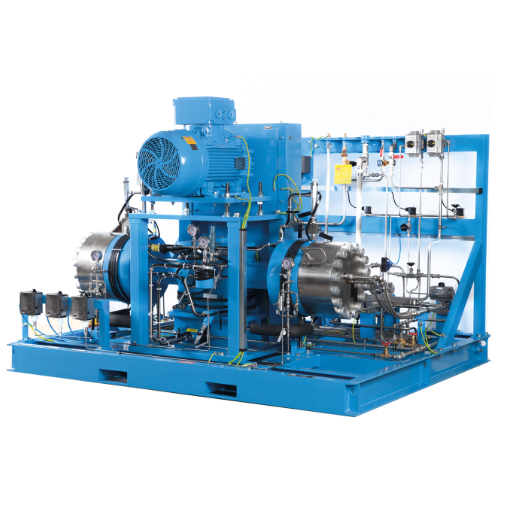
Metal hydrides are substances that are capable of absorbing and desorbing hydrogen over controlled pressure and temperature conditions. This characteristic of metal hydrides is employed in designing hydrogen compressors that cycle the material from hydrogen deficiencies to hydrogen coverage capacity, effectively compressing hydrogen. No moving mechanical parts are present in the system to complete this task. This technology allows for metal hydrides to be saturated to compress hydrogen and then depleted to release it as a gas for all operations because of key structural advantages. Improved energy efficiency, less need for maintenance, and improved reliability all contribute to these advantages, which position compression in hydrogen production, storage, and distribution systems as a hydrogen gas compressor as one of the alternatives.
What is a Metal Hydride Hydrogen Compressor?
The hydrogen compressor using metal hydrides is also known as the Metal Hydride Hydrogen Compressor (MHHC). It utilises the principle of reversible uptake and liberation of gas in a material. In particular, the technology employs balzentrated metal hydrides, specialized metallic substrates which absorb hydrogen at low pressures and release it at high temperatures. It works on the following principle: hydrogen is created within the equipment and is chemically attached to form a compound with the hydride. When hydrid is heated, hydrogen chemically bonded to the metal is disintegrated and pushed out at a high pressure, which achieves compression without the help of traditional mechanical annexes.
MHHCs are especially useful in areas where reliability and efficiency in energy usage are of utmost importance. Thanks to them the park or any other area of application can be free from noise pollution because noise energy is generated via a thermodynamic cycle rather than mechanical compression system. Modern tech utilizes some high end material as well which includes new metal alloy which helps to maximize capacities, cooling or heating the tank, as well as maintaining a safe pressure for refilling the hydrogen in some extreme pressures as high as 1,000 bars. This makes these compressors ideal for sectors dealing with hydrogen because they offer an improvement which advances the use of hydrogen energy and is highly appreciated mainly due to the current availability of non-renewable energy sources.
The Importance of Hydrogen Compression
Emphasis on hydrogen compression for efficient storage, transportation, and consumption in combination with different power-producing equipment. Hydrogen has decent digital numbers yet is very voluminous as such, enabling high-energy compact storage solutions for both static and mobile systems requires compression. Such high-pressure hydrogen compressors are important for the use of sophisticated fuel cell systems that require on time and repetitive fuel pressure to operate at their designed levels. For example, industrial-grade compressors may be able to contain pressures of over 700 bar, allowing a wide range of applications of high pressure tanks in hydrogen-powered vehicles and pipeline systems.
The change of the world towards the use of renewable energy sources requires an optimization in the manufacture and use of clean hydrogen. So these software combines have become possible for the pure gases market today no doubt. Such machines as modern diaphragm and reciprocating compressors reduce gas contamination to a minimum and provide for superior level of hydrogen fuel exploitation in transport, power and industrial sectors. Enabling hydrogen compression capacity would increase the reduction towards decarbonization initiatives in industries and enable the integration of hydrogen in active and new energy landscapes.
Comparison of Metal Hydride Hydrogen Compressors with Other Compressors
| Parameter | Metal Hydride | Reciprocating | Centrifugal | Diaphragm |
|---|---|---|---|---|
| Compression Mechanism | Absorption and desorption in hydrides | Piston-driven mechanical compression | Centrifugal force from impellers | Flexible diaphragm for compression |
| Efficiency | High at specific pressure ranges | Moderate efficiency | High efficiency at high flow rates | Moderate to high efficiency |
| Gas Contamination | Virtually no contamination | Minimal contamination | Potential contamination | Extremely low contamination |
| Maintenance | Low due to fewer moving parts | Medium; requires periodic servicing | High due to complex internals | Low, simple maintenance needed |
| Durability | Long lifespan for hydrogen applications | Good durability, regular parts wear | Good but affected by vibration | Excellent, minimizes mechanical wear |
| Operating Pressure | Suitable for moderate pressure applications | Wide pressure range | Best suited for low-pressure | Handles high-pressure applications |
| Energy Consumption | Moderate energy use | High energy consumption | Lower energy use at consistent speeds | Moderate energy use |
| Cost | High initial cost, low operating costs | Moderate upfront, higher over time | High initial, varies over time | High initial, cost-efficient later |
| Scalability | Suitable for specific, smaller systems | Scalable for various capacities | Ideal for large-scale applications | Limited scalability |
| Safety | Stable, low risk of mechanical failure | Risk of leaks or overheating | Moderate risks at high speeds | Very safe, robust operation |
↔ Scroll horizontally on mobile to view full comparison table
Section 03
Science Behind Metal Hydride Hydrogen Compression
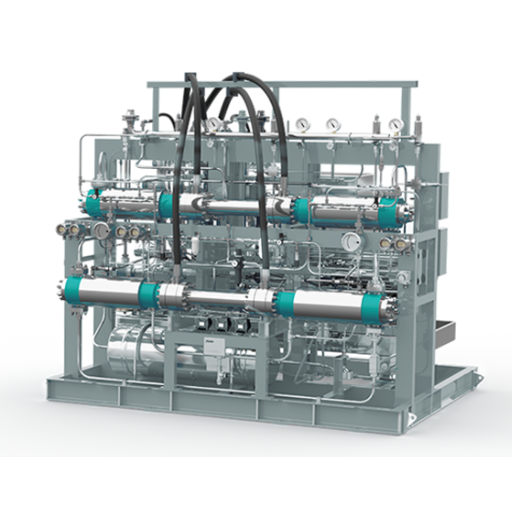
Metal hydride hydrogen compression is the result of a rather uncommon property of certain metals, as well as several of their alloys, to be able to absorb hydrogen gas at specific conditions and be able to also desorb the hydrogen gas. The metal gets saturated with hydrogen under specific temperature and pressure. When this occurs the metal becomes hydrided and reacts to the presence of hydrogen into the structure. With the addition of heat, the hydrogen gas which has been stored is desorbed at a slightly higher pressure than that required for absorption.
In its design, the technology promotes safety as it works under low temperatures and pressures, and no critical movements occur in the apparatus. Also, high temperatures and pressures do not induce any fatal damage to the technology and it could be used repeatedly. Pressure re-adjustment of applications requiring precision handling has very few emissions. It is also possible to employ these compressors for the storage of hydrogen and in fuel cell technologies.
Mechanism of Hydrogen Absorption and Desorption
When hydrogen gas comes into contact with a metal hydride material, the process of absorption begins, where the initially present, but weak bond in the form of a diatomic molecule of hydrogen (H2) is broken into atomic hydrogen (H) on the surface of the metal. This dissociation usually takes place on catalytic sites on the surface of the material that suppresses the activation energy of dihydrogen’s cleavage. This causes the atomic hydrogen to diffuse into the interstitial sites of the host metal’s lattice and combines with the lattice forming a stable metal-hydride complex. However, the process of absorption occurs with the release of heat, which must be managed to enable effective absorption of the hydrogen.
On reversal, desorption is the term to describe the return of hydrogen atoms to gaseous form from the metal hydride. Normally, heat is utilized for the desorption process in order to do away with the process endothermicity together with pumping out the pressure so as to make hydrogen removal easier. The absorption-desorption balance can be achieved according to many different factors like temperature, pressure, and the thermodynamic features of those metal hydrides used in this process. At present, enhanced systems like activated aluminum alloys and nano materials are more important for the development of efficient hydrogen generation and storage technologies.
Role of Alloys in Metal Hydride Compressors
As a central feature, alloys are employed in the optimization of the performance and efficiency of metal hydride compressors, significantly affecting the absorption and desorption of hydrogen. For example, it is known that various alloys like LaNi₅, TiFe, and magnesium based compounds possess some thermodynamic properties that allow or prohibit them from being used in certain equipment. In terms of LaNi₅-based alloys, these are usually applied due to their operation at moderate pressures and temperatures where efficient cycles of absorption and desorption can be run. As opposed to these, the use of magnesium-based alloys allows higher storage of hydrogen to be realized without the use of high pressures but high temperatures have to be provided in order for the storage to take place and hence are suitable for applications that require either high capacity or high temperature.
Current studies concentrate on changes made in the alloys to improve reaction rates and the lifespan of the powders. New advancements are on the horizon, particularly in nanostructures where surface reactions are catalyzed with metal-coated materials or minced palladium or titanium. Another interesting possibility is the replacement of certain elements within the alloy which would make it possible to adjust them for the required pressure-temperature and thus, make them suitable for particular engines. Improvement of these special products actively supports the progress of the renewable energy sector as they expand the application scope of hydrogen-powered systems in addition to improving their performance and reliability.
Heat Transfer in Metal Hydride Systems
For optimal interaction between the metal hydride and other system components, efficient heat transfer is crucial since it determines hydrogen uptake/release rates. Saturated metallic hydrogen absorbs or emits hydrogen by an exothermic reaction in hydrogenation, which means energy is released and nothing has to be done. In this case, one must mop up or sink the heat very quickly; otherwise, the system will act in an overheated manner. On the other hand, heat must be inserted at a desired temperature into the dehydrogenating system to succeed in overcoming the heat of reaction barriers.
Modern designs tend to incorporate high thermal conductive materials such as aluminum or copper in the heat sink construction in order to expedite heat removal. In some instances, such metal hydride reactors could include heat structures, convective heat sinks or even hybrid air cooling systems to enhance heat flow performance. Likewise, available literature opines that enhancing heat transfer in such devices can appreciably play a major role in lowering the consumption of energy and length of the cycle; thus, improving the performance of hydride storage and recovery based on hydrogen in the process.
Section 04
Applications of Metal Hydride Hydrogen Compressors
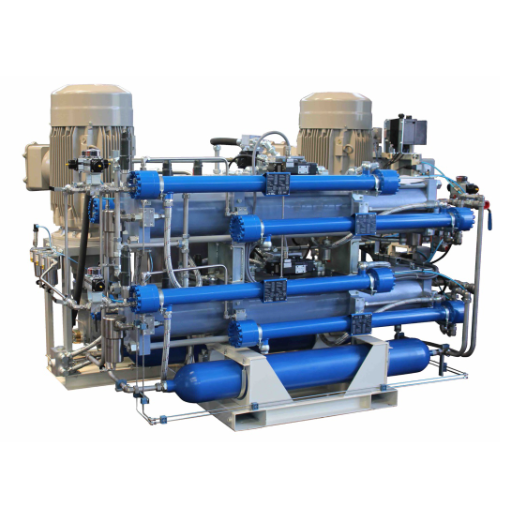
Compressors for hydrogen in metal hydride form offer a high advantage, being useful in all sorts of industrial processes that involve the storage and transportation of hydrogen. Though markedly effective in the manufacturing of items, these compressors do have other notable applications which entail hydrocarbon reformation and pipeline control that requires very high levels of pressure regulation. Additionally, hydrogen compressors powered fuel cell technology and have enabled advancements to be made in clean power provision for motive as well as stationary applications energy sources. Another of these is their ability to operate at lower temperatures as opposed to the mechanical compressors hence are beneficial in situations where heat engine needs are critical for example in renewable sources of energy and chemical plants.
Applications of Metal Hydride Compressors in the Hydrogen Economy
- 01
Hydrogen Storage Systems
The methodology under which hydrogen is stored in the process saves space and ensures that the gases are stored safely and effectively. For example, certain alloys, like LaNi₅ and TiFe-based and others are able to carry out reversible hydrogenation-dehydrogenation processes at specified pressure and temperature ranges and store hydrogen in a secure manner even when under volatilization pressures like 200 bar.
- 02
Fueling Infrastructure for Hydrogen Vehicles
The working principle of MHCs in the hydrogen refueling stations is the “compress on demand” mechanism. Their high efficiency and low friction allow for wear free performance in hydrogen fuel cell electric vehicles. Higher pressure distribution is seen in hydrogen refueling where standard fuel cell vehicles typically operate at pressures beyond 350 bar and especially in a fueling system that comprises high pressure, which provides fueling to 700 bar such as hydrogen refill systems requires high pressure.
- 03
Industrial Hydrogen Delivery
Certain operations done in the industry such as chemical production and processing of metals, need pure hydrogen to carry out the processes successfully. Moreover, metal hydride compressors, as linking technologies are able to deliver high-purity hydrogen at high pressures, endowing with high industrial standards. Nowadays, by selecting metal hydrides with ideal thermodynamic characteristics, such systems are capable of compressing hydrogen up to 85% and more effective conditions in the process.
- 04
Renewable Energy Integration
Hydrogen production and storage are essential processes within a range of renewable energy sectors, and it is a perfect deep subject for MHCs. It means the fact that compressor that can compress hydrogen occurring due to electrolysis as a result of a renewable energy supply such as solar or wind can be included in todays energy grid. Research carried out on the application of metal absorbers and PEM steel electrolyzers in the compression of hydrogen has shown that pressures of between 100 and 150 bar can be reached with negligibly small amounts of energy loss.
- 05
Laboratory and Research Applications
Owing to the quality of their build and how long they can function without breaking down, Membrane Hydrogen Concentrators are used extensively in laboratory environments to manage the supply of hydrogen gas. Hence, they can be used to allow for certain experiments to be undertaken using the required pressure and purity of hydrogen and for the use of a smaller experimental setup too. The field has reported performance of over 90% in laboratory benchmarks and experiments.
Benefits over Traditional Hydrogen Compressors
- ►
Higher Energy Efficiency
Metal Hydrides Compressors, more commonly known as MHCs by their abbreviation, compared to traditional mechanical compressors, have far superior energy potential. For traditional high-pressure hydrogen gas compressors (mechanical compressors), the turbine efficiency is 40-60%, and the MEAs can achieve efficiencies of up to 90% under the effect of optimal process conditions.
- ►
Lower Maintenance Requirements
MHCs not only have several fewer moving elements that are much to the delight of device owners they are built out of less traditional components than most machines which means they last long before they fail. As a result, maintenance of such machinery is neither regularly undertaken nor an expensive exercise. Also, it is simple to understand that MHCs require low levels of lubrication and this makes repairing easier.
- ►
Enhanced Operational Safety
The built-in measures in MHCs provide safer conditions with them because they work at much lower pressures and heat than their eastern counterparts. Traditional compressors tend to reach over 200 bars in use, however MHCs with reversible hydrides equivalent in performance work at pressure several times even lower than the control pressures at the reversible formation of hydride.
- ►
Improved Hydrogen Purity
MHCs are known to be useful in the purification of hydrogen gas as they work with the absorption of hydrogen gas and its subsequent release. It is however, necessary to mention that generally all the other impurities in hydrogen such as nitrogen, oxygen, and hydrocarbons, do not get absorbed in the metal hydrides.
- ►
Compact and Modular Design
MHCs are structured in such a way that they occupy very little space and thus associated with the installations where the space is too big from both sides or the installation is mobile in the first place. Moreover, these MHCs have scalability aspects which makes it possible for the system to be designed and extended according to the capacity requirement.
- ►
Noise and Vibration Reduction
Magnetic heat pumps operate virtually noiselessly, unlike mechanical compressors that rely on pistons or diaphragms which can produce considerable amounts of noise and vibrations. In establishments and industries that require a noise-free environment such as laboratories and cities’ hydrogen supply being refueled by robotic pumps, this provides a lot of advantages for magnetic heat pump machines.
Section 05
Future Trends in Metal Hydride Hydrogen Compression
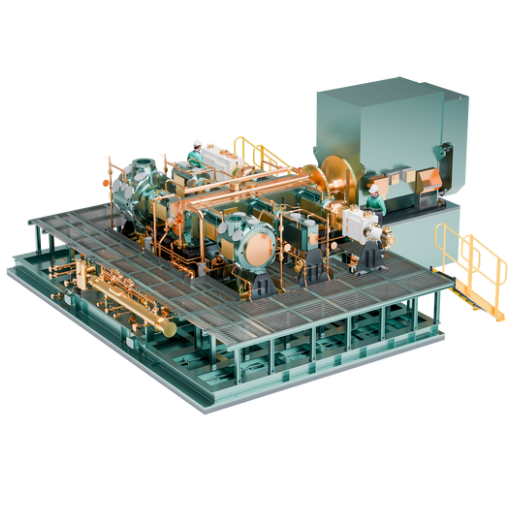
The improvement of metal hydrides as a potential technical approach in hydrogen compression enhancement is imperative. There is a current trend that pursues novel alloy development at institutes aiming at enhancing storage capacity and catalysis. Furthermore, the trend to the integration of renewable energy reservoirs such as solar voltaic cells and wind turbines is rising for the objective of making hydrogen compression more sustainable. There is important research in ways to change current systems to accommodate various sizes much more easily, and carry hydrogen to places of need with more storage tanks. There is continued expansion in the strategy of passive design in next-generation technologies where the elimination of heat control equipment saves even more energy and enables the increase in regulations energy efficiency.
Innovative Approaches and Numerical Modeling
Computational modeling is a crucial element in the process of optimization of metal hydride hydrogen compression systems since it leads to providing studies of heat transfer, reaction kinetics and hydrogen diffusion mechanisms. More tailored methodologies such as computational fluid dynamics (CFD) and finite element analysis (FEA) help with the design of more sophisticated simulation which allows detailed investigation of thermodynamic and mechanical properties under different modes of operation. These quantitative models provide estimates for critical quantifiable quantities, such as extent of compression, cycle stability, and thermal efficiency, which are important for both system development and improvement.
New methods of research are connected with the integration of computer simulation and experiment into one system in which modification of the model structure based on the real data taken on-line is possible. This methodology, definitely, is a capability in predicting the system proper functioning within a period of time. It helps in addressing specific problems such as determining how to improve heat sink effectiveness or prevent material from going bad. In connection with this trend, the creation of metal hydride systems applying machine learning is another useful tool in the quest for enhancing performance and minimising efforts. It is an innovative concept within the energy arena that promises to lower the energy profile of metallic hydride devices during deployment.
Future Prospects in Hydrogen Energy
Hydrogen energy possesses a lot of potential to develop, thanks to the combination of ecological hydrogen production and the improvement in fuel-cell technology. Among the potential breakthroughs in this regard is the ‘green’ hydrogen, which several industrial prospects are currently claiming to have diminished carbon emission thanks to its production using wind energy, etc. The current focus of research is on proton exchange membrane (PEM) electrolyzers being developed in order to improve their efficiency, and thus overall hydrogen production capacity.
There have been considerable advances in using fuel cells in automobiles. Transportation and automotive sectors have proved to require another form of power fuel cells. Some progress has been recorded in the making of lightweight fuel cells that are better performing. Such better production and functional capabilities of lightweight cells are of great interest to hydrogen-fueled vehicle technology, primarily, regarding energy efficiency and the driving range. There is an emerging trend in the development of solid oxide fuel cell (SOFC) designs as they are being considered for operation at higher temperatures, which paves the way for application of the fuel cells beyond transportation, such as in stationary applications.
On a different scale of improvement, there are efforts to put in place hydrogen distribution networks. The construction, expansion, and upgrading of pipelines, together with the construction of hydrogen zones in areas where industrial demands are high are taking place very fast. It is through the kind of development described earlier that if things go as they are now, hydrogen will become part of a solution to net-zero global emission problems within two to three decades.
References
Reference Sources
-
- 01
Performance assessment of metal hydride hydrogen compressor
- 02
Development of a high-pressure 700 bar metal hydride compressor
- 03
- 01
FAQ
Frequently Asked Questions
How does hydrogen storage with metal hydride hydrogen compressors work?
The hydrogen storage system based on solid hydrides involves reversible hydrogen absorption and desorption within the alloys, allowing compressed hydrogen gas to be stored as a solid material. The hydride hydrogen compressor type is different in that it involves compression without pistons. There is a process of pumping using the thermally driven compression or using compression based on metal hydrides with rejected thermal energy, leading to high-pressure hydrogen with high pressure being produced from low quality heat. These systems are particularly useful in attaining high compression ratios and, at times, high compressed gas pressures, reaching almost 70 MPa in laboratory applications.
Can a reactor-style metal hydride system be used as a hydrogen compressor?
A hydrogen compressor can be incorporated into a reactor block utilizing metal hydrides so as to take advantage of temperature and pressure cycling. This produces hydrogen uptake and outgassing and obviates the need for mechanical parts. Such reactor systems may be thermally driven or compressors in which hydride principles and electromechanic principles are used to increase the flux and compressibility of hydrogen. These reactors are also functional in that they can be powered by low-quality energy or waste instead of primary energy. This feature makes them useful for generation of local energy.
What are the storage systems’ benefits of metal hydrides for hydrogen compression?
Storage systems featuring metal hydrides are considered as one of the best, in many cases, the most convenient method to store, compress and transport hydrogen. This is as a result of storing hydrogen in a solid form as metal-hydrogen phase within the material of the elements. Further, such systems, based on the technology of metal hydrides, allow for better packaging of hydrogen with lower amount of high pressures entailed by using mechanical hydrogen compressors for energy storage. A new extending primitive hybrid compression concept enables the use of a metal hydride that performs three different functions.
How does hydrogen absorption and desorption enable compression in metal hydride-based hydrogen devices?
The absorption and desorption of hydrogen by a Fischer–Tropsch metal helps decompression effects. Absorption takes place at lower pressure, while desorption occurs when the metal is heated at a higher pressure and allows the pumping to happen since there is no need to move the pistons. And this process may be further refined due to the use of certain alloys, those embedded with hydrides and still performing good thermodynamics of hydrogen retention, and also due to the applicability of waste heat or electrochemical processes in controlling temperature variations and maintaining a particular rate of hydrogen release.
// SYS-DOC: WHY I WRITE THIS
[01] About PanGeng
PanGeng is an industrial gas compressor manufacturer based in Bengbu, Anhui, China. Since 2009, we have focused on the design, R&D, production, and manufacturing of customized gas compressor systems for oilfield, chemical, energy, hydrogen, nitrogen, biogas, and industrial air applications.
[02] Our Expertise
We write compressor guides based on real manufacturing and engineering experience, including hydrogen compressors, nitrogen compressors, booster compressors, medium and high-pressure air compressors, oilfield nitrogen injection systems, biogas compressors, and OEM/ODM custom compressor solutions.
Our engineering team supports customers from application analysis and compressor selection to production, factory testing, commissioning, spare parts, and after-sales service.
[03] Why You Can Trust This Content
The technical information in our articles is based on PanGeng’s in-house compressor design and manufacturing experience, current product capabilities, and project support for industrial clients in global markets. Our goal is to help buyers understand compressor types, pressure ranges, gas requirements, customization options, and long-term operating costs before making a purchasing decision.
CONTACT PROFILE
AUTHORITATIVE SOURCE
NAME
PanGeng Engineering Team
BRAND
PanGeng
COUNTRY
China
MODEL
B2B / OEM & ODM
EMAIL
pg20090705@163.com
PHONE
0552-4958225
WEBSITE
pgcompress.com
Related Posts
![Low Pressure Hydrogen Compressor Applications [Guide]](https://pgcompress.com/wp-content/uploads/2026/09/low-pressure-hydrogen-compressor-applications-blog-featured-768x512.png)

Trending now


![Low Pressure Hydrogen Compressor Applications [Guide]](https://pgcompress.com/wp-content/uploads/2026/09/low-pressure-hydrogen-compressor-applications-blog-featured-150x150.png)