Get in Touch with Pangeng

How Does a Nitrogen Compressor Work: Understanding Nitrogen Generators and Their Processes

Contents
show
The true investment value of nitrogen compressors and generators in many industries and scientific engagements has ever been clear in providing low-cost, quality nitrogen gas supply. However, how do these systems really function? This paper will delve into these questions by shedding light on nitrogen compressors’ basic operation and the relationship between nitrogen production and equipment setup. Gas compression and purification as well as some of the most cutting-edge methods of nitrogen generation will also be discussed. Whether one practices the craft of mineral application like processing minerals, providing health care to the patient or even wrapping food, the delicate understanding of how these products are made is a crucial factor in ensuring performance in the field is acceptable and performing the function adequately.
Nitrogen Generation Fundamentals
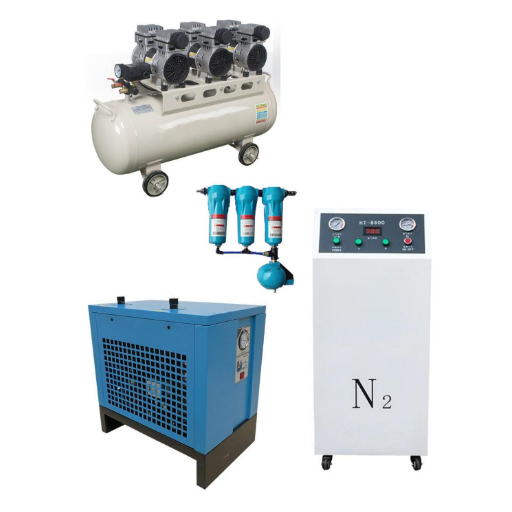
Nitrogen generation is the technique of sourcing nitrogen gas from the air in your premises. In atmospheric air, the nitrogen level is quite high; it is about 78%. It involves the removal of the nitrogen gas molecules from other gases mainly oxygen, and other trace elements. These are oxygen and certain trace gases in the air. Nitrogen generation uses two major categories of techniques:
Technique 01
Pressure Swing Adsorption (PSA)
This technique involves the use of specialized absorbent materials and allows the oxygen to be compressed and separated from nitrogen gas through carbon molecular sieves.
Technique 02
Membrane Separation
A semi-permeable membrane housed in the separation unit, which encourages very small oxygen and water elements to pass through. The rest is nitrogen.
Both of these techniques provide adequate and inexpensive nitrogen for various uses within such industries as pharmaceuticals, electronics and food packaging. The appropriate method chosen takes into account issues such as level of purity expected, modes of flow as well as whether the method is efficient.
What is Nitrogen Generation?
Generation of nitrogen is the act of obtaining nitrogen gas from the natural air by means of the efficient separation places. It is well-known that normal air or atmospheric air consists of approximately 78% nitrogen, oxygen as well as some other minor gases such that it is never a problem to get a filling source. At present nitrogen generation activities are carried out mostly by means of either Pressure Swing Adsorption or membrane separation technologies.
With the first method known as Pressure Swing Adsorption, gas-liquid separation in the form of a selective adsorption of oxygen and other gases on adsorbent materials such as carbon molecular sieves is applied to achieve a nitrogen rich stream of up to 95% purity. The other method is complementary to it and uses a selective impermeability of membranes to various gases by separating species of smaller molecular masses from nitrogen and “heavier” gases, e.g., oxygen in a gas mixture. Both facilities enable production of nitrogen with a predefined purity range — specifically, nitrogen with a purity of more than 99.99% can be produced.
Nitrogen generation has evolved to be an essential undertaking for numerous industries such as chemical, pharmaceutical, food, electronics and treatment among others. It offers competitive cost benefits, provides safer alternatives in comparison with the use of nitrogen cylinders, and helps in individuals’ efforts to reduce production-related nitrogen. The quality and dependability of the nitrogen systems available for purchase are the chief factors why they are embraced so effectively into the industrial set ups at the moment of the service delivery to ensure that nitrogen gas is of the needed specifications.
Importance of Nitrogen Gas in Industries
There are multiple applications of nitrogen gas in many industries and different levels of their needs. Therefore, one relevant component is the low reactivity of nitrogen with the other components such that it is used in applications where controlled investment is necessary or where oxidation is discouraged. For example, where food is packaged, the application of Nitrogen gas is carried out within an enclosed area. The air is displaced and instead, Nitrogen gas is introduced to reduce the oxygen levels in the air. This nitrogen gas is used to elaborate more as some of the common gases are lost in economic aspects.
Quite importantly, everywhere in the pharmaceutical manufacturing, one cannot do without nitrogen, for instance, during the emptying and clearing works; this allows to protect valuable substances from humidity and the harmful effects of oxygen. According to studies, companies benefiting from nitrogen gas usage obtain substantial operational benefits by way of improved process efficiency and with compliance with quality regulations. Additionally, improvements in nitrogen generation devices have enabled companies to produce the gas in-house, which in turn provides cost-efficient solutions, lowers the extent of external sourcing, and is good for the environment. It is through such applications that the importance of nitrogen gas in the innovation and operation of all contemporary industries is emphasized further by the capabilities of this gas.
Overview of Nitrogen Generation Systems
01
Pressure Swing Adsorption (PSA) Nitrogen Generators
PSA systems make use of adsorbent materials such as carbon molecular sieves which are capable of adsorbing and selectively separating oxygen from compressed air under pressure. This involves the adsorption of oxygen at high pressure followed by low pressure desorption to make a pressurization cycle for reducing the percentage of nitrogen to the desired one between 95%–99.999%. These features including modularity, energy efficiency, and varying yields make it a choice of preference in sectors such as food packing, pharmaceuticals, and electronics for onsite nitrogen production.
02
Membrane Nitrogen Generators
Membrane systems rely on hollow-fiber membranes especially designed to work against the setting up, throughout the membrane, of nitrogen at different transport speeds of different gases. The nitrogen readily enters the membrane compared to water vapor and oxygen which escapes with more speed. Membrane systems which demand simple configuration and have low operational expenses are efficient for high-volume nitrogen applications with purity levels of nitrogen up to 99.5%.
03
Cryogenic Nitrogen Generators
The design of the cryogenic system is such that it can handle the extraordinary high purity nitrogen (as high as 99.9999%) also in more voluminous output. Through the liquefaction of air at very low temperatures and distillation to nitrogen the system is able to separate the various constituents. The production capacity of such systems is retarded by the high cost involved for their installation and maintenance. However, cryogenic systems are indispensable in the aviation industry, chemical industries in the manufacture of high quality chemicals, and medical manufacturing processes that require accurate levels of purity.
Types of Nitrogen Compressors
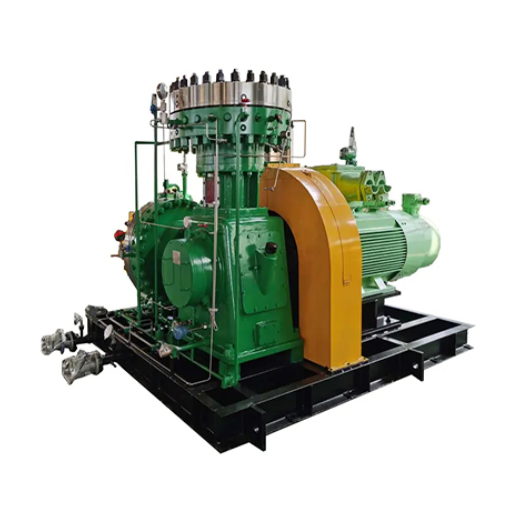
For this reason, nitrogen compressors are employed to enhance nitrogen gas capacity so as to accomplish certain industrial processes. There are various types of Nitrogen Compressors available, some of which include:
Each of these compressors has a particular value and they are used as per pressure, flow, and application requirements.
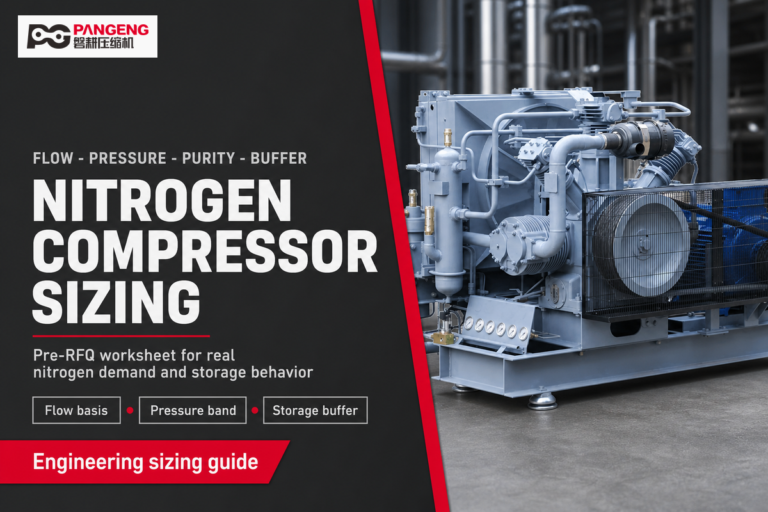
PSA Nitrogen Compressor
PSA nitrogen air compressors are known to be conceived of and exclusively used for nitrogen production from air using a sort of separation process and they are also compressors. Compressors are known to support adsorbents especially carbon molecular sieves that can absorb nitrogen and impurities present such as oxygen when air is compressed which helps to recover soaring nitrogen with a high content within the system. The operations of PSA are not continuous but in terms of a cycle, the operations alternate between adsorption and desorption to make sure nitrogen makes its production feasible.
There are various merits to utilization of the most recent PSA nitrogen compressors, efficiency in terms of energy, service life, and most importantly production of nitrogen with a grade above 99.9% as required by the activity of the industry. Community development, application-oriented subsidies under economic cost analysis structure to the industries such as the food packaging, chemicals, and electronic industries facilitate the use of PSA systems. In addition, the fact that PSA compressors such as the nitrogen compressors, have a compact structure and are available as modules allows them to be used in operations of any size. When choosing a PSA nitrogen compressor for an industrial sector, different parameters like enthalpy flow rate, operating pressure, and adsorption efficiency in the suppliers of the equipment have to be accessed towards any industrial applications.
Membrane Nitrogen Compressor
The history and the development of membrane nitrogen compressors has allowed embracing the use of highly developed polymer materials that enable the separation of nitrogen from the compressed air with maximum efficiency and ensured reliability of the equipment in many economically critical technical processes. The membrane technology employs butanol or other membranes in which separation of oxygen, water, and other more mobile gases from the nitrogen stream occurs on the certain fractional composition or molecular level. These plants are commonly known for their longevity, low power demand and low system services, which makes them very well suited for applications that necessitate nitrogen gas all the time employing packing food, in chemical covering, or for work in oil and gas under abnormal conditions.
Purity of nitrogen provided through membrane nitrogen compressors is one of the key parameters reaching a range of 95% – 99.9% in this case, along with the operating pressures and flow rates that can be adjusted in order to satisfy precise attention to the needs of the industry. Membrane systems are appropriated by its modularity as they are able to go from small-scale plants to full-scale installations without a hiccup. This in-built scalability can enable offline plug-in, while driving competitive advantage. No moving parts in membrane module will further add to this and lessen the possibilities of any mechanical efforts.
Comparative Analysis of PSA and Membrane Systems
| Parameter | PSA System | Membrane System |
|---|---|---|
| Efficiency | High for high-purity gas separation | Moderate, dependent on gas composition |
| Energy Requirement | Requires significant energy for adsorbent regeneration | Lower energy consumption |
| Purity Level | Achieves high purity levels (up to 99.999%) | Moderate purity levels (up to 99%) |
| System Complexity | Complex system with multiple adsorber beds | Simpler design with fewer components |
| Maintenance Needs | Regular adsorbent replacement needed | Minimal, no moving parts |
| Initial Capital Cost | High initial investment | Relatively lower initial cost |
| Operating Cost | Higher due to adsorbent and energy usage | Lower due to reduced energy consumption |
| Footprint | Larger system footprint | Compact design |
| Response Time | Longer cycle times for adjustments | Quick response to operational changes |
| Eco-Friendliness | Energy-intensive and less sustainable | Eco-friendly with lower power requirements |
| Scalability | Scalable for large capacity processes | Ideal for small to medium-scale applications |
Understanding the Working of Nitrogen Compressor
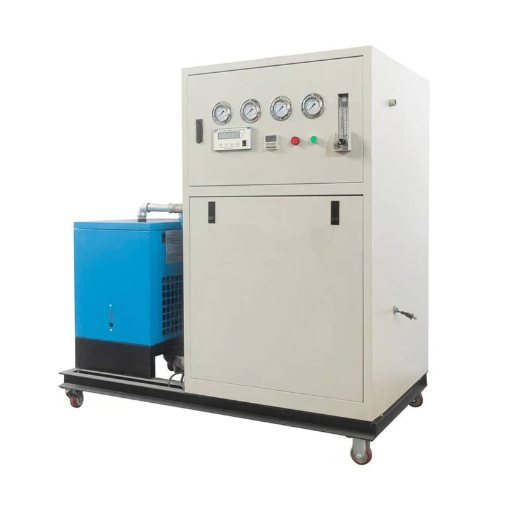
A nitrogen compressor functions by intake of nitrogen gas, compressing it, and outputting it at the needed pressure levels for various industrial purposes. The compression process almost always involves multiple stages to ensure efficiency and maintain gas composition. Initially, nitrogen is obtained by the compressor at atmospheric pressure. From there, it is led through a number of chambers until it gets to the last compression stage. In rectangular form, the compressed nitrogen will be discharged for advantageous use, or if it is not required, it will be pressurized for storage. The intake system, compression stages, cooling equipment and a discharge controller are all made to the compressor to allow for the machine to be efficient and reliable.
How Nitrogen Compressors Work
Compressors that use nitrogen are used in a variety of settings as they are designed in such a way that ensures high efficiency and safety at all times. Air compression process kicks off when atmospheric air or nitrogen from the source is drawn and filtered of impurities for the air to be made pure as it enters the system. Upon entry, the nitrogen passes through a series of compressors consisting of high-grade pistons, screws or centrifugal parts where all the stages offer different pressure levels. Meanwhile, the huge motors used for these activities gain heat other than the mechanical heat. The heat is so severe that it may even degrade the quality of the compressed medium due to molten thermal expansion.
Current nitrogen compressors also incorporate sophisticated management systems for the purpose of controlling parameters including the input pressure, temperature, and air flow rate. Thanks to the presence of the systems in place, the system is operated in the most optimal manner and the changes as far as the required capacity or the system characteristics at any moment can be absorbed. It is imperative to keep in mind while designing and constructing pressure-relieving mechanisms which provide for housings to shut off automatically, so that the equipment can be saved from excess pressure. This combined approach ensures nitrogen compressors provide stable performance hand in hand with conformity to the high requirements of industry and total energy saving targets.
Membrane Separation in Nitrogen Generation
When it comes to nitrogen production plants membrane separation technique has been highly adopted for its simple apparatus, its long self-life and its energy effectiveness. Its operation is structured in a way that a certain specific branch polymer, polyvinyl alcohol facilitates passage of nitrogen from the already compressed air. This is done from the principles of diffusive permeation, where the oxygen, vapour and other gases get through the membrane material more easily than the nitrogen thus achieving a pure nitrogen concentration.
The move to state-of-the-art membranes has also made it possible to achieve appreciably high nitrogen purities ranging up to 99.9% depending on the application in question. The membrane units are small and convenient as they are prefabricated thereby enabling their application to sectors of the economy with strict limiting conditions or changing nitrogen requirements. In addition, they do not require large resources for operation neither are there any chemicals used in the process which affects the overall expenditure and the green footprints of the plant.
The use of membranes has many ramifications such as the production of gas-tight packaging for food, production of electronic devices, and oil and gas extraction. This gas is necessary for particular trends in the industry concerning its continuous supply and production of nitrogen on the spot, to treat it any less means that no success in the industry will be achieved. This is in turn a capital source which can help in research among the researchers and helping these applications has caused the evolution of membrane technology.
Applications of On-Site Nitrogen Generation

Nitrogen that is formed on the premises is also widely utilized across many sectors, as it is highly dependable, effective in cost, and beneficial environmentally. The major ones being:
- Food & Bev
Nitrogen is regularly employed in modified atmospheric packaging (MAP) of foodstuffs to preserve their freshness and quality through preventing oxidation and microbial growth. It is as well critical in cleaning and inerting tanks, vessels and pipelines.
- Pharma
Nitrogen is of immense utility in the packaging of sensitive products for purposes of sterility and preservation of the capabilities or energy level. Also in application are its uses in cryopreservation plus instances of certain medical gas systems.
- Electronics
Nitrogen found a place within semiconductor manufacturing and designing where the atmosphere is created such that it forms a layer which reduces the level of oxidation in the soldering and assembly processes leading to increased production.
- Oil & Gas
Nitrogen is made use of in well stimulation, pressure testing and pipeline purging in the oil and gas industries as a way of increasing overall operational efficiency and safety.
This is an instance where the benefits shown by the on spot production processes lead to lesser dependency on supplies from abroad and even lower cost of transport hence making operations more flexible and environmentally friendly.
Industrial Uses of Nitrogen Gas
The versatility of nitrogen gas extends beyond traditional applications, as industries continue to innovate and integrate advanced technologies. For instance:
- Pharmaceutical Manufacturing: One of the key application areas is pharmaceutical manufacturing where nitrogen is utilized for both the production, and packaging of medicines in order to create an inert atmospheric environment which would not encourage oxidation, nor would it lead to the growth of microorganisms, thus ensuring the quality and efficacy of pharmaceuticals.
- Food and Beverage Industry: The food processing industry needs nitrogen as a protective gas (MAP technology) and it can have a positive effect on the shelf life of products that are sensitive to oxygen and are likely to deteriorate quickly. It is also engaged in cryogenic engineering – here nitrogen is used for cooling down contents to low temperatures during storage.
- Additive Manufacturing (3D Printing): Nitrogen is also very useful. It is great for 3D printing with metal powders but one must be aware of the dangers of explosions. It effectively suppresses oxidation by providing a low oxygen environment and it is very helpful in aerospace and automobile where advanced machining processes are combined.
There are new methods of generating pure nitrogen gas in industries that have eliminated the issue. An example of these methods is Pressure Swing Adsorption (PSA) on site nitrogen production plants. This also has the added benefit of reducing the dependence on outsourced nitrogen sources and complies with carbon mitigation and cost-reduction objectives related to the elimination of unnecessary transport.
Benefits of On-Site Nitrogen Generators
One of the best examples in industries that use on site nitrogen generators is the efficiency in which it enhances in terms of unbalanced growth and protectionism based on various sectors. The first and possibly most noticeable thing about nitrogen plant is that such liquidation takes place in the said regime in terms of transportation costs often called recurring nitrogen dissemination. Also, there is a continuous and stable source of nitrogen so that there is no downtime that is brought about by transport inconveniences.
Another important issue is the possibility of producing gas with very different purity levels, tailored to the specification of one or several specialized applications such as food packaging, fabrication of electronic appliances or processing of metal parts, which for a variety of reasons contain nitrogen. Modern nitrogen generators based on PSA and membrane technology are characterized by good performance and consume low amounts of energy very often due to a breakthrough in design concepts that involves lower power requirements but same high standards. Moreover, bringing production closer to the point of use helps reduce the transportation-generated greenhouse emissions hence helps comply with the policy guidelines of the company related to its objectives of sustainability and regulatory aspects.
Case Studies of Effective Nitrogen Applications
Maintenance and Troubleshooting Tips

1
Regular Inspection
Always execute overall visual inspections of the noted compressor parts like everyone else hoses, seals and valves for signs of damage or wear. Proper handling of the identified minor defects can prevent unnecessary breakdowns of the system.
2
Filter Replacement
Implement air filter change and other associated filters as per the manufacturer’s recommendations. These will affect the nitrogen purification process, reducing its effectiveness.
3
Lubrication
Remember to take care of all the movable parts of the compressor. Especially, it’s better to grease parts recommended by the manufacturer to improve the performance of the equipment and to prevent mechanical damages.
4
Monitor Operating Conditions
Measure correctly and determine the appropriate operating pressure and temperature. If the units are different, there may be a chance that something outside the unit’s range of operation such as a blockage, a line leak, or even a sensor out of calibration.
5
System Calibration
Examine how well all critical sensors and gauges are functioning. They must be routinely calibrated to ensure accurate nitrogen and eliminate process delays in operating it.
Regular Maintenance Practices for Nitrogen Compressors
One of the main concerns about nitrogen compressors and their maintenance is the need to appropriately maintain their compression ability to ensure good machine status, peak operation efficiency, and the highest possible equipment operation term. First and foremost, inspections of all mechanical systems, including valves, seals, pistons, etc. must be performed to spot any signs of wear, damage or any inconsistencies that could potentially cause defects or breakdowns in the system. Lubrication is also an important action that includes performing as per recommendations at regular intervals concerning the suitable lubricants manufactured by the producer in order to lessen as much as possible the friction and the possibility of thermal destruction in the parts that are moving.
Apart from the above information, the regular cleaning of air cleaners and cooling charges helps to prevent dirt from getting into the system and helps the compressor to work within the optimum heat range. With the help of high-end technologies including vibration measurement and thermal imaging the problematic nodes can be identified even before their evacuation in risk. It is possible to increase the service life of equipment and minimize harbor-led downtime by strictly adhering to the manufacturer’s maintenance schedule and performance of predictive maintenance methods that are currently in application.
Enhancing Efficiency of Nitrogen Generation Systems
Efficiency gains in nitrogen systems are directly related to appropriate system design and operation improvements, fundamentally. Extensive utilization of pressure swing adsorption (PSA) technology with optimal control methods was identified as one of the major steps in this regard. The PSA process provides the availability of nitrogen of desired purity and explains the energy conservation feature of the process. It is also wise to install oxygen probes, pressure differential transducers and other useful instruments capable of reading relevant parameters instantaneously in order to study the system more frequently and more extensively with the view of reducing energy consumption further.
Furthermore, improving the performance of these systems requires tackling the problem of air compressor inefficiencies. Compressed air consumption, hence power use, can be varied depending on the load rate due to the usage of variable-speed drive (VSD) compressor units. The timing for regular service activities, such as changing filters and membrane modules, is necessary to eliminate contaminates or minimize the occurrence of flow impairments while executing an efficient system.
Additionally, the study showed that industrial cases that guided this study determined some scientific reasons why the industrial plant layout should be such that the piping distance is minimized and pressure drops are avoided and in particular, improved and the facilities improved when it comes to energy consumption. Nitrogen generation systems can also be made more efficient, having an increase in output capacity and a drop in risk management skills, and at the same time, reduce operational costs and man-created degradation.
Reference Sources
[1]
Nitrogen Compressors
[2]
Successful Application of Nitrogen Turboexpanders-Compressors to Floating and Land-Based Liquified Natural Gas (LNG) Facilities
Frequently Asked Questions
Technical Q&A
What are the types of nitrogen generators, and how do the types of nitrogen generators differ?
Out of the nitrogen producing plants that are available, perhaps membrane and PSA nitrogen plants are the most popular, since they are known to function from the same principle of nitrogen separation. Monetarily, the membrane type carries out the activity by pushing compressed air within semipermeable membranes to cause nitrogen separation unlike the PSA type; which utilizes adsorption materials to hold onto the gases and allow purified nitrogen to pass through. Both of these techniques are used to generate nitrogen at point of use and what is employed depends on the desired nitrogen quality and output as well as the practicing time for nitrogen generation.
How does a PSA nitrogen generator produce nitrogen gas?
Compressed air is allowed to flow through an adsorbent material in a Pressure Swing Adsorption system to generate nitrogen. This material adsorbs the impurities like the oxygen completely and allows the nitrogen through. The adsorption and desorption processes are cyclic whereby one has the capacity to support the continuous production of nitrogen. Therefore, PSA systems are designed for producing high purity nitrogen. In the comparison of membrane technology and PSA, the results usually imply that PSA is superior in terms of purity; however, membrane systems are simpler and cheaper. The adsorption process eliminates the oxygen from the gas mixture so only the nitrogen is drawn out to be delivered.
How does a nitrogen gas generator separate nitrogen on-site?
Generating nitrogen on-site is more convenient as it entails no necessity for filling cylinders to full capacity due to the fact that nitrogen gas is produced by use of nitrogen gas generators that rely on compressed air to extract nitrogen and helium using a selective process which is achieved through nitrogen generation technology. Most of the systems include a nitrogen generator complete with an air compressor, a desiccant-based gas dryer, final membrane dryer, particulate filters and dust removal, and coalescing filters for remaining water droplets. By recalculating such facts, rather than having nitrogen tanks filled with the gas, the cost per unit of gas produced on site the cylinder fills, the cost of nitrogen or the convoys, or more simply put, the cost of pressing and transporting nitrogen in a tank will be more than that.
How does a membrane nitrogen generator operate compared to membrane nitrogen systems?
In the working mechanisms of membrane-based nitrogen generators, why use compressed air pressure and why are they famous for compressing air through what is known as a semipermeable membrane which is invented in such a way that oxygen gas is desirable for the location of the membrane more than nitrogen, hence more percentage of nitrogen exists at the product side. Such devices can easily fit into a small space and are easy to use, constantly giving nitrogen and meeting low and middle purity expectations. It is also possible to create a combination of membrane and PSA systems to cater to the select purity levels, adjusting emphasis at a given cost too, the membranes being valuable where the demand necessitates for a robust and low maintenance gas generator.
// SYS-DOC: WHY I WRITE THIS
[01] About PanGeng
PanGeng is an industrial gas compressor manufacturer based in Bengbu, Anhui, China. Since 2009, we have focused on the design, R&D, production, and manufacturing of customized gas compressor systems for oilfield, chemical, energy, hydrogen, nitrogen, biogas, and industrial air applications.
[02] Our Expertise
We write compressor guides based on real manufacturing and engineering experience, including hydrogen compressors, nitrogen compressors, booster compressors, medium and high-pressure air compressors, oilfield nitrogen injection systems, biogas compressors, and OEM/ODM custom compressor solutions.
Our engineering team supports customers from application analysis and compressor selection to production, factory testing, commissioning, spare parts, and after-sales service.
[03] Why You Can Trust This Content
The technical information in our articles is based on PanGeng’s in-house compressor design and manufacturing experience, current product capabilities, and project support for industrial clients in global markets. Our goal is to help buyers understand compressor types, pressure ranges, gas requirements, customization options, and long-term operating costs before making a purchasing decision.
CONTACT PROFILE
AUTHORITATIVE SOURCE
NAME
PanGeng Engineering Team
BRAND
PanGeng
COUNTRY
China
MODEL
B2B / OEM & ODM
EMAIL
pg20090705@163.com
PHONE
0552-4958225
WEBSITE
pgcompress.com
Related Posts


Trending now

![Low Pressure Hydrogen Compressor Applications [Guide]](https://pgcompress.com/wp-content/uploads/2026/09/low-pressure-hydrogen-compressor-applications-blog-featured-150x150.png)