Get in Touch with Pangeng

Complete Guide to Hydrogen Compressor Types

Contents
show
Hydrogen compressors are essential components across many areas, from manufacturing to green energy and various forms of hydrogen gas storage. The process of selecting the suitable type of compressor can play a vital role in enhancing operational efficiency, dependability, and safety in hydrogen apparatus. It is detailed on each kind of hydrogen compressor in this manual, and several factors are investigated, such as their special features, benefits, or cases of application, for instance, medical or industrial. Such compressors can also be helpful for those who are creating or upgrading any hydrogen system, since all these devices are properly reviewed and so on. Let us find the different solutions and understand the dialectical position of the above mentioned types.
Introduction to Hydrogen Compressors
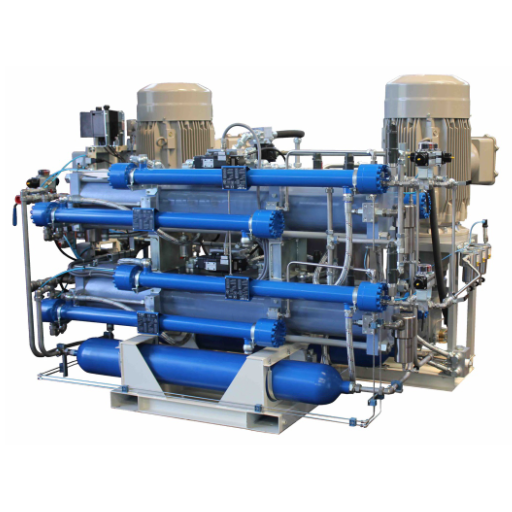
Hydrogen compressors are indispensable tools in the hydrogen enrichment, settings, and supply departments. They operate with the power flow of the hydrogen gas, and an important process is used to control the pressure, which is the high-pressure gas stored in high-pressure tanks. Hydrogen compressors are of three main types: reciprocating, diaphragm, and centrifugal, each with its own discharge rate and frequency ranges. Reciprocating compressors are good for operations with high pressures and low flow rates, diaphragm compressors are for instances with the need of ultra-pure hydrogen gas only. Centrifugal compressors are usually used for high voluminous and low-pressure gas systems.
What is a Hydrogen Compressor?
A hydrogen compressor is equipment that is used for handling the process of compressing hydrogen and raising its pressure by reducing its volume. Maintaining the official standards of the industries like energy, chemical, and gas usage, among others featuring hydrogen compressors in the device would require a pressure of compression at which the gas should be stored or transported. New hydrogen compressors have succeeded in creating energy-efficient and effective solutions that do not distort the quality of the consumed gas in applications with high requirements for purity.
Hydrogen compressors are available at different pressure levels as per the process requirements, varying from a few bar up to several hundred bar in some applications such as hydrogen deliveries. This in turn leads to a change in the energy emphasis in compressors’ construction, in terms of minimizing the design and construction of energy efficient and user friendly compressors available for hydrogen services in view of the MH lower molecular weight and high diffusivity.
Importance of Hydrogen Compression in the Hydrogen Economy
Hydrogen compression is vital in the determination of the hydrogen economy propulsion due to its important role in the storage, delivery, and use of hydrogen in all applications. It goes without saying that effective compression technology is key to enabling hydrogen gas to be stored at high densities, thus allowing for easy transportation of very large volumes over significant distances as well as easy location of hydrogen refuelling stations. An example in this context is that hydrogen for motor cars powered by fuel cells mostly requires compression up to about 350 and 700 bar. Running the vehicle on full tank becomes possible, at the same time tank design remains undermine weight norm.
In addition to the above, industrial applications, specifically the production of ammonia, refining, or manufacturing chemicals depend on compressed hydrogen at a defined pressure to ensure efficient working conditions and prevent any damages in the flow processes. Development of other means of hydrogen compression is equally dealing with such issues as energy wastage and dropping scaffold quality. Diaphragm, ionic liquid piston, and electrochemical compressors with high utilization rates have become the latest technological advancement in the field, as they are very efficient and can reduce expenses. These improvements are essential for the development of hydrogen compression systems and mostly for making feasible the global movement to a sustainable hydrogen-based energy infrastructure.
Applications of Hydrogen Gas
- Energy Storage and Fuel Cells
Energy storage and fuel cell systems lack something- hydrogen. It generates an electric current when fuel cells are utilized, creates water; as a result, it does not release harmful gases during operation. The demand for hydrogen technologies is becoming higher year by year, with fuel cells in the range of transport or backup power use for instance Proton Exchange Membrane Fuel Cells (PEMFCs). Encouragingly, the demand for hydrogen, more so as the hydrogen economy, has resulted in the growth of the fuel cell market by 25% in 2022, as reported by the International Energy Agency (IEA). - Industrial Processes
Hydrogen is much more than just a functional energy converter when it comes to industrial use. It is one of the preferred gases in the Haber-Bosch process that is very effective in ammonia production, which is the basis of all industrial agriculture. Also, hydrogen is a great asset particularly in the field of oil refining since it allows clearing of sulfur from oil so that cleaner burning oil products can be produced. More than 70 million tons of hydrogen per year are used in home energy storage and fuel cell systems in these industries. - Transportation
Indeed, fuel cell vehicles, which include buses and cars, are fit to describe a way in which transport can become eco-responsible. Resulting from the presence of hydrogen which has an energy content of about 120 MJ/kg, it is possible to support hundreds of kilometers driving range in the vehicle and even conduct refilling in a very short time, unlike in battery electric vehicles, making it possible to use such solutions in trucks and other long haul vehicles. - Power Generation
There is a lot of work now being undertaken aimed at developing more advanced breeds of turbines and engines that can burn hydrogen or its blend with natural gas, making it possible to cut down on emissions in the power sector. Hydrogen is now being used in some plants at a ratio of 30 %, but there are also targets of using 100 % hydrogen in the future so as to achieve global decarbonization. - Aerospace Applications
When doing so, the high combustion capabilities of hydrogen and its low molecular mass make it the best option for use in jet and rocket propulsion. Liquid hydrogen becomes part of the essential components of cryogenic rocket engines, as it has been shown in the engineering development of NASA’s space efforts and missions from the 1960s. - Chemical Industry
Although a significant amount of hydrogen is used in ammonia synthesis, another major application is in the carbon side of the chemical industry, with methanol synthesis and the further manufacture of resins, plastics, and solvents as the most important hydrogen-consuming processes. A notable application for hydrogen is its production of synthetic hydrocarbons through Fischer-Tropsch synthesis.
Types of Hydrogen Compressors

- Reciprocating Compressors
Reciprocating Compressors use pistons to compress hydrogen into the cylinder. These compressors are particularly successful in decontaminating high pressures and are popularly employed in fuelling hydrogen vehicles stations as well as in the industrial sites. - Diaphragm Compressors
Diaphragm Compressors which engage the hydrogen in a flexible mechanism, and that is how the gas is compressed, effectively ensuring that it is free from any poisoning contamination. Such compressors are excellent for use whenever ultra-high-purity hydrogen gas is required, including applications involving hydrogen fuel cell use, gas distribution, and laboratory settings. - Centrifugal Compressors
Centrifugal compressors work by using high-speed rotating impellers for the compression of hydrogen gas. Despite the fact that these are also efficient, working in handling much gas is better achieved with such compressors where few pressure changes will occur, that is in most cases at much lower pressure and are largely found in the petrochemicals industry. - Ionic Liquid Compressors
Ionic-liquid compressed hydrogen in this type of compressors is due to its choice of using a non-volatile liquid which compresses hydrogen without any need for lubrication hence increased efficiency. An alternative method of compressing hydrogen reduces wear, thereby increasing the equipment’s operational life. - Metal Hydride Compressors
Metal hydride compressors work by absorbing hydrogen under the influence of reversible chemical reactions in hydride-forming alloys. It is a type of hydrogen compressor that is extremely helpful in certain situations as it is small and compresses the gas at pressure.
Compare Types of Hydrogen Compressors
| Compressor Type | Mechanism | Advantages | Disadvantages | Ideal Applications |
|---|---|---|---|---|
| Piston Compressors | Reciprocating motion compresses gas | High pressure output | High maintenance requirements | Heavy-duty industrial use |
| Diaphragm Compressors | Flexible diaphragm compresses gas | High purity hydrogen output | Low flow rate | Applications needing contamination-free gas |
| Centrifugal Compressors | Rotating impellers increase pressure | High flow rates | Limited to low pressure increases | Mass transportation of hydrogen |
| Liquid Compressors | Non-volatile liquid for compression | Low wear, highly efficient | Complex operational design | Sustainable and reliable operations |
| Metal Hydride Compressors | Hydride alloys chemically absorb hydrogen | Compact, low-pressure solutions | Limited hydrogen storage capacity | Compact systems, low-pressure operations |
Positive Displacement Compressors
The backbone of positive displacement reciprocating machinery is in which a confined chamber is mechanically reduced in order to compress the enclosed gas. Common classification criteria are reciprocating and rotating pneumatic compressors. The former is designed in such a way that a piston can be reciprocated or oscillated by a crank in a controlled and timely manner so that it can give high pressure forces. Rotary compressors, conversely, have, unlike reciprocating compressors, revolving components such as screws, vanes, or lobes to fill the void, enabling the provision of more efficient services for lower pressures.
Acclaimed by industry professionals, these compressors are utilised for hydrogen compression since they can adjust to perform at various rates and pressures specially and with great precision. As reliable as they are in terms of structure, it may be worth noting problems of the high maintenance requirements and the possibility of the system wearing out with time. However, the current progress in cutting-edge materials science and innovative compressor design provides design features that ensure the service life of such products to the hydrogen infrastructure, particularly for cases where reliable high-pressure levels are needed on an ongoing basis.
Centrifugal Compressors
Another name for a centrifugal pump is a “Dynamic Compressor”. Furthermore, its application scales range from handling a dense volume of gas at relatively insufficient to high pressure. What makes these devices distinct is that they manipulate gas pressure levels. Their energy is stored in the velocity of the compressed gas through impeller rotation. The impeller and other gearing are shut down, the gas is compressed through diffusion, allowing the conversion of the velocity potential to pressure potential. This system is less disturbing than others units when the gas is required continuously, as in the case of natural gas processing, air separation or industrial cooling systems.
Advancements in centrifugal compressors bringing together fluid dynamics and material design have seen much growth due to computational fluid dynamics (CFD) and material engineering. Using state-of-the-art materials as well as enhanced designs which focus on increased performance, reduced hydraulic losses and stresses, improved reliability, and greater service life is now a common practice. Because of these details, the well-detailed increase in value of the performance indicators, which are the isentropic efficiency and pressure rise, surpasses conventional user-friendly data.
Diaphragm Compressors
Diaphragm compressors are refillable machines meant to compress gases cleanly with the least contaminative effect. Their operation relies on the flexing of a diaphragm which is typically made from high-strength polymers or metallized materials. The purpose of this type of design is that by isolating the gas, the diaphragm eliminates the contamination to the mechanical components which handle the gas. When there is a need to deal with toxic, ultra-pure, or explosive gases, this design is essential as it aids in confined gas purity. Compressors outfitted with French recall Konus “Faspring Technology” are capable of energy above 1,000 bar (14,500 psi) thanks to modest dimensions and existing volumetric productivity.
In more recent developments, the focus was on working towards longer performance time for the diaphragm and on improving the sealing mechanism for the life of the compressor. These advancements have resulted in the ease of maintaining the compressors, especially during the harsh, pressure-fluctuating, high, and corrosive gas processing. Also, limiting the need for disassembling the compressors at regular intervals in most cases is possible due to the integration of sensors that monitor pressure, temperature and diaphragm deformation among others in modern machines. Diaphragm compressors are used in fields such as the production of hydrogen and specialty gases, or in the oil and gas industry, where the quality of the end product is highly demanding.
Working Principles of Hydrogen Compressors

Hydrogen compressors functions on the principle and operation of increasing the pressure of hydrogen gas until it attains the threshold system requirements. Typically, it requires reducing the stress of the gas by performing mechanical work which in turn allows reciprocating, diaphragm and or centrifugal compressors to perform their intended function. Most hydrogen compression processes involve the first step of intaking low pressure hydrogen gas, compressing it through a series of pathways or diaphragms and finally discharging it at elevated pressures.
The main purpose of this compression is to ensure safe storage or transportation of hydrogen gas since hydrogen is usually applied under high pressure conditions. Such technologies have high standards of performance as built-in systems ensure purity, safety and the ability to operate at high pressure mostly which may be needed in certain industries like in hydrogen dispencing in a fuel cell or storage of energy.
How Positive Displacement Compressors Work
The mechanism of that compressor is the system that traps a definite volume of the gas in what is known as the compression chamber and decreases the volume in a mechanical way, therefore increasing the attendant pressure. This is done to the mechanical components in motion that is, the pistons, membranes, or screws are located within the compressor body. For instance, a reciprocating-type compressor is fitted with moving pistons in and out of the cylinders, whereas a spiral screw compressor is equipped with helical meshing screws for compressing the gas.
Operating metrics in a positive displacement type unit are typically internal capacities and the amount of pressure that is provided in the operation process; these two are affected by entry conditions of the compression(e.g., Inlet Pressure), temperature, among other gas-type dependent concerns. New materials and improved sealing technologies reduce loss by leakage while also delivering a higher speed, whereas control systems make processes more effective and safer. Due to the characteristics explained in the abovementioned section, the Positive Displacement compressors are particularly well-suited in situations that require high pressure and accurate modulation which is why they are commonly found in chemical processes, power and refrigeration systems as well as stored pressure.
Mechanism of Centrifugal Compressors
The momentous advantage of dynamic compression is that it impels a fluid to be modified with the aid of a whirling rotor. The rotor, which is moved by a shaft that is connected to an engine or a throttle, expels gas towards the periphery at high speed. This increase in the speed of the gas causes an increase in the amount of available kinetic energy, which is then taken up in the form of pressure as the gas passes over the diffuser. The diffuser decreases gas flow, thereby increasing pressure, which is a favorable construction for gas compression of large quantities of gas.
Modern machinery is highly efficient, with modern aerodynamics and centrifugal technologies designed to improve its performance and reliability. Optimization of the aerodynamic performance of the impeller and diffuser is possible using computational fluid dynamics (CFD) modelling, which mollifies turbulence and seeks to maximise the energy transfer efficiency. The most effective application would be in cases where flow is in demand, for example, in oil and gas processing plants, large-scale cooling facilities, and pipeline transportation systems. Also, thanks to new age automation the operational characteristics are controlled so as to ensure that the efficiency of the compressors is high and constant, even if the working conditions are variable, so that the compressors can be used satisfactorily in almost all industries.
Functionality of Diaphragm Compressors
A pulse jet valve design using a corrosion resistant rubber diaphragm is very popular in industrial applications. The pressure wave produced inside the diaphragm causes it to flex outwards thus opening the valve which it controls. This is why pulse jet valves are usually at the end of the tank above 30° to enable gravity to work and the dust to flow downwards. When the compressed air blows off, it creates a shock wave which causes the dust and water particles to flow out together. This standard operating system is used in all the pulse-jet systems to prevent them from performing below their dust removal efficiency levels.
With recent advances in the materials of the diaphragm, for example, PTFE (polytetrafluoroethylene) or metal composites, the diaphragm life span has significantly increased, and the diaphragm material is more chemically resistant, as well as the overall effectiveness of the apparatus in achieving a given purpose. Flow paths and regulators can be engineered with high accuracy allowing consistent performance within an appreciable variation of pressures, there are instances where the pressure can exceed 10,000 psi in a specific sector. In regard to such activities, they have found application in systems handling superclean gases free of uncontrolled leaks, for example, in the manufacturing of semiconductors, the delivery of medical gases, and the installation of hydrogen service stations.
Industries Utilizing Hydrogen Compressors

Hydrogen compressors are crucial in various key fields. These include the energy sector which depends on these compressors for the storage and transportation of hydrogen, especially in renewable energy projects as well as hydrogen fuel cell technology. Hydrogen compressors are used in the chemical industry where they enable the handling of hydrogen, a valuable resource used in numerous applications such as ammonia production as well as in refineries. In the same way, the automotive industry also requires these compressors, which enable operating of hydrogen refueling stations for fuel cell electric vehicles. Furthermore, these compressors are used in the medical industry to deliver ultra-high-purity hydrogen in precisely controlled doses.
Fuel Cell Vehicles
The role of hydrogen compressors is critically important to ensure that hydrogen refueling stations are operational efficiently. This is particularly important in the expansion of fuel cell vehicle (FCV) technology. The compressors enable hydrogen gas to be pressed or compressed to very high pressures, typically from 350 to 700 bar pressure, which can be stored and refilled in the vehicle’s tank. High-pressure hydrogen is essential for powering the fuel cells in the new FCVs, the fuel cells that generate electricity by combining hydrogen and oxygen in electrochemical processes thus with zero emission.
In recent years, the progress of hydrogen compressor technology has enabled increases in energy conservation, reliability, and reduction in capital expenditure. This also helps to ensure that enhancing capacity with hydrogen-powered vehicles will be feasible in the long-term. For example, the longevity of operation of compressors has been increased by using newer materials and sealing methods to the extent that several such machines only need to be cooled during the night, thus reducing the cost and time of maintenance. Growth across various sectors also indicates demand for FCVs, especially in public service vehicles, goods transport, and personal cars.
Hydrogen Storage Solutions
Developing efficient energy storage is critical to supporting the hydrogen economy and enabling effective energy use. Also, hydrogen compression is crucial for effective storage in large/or high-pressure storage tanks, underground storage cavities, or gas grid networks. Also, hydrogen storage is critical in the energy sector especially where surplus power from renewable sources such as wind and solar is coupled with hydrogen as a means of managing and moderating the energy production and consumption patterns which is the case of many other energy systems.
Unlike the retail industry, the transportation industry, particularly in fuel cell vehicle (FCV) networks, also benefits significantly from hydrogen storage. The use of compressors to push hydrogen to pressure levels necessary to ensure FCVs are rapidly and efficiently refueled poses no challenge to safety and normal operation of refueling stations. Amongst others, include manufacturing and chemical processes that will require the storage of large quantities of hydrogen for processes such as ammonia and refining, also making it essential to find durable solutions for storage.
Natural Gas and Hydrogen Blending
A lot of market players have embraced the concept of mixing hydrogen with natural gas in an attempt to minimize or even eliminate CO2 emissions from industries that already possess natural gas infrastructures. Hydrogen compressors have a major role in this process as they aid in achieving pressures and mixing in hydrogen with natural gas pipelines. The range of these hydrogen mixes goes mostly from 5% to 20% by volume, with the lower limit of 5% depending on limitations of the infrastructure and the requirements of the final destination. Such an approach enables the displacement of conventional natural gas with hydrogen without increasing carbon dioxide emissions by enabling the use of green hydrogen (hydrogen produced by electrolysis powered by renewable energy) alongside natural gas blending.
One crucial issue in blending hydrogen with other types of fuel, such as natural gas, is the preservation and effective use of the already existing pipeline systems, which are mostly not designed for transporting hydrogen. The incorporation of hydrogen compressors tackles the concern by keeping up the desired pressure levels, limiting the potential for hydrogen leakage and degradation of material properties due to unique properties of hydrogen which include its small size, and high diffusivity. Countries like Europe, and, more recently, Asia have shown proof of concept of such systems with trials of hydrogen blending being done at an industrial level, advertising compelling evidence for their pervasive uptake. These advancements stress how important hydrogen compressors are when it comes to meeting the conflicting objectives amidst the energy shift.
Maintenance Tips for Hydrogen Compressors

- Regular Inspection and Monitoring
Be sure to conduct basic checks for defects, corrosion, or seal, valve, and line leaks as a regular habit. Timely hearing and addressing of problems allows prevention of accidents and failures of regular service. - Lubrication Management
Ensuring that the appropriate lubricant is used and is present and also prevents overheating and excessive wear of rubbings. And it is only proper to use hydrogen compatible lubricants to avoid any contaminants. - Pressure and Temperature Control
When attempting to control conditions, especially from an operational point of view, it is foremost necessary to find out if the set point of pressure and temperature of the compressor is at fault. Otherwise, inefficient functioning of the system can be caused. - Filter and Component Replacement
Filters and other parts should be replaced whenever the manual or an engine has given a certain mileage in an effort to performance which in turn will enhance the efficient operation of the processes involving hydrogen. - Compliance with Manufacturer Guidelines
Maintenance intervals and methods suggested by the manufacturer should be adhered to in order to prevent limited warranties and ensure warranty is not voided due to faulty products. - Calibration of Safety Systems
Periodic testing and calibration of safety systems such as relief valves and pressure gauges for proper operation in extreme emergency or overload conditions.
Regular Inspection and Maintenance Practices
To ensure that all safety and operational protocols within a hydrogen plant are adhered to, it is necessary that the system be subject to regularly planned inspection maintenance system. Herein, focus should be placed on critical plant equipment such as pipelines, compressors and vessels among others. Such techniques as advanced non-destructive testing, ultrasonics, and radiography enable the detection of minor or major physical flaws in physical components that such processes as visual inspection are not able to detect.
The monitoring of operating parameters, such as pressure, temperature and flow rates, is helpful in the estimation of abnormal evolution, which may induce system risks. Moreover, it is essential to keep evidence of all performed, planned, and future inspections and works as it helps not only in trend analysis, but also in strategizing for long-term, heavy budgeted system management activities.
Best Practices for Longevity of Hydrogen Compressors
For appropriate functioning and prolonged service life, lubrication is key for hydrogen compressors. It aids in preventing internal friction and decreasing wear in the course of the operation of the machine. It is thus necessary to use lubrications that are hydrogen compatible as they resist high pressures and are not very reactive with hydrogen. Additionally, timely inspection and replacement of hydrogen containment system seals are highly recommended. Escaping hydrogen is a critical problem; even small damaged or worn seals can cause trouble to the system and the operational safety guidelines of the system as well and must be followed.
The installation of state-of-the-art monitoring arrangements that have pressure sensor capabilities, vibration analysis modules, and temperature gauges can be a great boon in improving the long-term performance of hydrogen compressors. The availability of such features makes it possible to emphasize operational reform, particularly with regard to detecting excessive pressure, temperature, or the operation of an unusual form of shaking. These diagnostic schemes can take care of any problems through predictive maintenance by using the appropriate maintenance algorithms that are based on such data to fix arising problems in advance.
Reference Sources
- Green Hydrogen in Europe: Where Are We Now?
Access it here - Generation Coordination and Planning of New Power System Considering Industry Hydrogen Load
Explore the study here - Hydrogen Compressor
Visit resource
Frequently Asked Questions (FAQs)
What is a hydrogen compressor, and how does a gas compressor differ?
The broad description of the device can be the gas compressor. The hydrogen compressor is this very same device used for compressing hydrogen gas used for storage, transport as well as fuelling and hydrogen gas in fuel-cell vehicles. In the natural gas sector, and when air in General is compressed. Hydrogen compressors are typically available in hydrogen production plants and hydrogen fuel stations to transport and pressurize fuel for fuel cell vehicles. Compressors are designed of special materials and sealing to withstand high-pressure hydrogen and avoid any leaks.
Can air compressor technology be adapted to handle hydrogen gas safely?
There are many ways to design an air compressor to be hydrogen-compatible without any losses in efficiency, for example, typical rotary screw compressors can be utilized as well. However, the design and the materials in such compressors in particular would have to be adapted, since molecular hydrogen, due to its very small size, tends to leak through normal seals and is also prone to causing material embrittlement. You see, when it comes to the use with hydrogen, compressors are supplied with certain proprietary alloys and surface protection to ensure both safety and longevity of the hydrogen storage and refueling systems in situ.
What role do natural gas compressors play compared to hydrogen compressors?
There is no simple answer as to whether hydrogen compressors will utilize the existing natural gas compressor infrastructure. There are different designs and requirements for the hardware in each equipment. Various challenges associated with the deployment of hydrogen energy involve those of compressors, and that is significant in the topology of the hydrogen energy system in terms of such process steps as hydrogen production, conversion, and delivery to an end user. It is also anticipated that some of the distribution network infrastructure will be repurposed which may require some modifications.
How do gas compression methods affect hydrogen storage and distribution?
The methods which serve for the increased oppression of gas are required in order to manage storage of hydrogen at high pressure. Such methods are also important for achieving the required degree of energy efficiency, and for ensuring safety. In the process of transportation and filling, compressors help prepare solutions ready to be converted into hydrogen that have the required pressure needed for the said purpose, and there are variations related to compressors, their choice influencing the cost of use and the time taken under which ordinary and periodic maintenance and management are done.
// SYS-DOC: WHY I WRITE THIS
[01] About PanGeng
PanGeng is an industrial gas compressor manufacturer based in Bengbu, Anhui, China. Since 2009, we have focused on the design, R&D, production, and manufacturing of customized gas compressor systems for oilfield, chemical, energy, hydrogen, nitrogen, biogas, and industrial air applications.
[02] Our Expertise
We write compressor guides based on real manufacturing and engineering experience, including hydrogen compressors, nitrogen compressors, booster compressors, medium and high-pressure air compressors, oilfield nitrogen injection systems, biogas compressors, and OEM/ODM custom compressor solutions.
Our engineering team supports customers from application analysis and compressor selection to production, factory testing, commissioning, spare parts, and after-sales service.
[03] Why You Can Trust This Content
The technical information in our articles is based on PanGeng’s in-house compressor design and manufacturing experience, current product capabilities, and project support for industrial clients in global markets. Our goal is to help buyers understand compressor types, pressure ranges, gas requirements, customization options, and long-term operating costs before making a purchasing decision.
CONTACT PROFILE
AUTHORITATIVE SOURCE
NAME
PanGeng Engineering Team
BRAND
PanGeng
COUNTRY
China
MODEL
B2B / OEM & ODM
EMAIL
pg20090705@163.com
PHONE
0552-4958225
WEBSITE
pgcompress.com
Related Posts
![Low Pressure Hydrogen Compressor Applications [Guide]](https://pgcompress.com/wp-content/uploads/2026/09/low-pressure-hydrogen-compressor-applications-blog-featured-768x512.png)
Trending now


![Low Pressure Hydrogen Compressor Applications [Guide]](https://pgcompress.com/wp-content/uploads/2026/09/low-pressure-hydrogen-compressor-applications-blog-featured-150x150.png)