Get in Touch with Pangeng

Nitrogen Booster vs. Nitrogen Compressor: Understanding Pressure and Performance

Contents
show
Introduction to Nitrogen Equipment
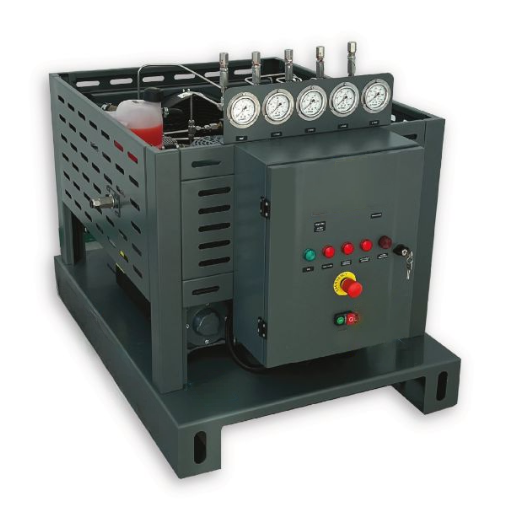
The purpose of nitrogen equipment is managing nitrogen gas for utilization to industrial and commercial aims. Nitrogen devices differ from one another, particularly, it’s necessary to mention, that it consists of nitrogen boosters and compressors. A nitrogen booster is used to increase nitrogen gas pressure whenever required whereas a compressor is used to compress nitrogen for storage or continuous usage. The effective application of these instruments is achieved in practices such as the manufacture and processing of medical products, or in the field of aviation. Such industries require proper pressure and sufficient storage capacity in order to maintain safety and performance. The right equipment is determined by various factors such as operational pressure, the specific operational requirements and general use.
What is a Nitrogen Compressor?
The nitrogen air compressor is a specialized equipment used to increase the pressure of the Nitrogen Gas to be able to store, transport or incorporate it into processes that require specific pressure levels. Nitrogen compressors are widely used in the industrial and commercial fields including laser cutting, food and beverage packaging, electronic manufacturing, and oil and gas sectors. In today’s times, nitrogen compressors are available including exclusive features like having oil-free and oil-lubricated technologies to prevent compressors from being crucial, and persistence in contaminated conditions.
Such performance metrics constitute: the gas flow rate, the maximum gas pressure achievable, together with the energy consumption, to enable the operating parameter list to be tailored to the intended use. More so, it is worth noting that use of compressor technology has developed to include features that require less maintenance in addition to emission abatement, which further acts to prove their value in the harshest of environmental conditions.
Understanding the Nitrogen Booster
Nitrogen booster, as the name suggests, is a piece of sophisticated machinery whose function is to raise the pressure of nitrogen gas for industrial applications. These equipment work essentially by compressing nitrogen up to the desired higher pressures commonly needed for activities such as laser cutting, pressurizing tests, or gas purging. Nitrogen boosters most of the times use pneumatic, hydraulic, or electrical motors which each has something to offer depending on the circumstances under which they are used. In more complicated settings, nitrogen pumps tend to shore up standard parts and that is for a specific need, as the pressure is particularly high, notably over 1000 psi.
Basic parameters of effectiveness include the compression and discharge rates and the allowable working pressure, which are matched to the purpose of maximizing combustion efficiency. For improvement purposes, it is possible to incorporate additional measure like pressure supervisory apparatus and controller units into the nitrogen booster which in turns, increases the system efficiency and operational security, hence reducing the system’s downtimes and also the maintenance expenditure. Today’s nitrogen boosters are supplied in compliance with the factors of environmental and safety considerations which help promote and support the performance and the ecological efficiency of any compressed gas systems in any industrial sector.
Key Differences Between Nitrogen Compressors and Nitrogen Boosters
| Parameter | Nitrogen Compressors | Nitrogen Boosters |
|---|---|---|
| Primary Function | Compress nitrogen to desired pressure levels | Increase pressure of pre-compressed nitrogen |
| Pressure Range | Operates at low to moderate pressures | Operates at high-pressure levels |
| Input Gas State | Can handle atmospheric or low-pressure nitrogen | Requires pre-compressed nitrogen as input |
| Applications | General industrial nitrogen supply | Specialized, high-pressure applications |
| Energy Efficiency | Moderate energy consumption | High energy consumption |
| System Design | Larger, bulkier units | Compact, high-pressure designs |
| Integration Necessity | Functions independently | Often integrated with other systems |
| Maintenance Requirement | Standard maintenance needs | Requires specialized maintenance |
| Cost Consideration | Lower initial investment | Higher initial investment |
| Usage Example | Supplying nitrogen for welding | Charging gas cylinders or high-pressure tools |
Operating Principles
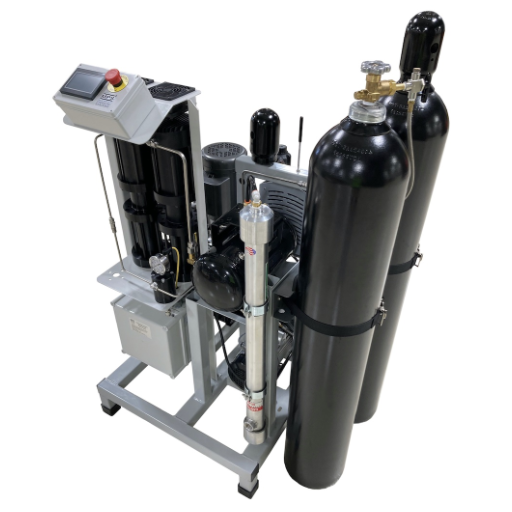
Altering the atmospheric air pressure allows influencing the operation of nitrogen compressor. Such a device allows the obtaining of free-on-top hydraulic pressure gas to be increased to the demanded intermediate pressure. The mechanism of pressure alteration in suppliers’ gas centers is based on changing the volume of gas using some external efforts, usually mechanical, such as reciprocating, rotary, or Kempel pistons. They are designed to perform most efficiency with low – and moderate pressure ranges and find wide application with providing stable – continuous flow of the pressurized gas.
Unlike these devices, nitrogen or air boosters work with nitrogen of some pressure from the plant and boost it to a higher pressure. They belong to other stage systems where reciprocating compressors are mostly used. Nitrogen or air boosters, however, are mainly required for such occasional peak flow at high pressures as for example in severe plate equipment or in filled up cylinders which has to be pressured and dried or allowable nitrogen pressure has to be raised.
How Nitrogen Compressors Work
Nitrogen compressors operate by suctioning nitrogen in gas in, increasing its pressure as needed, then dispensing it to various intended industrial uses. They are the machine of the compressor that wholly establishes the nitrogen gas producing capacity gradually making nitrogen gas under the norms, the performance inflammatory substances is first required. The compressors used are operated in radiation-resistant modes. Most that hums just like other motors during operation often in the case of a piston compressor. The mechanical force then curbs the volume of gas, increasing the pressure in line with the requirements given.
Today’s advanced compressors that are nitrogen-cooled help in controlling the heat that does build up during the compression. The result is increased efficiency and protection for the machine’s inner parts. The compressors contain integrated control systems, which keep track of pressure as well as temperature and flow rates enabling accurate settings. These compressors are capable of providing a range of pressures depending on what the industry would require, from low one (for general applications) to extremely high where tasks are critical such as gas cylinder refilling or industrial tools. The recent advances in compressor technology have also made a contribution to energy conservation and hence less operational costs and less harm to the environment.
Mechanics of Nitrogen Boosters
Nitrogen compressors are built to boost nitrogen’s pressure upon intake. This is made possible by use of a movable piston that is moved back and forth pneumatically. The process usually starts with a small amount of nitrogen at low pressure being pushed into the booster in which expansion takes place through several stages creating the gas pressure. They are made to operate at very high boosting pressures which commonly reach 10000 psi which is associated with sectors like space, health and atomic energy among others. It is completed with very important parts that are manufactured to very high standards of exactitude including seals, valves, and in-built cooling technology which are made for this purpose where each of them operates in conjunction with the others.
In recent years, manufacturers of nitrogen boosters have increasingly introduced modern controls to ensure that it is the policy of technology to apply the inlet and outlet pressures, which modify the operator permits overuse that would lead to the overexcitation of this publication. Control of many of the boosters has been further improved so that non-cryogenic instrument-grade nitrogen and compressed air from tank can be supported as well, increasing the usability of some models and the current state of technology. The latest approaches have facilitated operation of disturbing elements at lowered decibels. Full dependability improvement has been ensured by means of wear protective materials and entailed development of digital control concepts complete with monitoring and diagnostic features that include factory automation supporting files for the boosters.
Pressure Generation and Management
Today, present day pressure development methods are a combination of advanced technology for precise efficiency and control as well. Intended to address pressure output levels encompassing low to high-pressure limits greater than 10000 psi, these systems have been equally versatile and flexible. Apart from this, another major improvement is the availability of proportional pressure regulation and relief functions to increase system accuracy and overall system stability, particularly when working at various input conditions.
The maintenance methods are being improved with the aim of designing cleanable components and also self-diagnosing valves so as to count the hours spent on shutdowns and therefore to prolong the machine operational life span. Moreover, the utilization of energy recovery systems has resulted in very useful cost reductions in terms of running operation and energy saving through utilization and reusing of residual energy in hydraulics and pneumatics.
Advances in the use of real-time data analytics are shaping the future of stress control. With the help of sensors and IoT, one is able to monitor deliverables such as the system load, salt content as well as temperature down to the high levels. With such functions, it is possible to contain equipment-related downtime, enhance utilization of resources and make high throughput operations more reliable.
Applications in Industry
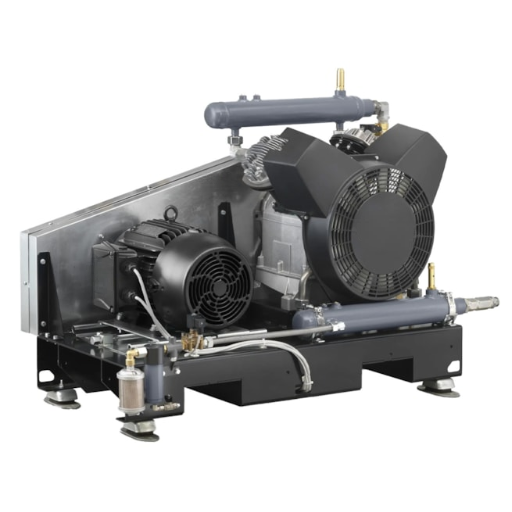
Nitrogen compressors and nitrogen boosters are used in many industries in order to meet the demands of utmost purity in generating nitrogen and keeping the pressure conditions within the normal range. Where this equipment is common includes:
- Oil and Gas: Widely used in the oil sector as it is helping to increase the volume of oil that is available for exploration, as well as well performance i.e. productivity of the wells and the transportation of oil and protecting the environment.
- Food and Beverage: Effort to include high-pressure Nitrogen is also observed during the process especially in closed packages. This enhances the products’ shelf life by maintaining a non-oxidizing environment that prevents contamination.
- Pharmaceuticals: This is particularly important in healthcare, clean environments for manufacturing products and the packaging department.
- Electronics Manufacturing: Gas assist molding aids in simplified processes breakdown to trivial yet high factor of contributing to actual material production and the products itself.
- Aerospace: Turning to land vehicle and oil technology, nitrogen is required for oil rigs in dismantling it and building it back again, while at the same time inflating the tires so as to achieve the correct operational performance hard pressure values.
These applications suggest that nitrogen compressors and boosters are advanced technology, which is useful for operational processes and safety, throughout various industrial applications.
Nitrogen Compressor Applications
- 01
Pharmaceutical Industry
Nitrogen compressors are significant in application as it serves to help ideal conditions within the processes of manufacturing and packaging high-value medicines while available. Some hills as nitorgen by the percentage of up to 99.99% value or more air containing nitorgen will make sure they protect the products from oxidation and pollution, thus preventing any impairment of the properties of the product.
- 02
Food and Beverage Industry
The use of nitrogen instead of air for packaging food products to avoid botulism will also have an extended shelf life as well as enhanced quality in the food. Gas compressors are also capable of delivering nitrogen gas to Modified Atmosphere Packaging (MAP) machines at the desired pressures. Studies have suggested that the use of MAP technology can extend the shelf life of certain food products by 50% up to 300%.
- 03
Oil and Gas Sector
Nitrogen compressors play a significant role in gas lift, leak testing of pipelines, and well stimulation. Such compressors are designed specifically for the high volumes of nitrogen pressures above 5,000 psi. It is necessary to use nitrogen injection in the oil recovery process due to the operational necessity and economy of its application.
- 04
Chemical Manufacturing
Nitrogen compressors are mainly used for evacuating tanks, closing off reactors where chemical reactions occur, and helping pump liquids. Such methodologies protect the manufacturing setup from dirt which many a times may be present in the atmosphere making working in such an environment hazardous. For instance, in this situation the nitrogen gas required gas purity may be between 95% and 99.5%.
- 05
Electronics Manufacturing
High purity nitrogen is essential to the working process of the semiconductor, and micro electronics industries in the hardening process of bears. With the help of nitrogen compressors the needed ultra high purity nitrogen (up to 99.999%) is supplied in a homogeneous and consistent flow free of impurities to prevent contamination that could affect the performance, and enhance the service life of electronic devices.
- 06
Aerospace Industry
Aerospace applications entail the inflation of aircraft landing gear tires, the pressurization of hydraulic systems, and the testing of vital components to see if they are airtight. High precision pressure control is required to execute these tasks, which is frequently performed by nitrogen compressors capable of producing pressures of up to 10,000 psi to comply with high safety requirements.
Nitrogen Booster Use Cases
- 01
Gas-Assisted Injection Molding
Nitrogen boosters are needed to create the volumetric pressure of nitrogen gas required for gas assisted injection molding. Enhanced finish and structural integrity of the properties can be achieved without increasing the bulk of material. The recommended pressure levels for such purposes are between 2,000 psi and 5,000 psi.
- 02
Pressure Testing
Nitrogen boosters are often found in the pipeline and pressure testing spheres to help increase the system pressure for testing purposes. These boosters make it easier to obtain the desired leak detection and pressure testing conditions with quantities as high as 15,000 psi air pressure mimicking extreme conditions with relevant explosive content and for the purpose of meeting regulatory expectations.
- 03
High-Pressure Gas Storage
Where application involves storing nitrogen gas at very high pressures—this is frequent in the industries and research centres, to achieve the goal boosters are used to compress nitrogen to pressures of over 10,000 psi which then go into storage place. That is mainly designed to save sufficient storage space and ensure that nitrogen may be consumed intermittently.
- 04
Aerospace Component Testing
Under high pressure, the aerospace applications usually test manufactured products, for example, actuators, flaperons, and nozzles using a nitrogen booster. In many instances, tests have been run with the pressurized water to 30,000 psi which suits the appropriate standards across the industry.
- 05
Laser Cutting Support Gas
Nitrogen is also employed for delicate and high-quality operations such as laser cutting to avoid rust and to clean the cut edges. For cutting materials and especially metals, plastics and other materials, high pressure for the continuous nitrogen feed is required, with levels from 2500 psi to 6000 psi provided with the assistance of nitrogen boosters.
- 06
Oil and Gas Drilling and Production
The use of nitrogen boosters has become essential in oil and gas production techniques, overlook protection, hydraulic fracturing, crutching, pigging of pipe and nitrogen purging. Pressure of about 20000 psi can be utilized to deliver nitrogen whereas in case of safety issues rosette tensile characteristics of the design are ensured.
Performance Metrics of Nitrogen Equipment

Efficiency of Nitrogen Compressors
There are many factors that influence the operation of compressors and the use of nitrogen gas as a homogeneous of a prime mover, for example; by making use of thermodynamics and other physics. These factors include the way that the compressors are designed, the manner in which they are operated and also the extent of the development of the technology used in compressors. Compressors with a high rate of work perform ideally at the minimum consumption of energy. The actual design permits minimizing of the power.
Three such components are variable frequency drives or VFDs, advanced sealing devices, which help reduce energy loss and manage the compression accurately. New innovations have venturing into heat recovery and there are several installations of innovative heat recovery systems in most compressors to embrace and reuse waste heat. The percentage of benefits that are actualised by harnessing the full potential of heat recovery is tending to a figure above 90% of the useful energy input into the compressor with conventional practices.
The efficiency factor can also be increased by the use of multi-stage compression systems. These systems compress gas in several steps and include an intercooler between each cycle, hence a reduction in the power consumption and decrease in mechanical stress on the devices. The exchange is approved as well by the system of’s maintenance, where maintenance works should be performed with a guarantee of these filters, valves and lubrication systems working at the highest possible standards. Implementing measures such as real time monitoring and predictive analysis also improves efficiency by spotting inefficiencies and potential failures early enough to avoid them, thus improving output while minimising periods of no production output.
Performance of Nitrogen Boosters
Nitrogen boosters’ performance matters a lot for high-pressure applications such as nitrogen supplies in industrial and manufacturing facilities. The magnification of the nitrogen ratio that the modern nitrogen booster can achieve is awesome. This is achieved at the expense of minimizing the frictional forces within the system. For the combined stages, a normal or dual-stage nitrogen booster lowers the gas temperature during compression and stress. This design is very effective in the protection of systems, particularly in extending the service life.
The performance parameters which are consistently used when discussing such devices are maximal achievable pressure level, flow rate and the amount of energy consumed per the emitted gas or air pressure. The more modernized machines are fitted with specialized techniques and equipment and can effectively force the gases above 6,000 psi with the specific flow rate. This is to make them appropriate for tasks that include, but are not limited to, gas injection molding, pipeline inspection, and aerosol cylinder pressurization systems. Additionally, using improved alloys and materials for the fabrication of structural parts from these latest material classes enabled an increase in the fatigue strength of this critical system, especially in high-cycling regimes.
The introduction of various control mechanisms has lead to a significant improvement of performance of nitrogen boosters. For instance, modern devices now come fitted with pressure sensors that enable automatic pressure regulation allowing better control of pressure especially when, the device is prone to sudden changes in the nature of the work performed. Also, by using advanced approaches such as preventive maintenance algorithms, it has become relatively easy to determine the time before the next inspection or intervention should be carried out, especially when the equipment in operation entails a predetermined period of operation.
Cost Considerations of Compressors and Boosters
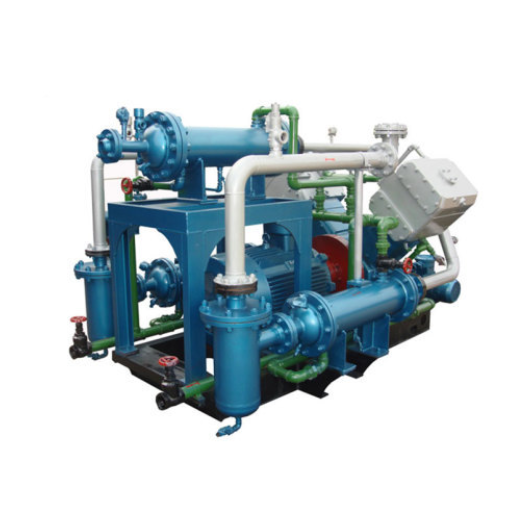
Various factors should be taken into account when determining the amount of money required for a nitrogen compressor or booster. The cost of the first use of the equipment will differ because of its size, performance, and modern functionality. Devote attention to its cost-at-use including energy consumption, regular repair or maintenance, and so on. Some systems that are more efficient may prove to be more expensive at inception but yield less cost of operation over the long run. The concept of the total cost of ownership, which also addresses these, is important, i.e., all the costs for the duration of the equipment’s life and its future resale value. For profit to be achieved and to serve the interests of the operating business, that one will change the balance in their minds of selection, always giving more direction to the factor that actually works the most and the sustainability of the factor of energy efficiency.
Cost Analysis
Initial Investment: Compressors vs. Boosters
One should consider and evaluate the relevance of compressors versus boosters in-terms of the initial purchase or operating expenses, bearing in mind the specific operational characteristics and needs. Compressors tend to have higher acquisition costs due to their larger sizes, elaborate interior components and the ability to operate over a wider range of pressures and generations. This known flexibility in operation, which ensures an inclusive operational performance for a specific application, always comes at a difference or first cost of using compressors.
Conversely, beauter or pressure booster, whose function it to elevate pressure of already compressed air, come at a lesser purchase cost owing to their technical advanced fingertips. They are often designed for a selective application demanding a certain amount of increased pressure which might not justify such a wide range for a full nursing compressor. The cost of additional apparatus such as controlling devices, and safety mechanism should also be a part of the booster-equipment costs.
To find innovative solutions to future costs, the fabrication of compressors and boosters that consumes as less electricity as much as possible with the use of new materials and designs relating to energy efficiency is effective. Using such approaches involves additional capital that may be associated with the purchase of materials for the high-tech equipment such as magnetic bearings, or using an increased number of juicer impellers. Ultimately, any commercial organization considering all costs, from the very start to the very finish, must be provided with an expedient solution which is not only what cost input would be, but also how it is to be of the system in question.
Ongoing Expenses
Operational Costs and Maintenance
The fuel and electricity expenditures are not constant and depend on a few key factors: the energy- and resource-saving potential of the basic equipment as well as its particular design and modes of operation. The present day compressor technologies for example work with devices engaging particularly innovative principles i.e. VFD (Variable Frequency Drive) which become more and more efficient in order to facilitate maintenance costs paid for energy, which in certain cases can make up to 70% of total expenses. The maintenance part is also very important, and proper maintenance, such as grease-ups, filter changes, and examinations of critical parts, ensures the equipment operates properly and efficiently and prolongs its service life.
As an example, machinery with zero-friction magnetic bearings thus demand exceptional accuracy and precision reducing usage of maintenance services on a constitutional extent, but present more costs for buying. It is generally observed that pursuing a proactive maintenance strategy will help cut the number of unforeseen breakdowns by good 30% which completely benefits the overall operational model of the said plant. All the more important is the fact that, every item when its recommended service intervals are due, procedures are carried out to develop, implement and execute cost effective and reliable strategies.
Frequently Asked Questions
Reference Sources
-
Bridging compressor and expander technologies in sSlNG processes
-
Study on nitrogen barrier protection of an airend oil-free compressor bearings in H2 compression
- Nitrogen Compressors
// SYS-DOC: WHY I WRITE THIS
[01] About PanGeng
PanGeng is an industrial gas compressor manufacturer based in Bengbu, Anhui, China. Since 2009, we have focused on the design, R&D, production, and manufacturing of customized gas compressor systems for oilfield, chemical, energy, hydrogen, nitrogen, biogas, and industrial air applications.
[02] Our Expertise
We write compressor guides based on real manufacturing and engineering experience, including hydrogen compressors, nitrogen compressors, booster compressors, medium and high-pressure air compressors, oilfield nitrogen injection systems, biogas compressors, and OEM/ODM custom compressor solutions.
Our engineering team supports customers from application analysis and compressor selection to production, factory testing, commissioning, spare parts, and after-sales service.
[03] Why You Can Trust This Content
The technical information in our articles is based on PanGeng’s in-house compressor design and manufacturing experience, current product capabilities, and project support for industrial clients in global markets. Our goal is to help buyers understand compressor types, pressure ranges, gas requirements, customization options, and long-term operating costs before making a purchasing decision.
CONTACT PROFILE
AUTHORITATIVE SOURCE
NAME
PanGeng Engineering Team
BRAND
PanGeng
COUNTRY
China
MODEL
B2B / OEM & ODM
EMAIL
pg20090705@163.com
PHONE
0552-4958225
WEBSITE
pgcompress.com
Related Posts


Trending now
![Low Pressure Hydrogen Compressor Applications [Guide]](https://pgcompress.com/wp-content/uploads/2026/09/low-pressure-hydrogen-compressor-applications-blog-featured-150x150.png)