Get in Touch with Pangeng

Ionic Liquid Compressors for Hydrogen: Liquid Piston Design

Contents
show
Hydrogen is known as an energy carrier in the world and it has attracted a lot of attention owing to its environmentally friendly characteristics. It will play a major role in the pursuit of a low-carbon world. However, some challenges like hydrogen storage and compression, make it difficult to make good use of hydrogen. The good news is that compression systems of these gases may use ionic liquid compressors with liquid piston concepts that save energy and reduces wear and tear, in addition to more reliable injection. In this paper, we shall be focusing on the theory behind liquid piston compressors and specifically the mechanical compressors driving in ionic liquids, and look at the design, their advantages, and the innovation of these devices for the use in hydrogen systems. Be ready to know how this revolutionary design is going to change the face of hydrogen compression and energy marketing forever.
Introduction to Hydrogen Energy

Hydrogen power, as well as its applications, is a significant resource in the sense of creating a sustainable energy mix. It is specifically manufactured in the form of in gas steam reforming or electrolysis, in which case, electricity is used to separate water into hydrogen and oxygen. When used in fuel devices or in combustion, especially in fuel cells or gas turbines, hydrogen happens to be a shifting substance as it does not produce any other substance except water vapor. This feature enables reduction in pollutant emissions including carbon dioxide. Continuing applications of this energy source will be in energy for transport, management or dispatch of renewable energy, and in various industrial processes which means that it is very effective for reducing oil dependence and reducing risks of global warming.
Overview of Hydrogen as a Fuel Source
Hydrogen is gaining more and more attention due to the potential that it has in acting as an energy concerning fuel. Being versatile in that it can be utilized in the generation of energy via combustion or fuel cells it is feasible to state that the usefulness of hydrogen as an alternative energy source can occur without the usual greenhouse gases being released hence this is regarded as a modern alternative to fossil fuels. Some of the technologies from which hydrogen molecules are produced include steam methane reforming (SMR) and electrolysis. Although the latter produces the most hydrogen, the use of SMR is more common because it is cheaper. On the disadvantageous side, hydrogen production through SMR causes high emissions to the environment unless accompanied by carbon capture and storage (CCS) measures.
Hydrogen storage and transportation are two vital domains that ought to be given priority in the course of increasing the magnitude of hydrogen use. Hydrogen can be stored as a compressed gas, as a liquid and even in other forms where it is chemically bonded for example in ammonia. Nonetheless, over and above such advancements, we have to grapple with the issue of losses in energy during storage or conversion and inconvenient facilities which promote these confined usage of hydrogen. These include uses in transportation especially fuel cells in vehicles which are used in automotive, even maritime and aviation regions, and utilization in industries such as steel making and power generation. This will therefore promote the adoption of cleaner and more aggressive energy uses mostly focusing on fuel cells for transportation and electrical generation.
Importance of Hydrogen Compressors in Storage and Transportation
When it comes to the development of new fuel type which is hydrogen, there is significant evidence that the need for hydrogen compressors in the design of hydrogen storage and transportation systems lines is quite important. In other words, compressors have to be waterless or oil-free and specifically designed for gas compression up to considerably high pressures suitable for storing hydrogen in cylinders or pipelines and for moving this gas to its points of use. Lastly, compression is necessary as hydrogen has a low volumetric energy density in standard temperature and pressure thus the hydrogen must be stored in an energy dense manner to make it economical.
The most recent advancements in hydrogen based pump technologies employ resistant materials since this element has very small molecules that seep through and make the elements fragile. Various types of technology, such as reciprocating and diaphragm compressors and are used for specific needs and have different degrees of effectiveness, throughput and operational dependability. It is an established fact that distinct types of compressors such as the diaphragm compressor are suited for specific environment where ultra-pure hydrogen gas is required, as well as the definition of specific operating conditions such as hydrogen gas use for fuel cells.
It is indeed stress that the cost of delivering hydrogen can be very high, particularly in transport, where it takes up as much as 60% of the total delivered hydrogen costs, thus, there is a critical necessity to develop compression measures that are both effective and reduce industrial operations cost. What is more, optimal hydrogen compression technology will enhance the ability of companies to be more effective and achieve targets, rather than raise the gas compressors heat among those that are used during natural gas service, by being fully supportive of the scale up and hydrogen as an alternate power solution.
Current Trends in Hydrogen Energy Utilization
Hydrogen is increasingly being tapped in the energy sector as more production techniques are developed and as the storage technologies as well as its integration into the energy system. Green hydrogen which is produced through electrolysis using renewable energy is a central theme mainly because of its ability to drastically alter the carbon foot prints. Enormous financial and policy resources are being channeled in places such as the European Union, the United States and Asia leading to adoption of green hydrogen and with some countries placing daring production targets in the next decades to come.
Contributing to this shift are the advances made in hydrogen fuel cell technology as new applications relating to sectors such as transportation and heavy industry have been realized. In particular, fuel cell electric vehicles (FCEVs) rise as alternatives to traditional engines are sought owing to a better energy range and faster fuel filling ratios than the conventional fuelled vehicles. Carbon-neutral stance is the target and as such to decrease existence of shipping, aviation and rail service, means are being looked at to how to implement hydrogen as a fuel in these sectors hence there high energy enthalpy and versatility.
Hydrogen storage is demanded and also an interesting research area. To this end, efforts are being directed to improving the energy efficiency of the mechanisms and, as a consequence, reduce their cost. Liquid hydrogen storage, metal hydrides as well as different high-pressure tank concepts are the current avenues in the pursuit of hydrogen storage. Also, testing ground for hydrogen together with the existing gas infrastructure is being explored in various countries to assist in integrating hydrogen in energy systems, in enhancing energy security as well as grid’s resilience.
Understanding Ionic Liquids

Ionic liquids are those kinds of salts that can maintain the stability of high energy level of fluidized state even at much lower temperatures, usually not above 100°C. These salts have a two-dimensional structure wherein one dimension corresponds to the size parameter of the cation and the other to the anion. Temperature-independent design and maximum practical functionality make the ionic liquids less prone to intraparticle corrosion. These liquids are easily handled, have high thermal and chemical stability and find use in wide range of applications such as catalysis, electrochemistry and processing of materials. Using ionic liquids as less hazardous than conventional solvents is increasingly elaborate, especially from the point of view of flammability and disposal mechanisms.
Definition and Properties of Ionic Liquids
Indeed, the surge in inventiveness in the sphere of ionic liquids emission an assorted range of consumer and scientific pursuits. Essentially, ionic liquids are expressed as a grammar of salts which have the property of a melting point that remains somewhat lower than 100°C. Any salt is known to comprise an anion and a cation. That being said, ionic liquid involves two components hence their melting point is usually low. Besides, the cation and anion in ionic liquids can be altered in order for the liquid to possess the desired properties, especially in viscosity, electrical conductivity as well as in hydrophobicity.
The extent to which ionic liquids can dissolve a variety of substances, such as organic, inorganic, and polymers, has caused ionic liquids to be an essential component in green chemistry. For instance, the industrial use of such liquids in the bonding of carbon dioxide helps in the recovery of CO2 gases. It also helps in the objective of combating climate change. Their good ion transport and high thermal stability offer favorable electrolytes in the powering of advanced batteries, fuel cells, and super capacitors, as it is an improvement to conventional batteries and other energy storage devices. Even in such a scenario, many recent research advances in the area amplified on utilizations in breaking down biomass, specifically concentrating on the technology utilizing ionic liquids in the area of processing of biomass so as to reduce the aggravating high price of biofuel.
Benefits of Using Ionic Liquids in Compressors
- 01
Enhanced Lubrication Efficiency
Even though these are just short examples, ionic liquids are great in isolation in situations where lubricants as we know them, have failed. High viscosity and the ability to form formidable boundary layers bring the level of stress and wear on the material removed on compressor parts leading to the longer life of machines.
- 02
Thermal Stability
Ionic liquids’ elevated thermal stability also enables compressors to function reliably even under elevated temperature conditions. In general, ionic liquids are superior to conventional lubricating materials that tend to decompose and lose their lubricating properties above 300°C. This feature makes them more reliable for heavy industry requirements.
- 03
Environmental Benefits
Ionic liquids have an ultra-low volatility due to the fact that they have a very low vapor pressure and hence do not readily evaporate after application, lessening the release of gases and harmful chemicals into the environment. It thus makes them an eco friendly kind particularly in applications where the aspect of environmental preservation is very important.
- 04
Corrosion Prevention
Numerous organic salts have demonstrable applications as inhibitors to corrosion. They aid in reducing instances of corrosion by affording metallic surfaces protective thickness layers, in particular in humid or chemically-compromised conditions. This acts to enhance the efficiency makes the system live longer.
- 05
Improved Energy Efficiency
Using ionic liquids allows for better energy efficiency in compressors. Due to high heat bearing capacities and low shear rate, these properties reduce energy consumption. It is possible to increase the energy efficiency of a system by spatially saturating ionic liquids of up to 10-15% in the place of classical lubricants, as has been found in some actual plant operations.
- 06
Customizability for Specific Applications
One of the unique advantages of ionic liquids is that they can be finely altered or modified. They can be tailored into ideal chemistry, viscosity, materials compatibility or thermally conductive to generate counteracting efforts to enhance performance of a specific compressor.
Ionic Liquid Hydrogen Compressors
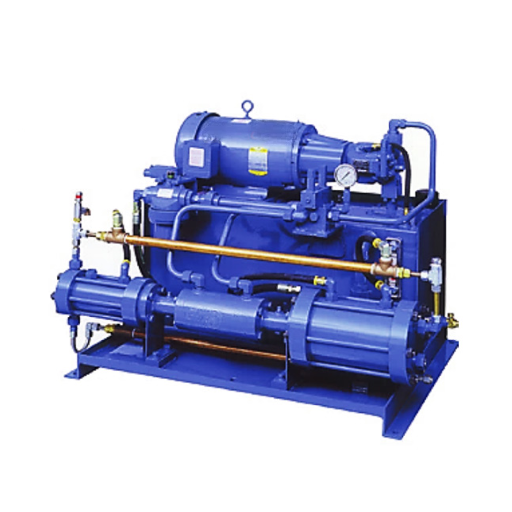
The compressors of hydrogen in an ionic liquid operate making use of special properties to compress hydrogen gas quickly and efficiently. These systems contain ionic liquids as lubricants and seals. This introduces the technology of engineering construction in which ionic liquids as lubricants and machining diminish, reduce friction and mechanical wear and tear on external surfaces within media rods, and improve overall compressive efficiency. Elastomer matrices include ionic liquids, which possess low volatility and are high-temperature resistant, that is, they have a low vapor pressure and are thermally stable. These comply with high–temperature and high–pressure conditions and perform without degradation to the specified gas volume.
Mechanism of Ionic Liquid Hydrogen Compressors
Ionic Liquid Hydrogen Compressors function by relying on the key attributes of ionic liquids in order to eradicate the problems that come with compressing hydrogen gas. The primary phase starts with the hydrogen gas entering the compression chamber, where it meets with the ionic liquid. In this process, the ionic liquid plays a two-fold role of lubricating and serving as a medium for heat transfer, respectively reducing compression; maintaining the friction between the parts that move is decreased, the heat that is generated during the compression is also taken away from the system. This functionality guarantees that the system is able to maintain the temperature level of the design while dynamically building ones stability throughout a wides operating range of effective energy utilisation.
One of the key selling points of these compressors is the ability to provide high compression ratio while maintaining the mechanical strength of the corresponding parts. This is probably due to the non-volatile and non-flammable properties of ionic liquids allowing the stable operation of compressors in the systems having the pressure greater than 1,000 bar. Moreover, the ionic liquids are effective in that they promote an almost isothermal expansion, due to their thermal energy transport and absorbing properties, which reduces heat loss and enhances the system efficiency at large.
The reason why the mechanism is regarded as successful is not only this, but also the remarkable and unquestionable molecular structure of ionic liquids that avoids any gas evaporation at all, and such a fault is almost not possible. For example, in the case of obtaining ultraclear hydrogen, which is required actually in fuel cell technology and modern energy engineering. Besides, the design is advantageous also because ili help to reduce wear of elements inside since these elements properly form lubrication-containing layers, thanks to which the pumping period increases, and the maintenance is reduced.
Types of Ionic Liquid Compressors
| Type | Key Features | Applications | Advantages | Limitations |
|---|---|---|---|---|
| Reciprocating | Uses pistons for pressure generation | Fuel cells, gas storage | High compression ratio, compact design | Requires periodic maintenance |
| Screw | Employs rotary screws for compression | Industrial hydrogen processes | Continuous operation, low vibration | High initial cost |
| Diaphragm | Features flexible diaphragm mechanism | Semiconductor manufacturing | Ultra-pure output, leak-free operation | Lower flow rates |
| Centrifugal | Utilizes high-speed rotating impellers | Pipeline transport, energy grids | High efficiency, suitable for large volumes | Less effective at low pressures |
| Scroll | Includes orbiting scroll components | Medical equipment, laboratories | Quiet operation, low maintenance | Limited to small-scale use |
Comparison with Traditional Hydrogen Compressors
| Parameter | Liquid Hydrogen Compressors | Traditional Hydrogen Compressors |
|---|---|---|
| Operating Temperature | Extremely low (<-253°C) | Moderate to ambient |
| Energy Efficiency | Higher due to cryogenic properties | Moderate to high, varies by type |
| Maintenance Requirements | Specialized cryogenic expertise required | Standard maintenance procedures |
| Compression Stages | Fewer stages required | Multiple stages needed for high pressure |
| Application Suitability | Best for cryogenic storage | General industrial and energy uses |
| Handling and Safety | Requires advanced insulation materials | Standard safety protocols sufficient |
| Initial Equipment Cost | Higher due to cryogenic technology | Lower acquisition costs |
| Hydrogen Purity Output | Ultra-high purity | Varies, not always ultra-pure |
| Noise Levels | Generally quieter | Depends on compressor type |
| Size and Weight | Larger and heavier design | More compact versions available |
Liquid Piston Design in Compressors

Liquid piston compressors use a liquid such as water or oil to compress the gas. A notable feature of this design is that it has the following benefits:
-
Sealing Efficiency: As an additional argument, due to the liquid acting as a perfect seal between two moving parts, minimum gas leakage ensues, making sure that compression is effective with minimal losses.
-
Heat Absorption: Liquid absorbs heat in compression, which is impossible in traditional compressors.
-
Maintenance and Durability: Systems with less moving mechanical parts suffer less wear and tear hence the life of the system is extended and maintenance requirements are also reduced.
-
Adaptability: Different gas specifications can easily be accommodated with liquid sliding devices and the variations of pressure levels, in all the gas mixtures, can be made as per the available gas supply limits.
Such characteristics of liquid piston compressors are ideal for various fields or the significance of potential uses, which requires high efficiency and adaptability like energy storage, industrial gas treatment and compression of hydrogen.
Principle of Liquid Piston Mechanism
The concept of fluid enclosed design works on the principle of using a fluid column as a moving boundary to heat and cool the gases in an enclosed vessel. This design effectively removes the need for traditional pistons thereby reducing friction and wear. The process commences with pumping of liquid – usually water or an oil-based medium—into the cylinder where it is kept only to push the gas from the cylinder to the target pressure. Once you have the gas compressed to the correct compression ratio, it can be unpressurized or left as is for further processing. The liquid flows, therefore, allows equal pressure distribution and curbs heat loss that would occur in mechanical parts like pistons.
Modern designs of liquid-driven pistons are capable of outstanding performance, thanks to new technology employed in fluid sealing challenges and precise control over the fluid motion. This delivers possibilities of improved compression ratios, as well as reduced thermal loss during heat transfer processes. Moreover, this capacity to use liquids which can be compressed has the additional advantage of moderating vibrations and sound to a large extent, which is deeply conducive to system stability in general. Liquid Pistons by virtue of Innovations in the field of material science and in the understanding of hydrodynamics has in the recent past demonstrated workable compression efficiencies in the range of 90%, especially in fields where hydrogen, as well as natural gas are compressed to high pressures (energy-consuming).
Advantages of Liquid Piston Design for Hydrogen Compression
- 01
High Compression Efficiency
The efficiencies in compressing the piston include the ballistics integrated efficiency approaching upto an unexpected 90% in some cases. Most of these compressors work efficiently because of the low heat loss and frictionless mechanical losses as in the case of conventional reciprocating pistons compressors. This approach is different from the previous method as the support capabilities of the liquid confer a nearly constant location and quality of compression throughout the cycle.
- 02
Enhanced Cooling Capabilities
The piston allows for increased heat removal during the compression stage. Overheating in traditional gas or solid piston systems brings reduced efficiency and shorter equipment lifespans. As a result, numerous investigations have shown that in the operation of a liquid piston system, there is effective temperature control and heat management and up to 50% of the thermal gradient is shielded, thus the chances of an accident occuring are minimized.
- 03
Scalability and Modularity
Piston-based systems are basically portable and can be easily increased to match the required forces or the space. With hydrogen compression, that would be an invaluable asset since the system would be dealing under different pressure ranges that may surpass 700 bar when it comes to fuel cell or energy storage applications.
- 04
Minimized Wear and Maintenance
Perhaps strangely, pistons need a certain amount of intense interaction between their moving parts to function properly, yet this design approach can also easily lead to wear and tear. Meanwhile, liquid pistons provide a cushioning effect as the liquid reduces wear and tear significantly. Therefore, the equipment needs less servicing and enjoys a longer operating life. Some models of liquid piston compressors have been known to work for 2-3 times longer than their solid counterparts, for instance.
- 05
Contamination-Free Compression
The fluid functions as means of sealing and compressing, thus mitigating the possibility of gas infiltration, a parameter of crucial importance in high purity hydrogen applications. For example, this practice is followed to only use hydrogen in fuel cells exposed to very stringent requirements as well as for other adequate safety levels in most parts. It is fairly common that the purity of hydrogen gas compressed using liquid pistons exceeds the benchmark 99.999%.
- 06
Energy Recovery Potential
It should be noted that liquid piston compressors are the only compressors which can evolve recoverable energy. Therefore, this energy can be used to partially substitute energy inputs. Some systems were able to save additional energy of up to 15% helping with increasing performance indices for hydrogen compressors.
Challenges in Ionic Liquid Hydrogen Compression

- 01
Material Compatibility
Despite the attractiveness of using ionic liquids in various technological applications, it is still difficult to ensure the compatibility of all the system components. In the case of ionic liquids, one should take into account the fact that some materials will irreversibly degrade or even react upon immersion into some specific ionic liquids and this would threaten the system wear until it fails.
- 02
Cost of Ionic Liquids
Making high-quality ionic liquids or acquiring them can be very expensive. This overhead may act as a bottleneck on the degree to which this technology can be expanded in the hydrogen compression sphere.
- 03
Viscosity Management
It is not unusual that ionic liquids show higher viscosity than the common neutral liquids leading to higher energy intensities being needed to drive the system for both pumping and flow control region in such systems.
- 04
System Design Complexity
In a hydrogen compression system where ionic liquids are used, such technology dictates proper designing so as to eliminate fugitive emissions, modify fluid dynamics accordingly, as well as ensure success operation despite changes in conditions.
- 05
Environmental Considerations
Even though there is a large extent of greenwashing regarding ionic liquids, the issue of any negative effects of outflow or inadvertent disposal of ionic liquids to the environment is still very real. It is generally agreed that there is a need for more studies in the area of degradation of these compounds, as well as their environmental impacts.
Technical Challenges in Performance and Efficiency
One of the primary limitations in the effective compression of hydrogen using ionic liquids is the materials. For example, ionic liquids are sought for compression applications for their very good physical and chemical features, and potential exposure to some materials can be devastating because of aggressive iso, the materials that are designed to envy while in action. This also include addressing the possibilities of corrosion or even decomposition of the seals, gaskets, and other essential components, which will include the material selection and engineering design. Such as the use of stainless steels which are typically preferred because of their corrosion resistance, but studies of the effects of long-term exposure should be considered to optimize their service life.
The process of compressing hydrogen in an ionic liquid remains a very serious problem that prevents its massive use. Due to the large amounts of compression in a high ratio, a provision must be made for significant amounts of energy involved in the process while balance thereby stability of performance in relation to consumption is tenuous. Research articles try to gauge hydrogen solubility in relation to these aspects of performance. These researchers combine the aspect of phenomena analysis with experimental results in order to minimize energy consumption by the process.
Economic Considerations and Market Adoption
The possibility of using hydrogen storage in ionic liquids depends on several factors including cost effectiveness, usability, and ease of storage. Production technologies of ionic liquids have been particularly advanced by reduction in raw materials costs and bargains can easily be made for their use in large scale applications. The issue, however, is the resistance in the cost of initial investment for infrastructural retrofitting which acts as a barrier to the expansion of the market.
Mass adoption hinges on technology being capable of better cost-performance than conventional compression machines. It can be predicted from the current forecast models that it is possible to save energy through the application of hydrogen compression systems using ionic liquids, most effectively in high-pressure operations configurations, which are called to minimize long-term costs. Especially as well, as the non-volatility and recyclability of these ionic liquid causes a negative e-year footprint, which is a great factor to those industries in which green hydrogen is produced.
Market shifts are further accelerated by the rise of legislation and policies that support the development of the hydrogen economy and ongoing encouragement from governmental agencies to boost investments towards the technology. Legislation and policy changes in several countries also help in promoting the consideration of innovative technologies in the design of distribution systems aimed at production of green hydrogen. To advance on a commercial scale validation of new technologies, standardization is needed. Pilot studies and projects are also highly indispensable aiding in ionic liquid hydrogen compressors becoming effective and more desirable by clearing any such hurdles as a restructured value chain and compromised commercial readiness.
Frequently Asked Questions
How does an ionic liquid hydrogen compressor improve hydrogen compression?
Ionic liquids hydrogen compression improvement based on using the sealing action in the liquid pressure of the layer and in the liquid within the hydraulic tuning or solutions. Such an arrangement will be able to compress hydrogen more efficiently than the existing piston type compressors. This has been shown in full length articles which specifically focus on enhanced energy efficiency and decreasing leakage by considering imidazolium-based ionic liquids and compound system of ionic liquid compressors. Lower green house gas footprint may be achieved thanks to improved performance of the compressor and the better control system integration with respect to the hydrogen refueling site as well as for hydrogen storage purposes.
What role does an ionic liquid piston play in a liquid piston compressor?
As an alternative, a ionic liquid piston is placed in the cylinder to replace the metal piston aimed to reduce mechanical wear in shirt cuffs. The ionic liquid forming a column, which serves as a liquid piston, together with the liquid surface and the piston in the ionic liquid has lower friction and thus allows for the development of system based on reduction of expanded entropy compression that can achieve mpa grades of hydrogen cost. In addition, for the hydrogen refueling station storage compressor and the corresponding hydrogen storage compressor equipment, the ionic liquid piston compression device is advantageous in terms of its small size and the low level of service requirements.
How does an ionic liquid piston compressor compare with a diaphragm compressor?
When an ionic liquid piston compressor is utilized, it no longer uses conventional seals or lock annular space with the traditional piston. Instead, it gets replaced with a liquid column that aids the compression by reducing various wear and tear as well as flammability only products as it undergoes continuous condensation. Vanilla diaphragm compressor and piston compressor designs have higher effective internal areas and maximal usage of the working area which together with larger stroke length give notice of benefits resulting from reduced wear of the compressor and its components.
What safety and operational considerations exist for compressor systems?
Many factors related to security and functionality include the implementation of precautions against hydrogen hazards. It also requires checking the hydrogen temperature, selecting the material (including ionic liquids) and other substances that are suitable with hydrogen and thus, the generation of hydrogen is also done. Some of the precautions include tight compressor designs to prevent gas leakages. Action in integrating hydrogen production and compression control systems, including the number of compression stages in operation within and most importantly, effective monitoring of the compressor so that it is not sensitive to dynamic changes in load.
Reference Sources
- 01
International Journal of Energy Research
Link to the paper - 02
Hydrogen Compressor
Link here
// SYS-DOC: WHY I WRITE THIS
[01] About PanGeng
PanGeng is an industrial gas compressor manufacturer based in Bengbu, Anhui, China. Since 2009, we have focused on the design, R&D, production, and manufacturing of customized gas compressor systems for oilfield, chemical, energy, hydrogen, nitrogen, biogas, and industrial air applications.
[02] Our Expertise
We write compressor guides based on real manufacturing and engineering experience, including hydrogen compressors, nitrogen compressors, booster compressors, medium and high-pressure air compressors, oilfield nitrogen injection systems, biogas compressors, and OEM/ODM custom compressor solutions.
Our engineering team supports customers from application analysis and compressor selection to production, factory testing, commissioning, spare parts, and after-sales service.
[03] Why You Can Trust This Content
The technical information in our articles is based on PanGeng’s in-house compressor design and manufacturing experience, current product capabilities, and project support for industrial clients in global markets. Our goal is to help buyers understand compressor types, pressure ranges, gas requirements, customization options, and long-term operating costs before making a purchasing decision.
CONTACT PROFILE
AUTHORITATIVE SOURCE
NAME
PanGeng Engineering Team
BRAND
PanGeng
COUNTRY
China
MODEL
B2B / OEM & ODM
EMAIL
pg20090705@163.com
PHONE
0552-4958225
WEBSITE
pgcompress.com
Related Posts
![Low Pressure Hydrogen Compressor Applications [Guide]](https://pgcompress.com/wp-content/uploads/2026/09/low-pressure-hydrogen-compressor-applications-blog-featured-768x512.png)

Trending now

![Low Pressure Hydrogen Compressor Applications [Guide]](https://pgcompress.com/wp-content/uploads/2026/09/low-pressure-hydrogen-compressor-applications-blog-featured-150x150.png)