Get in Touch with Pangeng

700 Bar Hydrogen Compressor Selection Guide

Contents
show
Given the dominance of hydrogen energy systems in today’s industrial applications, the emphasis is on the development of high pressure hydrogen compressors functionality 700 bar image. These compressors are critical in hydrogen stations as well as the factories that leverage the previous gases as they are capable of pumping hydrogen at very high pressures and ensures that its handling is also safe. As has been the understanding, there are a number of options; however, choosing such an amount is a quagmire, as issues include but are not limited to efficacy, durability, health and safety regulation, and lastly, the one that never misses an equipment pendant in the operating conditions. This manual is created to help in selecting the right one without fear, and helps in taking a few, if not all, steps necessary for the buyers as the suitable one has already been found to be in existence.
Understanding Hydrogen Compression
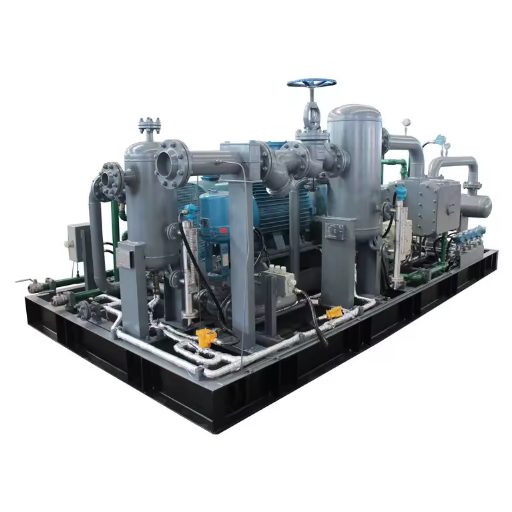
The compression of hydrogen refers to the process of enhancing the pressure of gaseous hydrogen so that it can be stored, transported, or used in industrial processes. This is done by depressing the dimensions and consequently the volume of the gas mechanically to suit the pressure demands of the given attestation such as refilling stations or energy stores. High pressure reduction compression of hydrogen gas is intended to contain it efficiently at high values of pressure without compromising its safety for use. It should be possible to design such high-pressure compressors in a new way so as to enable the minimizing of energy use, prevention of excess heating, and allow safe use, taking into account the peculiar properties of the hydrogen gas, such as low molecular contributions and possible gas disappearance.
What is Hydrogen Gas Compression?
When it comes to providing hydrogen-carrying solutions, there is a need to compress the hydrogen, which makes this process one of the most important processes of hydrogen production and transportation across all industrial sectors. It allows the application of pressures to the hydrogen gas so that hydrogen is very easily transported to the end-use system such as hydrogen fuel cell vehicles, industrial applications and even hydrogen storage systems. Modern concepts of today’s hydrogen compression technologies are already being designed with capabilities of above 700 bars pressure necessary for hydrogen refueling stations for the new generation vehicles.
Moreover, in an effort to further increases in efficiency and operational reliability, advanced technology is employed in the development of compressors to address the tendency of hydrogen to leak due to its relatively small molecular size and its hazardous nature to certain metals. Incorporating high performance aspects – including new materials, highly efficient sealing methods, and improved design practices – allows to maintain safety and performance of hydrogen compression plants even at highest demands.
Types of Hydrogen Compressors
| Type of Compressor | Description | Key Features | Applications |
|---|---|---|---|
| Reciprocating Compressor | Uses pistons for gas compression. | High pressure, energy-efficient. | Hydrogen storage, refueling stations. |
| Diaphragm Compressor | Utilizes a diaphragm to compress hydrogen. | Leak-proof, oil-free design. | High-purity hydrogen applications. |
| Centrifugal Compressor | Compresses gas using centrifugal force. | High flow rate, continuous operation. | Large-scale industrial use. |
| Rotary Screw Compressor | Employs rotor screws for compression. | Compact, uniform compression. | Hydrogen production processes. |
| Scroll Compressor | Uses spiral scrolls for compression. | Quiet operation, small footprint. | Small-scale and specialty systems. |
| Linear Compressor | Uses linear motion without rotary mechanisms. | Low maintenance, efficient. | Fuel cell vehicles, energy systems. |
| Electrochemical Compressor | Compresses hydrogen via electrochemical reaction. | Compact, no moving parts. | Emerging hydrogen technologies. |
Screw Air Compressor
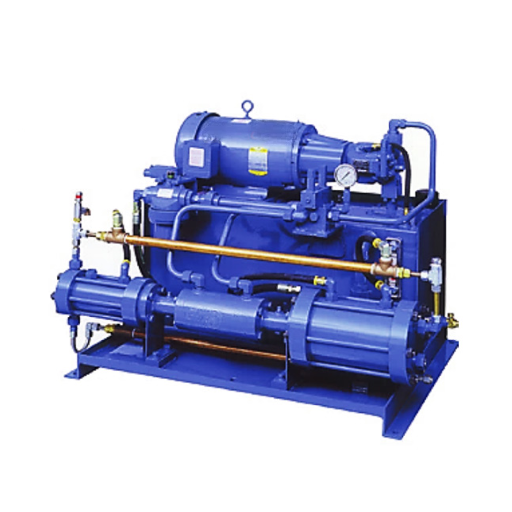
In a screw air compressor, a pair of helical rotors intermesh inside a cavity to compress air and achieve effectiveness in delivery. This kind of a compressor is most suitable for plants that require a very high amount of air to enter continuously. Even the present screw type air compressors have many additional features like the ‘Controls’ where the exact energy use, and costs reduction can be cost effectively reduced through manufacturing. These compressors deliver performance even under critical conditions, require minimal maintenance, and have lower noise levels than other types of compressors, making them more suitable for sectors such as steelmaking and chemical and renewable energy plants. Furthermore, the recent trends in the compressor industry have seen innovations in the lubricant and the compression. With advances in technology, the compressor is optimized for material resistance and lubrication, which helps increase its efficiency and adaptability across industries.
Technical Specifications for 700 Bar Hydrogen Compressors

- Operating Pressure: The tank will have an operating pressure of up to 700 bar, allowing compatibility with high shelf high-pressure storage and dispensing systems with ease.
- Flow Rate Capacity: It can hold fluids with a flow in the range of 2 to 50 kg/h.
- Temperature Range: Designed to function within a range of -20°C to 60°C, the tolerant capabilities of the system enable it to cater to multiple varieties of environmental conditions.
- Power Requirements: The system uses electrical power within the range of 400V to 480V with a focus on energy saving.
- Materials and Construction: High-quality corrosion-resistant materials have been constructively assembled alongside high-grade seals for applications subjected to elevated pressure, where they also contain gas.
- Noise Levels: The system ensures that the sound level in the working area does not exceed 75 dB which is the permissible standard level for normal factory operations environments.
Flow Rate Requirements
The system is intended to accommodate a flow rate from 50 to 500 m³/h to suit the objectives of the process. This rate is applicable for most industrial systems of fluid transport and processing purposes, for example, pipelines, etc. More or less precise control of almost all elements of fluid flow is possible thanks to the use of modern machinery which is included on the design so as not to output the system under even very significantly changing automotive or other loads. In addition, system internal turbulence and pressure drop are controlled by the smart design of the internal channels to ensure that the equipment performs at its best. The equipment meets ISO 5167 and ASME standards on flow rate measurement which accountability and dependability.
Compression Stage Requirements
The compression part aims at being both dependable and achieving maximum energy efficiency by using the latest design practices. In relation to ambient pressure, it is also important to ensure that the compression delivered by the compressor remains within a certain limit which is set by the maximum and minimum pressure levels that the process system is required to operate. It is common to use a lot of advanced materials – high-strength alloys, and corrosion-resistant coatings – to provide protection in the most rigorous conditions posed, such as high temperatures and pressures necessary for work in industry.
The formulation of KPIs for the compression stage is based on the requirements of API Standard 617 which insists on the accuracy of pressure drop delivery and energy efficiency. Besides, contemporary design of compressors allows the incorporation of direct driven or variable speed compressors, or a better term, variants (VSDs) in order to minimize the power utilization and take into account variable load capacities. There is a particular focus on the leakage control, which is achieved through the use of mechanical seals and dry gas seals, to control the leakage, which must be within the limits of environmental and safety standards, notably ISO 10438.
Modern performance monitoring techniques in essential equipment, such as compressors, use a range of sensors to capture effectively vibration, temperature, and pressure with the aim of facilitating preventive analysis on the system to identify issues and prevent downtime without early warning. By and large, these features contribute to enhancing the integrity and performance of machines in mission-critical sectors.
Pressure Capabilities and Ratings
Modern sealing systems and industrial components are configured in such a way to survive within the pressure range, particularly high vacuum conditions, and up to 400 bar, depending on the design requirements. The design values of the pressure for these systems include safety factors and are obtained through testing within specified in the standards such as ASME B31.3 and API 682 to cover the extreme state of such equipment. The latter also applies to industrial standards for wholly industrial external high pressure metal products. Such objects are made of nickel-based or duplex steels, for example, when there is a high probability of mechanical stress being exerted on them and they are in a corrosive environment. Allowable maximum stress and the system’s permissible safety level are evaluated, and secure pressure operations are met in light of pressure curve changes by the rules of design, which are widely practiced in the sphere of industry.
Safety Standards for High-Pressure Hydrogen Handling

- Material Selection: It is important to choose reliable materials to avoid possible problems due to embrittlement and hydrogen leaks. Traditionally approved materials are austenitic steel of different grades and some types of nickel-based alloys.
- System Integrity Testing: To ascertain no leaks or other operational failures like pipes, valves and storage containers, these components are tested for pressure and leaks at appropriate intervals.
- Ventilation Requirements: Absence of restricted air flow within confined areas is required to remove the build-up of any entrapped hydrogen which could eventually cause explosion.
- Pressure Relief Mechanisms: Introduce devices that prevent or reduce the negative impacts of pressure, such as bursting disks, safety valves, etc., to avoid overloading of the system.
- Compliance with Standards: It is important to observe the standard operating procedures set out in the ISO 19880-1 or any other pertinent standard such as the ASME codes and regulations that outline how hydrogen systems should be engineered, installed and maintained safely.
Leak Prevention Measures
One of the most important aspects to maintaining operational safety and environmental integrity in which gas operated systems is the failure prevention of hydrogen leakages. Seals and closures are of prominent importance, especially of the following types, metal-to-metal and elastomeric seals, in order to eliminate potential leakage in pipelines, storage tanks, and sub-assemblies. Advanced monitoring techniques including hydrogen sensors and ultrasonic hydrogen leak detectors also aid in amending the leakage as soon as it is detected without loss thereof.
Constructed with the aid of modern technology, stainless steel, as well as impermeable composites, could be of use in resisting hydrogen embrittlement, and thus are employed for the sake of the quality and reliability of products under high pressure. These materials, however, require periodic tests and the application of destruction techniques, including ultrasonic or radiographic tests, to identify and address any minute internal flaws. Proper use of such steps can greatly reduce the danger of possible and hazardous spills and draw the practice in harmony with health and industry safety regulations.
Certification Guidelines and Compliance
Following the stipulations set by regulators is critical in institutions because failing to do so is a bigger sin. These include among others, ISO 9001 that guides quality systems management and ISO 45001 that is occupational health and safety to avoid various risks and policies on operations and safety. On the other hand, it is not necessarily true that an organization is efficient and safe merely because it has an ISO certificate. In addition, the extensive application of compliance and audit solutions and procedural and parameter controls for various simple and automatic compliance regulatory tools has made it possible to compile and present pictures of didactic documentation that fulfills the most exacting requirements.
It includes situational analysis from data and customised reports enabling the management of organization to conduct business effectively and in compliance with the laws. In order for organizations to obtain and hold on to their accreditations, these companies need to have ongoing improvement programs, conduct internal audits frequently and provide thorough training sessions for their employees on how to work in accordance with the set rules and procedures. Implementation of such procedure brings about great benefits towards a committed and engaged enterprise that orients itself either on safety, quality and or responsibility toward the certification.
Handling High Pressure Safely
A vast number of regions and hearts are lucky enough to employ high-pressure expanses in their respective endeavors, in industries such as manufacturing, chemical, energy, and more, since they are an essential instrument for performing most of their activities. Nonetheless, mishandling of high-pressure areas may also bring about undesired consequences if fragile equipment collapses, workers get hurt or there is excessive pollution and contamination of the environment. Steps taken to mitigate these risks often suggest a combination of engineering controls, training for employees, and administrative controls, and other inappropriate and prohibitive actions.
Any high pressure duct or device must come with some special properties that must comply to specific standards that can be imposed upon it to help it be more aware and fight against decay or rupture. Focus during frequent inspections and setups is preventive for wear, corrosion, or fatigue in such items as pressure vessels, decks, and piping systems. In order to enable effective pressure relief and meet the imperatives created by overpressure, such as reduction of the hydraulic pressure and flow of the compressed air, certain types of pressure-enhancing and pressure-reducing equipment, such as pressure relief and rupture devices, ought to be provided in a system.
Organizations must also set up protocols for ensuring the safety of all personnel on-site, including the appropriate courses of action within a given time frame, as well as the levels of danger and the involved substances; liquids or gases. It is imperative that employees be provided with proper training packages in high pressure safety matters to curb the danger. These packages should focus on what comprises safe working environment as well as best practices in operation. They should also train on how to select and use personal protective equipment (PPE) against high-pressure accidents.
Material Compatibility in High-Pressure Hydrogen Environments

Determining the compatibility of materials in high-pressure hydrogen environments mostly entails the capacity of the material to resist damage that is vaccine-induced, such as hydrogen permeation or brittleness. It is recommended that metals like stainless steel, certain non-ferritic alloys, and aluminum (especially aluminum) be used on the grounds that the mentioned materials do not significantly fall under these effects with the well-controlled use.
However, weldable high-tensile steels and some nickel based alloys are highly susceptible and hence, would require special precautions to prevent degradation by either treating the surface or using other methods like coatings. Some non-metallic materials, certain types of plastics, for example, can also be used although they have Pressure constraint conditions in respect of their ability to sustain pressure as well as their permeation limits. It is important that materials are chosen only after verifying that they have undergone the necessary hydrogen service testing and accreditation as this is vital for safety and performance.
Corrosion Resistance Considerations
Hydrogen-rich environments are conducive to the degradation of materials, especially because of hydrogen monitoring. Such precious metals under hydrogen may undergo corrosion at very high rates especially under elevated temperature and pressure conditions. For example, stainless steels which are generally resistant to erosion have various limitations when subject to corrosion such as pitting and stress corrosion cracking in hydrogen sulphide or acidic media. In other cases thermoreactors with Duplex and Super-Duplex stainless weaves for more service life with fine grained structures achieve impact strength; although their full use is conditional upon the prevailing conditions in the environment such as p H and chloride concentration.
Nickel-containing alloys, such as Hastelloy or Inconel or more advanced materials are used in construction due to the superiors resistance of hydrogen stress cracking. Such alloys additionally have sufficient mechanical properties in corrosive environments but are somewhat pricier. With the introduction of new and innovative materials wide use of metal materials may be more pronounced. Also, recent research has suggested and coating materials and techniques such as aluminization can be beneficial for reducing hydrogen permeability and improving surface strength.
Durability and Long-Term Reliability
Durability and long-life qualities of materials utilized in severe conditions are prohibitive to industrial innovation. Modern materials selection not only requires such qualities as strength and toughness, specifically those of high modulus fibers, but also involves extensive surface modification. For example, it has been found that in certain high temperature applications, more notably in the energy and petrochemical sectors, wear resistance and thermal resistance can be significantly enhanced when the surfaces are coated with chromium carbide or titanium nitride.
Also, the data availalbe indicates that in combination with predictive maintenance concepts it has been shown that very effective monitoring causes in some cases additional 10, and even more years of service life of critical components by detecting fingerprint runnal on time before it turns into a large scale destruction of a component. The development of new materials, such as alloy design, together with on-line performance monitoring systems permits parts to remain safe even on constant loading, in chemically hostile environments as well as under temperature variations, thus minimizing unplanned downtimes and associated reputational and safety risks.
Effects of Hydrogen Embrittlement
The mechanical property of the high strength material is highly restricted because the hydrogen embrittlement reduces the ductility by making the metal brittle especially steel. This is due to the fact that the hydrogen atoms will diffuse into the material, and significant brittleness will be induced when the hydrogen interacts with various elements within the microstructure, such as dislocations, grain boundaries, etc. Hydrogen in most materials cause the atomic bonds to fail, leading directly to reduced tensile strength and failure in energy absorption in the material during fracture.
Studies have proven that hydrogen can significantly increase the rate of crack growth, particularly during applications of cyclic or sustained load, which is the case when some machines are used or even structures fail. Understanding fractography and microfractography helps to avoid a lot of possible errors. Techniques used when using hydrogen as fuel are becoming more costly in places with higher pressures. Studies have shown that hydrogen embrittlement is the most common and severe case of hydraphilic microstructures present within steel. A source of worry arises from the fact that hydrogen causes embrittlement even at the center of its plasticity leading to the opposite of a ductile fracture.
Key Factors in Selecting a Suitable Hydrogen Compressor

- Pressure Requirements: There are a couple of factors that are considered in the designing and the manufacturing of the hydrogen system components such as hydrogen pressure within the system. High pressures are often required when handling hydrogen.
- Material Compatibility: Hydrogen miracle is also caused by its extremely small molecular size, which has a considerable tendency to affect changes in the material’s physical structure, which has the potential for permeation.
- Capacity and Flow Rate: Investigate the amount of flow that is required. Select an air compressor that can deliver appropriately without being overwhelmed.
- Efficiency and Energy Consumption: The compressor performs better in terms of power requirements and energy use. It is common knowledge that compressing hydrogen gas at high pressure requires a lot of power.
- Operational Environment: When assessing the design telerances other important factors to take into account will include things related to temperatue, any external oreation conditions, dry air, as these factors have the propensity of impacting how the compressor operates as well as the duration that it can operate before being affected.
Maintenance Requirements
It is a requirement that in order to keep the hydrogen compressor at a level performance there should be a system maintenance put in place. Periodic checking of the equipment, focusing on the important ones like the seals, valves, and lubricating systems for wear and tear, should also be done in time. Lubricants have to be checked, and precautions have to be undertaken so as to prevent contamination of lubricants. This is because the impurities will reduce the compression efficiency of the compressor, hence increasing the operational cost. Moreover, it is necessary to change the filters, particularly the particle and coalescing filters, under the recommended interval to prevent fouling and achieve the desired clean room regulations.
Vibration analysis and temperature sensor technologies are for equipment maintenance providing data to other parties. These are used to track equipment health in real time, also known as predictive maintenance. This means that there is little or no unwanted shut down due to equipment failure. Ensuring that the safety criteria are being met, the periodic pressure testing and leak detection become imperatively essential. Furthermore, with respect to the stationary application of energy storage, the hydrogen leakage is dangerous and at least marginally undesirable for the sake of efficiency. To minimize compressor wear and maintain its basic functions, activities and strategies such as scheduled maintenance hard coating will be incorporated in the management plan.
Energy Efficiency and Cost-Effectiveness
When it comes to efficient energy use in the compression of hydrogen in industrial processes, this issue is crucial not only for the reduction of the economy and the effect but also for the technical development. Modern hydrogen compressors have been designed to save on power usage by employing sophisticated technologies like variable frequency drives (VFDs) which adapt motor speed to load requirements, eliminating unneeded energy wastage. Also, the implementation of isothermal compression methods has advanced significantly in the macroscale, saving substantial amounts of energy that would have been needed in the compression process through maintaining an almost uniform temperature.
It is always advantageous to invest at one go in smart compressors for the purpose of saving power, as the savings in electricity bills or expenses incurred over such investments are always considerable. According to a couple of studies, introducing fuel-efficient compressors may save 30% energy of a system, given the fact that the compressor is applied at a given mode of a process. Other than that, even in the presence of other sources of power such as conventional electricity, the use of energy recovery systems in this case waste heat from the compression processes will enable the increased outputs resulting less intake of fresh energy. By having renewable options instead of non-renewable ones, which are so needless for the development of the economy, such as wind and solar energies and fossil fuels, management of resources is enhanced, which conserves the environment.
Application Suitability: Refueling Stations vs. Industrial Processes
There are a few applications that can be identified as including refilling station area and manufacturing ones. As a result, there must be compression units that are not only effective but also tend to the exacerbation of the operating conditions and performance objectives. For refilling stations especially those serving hydrogen or compressed natural gas (CNG) the compressors must be reliable and able to compress liquids rapidly. This is because the units need to operate with pressure effectively depending on the amount of refueling taking place at any given time. Also, often designs are required to be made compact and between the nearby property and the dense habitats noise is an issue today.
On the flip side, installations within industries usually demand fantastically driven air compressors designed for range of capacities engine emptyings, including those under severe climates. These also need the flexibility to modify the volume of gases instead of air and the capacity to handle large changes in the physical conditions. Note that the objective of improving efficiency and emissions will require such management systems to make decisions that are timely and efficient up to a point as failure to do so will result in significant operational loss within the plant or the factory. In addition to this, when considering a centrifugal gas compression system, there are such issues as occupational, which are related to the operating personnel’s activity, and environmental requirements, among others, particularly in industries such as the petrochemicals, drugs, and power generation industries.
Reference Sources
- Technical Assessment of Compressed Hydrogen Storage
Read the document here - III.1 Hydrogen Delivery Infrastructure Analysis
Access the document here - Hydrogen Compressor
Frequently Asked Questions (FAQs)
// SYS-DOC: WHY I WRITE THIS
[01] About PanGeng
PanGeng is an industrial gas compressor manufacturer based in Bengbu, Anhui, China. Since 2009, we have focused on the design, R&D, production, and manufacturing of customized gas compressor systems for oilfield, chemical, energy, hydrogen, nitrogen, biogas, and industrial air applications.
[02] Our Expertise
We write compressor guides based on real manufacturing and engineering experience, including hydrogen compressors, nitrogen compressors, booster compressors, medium and high-pressure air compressors, oilfield nitrogen injection systems, biogas compressors, and OEM/ODM custom compressor solutions.
Our engineering team supports customers from application analysis and compressor selection to production, factory testing, commissioning, spare parts, and after-sales service.
[03] Why You Can Trust This Content
The technical information in our articles is based on PanGeng’s in-house compressor design and manufacturing experience, current product capabilities, and project support for industrial clients in global markets. Our goal is to help buyers understand compressor types, pressure ranges, gas requirements, customization options, and long-term operating costs before making a purchasing decision.
CONTACT PROFILE
AUTHORITATIVE SOURCE
NAME
PanGeng Engineering Team
BRAND
PanGeng
COUNTRY
China
MODEL
B2B / OEM & ODM
EMAIL
pg20090705@163.com
PHONE
0552-4958225
WEBSITE
pgcompress.com
Related Posts
![Low Pressure Hydrogen Compressor Applications [Guide]](https://pgcompress.com/wp-content/uploads/2026/09/low-pressure-hydrogen-compressor-applications-blog-featured-768x512.png)
Trending now

![Low Pressure Hydrogen Compressor Applications [Guide]](https://pgcompress.com/wp-content/uploads/2026/09/low-pressure-hydrogen-compressor-applications-blog-featured-150x150.png)