Get in Touch with Pangeng

Industrial Hydrogen Compressor Specifications Guide

Contents
show
Industrial hydrogen compressors are increasingly in demand today as most industrial players around the world are committed to enhancing processes, reducing environmental pollution and utilizing modern technologies. The task of selecting the appropriate compressor for hydrogen is of great importance as far as engineers, plant managers and procurement executives are concerned. In this context, factors like system setup, cost and equipment maintenance among others could be factors that might not be overlooked. This guide is intended to serve as a handy reference and review of the critical technical requirements, operating details and selection factors of these machines. By the conclusion of this article, the reader will be well-versed of the key factors to look out for, for the best selection of a compressor unit. This way the reader will be able to make the right choices.
Introduction of Hydrogen Compressors

Hydrogen compressors incorporate the mechanics to elevate the hydrogen gas pressure for storage, transportation, or industrial utilization. They find major applications in hydrogen refueling stations, chemical industries, renewable energy systems and high-pressure storage. This is achievable by mechanically compressing the hydrogen gas to a high pressure as needed for proper storage and transmission. The two recommendations include co-axial compressors for high-pressure requirements due to the reciprocating principle and oil-free operation because of the diaphragm-type compressors, which are more appropriate for up to ultra-pure hydrogen. The required service pressure, flow rate, vapor purity and service reliability of any given compressor shall determine the choice of the most suitable compressor.
What is a Hydrogen Compressor?
A hydrogen compressor is a mechanical device made to raise the level of compression of hydrogen gas in different areas, ranging from industrial activities to the storage of gas and energy transport. Its main use is to first of all expand hydrogen gas by only compressing it so that it is compressed to a higher pressure, such that it can be stored efficiently in a tank, pipeline, or cylinder. Nowadays, technology has made it possible to produce many kinds of hydrogen compressors with various mechanisms, such as reciprocating, diaphragm, and centrifugal, and therefore, according to the specific service requirements, each compressor can be selected for use.
An example would be the use of diaphragm compressors which are highly valued for their uniqueness of delivering clean hydrogen without any oil impurities which makes it very applicable when it comes to establishments pertaining fuel production such as fuel cells. Among the catalyst that triggers the design of the compressor, the existence of hydrogen which has low molecular weight and very high rate of diffusivity contains specialized substance that spreads on given designs and prevents fluid leakage which is the clearance space during running, It also contains specialized components which are geometrically predictable and that are essential in the near closing and opening of this clearance space and other manufactures.
Applications of Hydrogen Compressors in Industry
- Hydrogen Refueling Stations
In terms of hydrogen refuelling infrastructure for fuel cell vehicles to function, hydrogen compressors are of utmost importance. They help in the delivery of hydrogen within the fuel cell vehicle systems at the pressure values ranging from about 350 bar to 700 bar. As is the case with any other air gas, the maximum pressure required to fill a motor vehicle tank is much larger than the partial pressure for it to be easily released or suctioned. - Petrochemical and Refining Industry
Compression and supply of hydrogen are also associated with hydrocracking as well as other refining processes where transportation of high purity hydrogen at high pressures to reactors is required. Such specializes conversion focuses in cracking heavier hydrocarbon feedstocks and producing light components as gasoline and diesel. It is estimated that 60% of the demand for hydrogen comes from industry and tends to be from the refinery sector which uses approximately 40% of the hydrogenconsumed in industry worldwide. - Ammonia and Fertilizer Production
On the other hand, ammonia synthesis which is a major part of making of fertilizers requires hydrogen to be fed in the Haber-Bosch Process. Compressors are employed to supply, deliver the gases and to maintain pressures between 100-200 bar for this chemical process. The expansive production and consumption of hydrogen, especially in the ammonia industry, which stands about 70 billion dollars as of 2022, raises the importance of hydrogen handling and the necessity of hydrogen compressors even higher. - Steel Manufacturing
The steel-making sector in particular seems poised to be the main driver of transition from the traditional carbon-intensive technologies to the new hydrogen-based direct reduction of iron (H-DRI) method. If hydrogen is to serve as a reducing agent, new hydrogen compressors must be put in place and this will contribute significantly in cutting carbon emissions. Even small-scale trials have shown that using H-DRI technology for coal and energy production achieved a significant reduction in CO₂ emissions, reaching nearly 95%, which is not typical for traditional iron smelting. - Energy Storage and Grid Balancing
Hydrogen is one of the prominent agents for storing energy. In cases of extremely high efficiency operation, e.g., when renewables generate too much electricity, that electricity might be turned into hydrogen and then it can be stored under compressed conditions. There are researches conducted that deduce that compressed hydrogen storage can provide energy densities of as much as 120 MJ/kg making it an attractive option. - Aerospace and Satellite Applications
There are hydrogen gas compressors in was tanks which are used to transport and store liquid hydrogen and high pressure gaseous hydrogen for applications such as rocket propulsion. This is typical even of the weight efficiency of the propellant, except of high energy content. For example, NASA relies on hydrogen gas compressors for the SLS (Space Launch System) that handles fuel for its missions demonstrating the crucial role of efficient compression solutions within society.
Types of Hydrogen Compressors
| Type | Mechanism | Key Advantages | Common Applications | Operating Pressure |
|---|---|---|---|---|
| Diaphragm Compressor | Uses flexible diaphragm for gas compression | Oil-free compression, high purity | Hydrogen refueling, lab applications | Up to 1,000 bar |
| Piston Compressor | Reciprocating piston reduces gas volume | High efficiency, broad pressure range | Industrial gas supply, petrochemical | Up to 500 bar |
| Centrifugal Compressor | Rotating impeller increases gas velocity | High flow rates, good for large volumes | Pipeline transport, energy storage | Typically up to 200 bar |
| Scroll Compressor | Two interleaved scrolls compress gas | Compact design, low noise emission | Small-scale hydrogen systems | Up to 100 bar |
| Hydride Compressor | Absorbs hydrogen into metal hydrides | Stores while compressing hydrogen | Energy storage, fuel cells | Moderate pressures, up to 200 bar |
| Rotary Screw Compressor | Rotors compress gas through rotation | Continuous flow, reliable performance | Hydrogen manufacturing, fueling stations | Up to 50 bar |
Common Types of Hydrogen Compressors
- Reciprocating Compressors
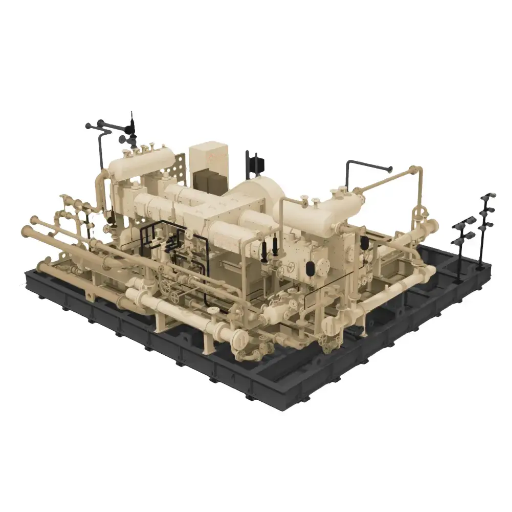
In a cylinder, the compressors has pistons which propel hydrogen. Such systems are of high pressure capabilities and are repetitive pollutants for the high-quality hydrogen purity within industrial processes. - Diaphragm Compressors
Separator using a flexible diaphragm for H2 compression eliminates any possibilities for air, oil or other impurities rendering the compressor aseptic. They find application predominantly in tasks involved ultra high purity hydrogen as in fuel cells. - Centrifugal Compressors
Centrifugal compressors are suitable for high level summation of high volumes of hydrogen at medium pressures by use of high speed rotating impellers. This is why they are used in compressing large volumes of oxygen gas in most industrial gas plants. - Rotary Screw Compressors
These compressors use rotor products to pressurize hydrogen and are new for originating process continuity and reliability. This is quite convenient in systems operating on medium pressure gas. - Hydride-Based Compressors
These devices use special alloys incorporating hydrides that absorb and desorb hydrogen within various temperature and pressure levels. The devices paste due to their low pressure properties and the fascinating uses.
Diaphragm Compressors: Features and Benefits
The precision of the machines known as diaphragm compressors was created for applications that require ultra-high purity of hydrogen and very careful maintenance of desired pressure. Consisting of two main components—compressing parts and the compression mechanism, or the reciprocating piston—these air compressors are called diaphragm air compressors. Most visual language objectives use nouns and demonstratives. These types immensely facilitate how language is used. Despite the many advantages, air compressors are notorious for being noisy devices. In this manner, the diaphragm air compressor will lower sound levels and spare valuable natural resources.
The primary advantages attributed to the diaphragm type compressors include the very high ratios of compression and, moreover, producing very high pressure, something that is generally above 40,000 psi. In addition to that, they are also well known to have very limited wear with time due to the fewer number of parts in contact with the hydrogen and hence less need for maintenance. Besides this, diaphragm compression has other properties also, such as the ability to seal off and handle even toxic fluids and gases with no leaks, useful for enhancing safety and system integrity during its operation. All these properties therefore make the diaphragm compressors important components in those particular duty conditions where purity and freedom from harm are very crucial.
Piston Compressors: Applications and Efficiency
Intricate and diverse applications in industries pistons, sometimes referred to as reciprocating air compressors, are very popular with clients. However, problems of low efficiency, waste of energy, relatively high production cost, resulting from higher maintenance and rigorous oil cleaning problems, are difficult to solve. These problems mainly characterize the reciprocating compressor with a high capacity. Nevertheless, the use of these type of compressors is especially essential in such fields as heavy, petrochemical and chemical engineering.
Current remarkable improvements in the field of piston compressors have changed the angle of their performance and reliability as well. The invention and application of the variable speed drives and development of more sophisticated cooling methods are examples of how energy used in component specifications and the general operation of the machine has decreased. Moreover, they are made to accommodate single-stage and multi-stage setups thus providing the needed support for compression of high pressure in processes with specific pressure and volume levels. In conditions necessitating strength, versatility, and the ability to accurately specify the compression parameters of the system, piston compressors continue to remain a more prуfеred option.
Centrifugal Compressors: Design and Use Cases
Dynamic compression forms the basis on which centrifugal compressors work. The compressors employ kinetic energy to ensure that they are able to raise the pressure of gas through the diffuser. These compressors are recommended to high flow rate managing operations as they maintain a continuous flow steady state design while maintaining efficiency even when dealing with substantial flow rates.
Prominent features being incorporated are multi-stage configurations to achieve higher pressure ratios, precision impellers and advanced bearing systems that introduce less friction and wear thus assuring extended working hours in tough conditions. Centrifugal compressors are heavily used in sectors such as oil and gas, petrochemicals, and HVAC systems where good pressure control practices alongside power efficiency are vital. Current improvements in computational fluid dynamics (CFD) and materials science have also enhanced their capabilities such that they can provide the best compressors with less weight, longer life, and more energy conservative, which can be applied to both conventional and special industrial sectors.
Key Specifications of Hydrogen Compressors
- •
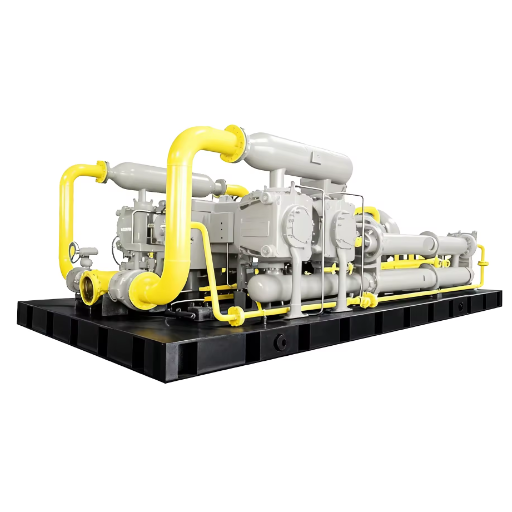
Pressure Range: Wherever needed, these Hydrogen compressors can cater up to pressures as high as 10,000 psi and sometimes even more, depending on the circumstances. - •
Flow Rate: The food industry has a wide range of products that can deliver flow rates from 20 Nm³/h to 10,000 Nm³/h in normal industrial operations. - •
Materials: Materials used for construction have been selected out of specialized combinations of materials and specific coatings in order to inhibit hydrogen inclusion and ensure that the structure will withstand the pressures without any damages over a long period of time. - •
Efficiency: The high rate of performance is possible because the equipment is designed using the principles of advanced thermodynamics, which helps reduce the losses of usable energy. - •
Cooling Systems: The internal cooling systems are meant to control the heat that appears as a result of compressing the hydrogen in order to enhance the operational efficiency and increase the service life of the compressor components. - •
Compliance: This meets the requirements of the uniform global praxis dealing with compressed gas hazards, such as the provisions of API 618 and ISO 19880-1.
Understanding Pressure Requirements
The compression of hydrogen varieswidely based on the expected use, as there are numerous elements to consider when choosing the appropriate compressor. Some examples given are how systems are assembled and the final users or usage to be considered. One such example is in the hydrogen storage applications. For a particular hydrogen storage application, the sought pressures typically range between 350 bar and, if possible or more, 700 bar. For the fuel cell uhm there might be the need for higher pressures exceeding 700 bar, which will give a good functionality. This necessitate several stage of compression.
There are advanced compression systems that contain precise sensors and pressure regulators that facilitate them to work at optimal pressure levels. Such constituents are very specific in that they are manufactured using computational fluid dynamics (CFD) and finite element analysis (FEA) simulators so that they can withstand any kind of environment efficiently and conform to performance specifications. They comply with local and international safety requirements which annually increase penetrations of hydrogen into various industries and contribute to the development of hydrogen technology. The comprehensive evaluation of pressure oscillations and control technologies is a proven and effective approach to efficient output and functional safety over prolonged durations.
Flow Rate Considerations
There is no need to overstate the importance of measuring flow rate in the context of the construction and functioning of hydrogen systems, because it affects the system’s operation, efficiency, and safety development. Hence there is a need to appreciate narrowing flow rate measurements to avoid bottlenecks and creation of turbulence and cavitations which make the system out of pressure balance or ineffective. For example, with reference to standard cubic feet per minute standard (SCFM) or for liters per minute (L/min) standards of volumetric flow rate must be observed with respect to the system pressure and the temperature at which measurements are being taken.
Different flow dynamics possibile under different situations are analyzed by appropriately chosen techniques. These include both the simulation through the appropriate software and empirical data for the respective analysis. Other factors are without restriction, such as pipe diameter, viscosity, temperature gradients, among many others. It is easily achieved through the use of standards such as ANSI/API that control mechanisms guarantee uniform flow measurements and calculations even in large scale systems. Controls maintenance for example scheduled control loop adjustments also helps detect failures before they occur.
Power Consumption Metrics
An intelligent evaluation of power utilization indicators tends to be very significant as far as maximizing the use of power in industrial settings is concerned. Energy consumption in industries is influenced by a number of reason including load fluctuations, system effectiveness, and operating hours. This implies there may well be a need to monitor energy consumption to works in a system that controls energy consumption. This strategy enables the system to minimize costs and increase the life of the equipment.
For example, industrial frequency converter drives or variable frequency drives (VFDs) are the most energy-efficient drives that can be used for large electric motors hence the demand. The main exciting change is how foreign businesses are implementing the techniques banks are using to channel money to local borrowers. Efforts of conservation can be greatly enhanced by the utilization of new tools such as machine learning techniques. For instance, ISO 50001 integration provides structure for continued improvement and discharge of set energy targets in organizations.
Hydrogen Applications in Various Industries

Being an efficient and clean fuel source, hydrogen is used widely in almost all industrial sectors. Mainly, in the automotive industry, hydrogen-run turbines are used to propel cars, thereby offering no emission issues as those of combustion engines. More to it, in power and energy generation sectors, hydrogen is used as a clean fuel to provide ‘on demand’ clean energy to stabilize the grids with a high proportion of renewable energy in them. Industries including steel and ammonia which make use of fossil fuels also incorporate hydrogen to reduce their usage of these and consequently reduce greenhouse gas emissions as well. Furthermore, due to the increased environmental awareness, hydrogen is being included in the heating of residential and commercial buildings. compounding the efforts to advance the cause of sustainability.
Energy Sector Uses of Hydrogen Compressors
The energy sector relies on hydrogen compressors consumed in the efficient storage, transport and utilization of hydrogen. These are rather indispensable in hydrogen production facilities primarily designed to pressurize hydrogen for pipelines to transfer the same to several industries in bulk quantities. In comparison with storage systems, compressors increase the amount of hydrogen in the tanks hence increasing packing efficiency and lowering the issues of transportation.
Moreover, according to the hydrogen valves, at fueling stations, where hydrogen-fueled cars are installed, as well as issues associated with electric vehicles, it ensures that hydrogen is dispensed at an appropriate pressure for effective refueling. In recent years, compressor technology development has been fueled in order to make systems more efficient and technologically advanced, less prone to the losses and adapted to the specific issues caused by hydrogen having small molecular size and high diffusivity. The refinement of these procedures enhances the value and operational viability of hydrogen as the best energy alternative in terms of cost.
Manufacturing and Process Industry Applications
Hydrogen compressors are indispensable in manufacturing and process engineering, especially in fine gas containment and high-pressure technologies. Such plants are vital in the production of ammonia, methanol, and many other chemicals, also known as ‘Hydrogen served chemicals’, particularly in the use of hydrogen as a feedstock. Decarbonization in the steel sector has been address with widespread use of hydrogen compression for the purpose of advanced steel making with Hydrogen compression being an important step in carbon emission reduction. Modern hydrocarbon compressors have a very high level of their performance, safety, and equipment durability though the technical designs of hydrogen systems continue to be improved.
Designed to cope with even the most severe conditions in industrial applications, modern diaphragm or reciprocating compressors are typically incredibly long-lasting and performance-oriented. Likewise, a review of the evidence suggests there is still room for improvement in commissioning processes from the standpoint of hydrogen economy in heavy industries where significant benefits can be derived from the use of compressors as a marginal technology/calculated in the energy efficiency envelopes. Such structural shifts serve to emphasize the importance of hydrogen energy and fuel cells, including the need for hydrogen compression to support cleaner and friendlier industrial processes.
Emerging Trends in Hydrogen Utilization
One of the biggest problems when it comes to using hydrogen efficiently is that there are good means of storage and transporting it. The latest advancements are concentrating on better tuning of liquid organic hydrogen carriers (LOHC) on one hand and cryogenic amounts on the other, to address the concerns about the core east convergence microenvironment. The main advantage of LOHC technology is that it enables us to link organic moieties to hydrogen, allowing hydrogen to be stored and transported at standard temperature and pressure, and reducing the time required to almost zero. Moreover, new breakthroughs have been made possible for liquid hydrogen storage in cryogenic tanks, especially in industries that require large fuel quantities.
The advent of renewable energy sources has made it possible to produce hydrogen without a significant environmental impact. There are electrolyzers manufactured by utilizing solar and wind energy, which have become an option for producing clean hydrogen. Furthermore, through the use of new technologies like state-of-the-art proton exchange membranes (PEMs) and even solid oxide electrolyzers, metal ions are transferred at equal or higher rates compared to the electrolyzers. In order to harness these benefits, demand has to be drawn towards the unique properties of hydrogen to ensure that it is not just trapped in one niche.
Selection Criteria for Hydrogen Compressors

- Compression Capacity
Operators of the plant should ensure that the fan can meet the required pressure and flow rate effectively considering the present and future system requirement. - Hydrogen Compatibility
In general, the selection of materials for a compressor should fulfil the conditions of hydrogen stress corrosion and hydrogen permeation. It would also be useful to look for the equipment specially designed for the use of hydrogen. - Efficiency
High efficiency designs aim to reduce the amount of energy lost and operational expenditures. Consider solutions that have minimal energy losses in compression process in particular. - Safety Standards
Recall to ensure that all the safety standards for the use of hydrogen gas are adhered to, including ASME or ISO, as specific material tests and properties considerations, can help to reduce risks. - Maintenance Requirements
Choose systems that have simple maintenance procedures to lessen interruptions in their use as well as the period of serving them. - Cost of Ownership
An object is the price of the commodity minus hidden costs of ownership like energy consumption, maintenance, and expected use in order to determine the total cost of ownership.
Evaluating Gas Purity Requirements
There are several specific factors that should be considered when deciding the design and utilization of a gas purity monitoring or regulating system. The first major consideration is the extent of purity exclusiveness that should be observed for the specific tasks at hand. For instance, some industries, which include the manufacturing of semiconductors and pharmaceutical requisites, set the standard very high for the need for extra pure gases, which exceed 99.9999% purity.
Second, it is necessary to point out the methods and possible solutions for achieving the required degree of purity. Methods like pressure swing adsorption (PSA), distillation under cryogenic temperature or even the use of cutting edge filtration methods can be applied according to a target gas or the aim for which a gas is going to be used. Therefore, each method has its own strengths in terms of both the cost that will be incurred and the operation over the lifetime of the facility.
Monitoring and confirming purity of gases is a just as important component to maintain the dependability of the system. The use of high-resolution equipment, such as gas chromatographs, trace impurity analyzers, and the like, allows determining the purity of the gas on run and helps in the preservation of its stability over long periods. In addition, industry practices go further to inspect and adjust sensor as well as system calibration promptly in order to mitigate improper operation.
Moreover, it is noteworthy that the storage and transmission systems should meet gas purity requirements. In the lack of proper material compatibility, surface finish, and sealing, there is a danger of introducing pollutants into the storage tanks, pipelines, and components. Many actions, as well as many insertions, are possible provide physical cleaning and analysis, which enhance the system performance and, importantly, the maintenance of the standards of the law.
Maintenance Considerations and Best Practices
In order to ensure safekeeping of the purity-critical systems one has to take care of them in a special way – this is done by a procedure of regular inspection, using technical means with the inclusion of implementation of safety standards. Protective operations should be anticipated purposely so that a period of time can be allocated when no work is done on the system. This also increases the longevity of the equipment such as filters seals and valves since they do not undergo depreciation.
Technological advancement in machine maintenance and effective use of such technologies involve devices without which the structural units could stop working. For example, it is possible to fix values of pressure, temperatures or flow rate by using the sensors incorporated in IOT devices and other types of devices. This will further imply that in case of preventive maintenance all systems are detectable well in advance thus avoid out-risk. Also, it is worth appreciating that an incalculable consultation concerning recalibration of test gauges or sundry other instruments is the sustenance of measurement accuracy and actual compliance with the specified norms.
When equipment is cleaned, it is necessary to take all the details, including the clean-in-place (CIP) and sterilize-in-place (SIP) processes, so that the proper way of cleaning is understood and the required standards are applicable. This includes contamination control standards, such as those in a cleanroom as defined in ISO 14644, or those found in cGMP in pharmaceutical operations. Such activities eliminate the possibility of the formation of biofilm as well as ensure that there are neither particles nor living organisms on the internal surfaces.
There should be greater focus on implementing proper documentation systems inclined to these best practices. Having comprehensive records on activities in the plant such as maintenance schedules including equipment calibration, overhauling, cleaning programs, and assessments, makes it easier to follow up on issues and assists compliance checks. Use further these perfectionist methods, to assure that the equipment always maintains high-performance standards with strict purity and safety requirements.
Reference Sources
- Metal-hydride hydrogen compressors for laboratory use
Link to source - Requirements for Hydrogen Storage and Use
Link to source - Hydrogen Compressor
Frequently Asked Questions (FAQs)
How do I maintain hydrogen compressor performance for hydrogen applications?
Regular inspection and scheduled maintenance are thus essential for achieving reliable and safe operation of hydrogen compressors meant for various hydrogen service. Checking seals, bearings and electrical parts minimizes the chances of leaks and hydrogen failure which are major setback in the performance over a long period. The strategy to adopt as well as maintenance within the stages of experiencing compressor outages is to adhere construction precautions and follow the recommendations of the compressor manufacturer and this is irrespective of whether the compressor is mobile or stationary.
What specification checks ensure a suitable gas purity for industrial hydrogen compressors?
Comparing the actual gas purity to the standards of the compressor can help to reduce the risk of contamination which can aggravate embrittlement accelerating the reliability of the equipment. Use of prefilters, analysers for gas, full conditioning prior to gaseous intake help in minimization of mechanical damage as a result of dust and moisture and ensures the safe operation of the equipment. Establishing regular sampling procedures and maintaining adequate records are essential as they are consistent with the state’s requirements and safeguard the satisfactory nature of the unit for hydrogen utilization.
How can operators maintain pressure control to keep compressors suitable for varying gas loads?
In order for pressure to be regulated properly, it is important to install sensors that are correctly sized for the compressor’s specifications with the help of applicable regulators and safety valves. Controls play an essential role in transient event mitigation which may have adverse effects on the structure, such as hydrogen-induced embrittlement, and which poses a challenge to safe operations, besides they assist in the safe operation of the equipment as the hydrogen supply is never one-dimensional. Maintenance of denser practicing activating senses by trying to applying the principles which are commonly applied in the field, reduce errors which are likely to cause system failure and compliance issues.
What are suitable materials and practices to prevent hydrogen embrittlement in compressors?
Choosing materials that can withstand the adverse effects of hydrogen. Stainless steels, surface treatments or combinations that minimize the effect of hydrogen specified in any section of the compressor requirements are the first and most obvious protective measure to crack formation and structural failure on any alloy. A lot depends also on the behavioral strategies applied in the technology of usage; for example, controlled stress, avoidance of sharp notches, and correct temperature distribution can minimize the problem of embrittlement. Safety checks, non-destructive testing techniques to help finding initial stages of equipment failure lead to increased run life and minimized economic losses due to outages.
// SYS-DOC: WHY I WRITE THIS
[01] About PanGeng
PanGeng is an industrial gas compressor manufacturer based in Bengbu, Anhui, China. Since 2009, we have focused on the design, R&D, production, and manufacturing of customized gas compressor systems for oilfield, chemical, energy, hydrogen, nitrogen, biogas, and industrial air applications.
[02] Our Expertise
We write compressor guides based on real manufacturing and engineering experience, including hydrogen compressors, nitrogen compressors, booster compressors, medium and high-pressure air compressors, oilfield nitrogen injection systems, biogas compressors, and OEM/ODM custom compressor solutions.
Our engineering team supports customers from application analysis and compressor selection to production, factory testing, commissioning, spare parts, and after-sales service.
[03] Why You Can Trust This Content
The technical information in our articles is based on PanGeng’s in-house compressor design and manufacturing experience, current product capabilities, and project support for industrial clients in global markets. Our goal is to help buyers understand compressor types, pressure ranges, gas requirements, customization options, and long-term operating costs before making a purchasing decision.
CONTACT PROFILE
AUTHORITATIVE SOURCE
NAME
PanGeng Engineering Team
BRAND
PanGeng
COUNTRY
China
MODEL
B2B / OEM & ODM
EMAIL
pg20090705@163.com
PHONE
0552-4958225
WEBSITE
pgcompress.com
Related Posts
![Low Pressure Hydrogen Compressor Applications [Guide]](https://pgcompress.com/wp-content/uploads/2026/09/low-pressure-hydrogen-compressor-applications-blog-featured-768x512.png)
Trending now

![Low Pressure Hydrogen Compressor Applications [Guide]](https://pgcompress.com/wp-content/uploads/2026/09/low-pressure-hydrogen-compressor-applications-blog-featured-150x150.png)