Get in Touch with Pangeng

The Complete Booster Compressor Selection Guide

Contents
show
The process of selecting an appropriate booster compressor becomes challenging because multiple compressor options exist in the market. The process of choosing which compressor to use becomes vital for achieving optimal efficiency and performance and dependable operation when you need to enhance industrial operations or improve pneumatic systems or fulfill high-pressure demands. This guide presents essential factors that must be evaluated during the decision-making process which starts with identifying your application needs and proceeds to the assessment of technical specifications. You will acquire the necessary skills to select your operational solution which meets your operational objectives by reading this article. We will explain booster compressors to you while we help you discover the product that best meets your requirements.
01
Understanding Booster Compressors
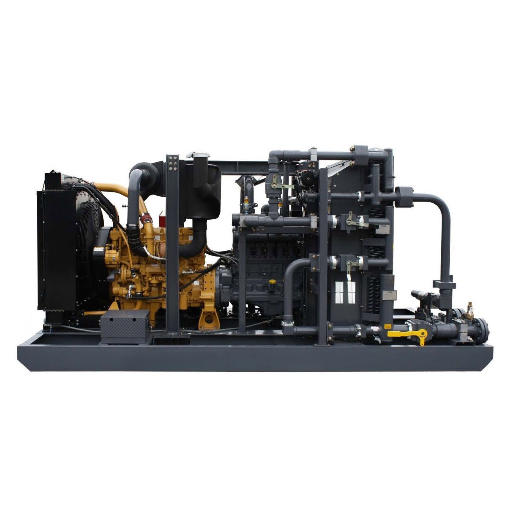
The process of selecting an appropriate booster compressor becomes challenging because multiple compressor options exist in the market. The process of choosing which compressor to use becomes vital for achieving optimal efficiency and performance and dependable operation when you need to enhance industrial operations or improve pneumatic systems or fulfill high-pressure demands. This guide presents essential factors that must be evaluated during the decision-making process which starts with identifying your application needs and proceeds to the assessment of technical specifications. You will acquire the necessary skills to select your operational solution which meets your operational objectives by reading this article.
What is a Booster Compressor?
Booster compressors function to elevate the pressure of existing compressed air and gas streams. The equipment finds its main use in processes that need increased pressure for manufacturing, bottling, and industrial operations. The compressors function by taking pre-compressed air or gas streams and performing additional compression until they reach their target pressure. Booster compressor selection requires assessment of three main factors which include the gas type and output pressure requirements and flow rate needs. The compressor specifications must match your operational requirements because this connection ensures both efficiency and operational reliability.
A booster compressor functions as an advanced compressor system which operates to elevate the pressure of gases that have undergone primary compression. These devices play a crucial role in applications where ultra-high-pressure levels are required, such as in industrial manufacturing, injection molding, pipeline testing, or even in medical and aerospace fields. Depending on system setup and application needs booster compressors can operate with multiple gases which include air nitrogen helium and various industrial gases.
The system operates by taking pre-compressed gas from a source and using a secondary compression stage to amplify the pressure to the desired level. Modern booster compressors are engineered for efficiency and reliability and safety which enables them to deliver consistent performance under demanding operational requirements. The selection process for booster compressors requires the assessment of gas types and compression ratios and flow rates and system compatibility to achieve optimal operational efficiency.
Factor 01
Gas Type
Factor 02
Output Pressure
Factor 03
Flow Rate Needs
Factor 04
System Compatibility
02
Types of Booster Compressors
There are several types of booster compressors including air, gas, hydraulic, and nitrogen boosters.
| Type | Key Use | Gas Type | Max Pressure | Efficiency |
|---|---|---|---|---|
| Air Booster | Air tools | Air | Up to 40,000 psi | High |
| Gas Booster | Gas systems | Oxygen, Helium | Up to 10,000 psi | Moderate |
| Hydraulic Boost | Fluid power | Oil, Water | Up to 50,000 psi | High |
| Nitrogen Boost | Purge systems | Nitrogen | Up to 36,000 psi | High |
03
Applications of Booster Compressors
-
01Industrial Manufacturing
The method applies pressure for operating pneumatic tools and equipment throughout industrial manufacturing facilities. -
02Aerospace Testing
The method serves as a fundamental requirement for testing high-pressure aerospace components and their associated systems. -
03Gas Cylinder Filling
The method serves as a standard practice for refilling gas cylinders with oxygen nitrogen and helium gas at high pressure. -
04Oil and Gas Industry
The method serves as a testing method to evaluate pipeline systems through pressurization which ensures operational safety and effective system performance. -
05Medical Applications
The system operates in hospitals to deliver compressed gases at high pressure for use in medical devices and systems.
04
Key Specifications to Consider for Booster Compressor

Air Pressure Requirements (PSI, PSIG, PSIA)
The air pressure requirements must be understood before selecting or operating booster compressors because this knowledge enables users to achieve both optimal performance and safe operation. The three commonly referenced pressure values are:
PSI
Pounds per Square Inch
This is the most general unit to measure pressure which indicates the force that exists on each square inch of an area.
PSIG
Pounds per Square Inch Gauge
This value represents the pressure measured relative to the surrounding atmospheric pressure. A reading of 0 PSIG corresponds to atmospheric pressure.
PSIA
Pounds per Square Inch Absolute
This measurement shows total pressure including the atmospheric pressure. PSIA is essential for measuring vacuum systems and systems that operate at different altitudes.
Typical Operating Range
Booster compressors require operators to evaluate both maximum inlet and outlet pressure levels and their target pressure increases. Most systems work within a specific range, typically from low inlet pressures (50–150 PSIG) to high outlet pressures (up to 6,000 PSIG), depending on the application.
Your system will operate efficiently and last longer when you choose a compressor which matches its exact pressure requirements. The relationship between PSIG and PSIA must be understood because it helps configure compressors for specific environments which include high altitudes and sealed spaces. Always consult the manufacturer’s specifications to match your requirements accurately.
Flow Rate and Capacity
The selection of a booster compressor requires evaluation of two essential parameters which are flow rate and capacity. The compressor flow rate defines its capacity to deliver specific air or gas volumes at particular pressure levels through standard cubic feet per minute (SCFM) measurements. The capacity of a compressor determines its ability to produce required pressure levels during different operational situations.
The selection process for a booster compressor requires proper flow rate matching to application requirements because incorrect flow rate matching results in system overload or system underperformance. High flow applications require compressors with larger capacities to maintain constant airflow because they need to deliver continuous high volumes. Low-flow applications require specialized equipment which delivers accurate flow measurements instead of high-capacity output.
The current compressor design trends show new development methods which enable designers to create systems with higher flow rates and lower energy requirements. The increasing adoption of variable frequency drive systems enables compressors to adjust their output according to actual airflow requirements. The manufacturer performance curve together with expert industry consultation should guide you in selecting the correct compressor specifications for your system requirements.
Inlet and Outlet Configurations
Proper inlet and outlet maintenance plus scheduled inspections create an operational framework which improves booster compressor efficiency for its complete operational life. System requirements should be reviewed together with technical guidelines to ensure correct setup for the intended application. Your decision to focus on these key factors establishes the foundation for compressor reliability together with its highest performance capabilities.
05
Factors When Choosing the Right Booster Compressor

7 Things to Consider When Choosing a Booster Compressor
1
Pressure Requirements
You need to find out the necessary output pressure which your application needs because this measurement will determine whether your booster compressor can supply required pressure levels or exceed them.
You need to find out the necessary output pressure which your application needs because this measurement will determine whether your booster compressor can supply required pressure levels or exceed them.
2
Flow Rate Capacity
The compressor needs to be tested at its flow rate capacity because this will show whether the system can supply enough air and gas for your operational needs.
The compressor needs to be tested at its flow rate capacity because this will show whether the system can supply enough air and gas for your operational needs.
3
Type of Gas or Air
The person must identify which specific gas or air they will compress because certain gases need special seals and materials which stop leaks and fight corrosion.
The person must identify which specific gas or air they will compress because certain gases need special seals and materials which stop leaks and fight corrosion.
4
Operating Environment
The compressor performance and durability will be affected by the environmental conditions which include temperature and humidity and altitude.
The compressor performance and durability will be affected by the environmental conditions which include temperature and humidity and altitude.
5
Energy Efficiency
You should choose energy-efficient products because they will decrease your operating expenses and their environmental effects will decrease through time.
You should choose energy-efficient products because they will decrease your operating expenses and their environmental effects will decrease through time.
6
Maintenance Requirements
The maintenance needs of the compressor need evaluation because they must match your available resources and equipment downtime restrictions.
The maintenance needs of the compressor need evaluation because they must match your available resources and equipment downtime restrictions.
7
Space Constraints
You need to assess the compressor’s dimensions and installation needs because this assessment will show whether the equipment can operate without interrupting your business activities.
You need to assess the compressor’s dimensions and installation needs because this assessment will show whether the equipment can operate without interrupting your business activities.
Evaluating the Ratio of Pressure Increase
The evaluation of pressure increase ratios serves as a critical element for selecting a booster compressor because it determines both system efficiency and operational dependability. The pressure ratio functions as a measurement that determines how much the compressor needs to raise pressure in order to fulfill your business needs. The process starts with the assessment of both the minimum inlet pressure and the desired outlet pressure that must be reached. The difference between these values will guide you in selecting a compressor that can handle the necessary pressure increase efficiently.
The appropriate pressure ratio needs to match your business requirements with the compressor’s operational limits to prevent both energy waste and equipment damage. The operation of a compressor beyond its specified pressure limits leads to system overheating which results in equipment breakdown and complete system failure. The pressure ratios established by the manufacturer should serve as your primary reference point when you need to make a decision because these ratios reflect laboratory-tested performance and durability benchmarks.
You must assess system design and specific applications before you can evaluate pressure ratio requirements. Applications that need regular changes to their pressure settings will find a compressor with wider pressure capabilities to be advantageous. The correct evaluation of the ratio enables efficiency optimization which extends the compressor’s operational life to produce savings over time and steady performance.
Understanding the Role of High-Pressure Air
Air at high pressure functions as a critical element in various applications which include manufacturing and medical equipment and industrial processes that demand both precision and power. The first step to making a decision requires you to evaluate the particular pressure needs of your application. The capacity of the system together with its flow rate and energy efficiency must be evaluated because these elements determine both the operational performance and the total costs.
The system evaluation process must include two elements which are the system usage frequency and the standard of compressed air required by different applications that need either oil-free air or specialized filtration systems. The decision process should include reliability and durability assessment because compressors made from durable materials and advanced technology will produce superior performance over extended periods.
The last step requires you to verify that the compressor works with your current system while you assess the maintenance needs which will help you reduce both system downtime and operational costs. You can select a booster compressor which will efficiently fulfill your requirements by evaluating these factors together.
06
Technical Aspects of Booster Compressors

Piston vs. Rotary Booster Compressors
Piston and rotary booster compressors differ in efficiency, maintenance, cost, size, and noise levels.
| Key Point | Piston | Rotary |
|---|---|---|
| Efficiency | Moderate | High |
| Maintenance | Frequency High | Frequency Low |
| Cost | Lower upfront | Higher upfront |
| Size | Bulkier | Compact |
| Noise | Louder | Quieter |
| Durability | High | Moderate |
| Pressure | Handles higher | Handles lower |
07
Financial Considerations in Selection

Cost Analysis of Different Booster Compressors
The analysis of booster compressor costs requires evaluation of multiple important factors which will lead to an appropriate choice. The initial purchase cost of compressors shows significant variation according to their compressor type and compressor capacity and their compressor manufacturer. Although reciprocating compressors need lower initial investment costs than rotary screw compressors their maintenance needs will result in greater costs throughout their service life. The evaluation process must include operating expenses which cover energy consumption because energy-efficient equipment will deliver substantial long-term savings. The assessment of total cost efficiency requires evaluation of both routine maintenance costs and spare parts accessibility. The selection of the most cost-effective solution for your application requires you to find the right ratio between initial costs and operational performance.
Long-Term Maintenance Costs for Booster Compressor
The long-term maintenance costs for a booster compressor require assessment through multiple evaluation factors. Regular servicing is essential to maintain optimal performance and ensure longevity, which includes replacing worn-out parts such as seals, filters, and bearings. The unexpected equipment breakdowns create unplanned work stoppages, which lead to higher operational costs because organizations need to perform regular maintenance tasks.
The long-term expenses of a business operation, which include energy consumption, make energy-efficient models a beneficial financial investment that will provide returns throughout their lifespan. The modern predictive maintenance technologies, which include sensors and AI-driven monitoring systems, offer organizations valuable information to identify and solve problems before they escalate into major issues that generate extra costs. The operators can achieve both cost-effectiveness and reliability throughout the entire operational period of a booster compressor by combining proper usage with preventative care and advanced maintenance solutions.
Return on Investment (ROI) for Booster Compressors
Energy Savings
15–30%
Cost reduction via variable speed drives & advanced controls
Longer Runtime
20%
Extended continuous operation via predictive maintenance
Extended Lifespan
3–5 yrs
Additional operational life through IoT & AI-driven monitoring
Leak Savings
20–30%
Energy savings achieved through compressed air leak reduction
The operational lifespan of booster compressors proves their value because they provide returns on investment which exceed their initial costs. Recent industry data shows that companies achieve 15-30% energy cost reductions through energy-efficient booster compressors which use variable speed drives and advanced control systems. The new technologies achieve energy loss reduction through their ability to exactly match production output with actual operational needs, which makes them the best choice for organizations needing to maintain high efficiency standards.
Predictive maintenance using IoT and AI technologies delivers financial benefits through its ability to decrease equipment downtime while stopping unexpected maintenance needs. Predictive maintenance enables equipment to operate continuously for 20% longer periods while increasing the operational life of booster compressors by three to five years. AI-based maintenance schedules replace traditional service routines, enabling companies to save thousands of dollars each year through better performance and cheaper repair expenses.
The operational cost reduction from compressed air leak reduction, which leads to energy savings that range from 20% to 30% in certain systems, creates another strong justification for ROI. Advanced booster compressors today include built-in systems which enable users to detect and stop leaks, which helps prevent energy loss. The industrial manufacturers achieve operational cost savings of thousands of dollars through this single operational improvement, which depends on their production volume.
Businesses that purchase modern booster compressors with these advanced technologies and efficiency systems will achieve their investment payback period within three to five years based on their operational needs and maintenance schedule. The systems help organizations achieve sustainability objectives because they decrease carbon emissions, which are becoming more vital as businesses transition to environmentally friendly practices.
08
Frequently Asked Questions
REF
Reference Sources
-
A Practical Guide to Compressor Technology: This book provides insights into compressor types, selection processes, and their capabilities for handling various gases. Read more here.
-
Compressors: Selection and Sizing: This resource discusses the selection and sizing of compressors, including booster compressors and their operational conditions. Access the book here.
-
Compressor Handbook: Principles and Practice: This handbook covers the principles, selection, operation, and troubleshooting of compressors, including positive displacement applications. View the handbook here.
-
Compressor Specification, Evaluation, and Design Coordination: This paper explores the evaluation and design of compressors, including booster systems, with a focus on performance criteria. Read the paper here.
- Booster Compressors
// SYS-DOC: WHY I WRITE THIS
[01] About PanGeng
PanGeng is an industrial gas compressor manufacturer based in Bengbu, Anhui, China. Since 2009, we have focused on the design, R&D, production, and manufacturing of customized gas compressor systems for oilfield, chemical, energy, hydrogen, nitrogen, biogas, and industrial air applications.
[02] Our Expertise
We write compressor guides based on real manufacturing and engineering experience, including hydrogen compressors, nitrogen compressors, booster compressors, medium and high-pressure air compressors, oilfield nitrogen injection systems, biogas compressors, and OEM/ODM custom compressor solutions.
Our engineering team supports customers from application analysis and compressor selection to production, factory testing, commissioning, spare parts, and after-sales service.
[03] Why You Can Trust This Content
The technical information in our articles is based on PanGeng’s in-house compressor design and manufacturing experience, current product capabilities, and project support for industrial clients in global markets. Our goal is to help buyers understand compressor types, pressure ranges, gas requirements, customization options, and long-term operating costs before making a purchasing decision.
CONTACT PROFILE
AUTHORITATIVE SOURCE
NAME
PanGeng Engineering Team
BRAND
PanGeng
COUNTRY
China
MODEL
B2B / OEM & ODM
EMAIL
pg20090705@163.com
PHONE
0552-4958225
WEBSITE
pgcompress.com


Trending now
![Low Pressure Hydrogen Compressor Applications [Guide]](https://pgcompress.com/wp-content/uploads/2026/09/low-pressure-hydrogen-compressor-applications-blog-featured-150x150.png)