Get in Touch with Pangeng

Custom Nitrogen Compressor System: Efficient On-site Nitrogen Generation Solutions

Contents
show
Supply for industrial use in high purity has increased a lot in the last century, regardless of the sector occupation be it manufacturing, food and beverage, processing industries, pharmaceutical or electronic sectors. It is important to mention that by applicable cylinders and bulk storage it is expensive and problematic. The use of ready made, self contained nitrogen compression plants comes in handy. These systems embodies a novel concept in that they generate nitrogen in the place of use; at the same time these systems can be regarded as energy efficient. In these text, several articles centering on how the system operates, its advantages over conventional supply system and how these systems can be customized are provided. Upon finishing this article, you should appreciate the fact that onsite nitrogen technology is a life-saving tool.
Introduction to Custom Nitrogen Generation
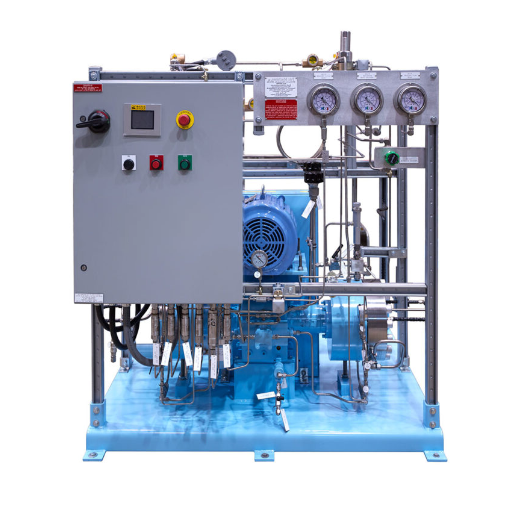
Custom nitrogen generation systems represent a sophisticated empowerment to companies since it enables the production of nitrogen gas in-house eliminating the need for the bulk liquid deliveries or high-pressure cylinder supply concerns that have been mostly followed. These systems are harnessed operating with several technologies, most notably membrane separation or pressure swing adsorption (PSA) so that they do not undergo in situ. In the essence of the very aforesaid, the nitrogen comes out of the process contingently to the degree of purity inherent for a particular user in given application areas like medicine, pharmaceuticals and food sectors. Use of in-house nitrogen production however makes it unnecessary to rely entirely on suppliers and allows significant cost savings and the enhancement of both the front and the back end of the business.
What is a Nitrogen Generation System?
A nitrogen generation programmable control system is a top-level technology adopting nitrogen oxide production methodology without nitrogen oxide production that is produced from used output, instead concentrated from the environment. These nitrogen generation systems work on specific principles of certain functionalities in which pressure swing adsorption or the membrane separation takes place to the nitrogen levels of purity desired ranging between 95% and 99.999%. PSA systems make use of activated carbon molecular sieves to remove oxygen and other impurities under varying pressures, on the other hand, membrane structure makes use of the inbuilt dying slope of the polymer and capable of very high selective permeability for nitrogen gas from air.
Importance of Custom Solutions
Specific use based solutions are of great advantage because they fulfill the needs of the various sectors that may have same needs thereby making the systems and processes fully operational. Designing the nitrogen air production systems to particular projects demands enhances how entitled businesses can meet the demands such as gas purity requirements, volumetric flow, and the inclusion of the systems within the processes. For example, the operation which is mostly carried out in pharmaceutical sector may need ultra high quality nitrogen because the application in that case is under very strict limitations, whereas the one on food packages will focus on uniformity and accuracy in delivery so as to ensure the preservation of foods.
Such creative designs also efficient as they improve the costs optimization by eliminating what is not necessary in the system and diminish wastage of energy. Practically, these targeted solutions through the adaptation of technology and industrial knowledge enable companies to be very exact in their expectations and bear in mind that do variance with the company operations and goals, are not accepted.
Overview of Cost Savings and Efficiency
The implementation of bespoke nitrogen compressor systems is vital for the reduction of operational budgets in the industrial cycle. In contrast to other systems that may be tailored to isolate certain problems, these are perfect for any given industrial environment, as it eliminates energy wastages through the provision of under or over capacity. An example is that the utilization of energy-efficient variable-speed drive (VSD) technology for such systems help reduce the power used by changing the output of the compressor according to the actual needs hence as many as 35% in the costs of operations can be decreased.
In addition, furnishing custom equipment reduces the necessity for routine upkeep periods and stoppages due to enhanced designs that limit the chances of degradation. Filters together with cooling function can enhance the longevity of items in client-manufactured appliances in regard to the specified level of cleanliness and the need by the corporation to pay frequent replacement and maintenance costs. An advanced level of energy effectiveness, especially for the organizations engaged in significant activities for that purpose, and Options for possible reduction in the amount of operational costs are being provided through the development of operating models that review throughput variance within the issues.
Types of Custom Nitrogen Generators
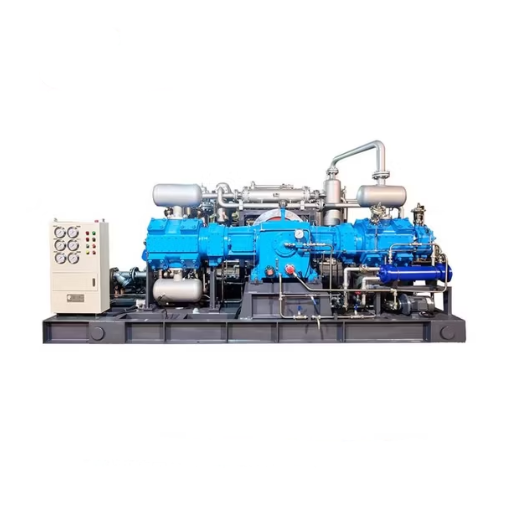
1
Pressure Swing Adsorption (PSA) Nitrogen Generators
The PSA Nitrogen Generator works by separating nitrogen from air using sorbent pellets of carbon molecular sieve. This type of nitrogen generator has many advantages among which are very high performance characteristics of the generator, namely producing nitrogen with purities of 95%–99.999%, hence is suited for the products where nitrogen is used for instance, in food, medicine, and electronics.
The PSA Nitrogen Generator works by separating nitrogen from air using sorbent pellets of carbon molecular sieve. This type of nitrogen generator has many advantages among which are very high performance characteristics of the generator, namely producing nitrogen with purities of 95%–99.999%, hence is suited for the products where nitrogen is used for instance, in food, medicine, and electronics.
2
Membrane Nitrogen Generators
Membrane nitrogen generators work by air separation technology which is carried out through the selective movement of nitrogen across hollow fiber micro-porous membranes. Such systems are practical and convenient as they are easily maintained since they are compact and without gases leakage in such devices designed for medium nitrogen concentration applications, and applications not concentration critical such as fire fighting or simply inflating tires.
Membrane nitrogen generators work by air separation technology which is carried out through the selective movement of nitrogen across hollow fiber micro-porous membranes. Such systems are practical and convenient as they are easily maintained since they are compact and without gases leakage in such devices designed for medium nitrogen concentration applications, and applications not concentration critical such as fire fighting or simply inflating tires.
3
Cryogenic Nitrogen Generators
Cryogenic generators utilize the method of increasing the rate of cooling of air up to the lowest possible temperatures to get nitrogen in its liquid form and separate it from the air. Amortisation is slower for the systems using cryogenics technology but these units are able to deliver nitrogen of highest purity which is good for high volume use and applications like chemical and metal production.
Cryogenic generators utilize the method of increasing the rate of cooling of air up to the lowest possible temperatures to get nitrogen in its liquid form and separate it from the air. Amortisation is slower for the systems using cryogenics technology but these units are able to deliver nitrogen of highest purity which is good for high volume use and applications like chemical and metal production.
Membrane Nitrogen Generators
Nitrogen generators based on selective gas separation technology with polymer membranes, functionally with the help of advanced polymer membranes that enable molecular sieving of smaller oxygen, carbon dioxide and water vapor while the bigger nitrogen molecules are rejected leaving a constant stream of nitrogen gas. Known for their improved durability, compactness, and ability to be adjusted to the desired nitrogen purity, they are membrane systems designed for moderate ranges of nitrogen purity, typically 90% to 99.5%.
The new improvements in membrane engineering have increased the productivity and performance, which has led to an increase in the propulsive and separation abilities in gas separation processes. It has also enabled the low conducting of energy while extending the life of the membrane systems. These aspects have encouraged a huge number of people in the food packaging, pharmaceutical isolation, and electronics fields including membrane based nitrogen carriers that fulfill the demands for onsite nitrogen gas without having to use the cryogenic storage or frequent refills. Finally, improvements in process control have resulted in the systems becoming more automated and therefore minimizing manual errors which in turn optimally ensures the purity of nitrogen to comply with specific industrial standards.
PSA Nitrogen Generators
PSA nitrogen generators are structured on concepts of carbon molecular sieves, used to separate nitrogen from compressed air. There is absorption of contaminated air due to diversion of compressed air to two towers which the oxygen, carbon dioxide and moisture is adsorbed by carbon molecular sieves (CMS) hence, nice and dry nitrogen gas passes on to the next stead. Ability to provide nitrogen of purities ranging from about 95% to above 99.999% enables PSA plants multifunctionality in industrial applications such as the production of paints, production of metal objects, and food.
There has recently been a shift in focus in terms of improving the efficiency of the new PSA systems and decreasing associated system costs. Thanks to developments in adsorption materials and their accommodation in modular systems, the air consumption is now virtually maximized, thus bringing the cost of nitrogen per volume to lower rates. Also, the modern nitrogen gas PSA generators are now much more intelligent with advanced Programmable Logic Controller based control systems that allow one to monitor the status of nitrogen generation in real time and to adjust the nitrogen output accordingly in respect to the changes caused by application requirements. Because of various improvements, PSA nitrogen generators have expanded to include in-situ nitrogen production as part of many industries.
Comparison of Types of Nitrogen Generators
| Type | Mechanism of Operation | Purity Levels | Operating Costs | Key Industries | Advantages | Disadvantages |
|---|---|---|---|---|---|---|
| PSA | Adsorption of oxygen on carbon molecular sieves | Up to 99.999% | Moderate | Food, beverage, pharma, electronics | High purity, flexible outputs | Requires regular maintenance |
| Membrane | Separation of oxygen via permeable membranes | Up to 99.5% | Low | Oil & gas, marine, fire prevention | Lower costs, compact design | Limited purity range |
| Cryogenic | Liquefaction of air via low temperatures | >99.999% | High | Chemical, aerospace, medical | Very high purity, handles large volumes | High installation and energy costs |
| Electrochemical | Electrolytic separation of nitrogen and oxygen | Up to 99.9% | Moderate | Laboratory and analytical | Compact, eco-friendly, low maintenance | Limited scalability |
Key Components of a Nitrogen Compressor System
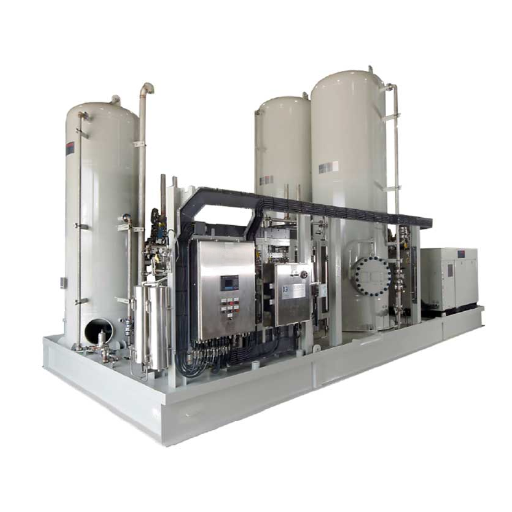
01
Compression Unit
This subsystem compresses ambient air to the required pressure levels for subsequent processes in the nitrogen production cycle. High-quality compressors help to manage processes effectively and efficiently.
02
Air Filtration System
Removes dust, oil, and moisture, and maintains the cleanliness inside the rotating equipment to prevent operational failure.
03
Nitrogen Separation Unit
Nitrogen is related to other gases in the air, such as oxygen, through the use of advanced membrane or Pressure Swing Adsorption Technology (PSA).
04
Storage Tank
This serves as storage for nitrogen providing automatic or operator-induced nitrogen filling to prevent any interruption when the level of nitrogen in the system is low or removing the nitrogen pressure when it could cause problems.
05
Control Panel
Represents management advantage in the field of system monitoring and operational parameters, including ensuring precise and efficient work.
06
Cooling System
The complex of units which provides control over the temperature during the operation process. Its main task is to prevent overheating when the system becomes overloaded, reaches a dangerous temperature, and so on.
Understanding the Compressor Technology
In recent times, compression systems have been innovated to improve efficiency, reduce energy use, and limit environmental constraints. There have developed cutting-edge machines. Perhaps the most interesting development is the penetration of variable speed drives into this industry. VSD technology enables compressors to change the RPM rate of the motors, respectively, to load variations allowing consumers to economize on the power lost unlike when using traditional fixed compressors. Furthermore, the new manufacturers have come with systems where there is no oil in the compressors to provide clean and dry air is required by some very critical applications of say pharmaceuticals and electronics.
Other improvements have been driven by improvement in materials and designs, which has led to the use of high-performance components and precision parts. As a result, critical parts get less physical damage and last longer. Smart monitoring systems have also come a long way, to where not only the compressors can be augmented with predictive functions but the entire system’s efficiency can be optimized thanks to the real-time data the compressors now offer. This illustrates the constant adaptation of compressors from a technical standpoint, so that they meet industrial requirements and contribute to the modern concept of sustainability.
Essential Equipment for Efficient Operation
Competent industrial operations are a result of different machines designed for achieving maximum positive outcomes but reducing the amount of downtime as well as the resources. It involves some of the advanced systems like filtering for instance which helps to keep the environment while it caters for the machinery by soaking any impurities that do not necessarily have to be stored. It also discredits the popular misconception that increasing the speed of each machine automatically translates into increased output such as compressors.
For instance, thank to modern technologies and maintenance procedures it is now possible to prevent intensified friction and thereby wear of the moving components without harming these components in case hard weather conditions or an overloading takes place. Hence, in combination with advanced health monitoring techniques and utilization of modern technological advances, this system which is used in industry is efficient. Applying these necessary adjuncts, businesses can fulfill the requirements concerning the appropriateness of plants, the profitability of their enterprises, and environmental norms.
Reliability and Maintenance Considerations
The reliable and functioning of industrial systems often involves a number of strategies that both prevents and deals with potentially developing faults. Predictive maintenance which uses sensors or IoT enabled devices is usually emphasized as a solution that helps to increase remote monitoring and provides information on the equipment health management with real time simulations and notifications. For example, vibration measurements, infrared thermography and oil analysis carry out potential failure predictions that may cause or will cause inefficiencies or performance deterioration of the system.
On a more critical note, automated maintenance solutions have enhanced how tasks are carried out in organizations recognizably by accomplishing versatility of tasks such as order for work management, tracking and scheduling works, monitoring the declared performances of assets. According to the elaboration of the trend, any company said to be entailing predictive as well as preventive maintenance incurs lower downtime and repair costs relative to those which use only detection techniques. In the same spirit, it can be said that the organizations are also able to eliminate the risk of non-compliance through annual system maintenance operations which should in theory align with the maintenance requirements outlined in ISO 55000.
Applications of Custom Nitrogen Generation Systems
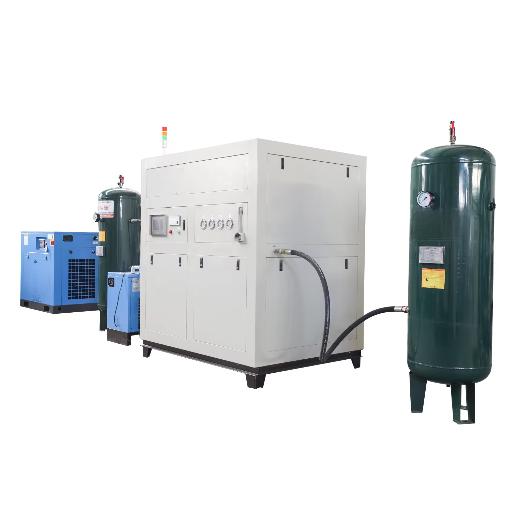
- Food and Beverage Industry: The food is packed in a specific way in order to maintain the quality and safety of the food. An example of such packing is a modified atmosphere packaging (MAP) system.
- Pharmaceutical and Medical Fields: Pharmaceutical and biomedical sciences demand high standards of clean, sterile environments in the fabrication of drug products, during cryopreservation and surgical sterilization procedures.
- Chemical Processing: In industries, specially the chemical industries nitrogen finds very high significance for its asphyxiant and inerting functions.
- Aerospace: In the aerospace industry, nitrogen generation units also cater to the high purity nitrogen requirements for various systems such as testing and manufacturing as well as aircraft fuel systems.
- Electronics Manufacturing: In electronics factories, it is beneficial to have nitrogen gas because it assists in reduced oxidation in the product while also enhance the quality of the solders placed.
- Laboratory and Analytical Applications: In the laboratories and for technical analysis activities, nitrogen supplies assist in chromatography, atomic absorption spectroscopy, as well as other such high precision applications.
Industrial Applications
The burgeoning utilization of customized PSA and membrane nitrogen manufacturing plants across different sectors has been central to the enhancement of all productivity related issues, economics and better operational aspects. For as long as gasses have been supplied to industries in bottles, the industries were approached with the problem of haulage which could not be ignored and supply chain disruptions were also experienced. Therefore, these gas generator systems are aimed at ensuring that a particular amount of gas is produced with a specific purity and at a specific pressure and rate of flow.
A typical concern such as nitrogen supplier reliability also depends on what one expects there to be improved technology and production specifically in those sectors of food processes or beverages since nitrogen supplier always acts within a certain time frame and supplies the gas the consumer asks for. Frosty nitrogen-filled packages can retain food quality, reduce oxidation of prepared food and enhance food taste. Sometimes already prepared food is put in boxes, so that there is a box filled with nitrogen; this helps in preventing the food from going bad or the oxygen in the box making the food less fresh.
In addition, by using custom nitrogen systems, environmental protection is enhanced because traditional gas transportation is associated with certain levels of carbon emissions. For operations like the oil and gas industry where nitrogen is greatly used for enhanced oil recovery (EOR) and pipeline cleaning, such systems introduce safe and effective high purity solutions which are scalable enough to meet the challenges posed by any situation effectively. Thus, the technology of nitrogen generation is very important to contemporary industries in which a great deal of emphasis is placed on being accurate, dependable, and ecologically safe.
Medical and Pharmaceutical Uses
Custom solutions for generating nitrogen form the foundation, so to say, of those important areas of activity as medicine sphere and drug industry in the provision of nitrogen of unvaried quality and purity that is essential for various (actually all) kinds of operations. Another major area of application is from the plant for filling and manufacturing drugs where nitrogen creates an oxygen free environment thus excludes oxidation, polymerization and further breakdown of the active ingredients and active pharmaceutical ingredients. That said, in addition to diagnostics available at clinics, for example, a freeze drop is broken. Dropping temperatures are essential in freezing other biological samples or medicines.
In order to alleviate the degradation of pharmaceutical and medical-grade products, introduction of nitrogen is a common practice in Modified Atmosphere Packaging (MAP). Advancements in MAP are crucial in the field as it ensures sterility regarding this subject and isolates products from sources of harm that would be responsible for their contamination. Additionally, medical services are provided mostly within a facility by running gas through piping into workplace to facilitate surgical practice and other emergency procedures.
The use of custom nitrogen generation plants has enabled companies to incur only costs while also increasing the efficiency of the manufacturing process by preventing down time associated with running out of gas and it eliminates the need to rely on third party gas suppliers. This has made it easier for any business to benefit from ebbs in production more efficiently. As you would expect, the prices for on-site nitrogen plants project vary a lot and do not come cheap. With biological treatments and other creative techniques, the on-site nitrogen generators are the most efficient in terms of both design and application practices. Such technologies will facilitate the ongoing improvement of the medical and functional hygiene standards worldwide.
Food and Beverage Industry
The role of on-site nitrogen gas generators is critical in the food and beverage sector since it improves the quality of product, extends ole of shelf life and helps to satisfy safety requirements fully. Among other industrial applications, for example, modified atmosphere packaging (MAP) which involves the replacement of oxygen with nitrogen in the food package to prevent oxidation and microbial contamination can be performed by custom equipment. Through this method, one is able to prolong the shelf life of food especially those which are in the form of meat, crops, snacks and pastries.
However, nitrogen is quite indispensable in the process of beverage manufacturing and is mainly used in the aspect of eliminating oxygen from bottles or cans especially during the filling process. Otherwise, the oxygen present in the bottled or canned beverage can trigger its oxidation and thereby deteriorated the product in terms of taste, scent, and overall standard. The process of how to use nitrogenated beverages like nitrogenated beer infused coffee, is another reflection of the st pregnancies in product marketing where innovation as a business strategy is employed in seeking market growth.
The state-of-the-art nitrogen generation systems of today possess cost-saving and expandable features, as they can make the typically expensive and environmentally corrupt practice of gas transportation in bulk obsolete because the suppliers can produce their own cleaner nitrogen gas on site. Moreover, hazard analysis and critical control points (HACCP) stress on Food industry, pharmaceuticals or cosmetic industry does not perform very good because though there is a necessity of meeting the twelve flowcharting find the food flow changes it adapted or not even the members of the focus groups have stringent measurement, BRC Food Safety Standard is focused mainly on pharmaceuticals, new diagnostics, and even food safety.
Benefits of On-site Nitrogen Generation
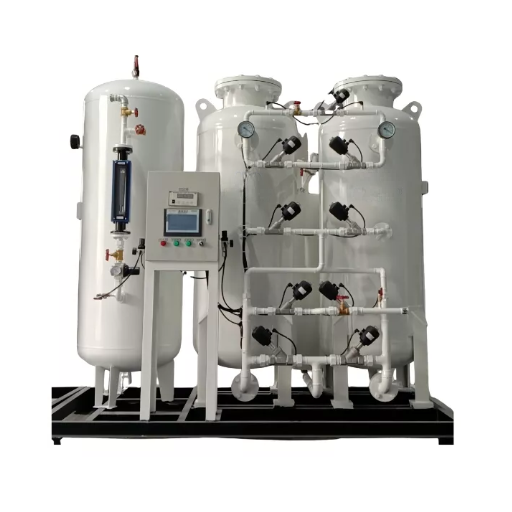
1
Cost EfficiencyThis level of efficiency, either through innovation or sheer industry evolution, is what centres nitrogen generation as a value-adding measure within the food and beverage industry in the era of lean and green business.
2
Operational ReliabilityThe process of generating nitrogen on an as-required basis ensures that such facilities are continuously operational and minimizes the chances of disruptions, which will eventually add up to production downtime.
3
Enhanced SustainabilityOn these systems, greenhouse gases are minimized due to reduction of gas transportation. In this way, unnecessary use and disposal of resources is avoided.
4
Improved Control and ComplianceFacilities that adopt on-site nitrogen production techniques can regulate nitrogen content and adhere to industry regulations, such as FDA or HACCP requirements.
5
Customization and ScalabilityWith on-demand nitrogen production, firms can use systems that deliver the required levels of purity or capacity, enabling them to manage operations effectively and expand the business without adding heavy machinery or equipment.
Cost Efficiency and Savings
On-site nitrogen production provides a very important advantage, when it comes to shifting costs of nitrogen supply from traditional techniques – those which involve the use of over the tank(s) nitrogen container, tanks or distributors to well thought-out topologies of on-site nitrogen gas generation. For this reason, facilities with storage and handling systems for high pressure liquified gas (a minimum of 1200 psi) or high pressure gas in cylinders, can be subject to cost-savings. This notion of on-site systems demonstrates less downtime for a facility since they are able to provide nitrogen gas uninterrupted to the point of use. As a direct result, this increases the productivity of a system.
Research demonstrates that industries may reduce expenses by up to half in reliance on delivered nitrogen. To maintain such facilities costs very little since the plants are constructed in such a way that they are expected to last very long, even without frequent repair. Moreover, on-site generation of nitrogen allows producers to make nitrogen only as and when needed, thus reducing overproduction and waste. It is easy to alter the levels of nitrogen production depending on the operational schedules and in both cases, the systems will ensure that the volume of nitrogen that needed will be taken and no more. As such, the ultra-high purity and strategic supply and distribution requirements relied on many industries can be, when compared to alternative resources, accomplished very competitively through on-site nitrogen production.
Improved Supply Reliability
Notably, in-situ nitrogen production improves the dependability of supply by removing the need to rely on outsider third parties, and the risks that come in the form of traffic or liquefaction discrepancies as a direct result of removing the divisions. That said, individual plants now have the ability to create nitrogen as and when they need it, which implies that operations cannot cease just because of vending practice still being disbanded or due to challenges of a logistical nature. New installations with the said components having PSA or membrane air separation units are configured in a way that a particular flow of nitrogen corresponding to a specific class of purity that is conventional in that branch of industry stays available at all times.
Besides, the presence of backup equipment and provisions for automatic control allows for doing away with such problems with the operation of the plant as soon as possible. For this and various other factors, the in-situ generation of nitrogen is such a exhausting option towards the breakthrough solution, mainly problems of production systems as far as the supply chain is concerned that is, those where interruptions due to cases of events are unacceptable such as food stuffs packing, medicine and the electronics.
Environmental Considerations
Possessing the capability of deploying nitrogen on-site, is deemed highly beneficial in the sense that the production and delivery methods which employ nitrogen generation are inferior to the environmental impact it poses. The local supply of nitrogen gas translates into the demand for less vehicle using fossil fuels which causes many emissions to be cut to the atmosphere. Additionally, the operational activities associated with the on-site nitrogen gas production are found to be reduced due to the low energy-consuming equipment such as some model indirect nitrogen gas generators with PSA of membrane techniques.
Numerous present-day technologies are focused on reusable materials for the adsorbing and separating components, and it is widely in line with the modern sustainable developments in industrial sectors. Abandoning a scheduled system of frequent hauls and inventorying as well as embracing a system of manufacturing and relying on stocks only where needed invariably plays a role in environmental protection. Extreme examples of innovative solutions include nitrogen generating equipment, which as such systems may be unique in that they are powered by waste energy, offering yet more options that contribute to savings in natural resources.
Frequently Asked Questions (FAQs)
How does a custom nitrogen generator system provide a reliable onsite nitrogen supply?
A self-sufficient nitrogen generator can be tailored, connected to the existing air and booster compressors, and used to produce nitrogen in situ when needed. This cuts the delivery costs and the annual outlay in contrast with ordinary sources of nitrogen, which are available in mobile form and could even be ground-mounted to save installation space and reduce site congestion. Generators also allow for enhanced cost savings which need to be effected on a specified form of commercial activity or a specified type of business. Inquiry about the technology is all that will be required to get clarification on the best, most cost-effective fit for that particular equipment’s use in that activity.
Can a compressor-based solution generate N2 for my industrial application?
It is correct that by using a compressor-based solution it is possible to produce nitrogen, through the use of an air compressor to supply air which can provide and PSA or membrane nitrogen generator technology to produce nitrogen gas. They are usually manufactured in ways that integration with the other equipment available is possible in order to avoid the need for carrying cylinders from one place to another thus allowing the supply to be done on site. The general purpose that for entrainment such as inerting, blanketing and purging can be achieved with a minimal service nitrogen supply is dependent on the nitrogen requirements. In powder transfer this may be dross flats or con-sortiums.
What are the typical specs for a custom nitrogen compressor and nitrogen supply system?
When designing a custom nitrogen compression and supply solution, the project specifications involve needed nitrogen purity, the extent of flow, required pressure as well as points of connection for regulation purposes. In the course of designing the system, the engineers shall take into consideration that theoretically, the above-mentioned can be constrained to specific, also that given space may be limited, very often such requirement may be able to be achieved through a booster compressor enabling high-pressure their current solutions. Both the future expectations and the ratios will also effectively indicate where the very nitrogen generator given the project shall be situated whether on the general project or as a standalone equipment.
How do nitrogen solutions compare to traditional nitrogen transport and supply?
Nitrogen solutions produced using production methods onsite are preferred for traditional nitrogen supply delivery as they do not require the need for transportation, lowers the risk of damage and enhances safety. In addition to reducing costs, these machines also help reduce environmental damage by avoiding frequent vehicle deliveries of single- or bulk-loaded cylinders during transport. Furthermore, this mode of nitrogen handling enables to bear and conform to variations in conditions as it offers a more consistent supply in comparison to when such supplies are ordered over the internet.
Reference Sources
- A Techno-Economic Model of Mycoprotein Production: Achieving Price Parity with Beef Protein
Read more here - Selected Aspects of the Design and Operation of the First Polish Residential Micro-CHP Unit Based on Solid Oxide Fuel Cells
Read more here - Nitrogen Compressors
- Read more here
// SYS-DOC: WHY I WRITE THIS
[01] About PanGeng
PanGeng is an industrial gas compressor manufacturer based in Bengbu, Anhui, China. Since 2009, we have focused on the design, R&D, production, and manufacturing of customized gas compressor systems for oilfield, chemical, energy, hydrogen, nitrogen, biogas, and industrial air applications.
[02] Our Expertise
We write compressor guides based on real manufacturing and engineering experience, including hydrogen compressors, nitrogen compressors, booster compressors, medium and high-pressure air compressors, oilfield nitrogen injection systems, biogas compressors, and OEM/ODM custom compressor solutions.
Our engineering team supports customers from application analysis and compressor selection to production, factory testing, commissioning, spare parts, and after-sales service.
[03] Why You Can Trust This Content
The technical information in our articles is based on PanGeng’s in-house compressor design and manufacturing experience, current product capabilities, and project support for industrial clients in global markets. Our goal is to help buyers understand compressor types, pressure ranges, gas requirements, customization options, and long-term operating costs before making a purchasing decision.
CONTACT PROFILE
AUTHORITATIVE SOURCE
NAME
PanGeng Engineering Team
BRAND
PanGeng
COUNTRY
China
MODEL
B2B / OEM & ODM
EMAIL
pg20090705@163.com
PHONE
0552-4958225
WEBSITE
pgcompress.com
Related Posts


Trending now
![Low Pressure Hydrogen Compressor Applications [Guide]](https://pgcompress.com/wp-content/uploads/2026/09/low-pressure-hydrogen-compressor-applications-blog-featured-150x150.png)