Get in Touch with Pangeng

Hydrogen Gas Compressor Selection: Pressure, Flow, Cooling, and Safety Checks

Contents
show
Updated August 2026. Hydrogen gas compressor selection is the process of matching inlet pressure, final discharge pressure, gas flow, cooling utilities, gas composition, purity limits, and safety controls to the actual process or storage target. A compressor model is only a candidate after those checks are tied to the duty.
An RFQ needs more than “we need 700 bar” or “we need 500 Nm3/h.” The better package question is: what pressure does the hydrogen arrive at, how fast must it be delivered, how many hours will the duty run, what cooling medium is available, and what safety standard will the site authority enforce?
Quick specs to define before sizing
- Inlet pressure, discharge pressure, and allowed pressure fluctuation
- Hydrogen flow basis: Nm3/h, kg/h, SCFM, average, peak, and duty cycle
- Gas composition, moisture, purity requirement, and oil-carryover tolerance
- Cooling medium, inlet temperature, ambient range, and discharge-temperature limit
- Leak detection, ventilation, relief routing, ESD logic, and hazardous-area requirements
Quick Selection Checklist for Hydrogen Gas Compressors
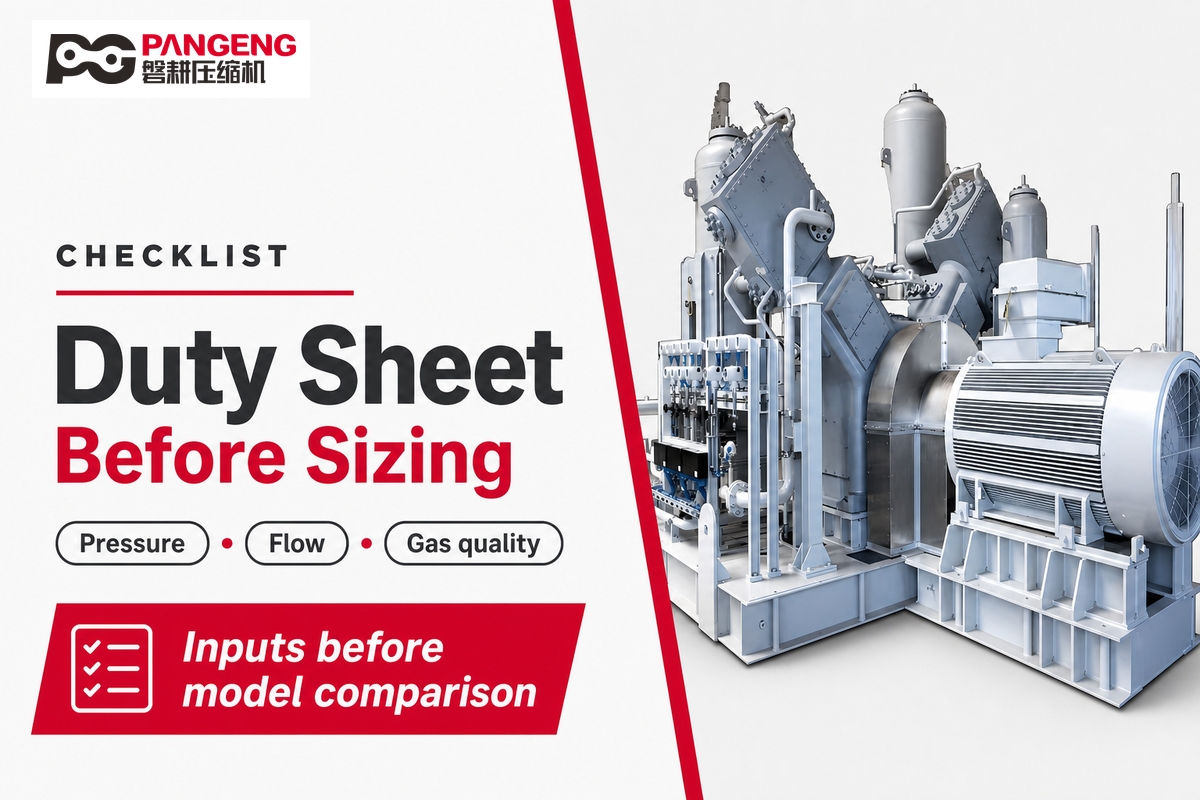
A practical hydrogen gas compressor selection checklist begins with seven inputs: pressure, flow, duty cycle, gas quality, cooling, site safety rules, and acceptance evidence. DOE’s gaseous hydrogen compression overview is a useful baseline because it separates compressor choice by compression ratio and throughput. If any one input is missing, a supplier can quote a machine that reaches pressure once but cannot hold continuous duty or pass site review.
6-Point Duty-Sheet Rule: do not compare compressor models until inlet pressure (bar or MPa), discharge target (bar), hydrogen flow rates (Nm3/h or kg/h), duty hours, cooling-water temperature (°C), and hazardous-area basis are listed in the same sheet.
Use numeric entries as a formatting pattern, not as design recommendations: “inlet pressure 5 bar, discharge target 200 bar, flow 50 kg/h, cooling water 32 °C, ambient 40 °C, motor allowance 75 kW, continuous run 24 hours, peak fill 30 min, alarm basis 4%, pressure drop 1 bar, relief margin 10%, alternate pressure note 150 PSI, and design pressure 25 MPa.” Replace every number with the project value before a supplier treats the sheet as engineering input.
390US monthly searches for parent term
400-12,000Nm3/h public PanGeng example range
350/700 barcommon storage and fueling pressure classes
Use the checklist as a front-end screen, not as a final engineering calculation. When packaged equipment options are being compared, start from PanGeng’s hydrogen compressor selection guide, then send the full duty sheet so the compressor type, number of stages, cooling arrangement, controls, and documentation can be checked together.
Start With Pressure: Inlet, Discharge, and Compression Ratio
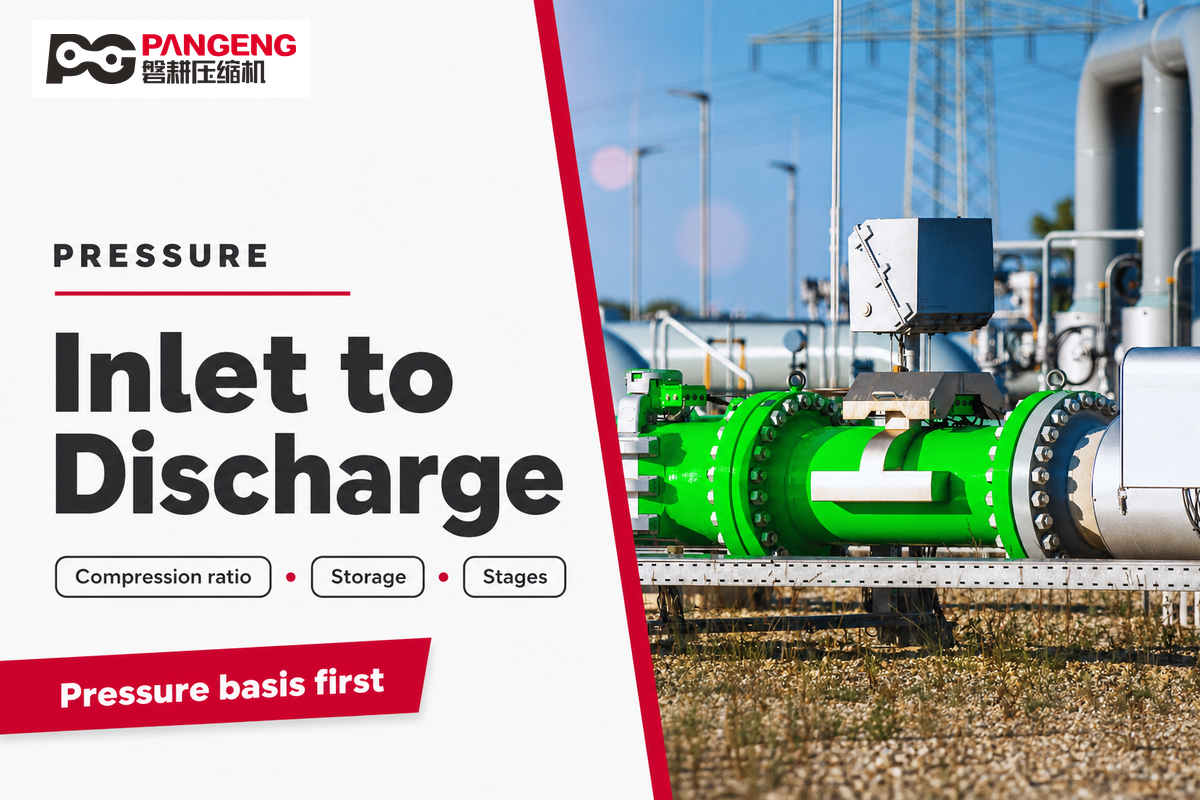
Pressure selection has three parts: inlet pressure, discharge pressure, and compression ratio. A low inlet pressure can make the same discharge target much harder than it looks, while a higher inlet pressure may reduce stage count, heat load, and power demand for the same hydrogen storage or process duty.
According to the U.S. Department of Energy, gaseous hydrogen is often produced at relatively low pressure and then compressed for transport, storage, or use. In hydrogen production and green hydrogen projects, the low molecular weight of hydrogen makes leakage, sealing, and compression efficiency harder to treat casually. DOE also separates compressor choices by compression ratio and throughput, noting that reciprocating compressors are common when a very high compression ratio is required and that centrifugal compressors serve high-throughput, moderate-ratio pipeline duties.
Storage and refueling work ties the pressure target to the receiving system. DOE’s hydrogen storage guidance describes high-pressure compressed-gas storage around 350-700 bar, and refueling-station design can require compressor outlet pressure above the vehicle nominal pressure to cover pressure losses and fast-fill temperature behavior. At the inlet and receiver boundary, the pressure of hydrogen is therefore more useful than a single discharge headline, especially in high pressure hydrogen compression or hydrogen fuel storage work. For bottle filling discussions, PanGeng’s hydrogen bottle filling compressor guide is a useful companion reference. Do not convert that into a universal “more pressure is better” rule.
Separate pressure layers before quoting a station package. The NLR Hydrogen Infrastructure Testing and Research Facility describes H70 dispensing at 70 MPa/700 bar, but it also lists high-pressure storage up to 900 bar and compressor paths from 415 to 900 bar or from 20 to 930 bar. For a station duty, the vehicle pressure class, cascade storage pressure, compressor discharge pressure, pressure ramp rate, and transient fill strategy are related but not identical.
Convert Flow Into a Real Duty, Not Just a Nameplate Number
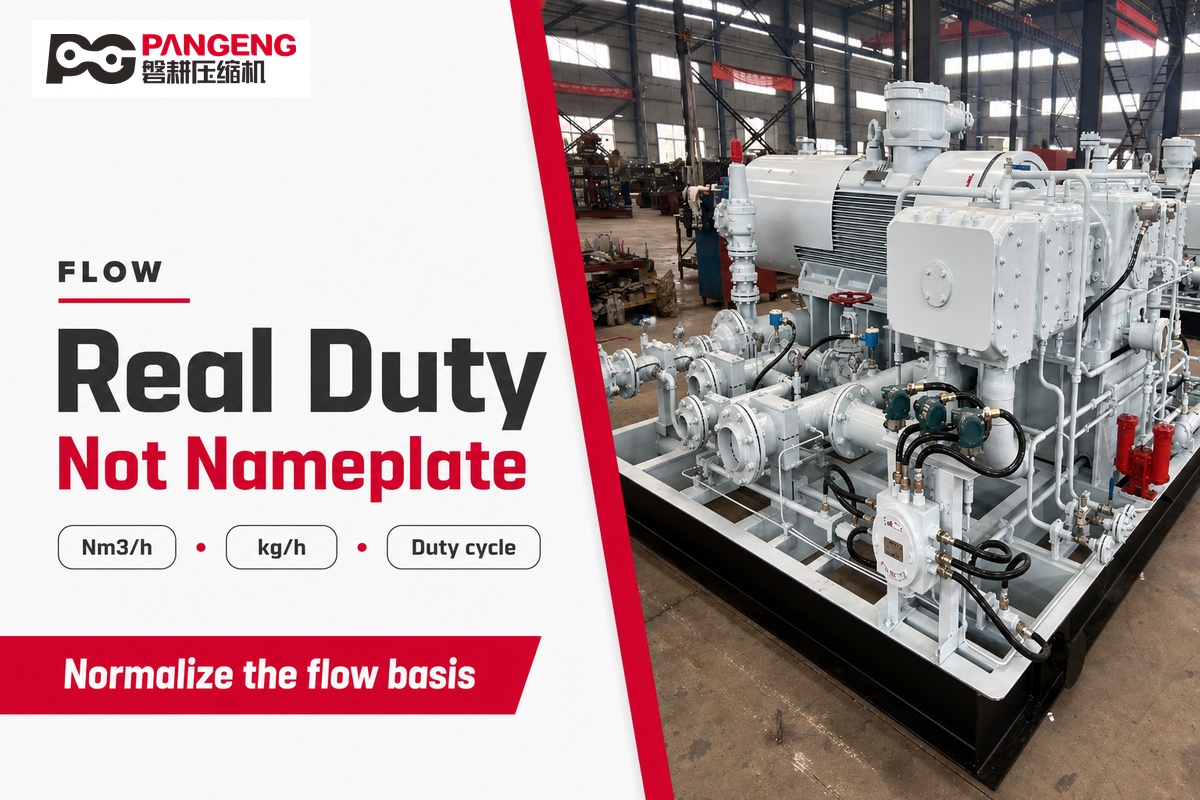
Flow is not one number on a nameplate; it is a duty statement. Before comparing a hydrogen compressor, normalize hydrogen flow rates in Nm3/h, kg/h, SCFM, operating hours, peak demand, and turndown. A wrong flow basis can delay commissioning because a compressor that fits average gas flow may still miss a 30 min peak filling window or continuous 24-hour plant operation.
DOE defines compressor throughput as the rate at which a compressor can compress hydrogen, usually expressed as mass per unit time such as kg/h. Industrial RFQs often use normalized volume such as Nm3/h, while some imported datasheets still show standard cubic feet per minute. Suppliers still need the flow measurement basis, inlet temperature, gas composition, and running pattern. Without those details, two quotes can appear comparable while representing different duties.
PanGeng’s public hydrogen compressor page lists hydrogen examples across several flow and pressure ranges, including process, boosting, recycle, and high-pressure duties. Treat those ranges as a reference for RFQ conversation, not a promise that one standard package fits every gas composition, cooling utility, or site code.
Cooling Decides Whether the Compressor Can Hold the Duty
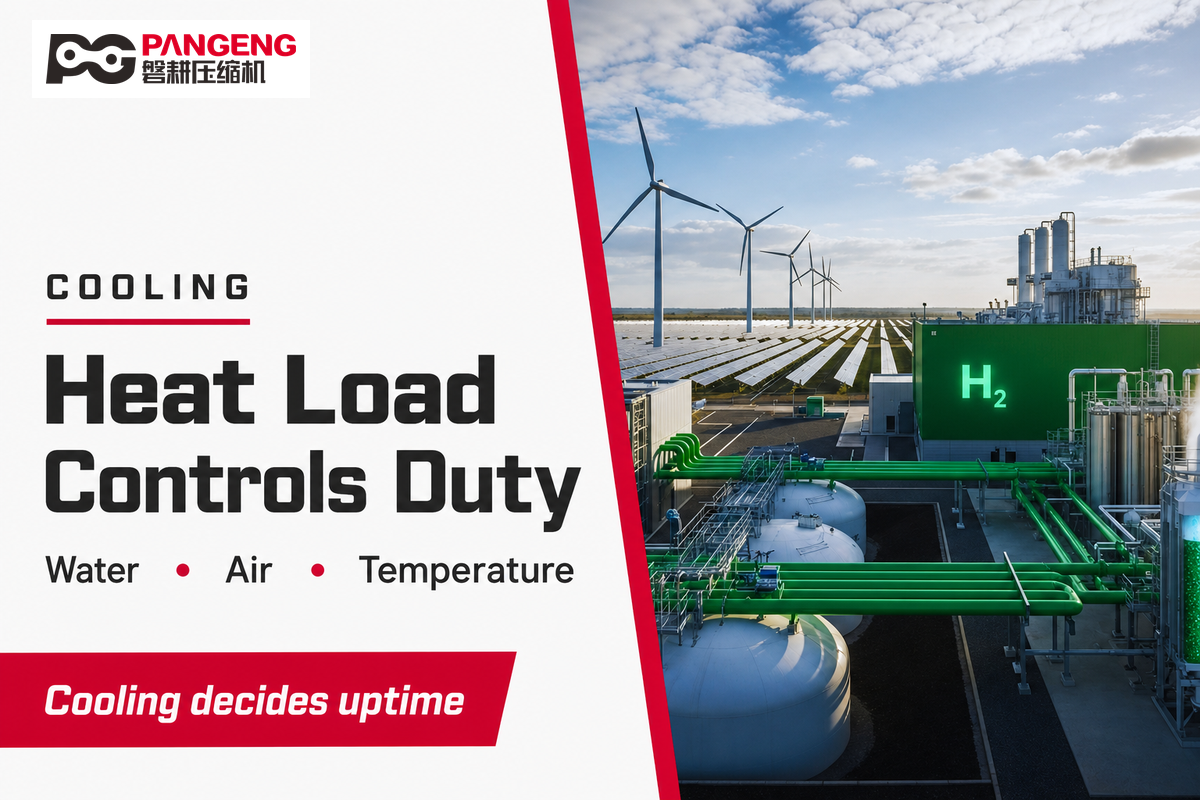
Cooling is a selection limit because compression adds heat and hydrogen service gives little room for casual assumptions. Package design must match stage count, cooling water or air availability, inlet temperature, discharge-temperature monitoring, and continuous-duty hours before the pressure and flow numbers are considered stable.
In a 2026 open-access review in Hydrogen, compression selection is linked to thermal management, stage cooling, dispenser pre-cooling, purity, maintenance, CAPEX/OPEX, Technology Readiness Level, and safety. That matters in real procurement because cooling failure does not always announce itself as a pressure-capacity problem. It may show up as rising discharge temperature, valve wear, ring leakage, or unacceptable downtime.
At RFQ stage, ask one practical question early: what cooling media are available on site for process gas cooling requirements between compression stages? State the cooling-water temperature and flow if water-cooled equipment is possible; if only air cooling is available, say so early. Do not let the supplier assume a utility that the skid will not actually receive.
9-Type Compressor-to-Duty Matrix: Match Purity, Pressure, Flow, and Maintenance
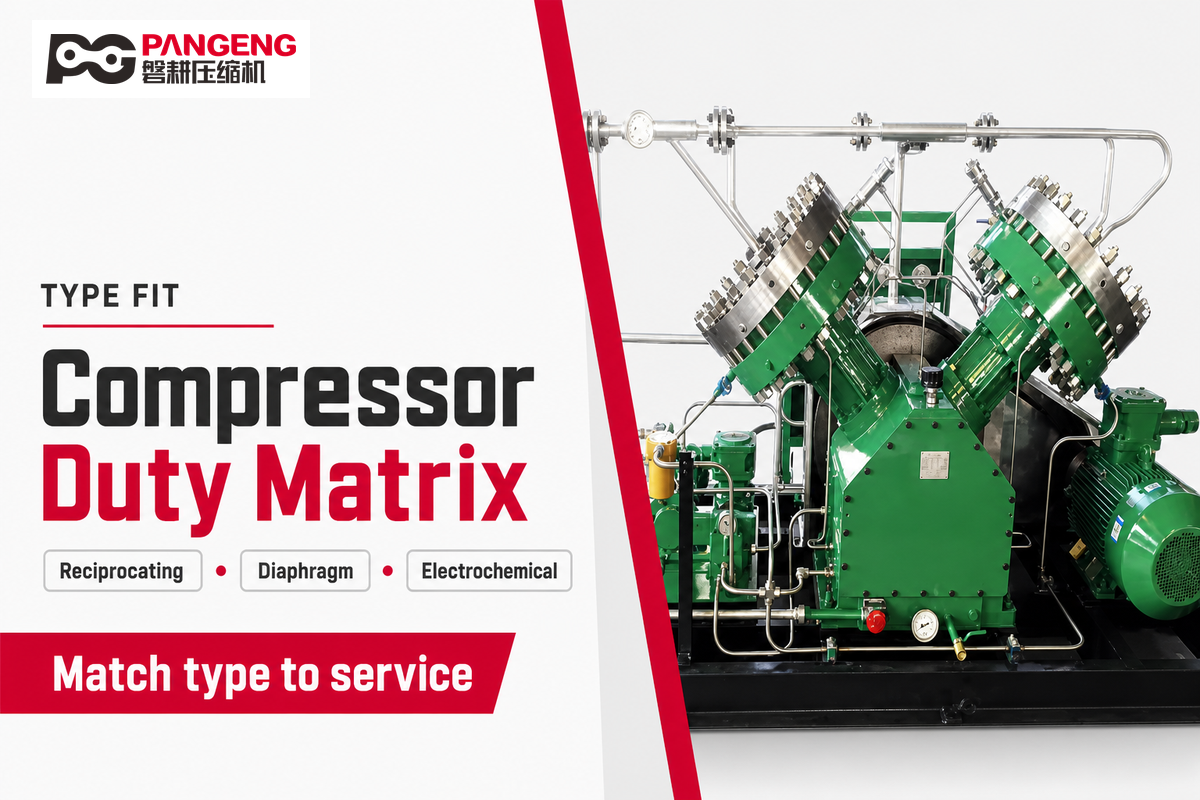
Compressor type selection is a fit decision, not a popularity contest. DOE’s compressor overview identifies several hydrogen compression approaches, including reciprocating, rotary, ionic, centrifugal, electrochemical, and metal-hydride options. Each type trades pressure capability, flow capacity, pure hydrogen handling, maturity, noise, footprint, maintenance, and cost in different ways.
| Compressor type | Typical fit | Purity / oil note | Main check before RFQ |
|---|---|---|---|
| Oil-lubricated reciprocating compressor | Industrial process gas, recycle or boosting duties where oil tolerance is acceptable | Oil system must match downstream purity and catalyst limits | Valve/ring maintenance, cooling, vibration, leakage and duty cycle |
| Non-lubricated reciprocating compressor | High compression ratio duties where oil carryover must be limited | Oil-lubricated or non-lube design must match downstream tolerance | Ring wear, piston-rod sealing, cooling duty and continuous hours |
| Diaphragm compressor | High-pressure, cleaner hydrogen service, fuel-cell-sensitive or specialty duties | Often selected where oil-free separation is important | Diaphragm life, inlet cleanliness, discharge pressure, flow limit and spares |
| Centrifugal compressor | High-throughput pipeline or large process duties with moderate pressure ratio | Oil system and seal design still need hydrogen-service review | Tip speed, molecular-weight effects, seal strategy and operating range |
| Rotary or screw booster | Lower-ratio transfer or boosting duties where the supplier has hydrogen references | Seal leakage and lubricant compatibility need review | Pressure ratio, seal gas, heat rejection, and hazardous-area package basis |
| Gas booster for bottle filling | Cylinder filling, pressure testing, or intermittent transfer where the duty sheet defines cycles clearly | Oil boundary, seal leakage, and gas cleanliness must match the receiving cylinder or downstream system | Starts per hour, blowdown behavior, cooling, final pressure, and operator safety controls |
| Electrochemical compressor | Specialized pure hydrogen or integration cases after electrolysis | Can support high-purity concepts, but water and membrane conditions matter | Capacity, water management, power supply, test hours, and service support |
| Ionic liquid piston compressor | Specialized high-pressure concepts where lubricant-free compression is valued | Check fluid compatibility and contamination boundary | Technology readiness, thermal control, references, and spare-parts path |
| Metal-hydride compressor | Emerging thermal-cycle applications with lower moving-part appeal | Hydride material and heat input define the operating window | Cycle time, heat source, capacity, materials, and proven installation record |
Most industrial buyers end up comparing reciprocating hydrogen compressor and diaphragm hydrogen compressor packages, with emerging compression technology kept as context. PanGeng’s public range shows several hydrogen compressor categories, but the RFQ still needs the supplier to explain why the selected compressor type fits the pressure, flow, purity, cooling, and maintenance conditions in the duty sheet.
Safety Checks Are Selection Inputs, Not Afterthoughts

Hydrogen compressor safety belongs in the selection stage because the gas is light, leak-prone, and highly flammable. Before price comparison, confirm hydrogen-service materials, hydrogen embrittlement risk review, gas-tight testing, ventilation, relief routing, leak detection, shutdown logic, ignition-source control, and documented operating procedures for the actual installation. Compressed hydrogen packages also need pressure-retaining parts, seals, and vented areas reviewed as a single system.
NOAA CAMEO lists hydrogen as a flammable gas with a lower explosive limit of 4 percent and an upper explosive limit of 75 percent. OSHA 1910.103 requires hydrogen-service piping and fittings to be suitable for the intended pressure and temperature, and it requires field-erected piping to be proved gas-tight at the applicable operating conditions.
Do not stop the safety review at ventilation and flammability. Hydrogen-specific package checks should also cover permeation paths, embrittlement-sensitive materials, seal blow-by routing, lubricant or particle contamination, hazardous-area electrical classification, hot-surface temperature limits, enclosure accumulation, and how leakage is detected before it reaches an ignition source. These checks are especially important when the same buyer is comparing lubricated reciprocating, non-lube reciprocating, diaphragm, and electrochemical compressor options.
Do
- Specify hydrogen-service materials, seals, and pressure-retaining components.
- Ask for gas-tight test basis and relief-device routing.
- Confirm ventilation, leak detection, ESD, and ignition-source controls.
- Document operating and maintenance responsibilities before FAT.
Don’t
- Treat safety devices as optional accessories after model selection.
- Use forum temperature figures as universal alarm or shutdown limits.
- Assume air, nitrogen, natural gas, and hydrogen packages share details.
- Quote a package before the site code basis is known.
Check Standards and Jurisdiction Before Freezing the Package
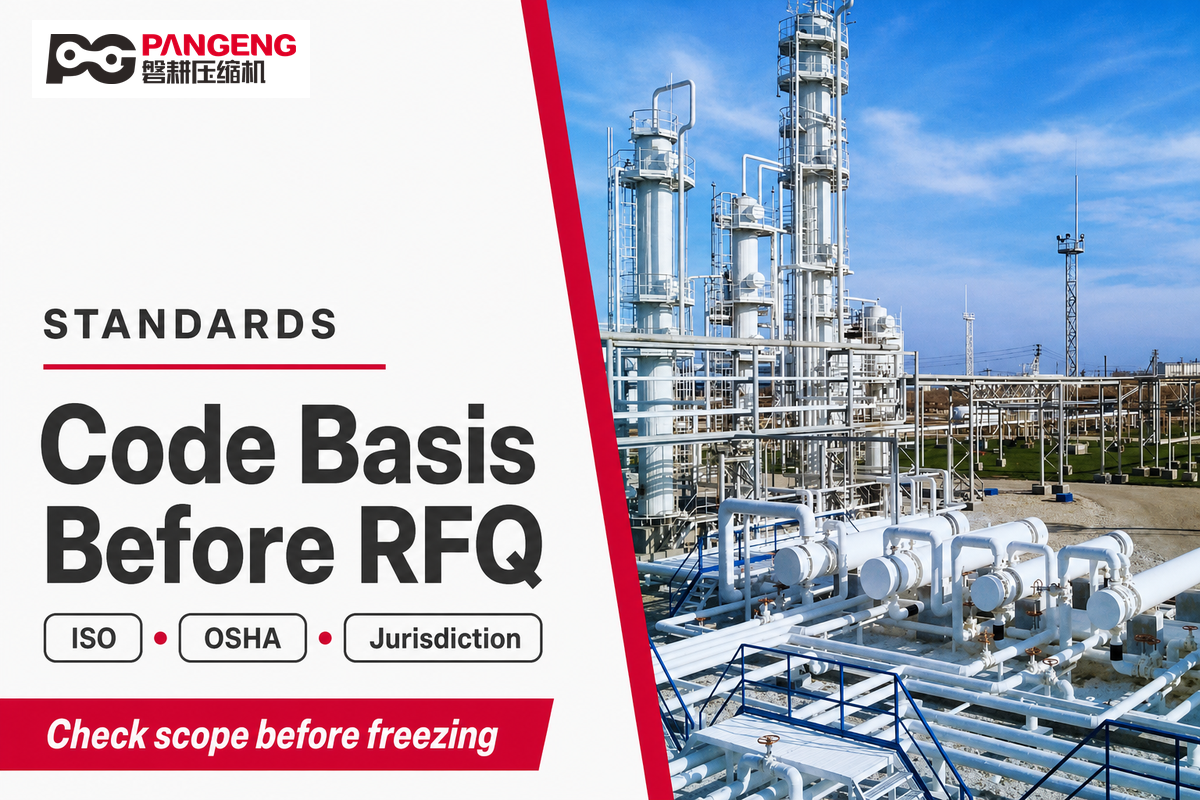
Standards review should happen before the compressor package is frozen, not after layout approval. A wrong standard assumption can create rework, delay, liability, or a rejected FAT package. ISO 19880-1:2020, OSHA 1910.103, pressure-vessel rules, hazardous-area classifications, local fire-code review, and project owner requirements can all change documentation, controls, materials, and testing.
ISO describes ISO 19880-1:2020 as the published standard for gaseous hydrogen fuelling stations, including compression, buffer storage, pre-cooling, and dispensing in its public scope. It is not a blanket rule for every hydrogen compressor duty: ISO’s public scope excludes cryogenic hydrogen dispensing and hydrogen dispensing to metal hydride applications. ISO also lists ISO/AWI 19880-1 as under development. That update signal is useful, but it is not a final published requirement and should not be quoted as one.
In non-refueling industrial duties, ISO 19880-1 may not be the governing standard, but it still shows how hydrogen compression, storage, cooling, dispensing, inspection, and maintenance are treated as a system. OSHA 1910.103 is also a U.S. workplace reference with defined applicability boundaries, including system-size and facility exclusions, so do not use it as a universal global design code. Ask which standards the supplier designs to, what third-party certifications apply, what local approval documents are excluded from the equipment scope, and which authority has final jurisdiction.
Fuel quality is a separate line item from compressor pressure. ISO 14687:2025 is published as the hydrogen fuel quality product specification and covers minimum hydrogen-fuel quality characteristics across residential, commercial, industrial, vehicular, and stationary applications. If downstream equipment is fuel-cell-sensitive, catalyst-sensitive, or purity-critical, name the required hydrogen grade, impurity limits, sampling method, and acceptance document instead of relying on a generic “oil-free” label.
Build the RFQ Around Failure Modes
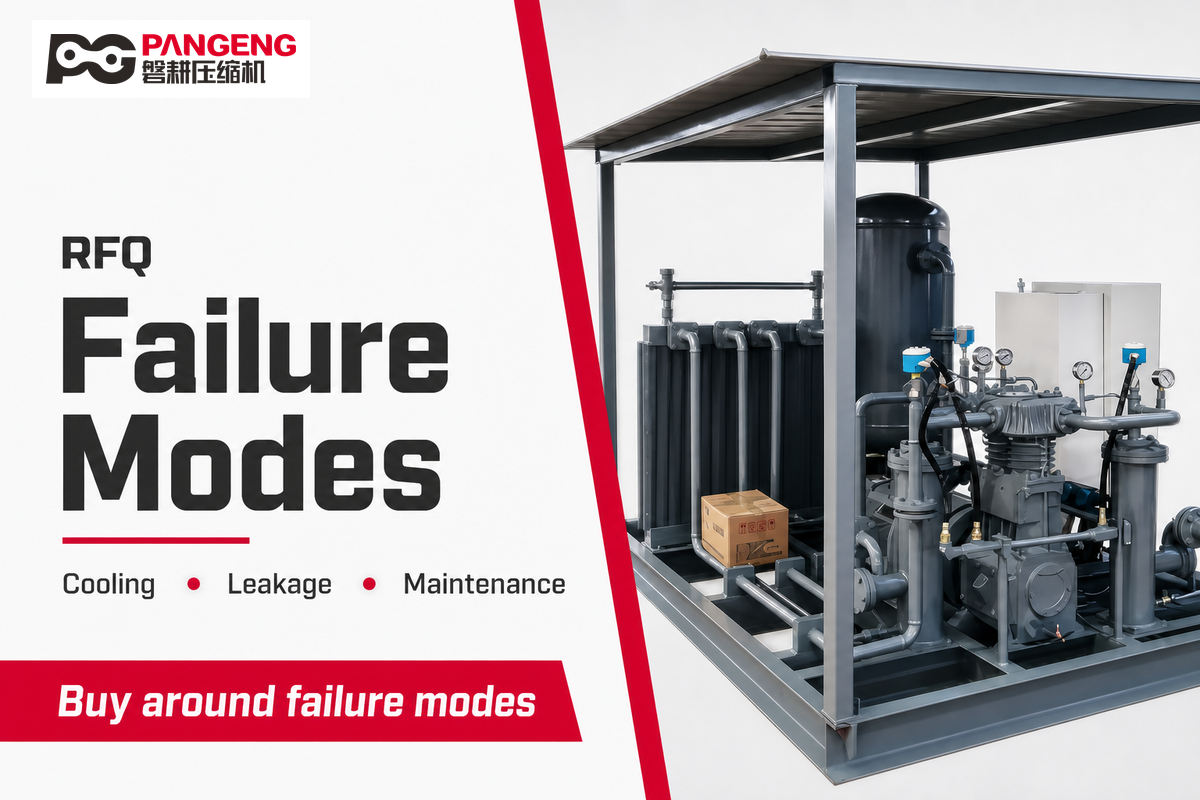
The strongest RFQ is organized around what can fail: pressure control, cooling, leakage, contamination, materials, shutdowns, relief routing, and maintainability. That same logic appears in OSHA’s hydrogen rule, which treats piping, relief devices, ventilation, ignition-source control, and gas-tight testing as system checks. This format forces each bidder to explain how the package will work in hydrogen service instead of hiding risk behind a model number.
Forum discussions from Eng-Tips and Cheresources are not authority sources for safety limits, but they are useful for buyer questions. Practitioners troubleshooting hydrogen compressors ask about material selection, discharge temperature, cooling condition, gas composition, suction and discharge valves, piston rings, seal gas, and routine maintenance. Those questions belong in procurement because they become downtime later.
Add an availability line to the RFQ if downtime is expensive. Ask whether the project needs duty/standby redundancy, N+1 compression capacity, spare diaphragm or ring sets on site, local service response time, repair-part lead time, and acceptance evidence for the required 8-hour or 24-hour duty. If uptime is critical, state whether standby capacity must cover 50% or 100% of the required kg/h during one compressor outage and whether spare parts must support a 24 h or 72 h response. Those items often decide lifecycle risk after pressure and flow look acceptable.
For cyclic filling or dispenser service, define the transient profile too: starts per hour, fills per day, pressure cycles per day, turndown range, blowdowns, and rapid depressurization events. Sandia’s metal-hydride compression summary notes that fatigue in moving parts can lead to diaphragm cracking and seal failures, and that repeated starts and stops at fueling stations can make those failures worse. Only include project-specific numeric limits, such as an owner-specified 3 bar/min ramp cap, 20 bar blowdown step, or 6 hours between restart windows, when those are the site’s real limits. A steady 24-hour run statement does not prove the same compressor is qualified for a harsh start-stop cycle.
Finally, ask for component-level hydrogen compatibility evidence, not just a package-level claim. The vendor response should identify wetted metals, polymer seal compounds, valve trim, instrument diaphragms, lubricant or oil-exclusion boundary, fitting materials, and traceability records for the actual pressure, temperature, purity, and cycling duty. A generic catalog phrase such as “hydrogen compatible” is not enough when the exposed component list is incomplete.
RFQ checklist – copy these into your quote request:
| Parameter | Recommended entry | Why it matters | How to verify |
|---|---|---|---|
| Pressure | Inlet, discharge, allowed fluctuation | Sets stage count, compression ratio and controls | Process datasheet and storage target |
| Flow | Nm3/h or kg/h, average and peak | Separates continuous duty from short filling duty | Duty cycle and operating-hours sheet |
| Duty cycle | 8-hour or 24-hour duty, starts per hour, pressure cycles per day | Separates steady hydrogen compression from cyclic filling service | Operating schedule, cycle profile and standby basis |
| Gas quality | Composition, moisture, purity, oil tolerance | Controls material, seal and oil-free decisions | Gas analysis and downstream purity limit |
| Cooling | Water or air, inlet temperature, available flow | Prevents discharge-temperature and reliability surprises | Utility datasheet and heat-rejection review |
| Safety | Ventilation, relief routing, leak detection, ESD | Determines package boundary and site approval | Code basis, P&ID, FAT and site test plan |
| Availability | Duty/standby, N+1 capacity, 24 h or 72 h spare-parts response | Defines uptime risk when one compressor is offline | Maintenance plan, service SLA and spare-parts list |
| Materials | Wetted metals, seal compounds, valve trim, traceability | Controls embrittlement, leakage and contamination risk | Material certificates and hydrogen-service review |
| Documentation | Certificates, spare parts, maintenance interval | Reduces commissioning and ownership risk | Vendor document list and FAT checklist |
Do Not Let Emerging Compression Technologies Distract From Readiness

Emerging hydrogen compression technologies deserve attention, but they should not distract from readiness. Patent language, pilot concepts, or market announcements do not prove that a compressor fits your pressure, flow, purity, cooling, hazardous-area, maintenance, and service-support requirements.
DOE describes ionic, electrochemical, and metal-hydride compression alongside mechanical options, and DOE notes that ionic compressors are available at fueling-station capacities and pressures. Recent patent searches also show continuing improvement language around hydrogen compression systems. Use those sources to understand where the field is moving, then compare them with PanGeng’s electrochemical hydrogen compressor information only after the duty is clear. The procurement trap is not that every newer technology is immature; it is assuming that availability in one pressure, flow, or station context proves fit for a different industrial duty. When buying equipment, still ask for proven references, performance data, spare-parts support, FAT scope, and site-specific safety documentation.
Many industrial buyers gain more from a cleaner specification than from an exotic compressor shortlist. Separate fueling-station, pipeline, process-gas, bottle-filling, trailer-loading, cryogenic, and metal-hydride contexts before copying pressure classes or standards from one use case into another. Ask the supplier to show service references, test report boundaries, 8-hour or 24-hour operating evidence, and what happens if the technology cannot meet the discharge pressure or cooling limit in the RFQ. A well-written duty sheet lets the supplier rule out fragile options early and focus on a package that can be manufactured, tested, cooled, controlled, and maintained within the site’s real constraints.
When to Send the Specification to PanGeng
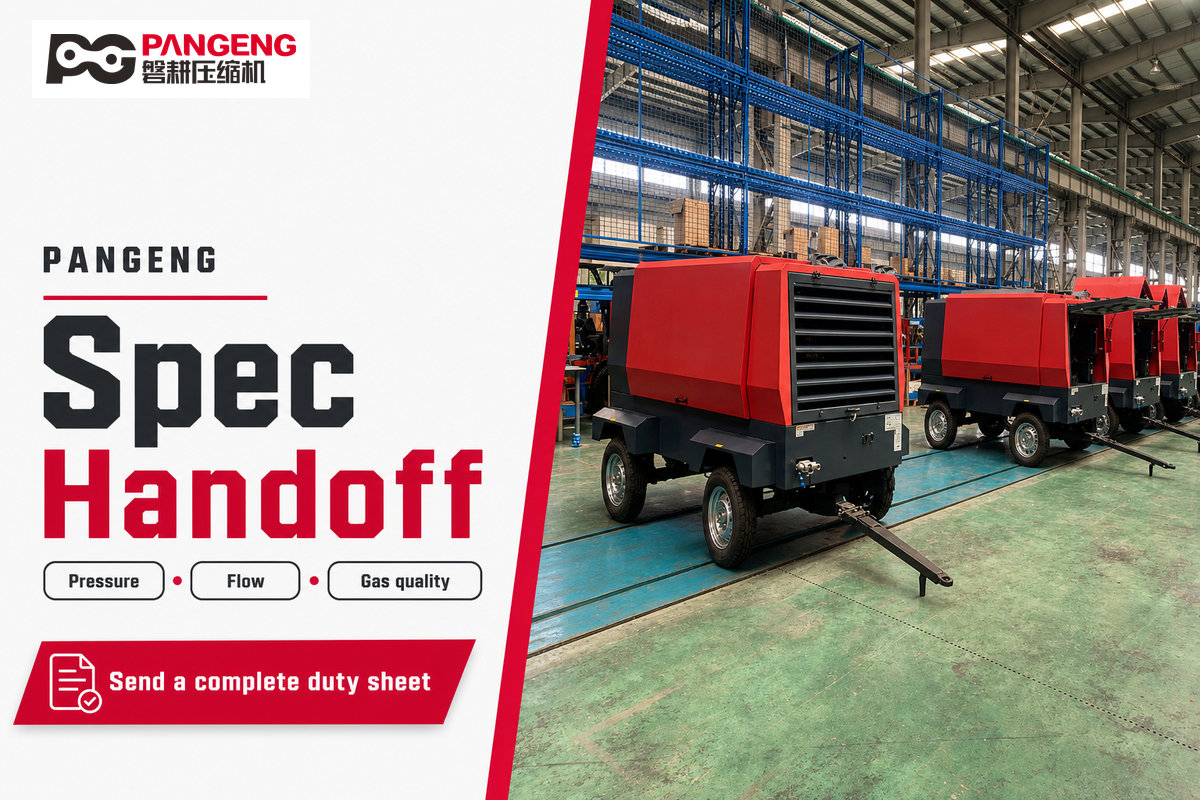
Send the specification to PanGeng when the pressure, flow, cooling, gas quality, and safety boundaries are clear enough for engineering review. Use public sources such as DOE’s compression overview and ISO 19880-1’s public scope page to frame the duty, but let the equipment maker check the actual package. Catalog selection alone is not the goal; the package must match the process, documentation, and operating reality.
PanGeng describes itself as a gas-compressor manufacturer with design, R&D, production, manufacturing, and custom gas compressor capability for oilfield, chemical, energy, and process applications. Its public hydrogen compressor materials show reciprocating, diaphragm, and electrochemical options, plus example ranges for hydrogen boosting, recycle hydrogen, high-pressure hydrogen, and water-cooled configurations.
Include this minimum data package in your first message: inlet pressure, discharge pressure, required flow, operating hours, gas composition, moisture, acceptable oil carryover, cooling medium, inlet temperature, ambient range, hazardous-area classification, preferred standards, control logic, required certificates, FAT expectations, and spare-parts plan.
Key takeaway
The safest shortlist is built from pressure, flow, cooling and safety evidence first; the compressor model comes second, after the real duty sheet is complete.
FAQ: Hydrogen Gas Compressor Selection
What are the main inputs for hydrogen gas compressor selection?
Answer
The main inputs are inlet pressure, required discharge pressure, compression ratio, gas flow, duty cycle, gas composition, moisture, purity requirement, cooling medium, inlet temperature, safety controls, and applicable standards. Suppliers also need to know whether the compressor is filling storage, feeding a hydrogen refueling station, boosting process gas, recycling hydrogen, or supporting high-purity hydrogen service.
Which compressor type is best for hydrogen compression?
Answer
There is no universal best type. Reciprocating, diaphragm, centrifugal, and electrochemical compressors each fit different pressure, flow, purity, cooling, and maintenance conditions. For a clean shortlist, compare inlet pressure, final discharge target, duty cycle, hydrogen grade, oil-carryover tolerance, cooling utilities, maintenance access, and component traceability before treating one compressor type as the default answer.
Why is cooling important in hydrogen compression?
Answer
Cooling is important because compression raises gas temperature, and high discharge temperature can reduce reliability, stress components, affect seals, and complicate downstream control. A hydrogen compressor RFQ should state the available cooling medium, inlet cooling-water or air conditions, continuous-duty hours, and discharge-temperature monitoring requirements. Final alarm and shutdown values should come from the manufacturer and project code basis.
What safety checks should be reviewed before buying a hydrogen compressor?
Answer
Review hydrogen-service materials, pressure-retaining components, relief devices, vent routing, gas-tight testing, ventilation, bonding and grounding, leak detection, emergency shutdown logic, ignition-source control, hazardous-area classification, hot-surface limits, seal blow-by routing, operating instructions, and maintenance documentation. Also ask who owns relief-piping design, site leak-test procedure, calibration records, spare-parts stocking, operator training, and commissioning signoff. For cyclic service, include starts per hour, pressure cycles per day, rapid depressurization, and wetted-material traceability in the safety review instead of leaving those items for commissioning. OSHA 1910.103, NOAA hazard data, ISO 19880-1 scope, and local code review should guide the safety boundary, but the final authority is the project jurisdiction and the owner should confirm it before purchase orders are released.
How much pressure is needed to compress hydrogen for storage?
Answer
Hydrogen storage pressure depends on the application. Compressed gas storage and refueling systems commonly refer to 350 bar and 700 bar classes, but the compressor outlet target can differ from the nominal storage or vehicle pressure because of pressure losses, fill strategy, thermal behavior, and buffer storage. Define inlet pressure, discharge target, storage system, and duty cycle before selecting the compressor.
References and Sources
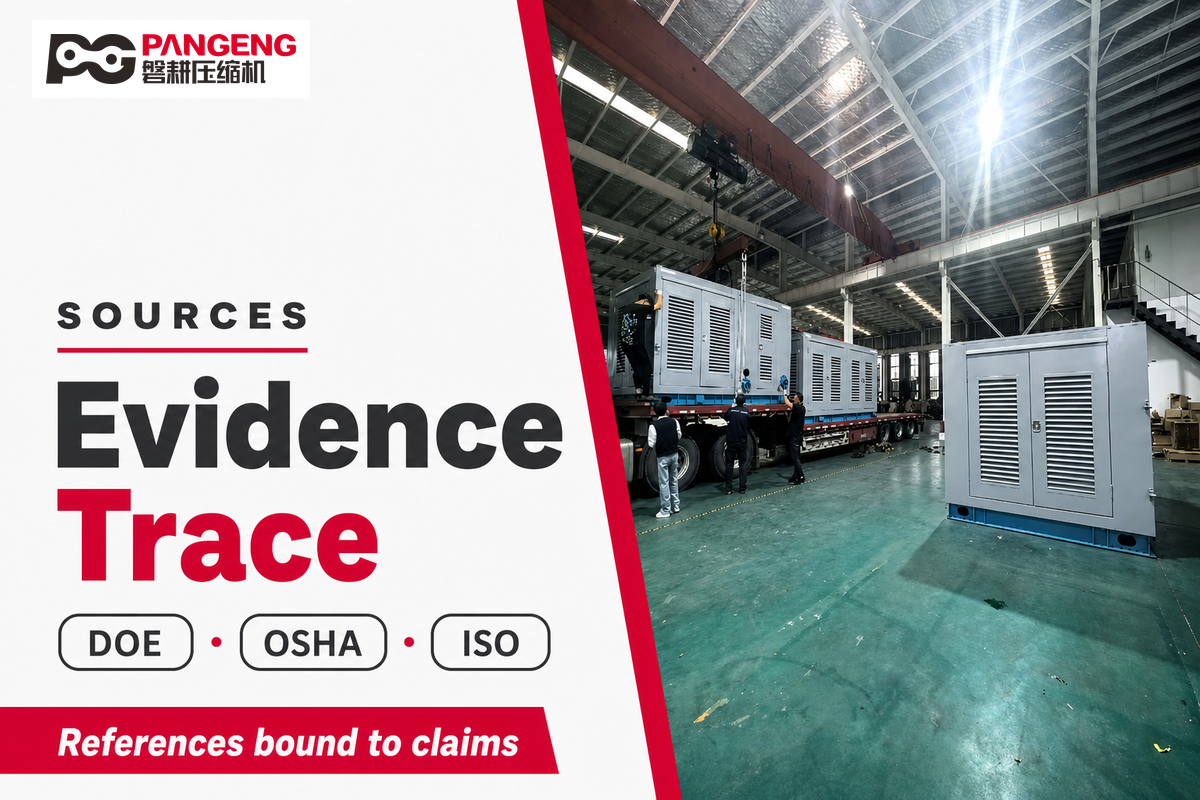
- U.S. Department of Energy: Gaseous Hydrogen Compression
- U.S. Department of Energy: Hydrogen Storage
- OSHA 1910.103: Hydrogen
- NOAA CAMEO Chemicals: Hydrogen
- ISO 19880-1:2020 public standard page
- ISO 14687:2025 hydrogen fuel quality page
- NLR Hydrogen Infrastructure Testing and Research Facility pressure-layer reference
- Sandia: Metal Hydride Compression
- Hydrogen Compression Choices for Tomorrow’s Refueling Stations, 2026
- PanGeng Hydrogen Compressor
// SYS-DOC: WHY I WRITE THIS
[01] About PanGeng
PanGeng is an industrial gas compressor manufacturer based in Bengbu, Anhui, China. Since 2009, we have focused on the design, R&D, production, and manufacturing of customized gas compressor systems for oilfield, chemical, energy, hydrogen, nitrogen, biogas, and industrial air applications.
[02] Our Expertise
We write compressor guides based on real manufacturing and engineering experience, including hydrogen compressors, nitrogen compressors, booster compressors, medium and high-pressure air compressors, oilfield nitrogen injection systems, biogas compressors, and OEM/ODM custom compressor solutions.
Our engineering team supports customers from application analysis and compressor selection to production, factory testing, commissioning, spare parts, and after-sales service.
[03] Why You Can Trust This Content
The technical information in our articles is based on PanGeng’s in-house compressor design and manufacturing experience, current product capabilities, and project support for industrial clients in global markets. Our goal is to help buyers understand compressor types, pressure ranges, gas requirements, customization options, and long-term operating costs before making a purchasing decision.
CONTACT PROFILE
AUTHORITATIVE SOURCE
NAME
PanGeng Engineering Team
BRAND
PanGeng
COUNTRY
China
MODEL
B2B / OEM & ODM
EMAIL
pg20090705@163.com
PHONE
0552-4958225
WEBSITE
pgcompress.com
Related Posts
Trending now

![Low Pressure Hydrogen Compressor Applications [Guide]](https://pgcompress.com/wp-content/uploads/2026/09/low-pressure-hydrogen-compressor-applications-blog-featured-150x150.png)