Get in Touch with Pangeng


Dd
I write about pressure and gas compatibility decisions in specialized compressors. My articles discuss high pressure hydrogen systems at different target pressures and the limits of small diaphragm compressors, helping readers organize questions about flow, pressure, gas properties, and the intended duty before selecting equipment.
High Pressure Hydrogen Compressor Selection: 200 Bar, 350 Bar, and 700 Bar Decisions
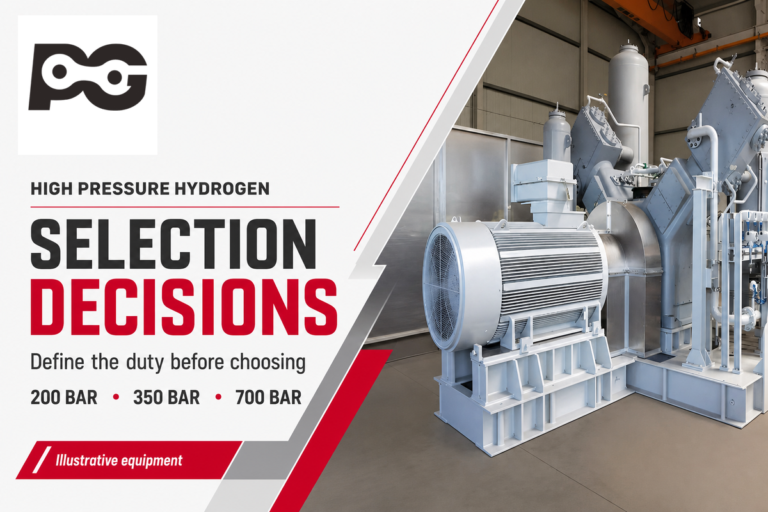
Quick Specs: information to send with a hydrogen compression inquiry Pressure basis: 200, 350, or 700 bar. Specify delivery, storage, or vehicle location. Identify bar (a) or bar (g). Supply envelope: Specify minimum and maximum pressure, temperature, and composition of…
Small Diaphragm Compressor Guide: Flow, Pressure, Gas Compatibility, and Limits
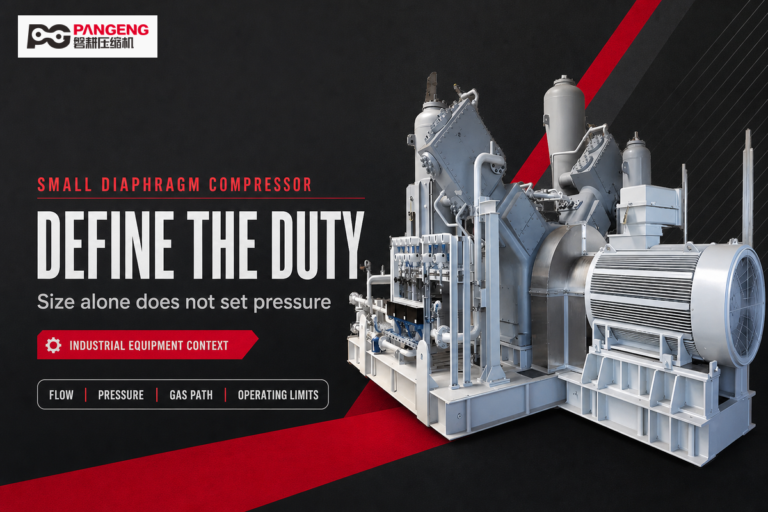
A small diaphragm compressor should be selected by delivered flow at the required pressure, gas suitability and permitted duty. A compact housing or two impressive maximum ratings cannot establish that operating point. First identify the construction, then ask for the…
Low Pressure Hydrogen Compressor Applications: When a Small Pressure Lift Still Matters
![Low Pressure Hydrogen Compressor Applications [Guide]](https://pgcompress.com/wp-content/uploads/2026/09/low-pressure-hydrogen-compressor-applications-blog-featured-768x512.png)
Quick Specs: scope of this guide Duty: close a defined pressure gap between a hydrogen source and an approved destination. Pressure basis: absolute pressure for compression ratio; label every measurement point. Worked example: assumed 1.30 bar absolute suction and 1.90…
Rotary Screw vs Reciprocating Air Compressor: Which Fits Industrial Duty Cycles?
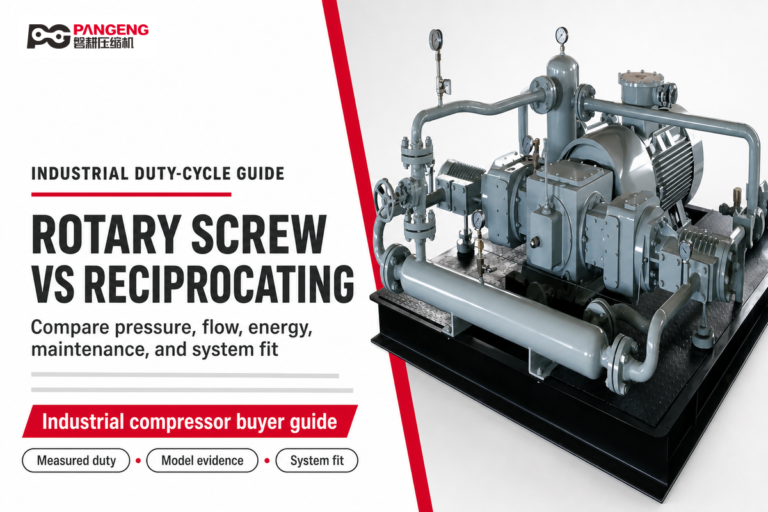
Rotary screw vs reciprocating air compressor is the buyer’s choice between continuous rotary displacement and cyclic piston displacement for a defined plant duty. Selection starts with pressure, flow, and the plant’s real operating cycle—not a generic claim that one design…
API 618 Reciprocating Compressor Checklist for Hydrogen and Process Gas Buyers
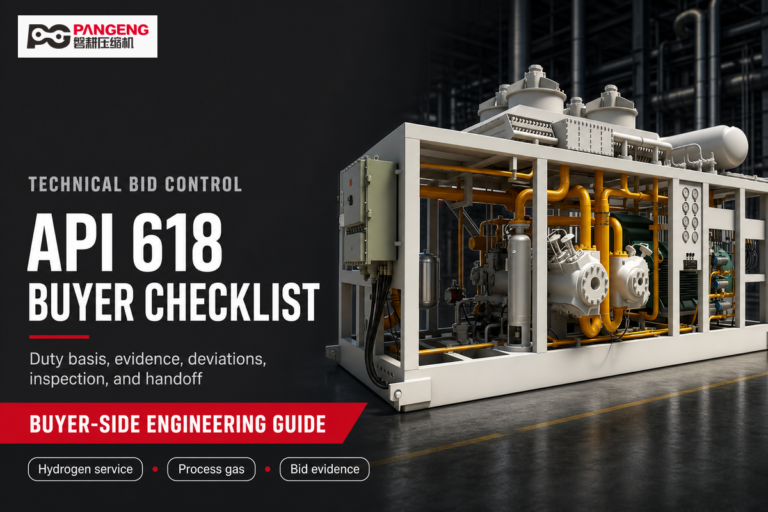
Updated August 2026 The api 618 reciprocating compressor checklist below is a buyer-side control for technical bids, vendor documents, inspection evidence, and post-award handoff. It doesn’t reproduce the standard, calculate a compressor, or replace the purchased API publication, the project…
Diaphragm Compressor vs Reciprocating Compressor: Which One Fits Hydrogen and Specialty Gas?
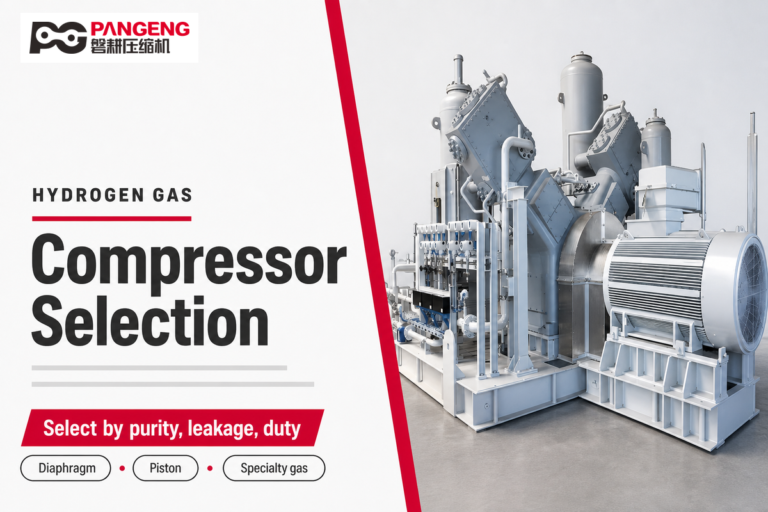
Diaphragm compressor vs reciprocating compressor is a practical hydrogen and specialty gas selection question, not a simple catalog comparison. For a complete product-family handoff, use the PG Compressor hydrogen compressor selection guide once you have specified the gas, pressure, flow,…
Nitrogen Gas Compressor Sizing: Flow, Pressure, Purity, and Storage Buffer Guide
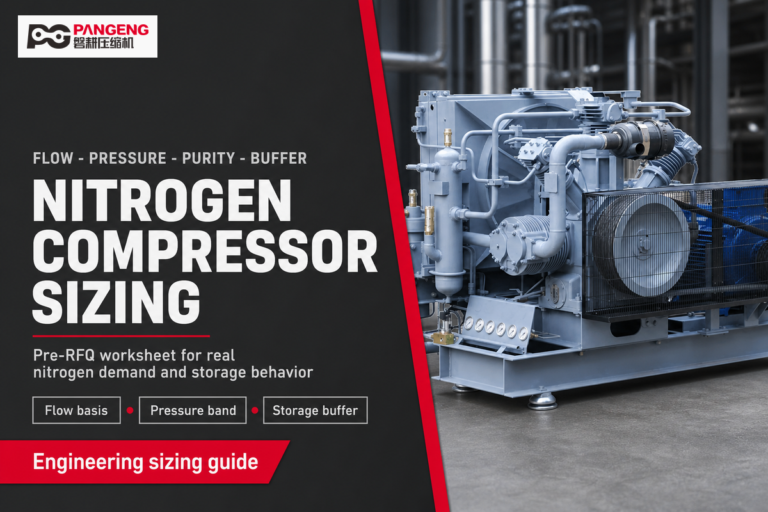
Updated August 2026 Nitrogen gas compressor sizing is the process of matching normalized flow, inlet pressure, discharge pressure, purity, duty cycle, and usable storage buffer to the real nitrogen source and point of use. Treat it as a pre-RFQ engineering…
Hydrogen Gas Compressor Selection: Pressure, Flow, Cooling, and Safety Checks
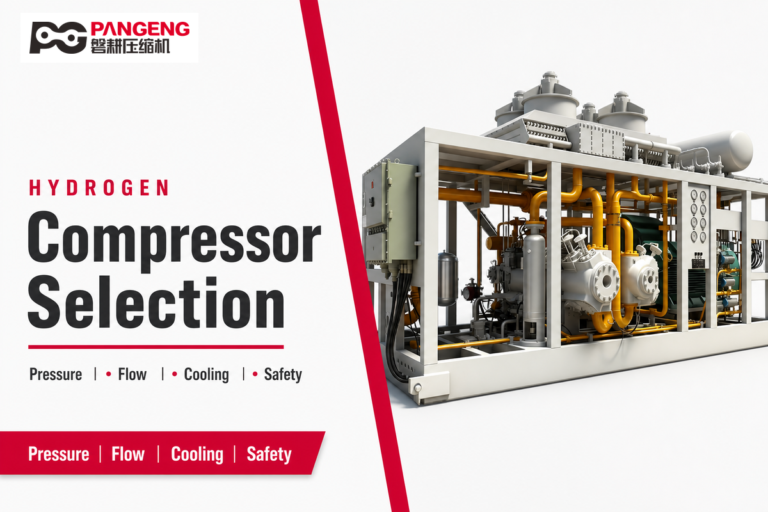
Updated August 2026. Hydrogen gas compressor selection is the process of matching inlet pressure, final discharge pressure, gas flow, cooling utilities, gas composition, purity limits, and safety controls to the actual process or storage target. A compressor model is only…
Diaphragm Gas Compressor Selection Guide for Specialty Gas and Hydrogen Systems
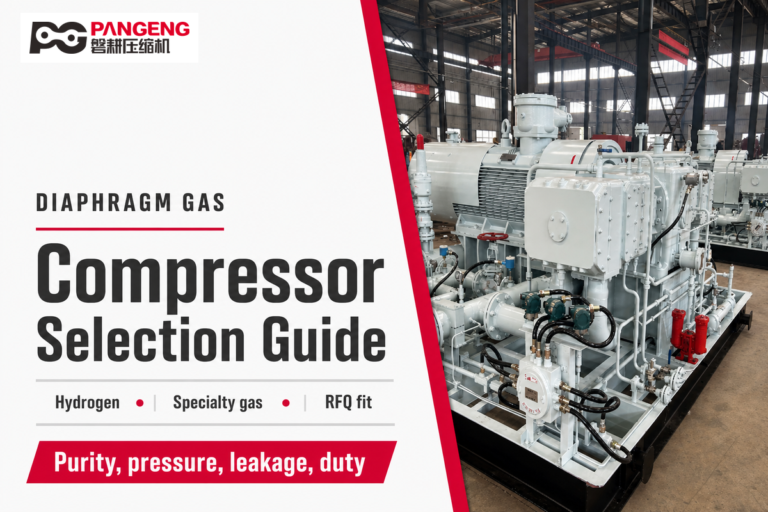
A diaphragm gas compressor is often chosen if the gas must be kept isolated from oil-side drive parts, where tight leakage limits are specified, or the duty is hydrogen, helium, silane, oxygen, toxic, rare, or otherwise high-value specialty gas. Discharge…
Diesel Air Compressors Explained: Principles, Sizing, Regulations & Buyer’s Framework

A diesel air compressor is a self-contained pneumatic power unit combining a diesel engine and a rotary screw or piston compressor element – the whole system is designed to run at full rated flow on jobsites with no electric grid.…
Trending now


![Low Pressure Hydrogen Compressor Applications [Guide]](https://pgcompress.com/wp-content/uploads/2026/09/low-pressure-hydrogen-compressor-applications-blog-featured-150x150.png)